
Should Employers Offer Free EV Charging?

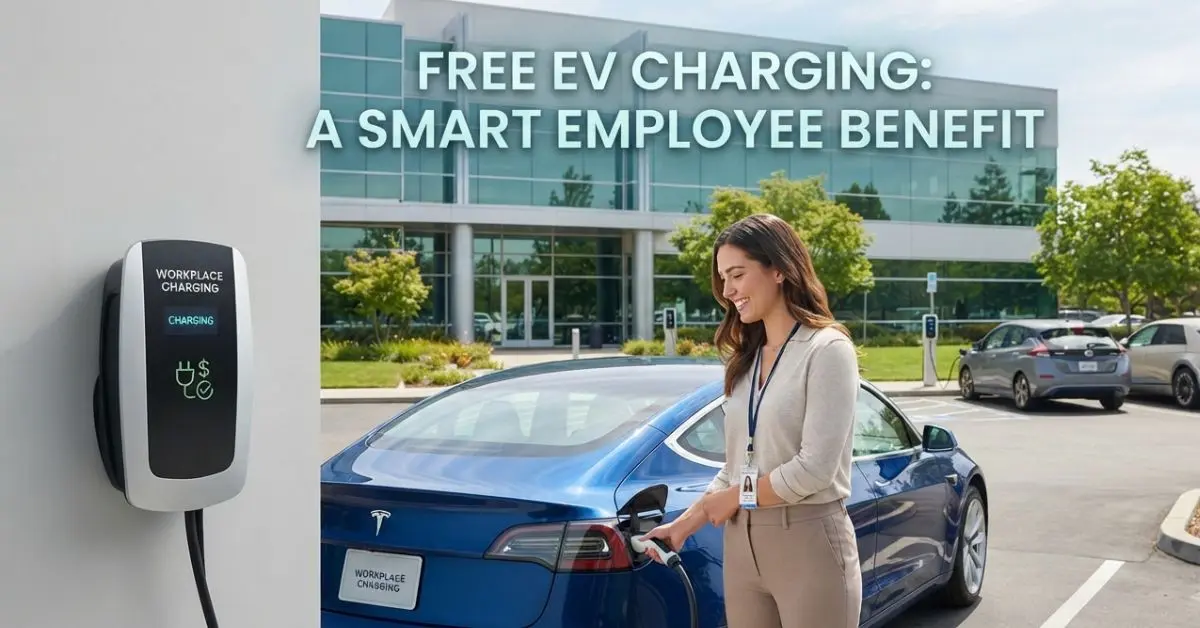
Yes — employers should seriously consider offering free EV charging. At approximately $2–$3 per employee per day in electricity costs, free workplace charging is one of the most cost-effective employee benefits available. It directly supports recruitment and retention of EV-owning employees, qualifies for a 30% federal tax credit on installation costs, reduces the company’s Scope 3 carbon emissions, and signals a genuine commitment to sustainability. For most mid-to-large employers, the total annual cost of free workplace charging is lower than the cost of replacing one disenchanted employee.
The Financial Case for Free Workplace Charging
| Cost Item | Typical Amount | Notes |
|---|---|---|
| Electricity per employee/day | ~$2–$3 | 15 kWh × $0.17/kWh; Level 2, 8-hour shift |
| Electricity per employee/month | ~$40–$60 | 22 working days |
| Electricity per employee/year | ~$480–$720 | 260 working days |
| Hardware per station | $500–$1,200 | Commercial Level 2 unit |
| Installation per station | $1,000–$3,000 | Varies by site complexity |
| Federal tax credit (30%) | –$450–$1,260 per station | Alt. Fuel Vehicle Refueling Property Credit |
| Net installation per station | ~$800–$2,940 | After 30% credit |
| Cost to replace one employee | $15,000–$25,000 | Industry average for mid-skill role |
The Employee Satisfaction Argument
EV ownership is growing rapidly — U.S. EV sales reached over 1.3 million in 2024, and EV-owning employees disproportionately represent younger, higher-earning knowledge workers who companies most want to retain. For these employees, free workplace charging is a highly valued daily benefit — it eliminates the need for a home wallbox installation and provides effectively free daily charging at no cost to themselves. Surveys from ChargePoint and SHRM consistently show EV-owning employees rate workplace charging among the top 5 most valued benefits — comparable to commuter benefits or flexible working.
Sustainability and ESG Benefits
Workplace EV charging directly reduces a company’s Scope 3 greenhouse gas emissions — the category covering indirect emissions from employee commuting. As ESG (Environmental, Social, and Governance) reporting becomes increasingly important for investors, lenders, and corporate clients, reducing Scope 3 emissions is a meaningful data point. Installing workplace chargers is one of the most visible and measurable actions an employer can take on employee commuting emissions — and one of the few benefits that serves both employee satisfaction and sustainability goals simultaneously.
Alternatives to Fully Free Charging
- Subsidised charging ($0.05–$0.10/kWh): Employees pay a below-market rate — recovers a portion of electricity costs while still providing meaningful savings vs public or home charging
- Time-based allocation: Each employee gets a monthly kWh allowance (e.g., 60 kWh/month) at no charge — covering typical commuting needs with employees paying for additional usage
- First-come, first-served free charging: Free during working hours with time limits (e.g., 4 hours) to ensure equitable access across all EV-owning employees
- Cost recovery from parking fees: Bundle EV charging into a slightly higher designated EV parking permit fee — charging infrastructure pays for itself through a modest premium over standard spots
Conclusion
Employers should offer free EV charging — the business case is compelling. At $480–$720 per employee annually in electricity costs (less than $60/month), free workplace charging costs far less than most other employee benefits while delivering outsized satisfaction and retention value. The 30% federal tax credit reduces installation costs to a 12–24 month payback period through energy cost recovery alone. As EV adoption accelerates through 2026–2030, companies that install EV charging infrastructure now will attract and retain the growing population of EV-owning employees who view this benefit as a meaningful part of their total compensation.
