
Can You Charge a US EV in Europe?

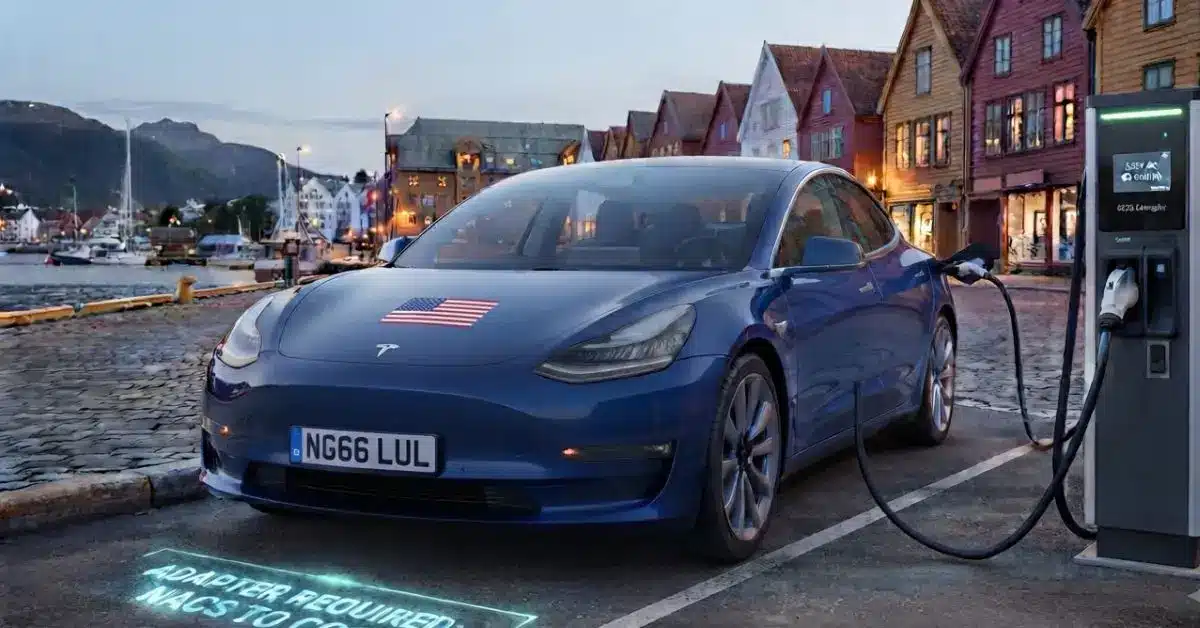
Checked against Tesla’s official manuals and warranty-region documentation, adapter manufacturers’ published specifications, and European charging networks’ posted prices (November 2026).
The usual way people meet this problem is standing in a European car park, cable in hand, looking at a plug that almost fits. The car got shipped — a military move, a posting, a used Tesla imported east — and North America and Europe simply chose different connectors, voltages and habits. The good news: charging a US-spec EV in Europe is genuinely possible, and for daily driving it is not even hard. The honest news: the fast-charging half of the story comes with fine print that most guides skip.
This page gives both halves plainly: what works with a simple adapter, what works with caveats and your warranty’s blessing withheld, and the one check a Tesla owner should make before the car goes on the boat.
AC charging: yes. A passive Type 2 → J1772 adapter (about $130–160) lets a US EV drink from European AC posts and wallboxes — at single-phase speed, up to ~7.4 kW, because US cars can’t use Europe’s three-phase power. US Teslas do the same via a Type 2 adapter or cable, no modification needed. DC fast charging: the catch. CCS2→CCS1 / CCS2→NACS adapters exist and are widely used on imported cars, but no carmaker endorses any of them, most are capped around 200–250 A, and a US Tesla may need Tesla’s own charge-port retrofit — done only in North America — before any DC adapter works. Plan your European life around AC; treat DC as a bonus, not a promise.
Key figures: AC ceiling ~7.4 kW · home socket ~2.3 kW · DC adapters typically 200–250 A · legit DC adapters €250–450
The Plug Problem: Two Continents, Two Connectors
Your car’s inlet was built for a different continent’s plugs — here is the whole mismatch on one table.
Your US car | Its AC inlet | Its DC inlet | In Europe you meet | The situation |
|---|---|---|---|---|
Most US EVs (to ~2024) | J1772 (Type 1) | CCS1 | Type 2 / CCS2 | AC: simple adapter. DC: adapter exists, unendorsed |
US Tesla + newer NACS cars | NACS | NACS | Type 2 / CCS2 | AC: adapter/cable works. DC: gated by the car’s CCS support (Tesla section) |
US Nissan Leaf | J1772 | CHAdeMO | Type 2 / CCS2 (+ shrinking CHAdeMO) | AC works; Europe is retiring CHAdeMO and no reliable adapter bridges it — plan on AC |
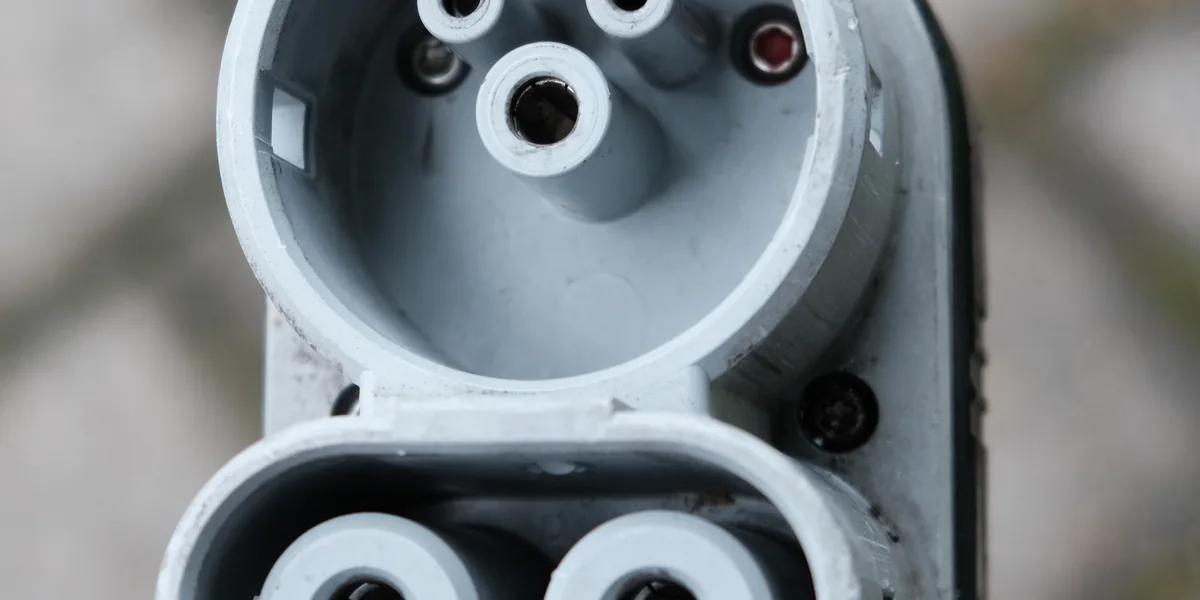
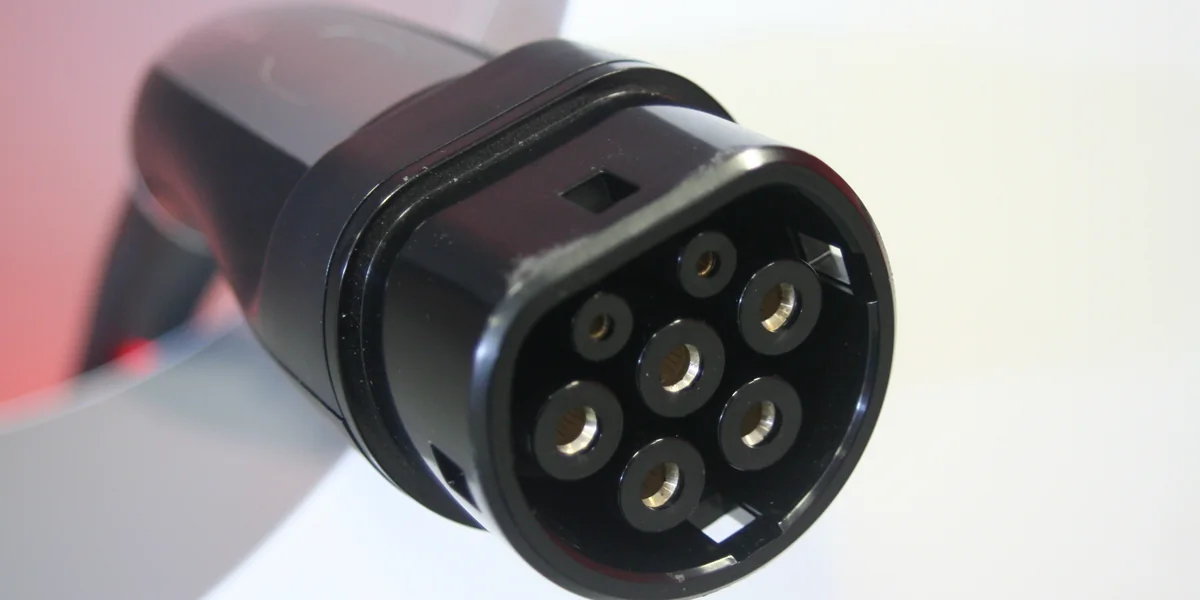
Europe standardised on the Type 2 connector for AC and CCS2 for DC — the same CCS communication language as America’s CCS1, in a different-shaped shell, with a different latch arrangement. That is why the AC problem is trivial (a passive pin bridge) and the DC problem is not (hundreds of amps through a third-party bridge is a different proposition). If you want the full connector family tree, our EV charging connectors guide draws it; this page is about your specific car, in a specific European car park.
AC Charging: The Part That Just Works
One passive adapter, bought before you travel, covers nearly all real-world charging.
For a J1772 car, the adapter is a dumb, reliable piece of plastic and pins — established US retailers sell Type 2 → Type 1 adapters for roughly $129–159, rated to 32 A, in compact and corded versions. There is no electronics inside to fail or to argue with the car. US Teslas use the equivalent Type 2 adapter or a Type 2-to-Tesla cable and charge the same way, no retrofit, no settings.
The catch is speed, and it is the car’s limit, not the post’s. European AC posts are commonly 11 or 22 kW three-phase — but a US car’s onboard charger takes single-phase only, so you will draw at most ~7.4 kW (230 V × 32 A) and often 3.7 kW at older or load-managed posts. Overnight, that is plenty; it is simply not the 11 kW the post advertises. Two practicalities the brochures miss:
- Bring your own cable. Many European public AC posts are bare sockets with no tethered lead — the cable is yours to carry (a Type 2 ↔ J1772 cable or the adapter plus your US cord setup).
- Mind the voltage rating of your own gear. Europe is 230 V / 50 Hz. Tesla’s own Gen 2 Mobile Connector is officially rated 100–240 V, 50/60 Hz in its manual — manufacturer-cleared for exactly this trip. For other brands, the rating is printed on your portable cord and in your manual; check it before the car ships, not after.
The household-socket fallback
Your car’s portable cord plus a European socket works — slowly, and with respect for house wiring.
Every European home has the ultimate backup: the wall socket itself. Portable cords throttle themselves to around 10 A ≈ 2.3 kW continuous for good reason — domestic sockets are built for kettles, not for a 12-hour full-load draw, and tired wiring heats at the terminals. Treat socket charging as occasional or emergency charging: a quality socket, no extension leads (Tesla’s manual prohibits them outright), and check the plug for warmth in the first hour. Overnight it still returns roughly 60–80 miles — enough to live on while you arrange something better.
DC Fast Charging: Possible, Unendorsed, Capped
The adapters are real, the cars do charge on them — and not one manufacturer will bless the arrangement.
Because CCS1 and CCS2 speak the same digital language, cross-system DC adapters are mostly a mechanical bridge, and imported US cars across Europe use them daily. Before you join them, know the three facts the sellers underplay:
- They are current-capped. Typical ratings run 200–250 A, so even a willing car tops out around 80–100 kW on a 400-volt pack — useful, but not the 250 kW the station advertises. Cheap unbranded units have reported thermal failures at ~150 kW; the credible band is €250–450. A €60 “400 A” listing is a story, not a specification.
- The latch differs. CCS2 locks from the car side; CCS1 latches on the handle. Adapters bridge that difference with varying elegance — one more reason session reliability varies by charger brand.
- Tesla owners: read the next section first. For a US Tesla, the adapter is the second question. The first is whether the car itself has CCS support enabled — and if it doesn’t, no adapter on Earth fixes that in Europe.
The Tesla Situation
A US Tesla in Europe runs happily on AC — and meets a software gate the moment it wants DC.
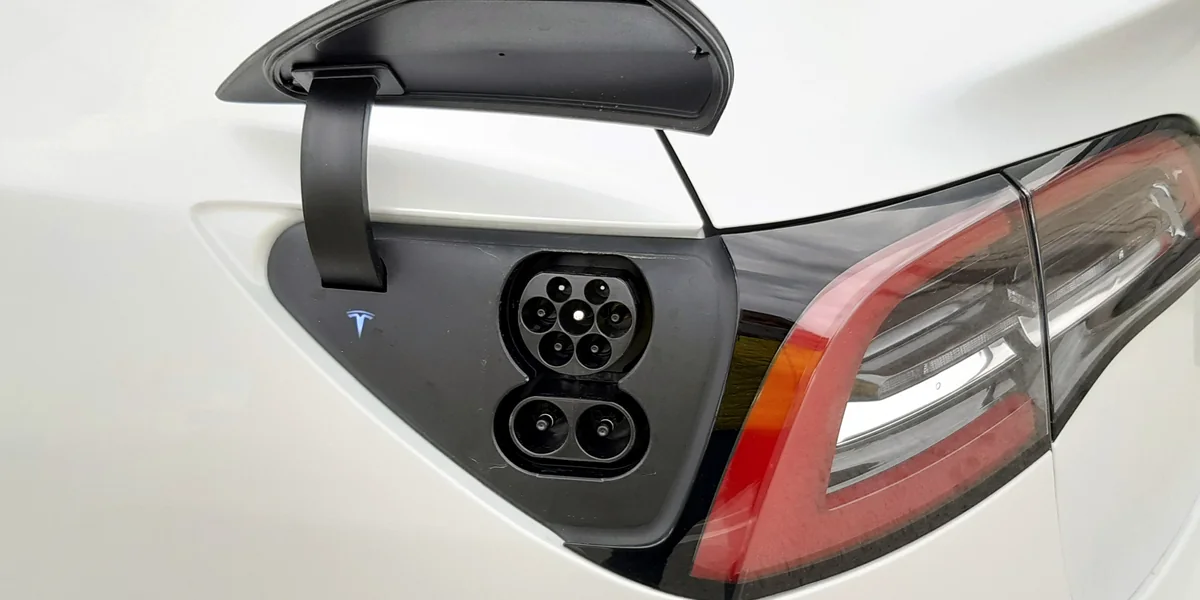
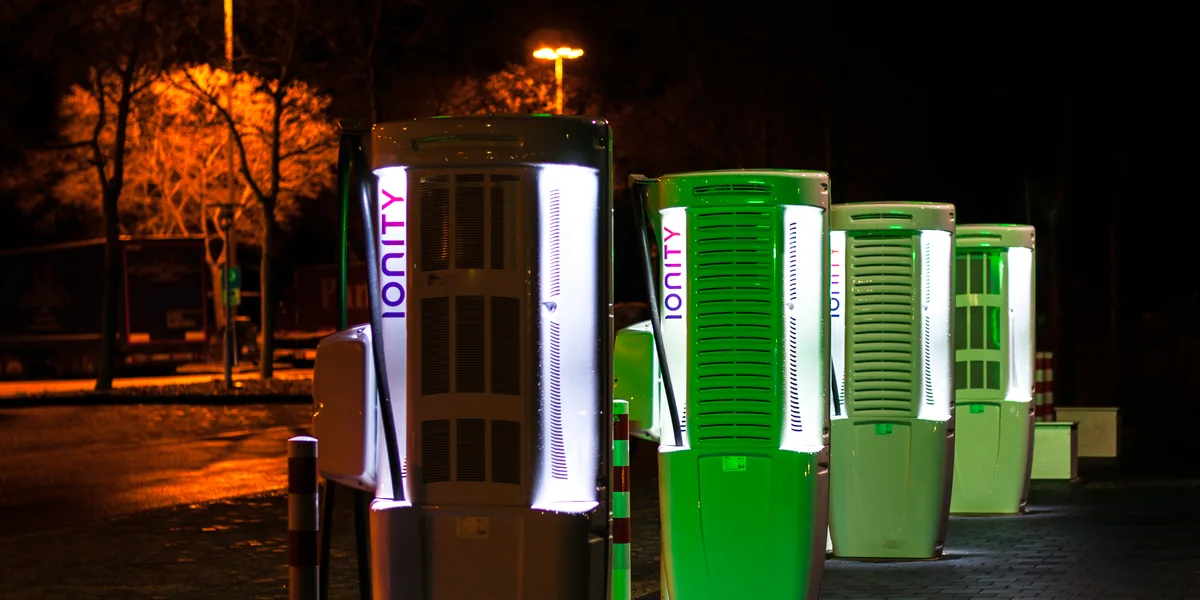
European Teslas leave the factory with a CCS2 inlet (pictured below) and CCS support built in. Your US car has the NACS inlet and, depending on build date, may or may not have the CCS communication support in its charge-port ECU. Check before you ship: on the car’s screen, Software → Additional Vehicle Information → “CCS adapter support”. If it says enabled, a quality CCS2→NACS DC adapter gives you access to IONITY, Fastned and the rest — owners report these networks working well.
If it says not enabled, the fix is Tesla’s charge-port ECU retrofit — which Tesla performs only in the car’s home region. Do it before the car ships, or accept AC-only life. And European Superchargers? Be sceptical of anyone who promises them: owner reports from US cars are genuinely mixed — one documented case charged happily at IONITY through an adapter but found only one of five Superchargers would work. Tesla sells its own CCS Combo 2 adapter in Europe, but it fits the European S/X inlet — it physically cannot plug into a US car’s NACS port, whatever a sales page claims.
Finally, the paperwork: Tesla’s official warranty-regions page states that a car’s warranty is only valid in the region where it was originally purchased, and a North American car repaired in Europe must be repaired to North American specification with no local parts substituted. Budget and plan accordingly — this is Tesla’s published position, not forum folklore.
Costs and Practicalities
European public charging rewards subscriptions and punishes improvisation — a little administration saves real money.
Ad-hoc DC pricing in expensive markets now reaches about €0.76/kWh (German motorway pricing, 2026), while network subscriptions and roaming deals list the same electrons at €0.25–0.43/kWh — so any single “Europe costs €X” figure is lying to you in one direction or the other. As a yardstick, US DC fast charging averages $0.538/kWh (Paren, Q2 2026): unsubscribed European motorway charging is dearer, subscribed charging often cheaper. Three habits pay for themselves:
- Get a roaming RFID/apps before you arrive. Some European chargers still reject US chip cards; a roaming tag (or the network apps) is the difference between charging and phoning a helpline in the rain.
- Subscribe if you’ll DC-charge monthly. One motorway session’s premium can cover a month’s subscription fee.
- Use our charging station locator and local apps together — coverage data for Europe is strongest in the networks’ own apps.
And the honest long-view: if the posting is measured in years and the car will live on AC anyway, many shipped-car owners eventually sell the US car and buy locally — gaining native CCS2, three-phase AC, a valid regional warranty and headlights/turn signals that match local rules. That is not a failure of the adapters; it is the total cost of the mismatch adding up.
Frequently Asked Questions
Can I charge a US Tesla at a European Supercharger?
Not reliably, and never as a promise. European Superchargers are CCS2; a US Tesla needs its CCS support enabled (check the car’s screen) plus a third-party CCS2→NACS adapter, and owner reports are mixed — in one documented case only one of five Superchargers worked while IONITY worked fine. Treat Superchargers as a possible bonus; plan routes on the open CCS2 networks.
Can I charge from a European household outlet?
Yes — with your car’s portable cord and the appropriate plug adapter or EU cord set, throttled to roughly 10 A (≈2.3 kW) for wiring safety. Expect about 60–80 miles overnight. Use a sound socket, no extension leads, and treat it as occasional charging rather than a permanent arrangement on old wiring.
Why does my US car only get 7 kW from a 22 kW post?
Because the post’s 22 kW is three-phase power, and US onboard chargers are single-phase. You draw one phase: up to ~7.4 kW at 32 A, sometimes 3.7 kW. Nothing is broken — and for overnight charging it rarely matters.
Will the 230 V / 50 Hz power damage my US car?
The car’s onboard charger is the only part that meets the mains, and it converts what’s offered. Tesla’s portable cord is officially rated 100–240 V and 50/60 Hz; for other brands, verify the rating printed on your cord and in your manual before shipping. Cars are not damaged by 50 Hz vs 60 Hz — the charger negotiates what it can accept.
Is there an official CCS2 adapter from Tesla for US cars?
No. Tesla’s CCS Combo 2 adapter is sold for European Model S/X with the European inlet — it cannot physically fit a US NACS port, and claims otherwise are wrong. Tesla’s North American CCS adapter works the other direction (CCS1 chargers for US cars, at home). In Europe, every DC adapter for a US car is third-party and unendorsed.
Do I need to bring my own cable for European AC posts?
Often, yes. A large share of European public AC posts are untethered sockets. Bring a Type 2 ↔ J1772 cable (or your adapter plus your US cable arrangement) and a Type 2 cable solution for a US Tesla. DC fast chargers, by contrast, are always tethered.
What about a US Nissan Leaf in Europe?
AC charging works with the same Type 2 adapter as any J1772 car. For DC, the Leaf’s CHAdeMO was once Europe-compatible — but Europe is retiring CHAdeMO and no reliable CCS2→CHAdeMO adapter exists, so a US Leaf in Europe should be planned as an AC-charged car.
Is charging in Europe more expensive than in the US?
It depends how you buy it. Unsubscribed motorway DC in Germany now reaches ~€0.76/kWh — above the US fast-charging average of ~$0.54/kWh. Subscriptions and roaming deals (€0.25–0.43/kWh on some networks) undercut US prices. Home and workplace AC on a local tariff is usually the cheapest charging in either continent.
Conclusion
Yes, you can charge a US EV in Europe — the continents disagree about plugs, not about physics. For the driving that fills most weeks, a $150 passive adapter and a single-phase trickle of up to 7.4 kW will quietly handle your life. The fast-charging frontier is real but unendorsed: adapters exist, they are capped, the warranty won’t follow you, and a US Tesla must clear its CCS-support gate in North America before any of them matter. Sort the AC adapter and the Tesla screen-check before the car ships, and the European plug stops being a problem worth worrying about.
