
EV Battery Disposal Safety: Handling Damaged Batteries the Right Way

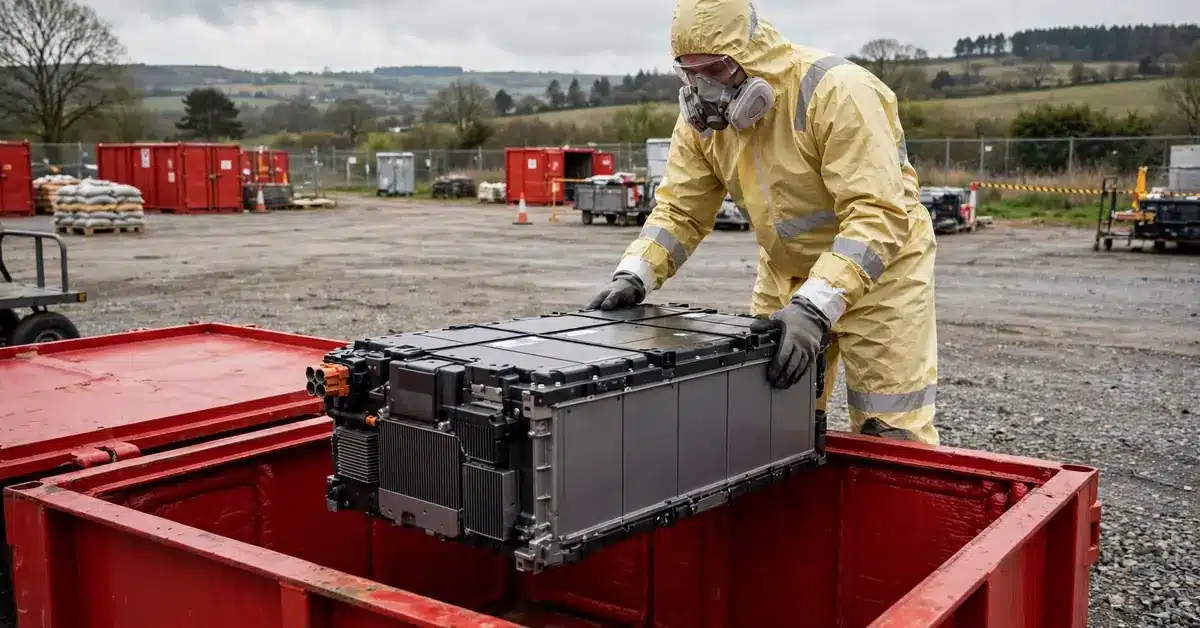
EV battery disposal safety matters most once a battery is damaged, swollen, or no longer usable. Mishandling a damaged pack risks fire, chemical exposure, or injury. This guide covers safe disposal steps, the protective gear you need, and why cold weather adds extra fire risk.
How to Safely Dispose of a Damaged EV Battery
Damaged EV batteries count as hazardous waste and require special handling. You cannot place them in regular trash, recycling bins, or household waste pickup.
Follow these steps if you’re dealing with a damaged or swollen battery:
- Stop using the battery immediately and isolate it from other materials.
- Move it to a cool, dry area away from anything flammable.
- Avoid puncturing, crushing, or attempting to repair the battery yourself.
- Contact the vehicle manufacturer or a certified EV battery recycler for guidance.
- Use a certified hazardous waste transporter if the battery needs to be moved.
- Confirm final disposal happens at a permitted recycling or disposal facility.
Never attempt to store a damaged EV battery in your garage or home long-term. Even a battery that looks stable can still pose a delayed fire risk.
What PPE Is Needed to Work on EV Batteries?
Anyone handling a damaged or high-voltage EV battery needs proper personal protective equipment. This isn’t optional gear. It’s the primary defense against shock, burns, and chemical exposure.
Standard PPE for EV battery work includes:
- Insulated gloves rated for high-voltage electrical work
- Safety glasses or a full face shield
- Non-conductive, insulated footwear
- Arc-rated protective clothing for higher-risk tasks
- A properly rated voltmeter to confirm the system is de-energized
| PPE Item | Main Purpose |
|---|---|
| Insulated gloves | Prevent electric shock from contact with live components |
| Face shield or goggles | Protect eyes from chemical splashes and arc flash |
| Insulated footwear | Reduce shock risk from ground contact |
| Arc-rated clothing | Limit burn severity during an arc flash event |
| Rated voltmeter | Confirm the battery is fully de-energized before contact |
This level of protection applies to technicians, tow operators, and recyclers, not everyday drivers. Regular EV owners never need this gear for normal use.
What Is the Risk of EV Battery Fire in Cold Weather?
Cold weather raises EV battery fire risk mainly through charging behavior, not the cold itself. Charging a lithium-ion battery at very low temperatures can cause lithium plating on the internal anode.
This plating doesn’t always cause an immediate problem. Over time, it can build up and place pressure on the battery’s internal separator. That pressure can eventually lead to a short circuit, sometimes triggered later by vibration or a bump in the road.
To reduce cold weather risk:
- Avoid fast charging in extreme cold when possible
- Let the battery warm up slightly before charging in freezing conditions
- Follow manufacturer guidance on cold-weather charging limits
- Store spare batteries at room temperature rather than in a cold garage
Most manufacturers avoid charging lithium-ion batteries below 32°F (0°C) for this exact reason.
The Bottom Line on EV Battery Disposal Safety
EV battery disposal safety comes down to isolation, proper gear, and using certified recyclers. Never handle a damaged battery yourself, and never toss one in regular trash. PPE protects anyone working directly with high-voltage components, while smart charging habits reduce cold-weather risk for everyday owners. These simple practices keep both people and property safe.
Frequently Asked Questions
Can I recycle an EV battery myself at home?
No, EV batteries must go through certified recycling programs or manufacturer take-back services. Home recycling isn’t safe or legal due to the hazardous materials and fire risk involved.
Do I need PPE just to charge my EV at home?
No, everyday charging and driving require no special protective equipment. PPE is only necessary for technicians or responders working directly on damaged or exposed high-voltage components.
Is it safe to leave an EV outside in freezing temperatures?
Yes, parking an EV outside in cold weather is safe. The main precaution involves charging habits, not simply exposing the vehicle to cold air.
What should I do if I find a swollen EV battery?
Stop using it immediately, isolate it away from flammable materials, and contact the manufacturer or a certified recycler. Never attempt to charge, repair, or transport a swollen battery yourself.
