
Can EV Manufacturers Update BMS Over the Air (OTA)?

Researched from Volkswagen’s and Kia’s own owner documentation, Tesla Support, Rivian’s release notes, GM’s dealer communications, NHTSA recall documents and UNECE R156 summaries — November 2026.
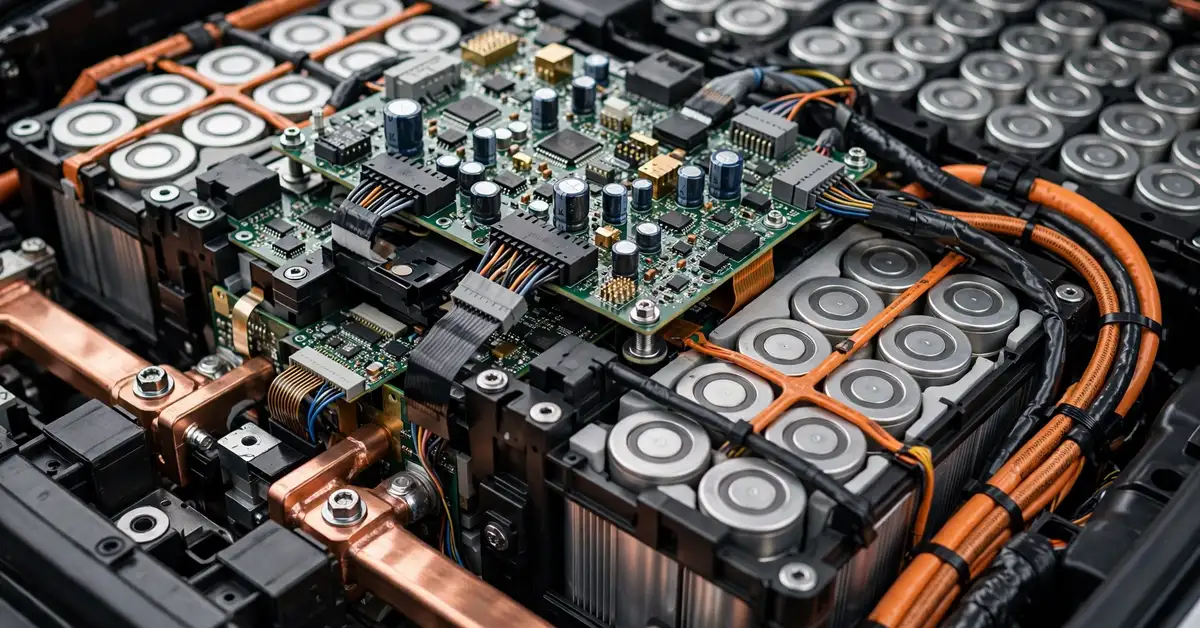
Yes — most major EV makers can and do update battery management software over the air. Tesla, Volkswagen, Kia, GM, Ford and Rivian all have documented battery-related OTA updates: charging curves raised, thermal management revised, even usable capacity unlocked. The exceptions matter as much: the Nissan Leaf’s battery software is still updated at a dealer, Hyundai’s biggest battery-adjacent recall is dealer-only, and early VW ID. cars needed a workshop visit before OTA worked at all.
• Deepest OTA: Tesla, Rivian — battery behaviour is routine update territory
• Proven by example: VW (125→135 kW), Ford (450→500 A), GM (Oct 2026 battery OTA)
• Dealer-only: Nissan Leaf, Hyundai ICCU recall
The brand-by-brand answer
The honest answer is a table, not a yes or no — capability varies by brand, and by model year within a brand.
| Maker | BMS over OTA? | Documented example |
|---|---|---|
| Tesla | Yes, routinely | 2017: software-locked 75 kWh packs unlocked remotely during Hurricane Irma |
| Volkswagen | Yes (after a workshop first step on early cars) | ID. Software 3.0 raised 77 kWh charging from 125 to 135 kW |
| Kia | Yes — BMS named in its OTA controller list | Kia’s owner portal lists the battery management system among OTA-updatable controllers |
| GM | Yes | Oct 2026 OTA for Lyriq, Equinox EV, Silverado EV, Sierra EV: battery-drain and charging fixes |
| Ford | Yes | F-150 Lightning OTA raised DC charging from 450 to 500 amps |
| Rivian | Yes | 2025.18 update: new charging curves, Gen 2 Large Pack to 215 kW |
| Lucid | Machinery yes; battery example not public | Full OTA system documented; no battery-specific change published |
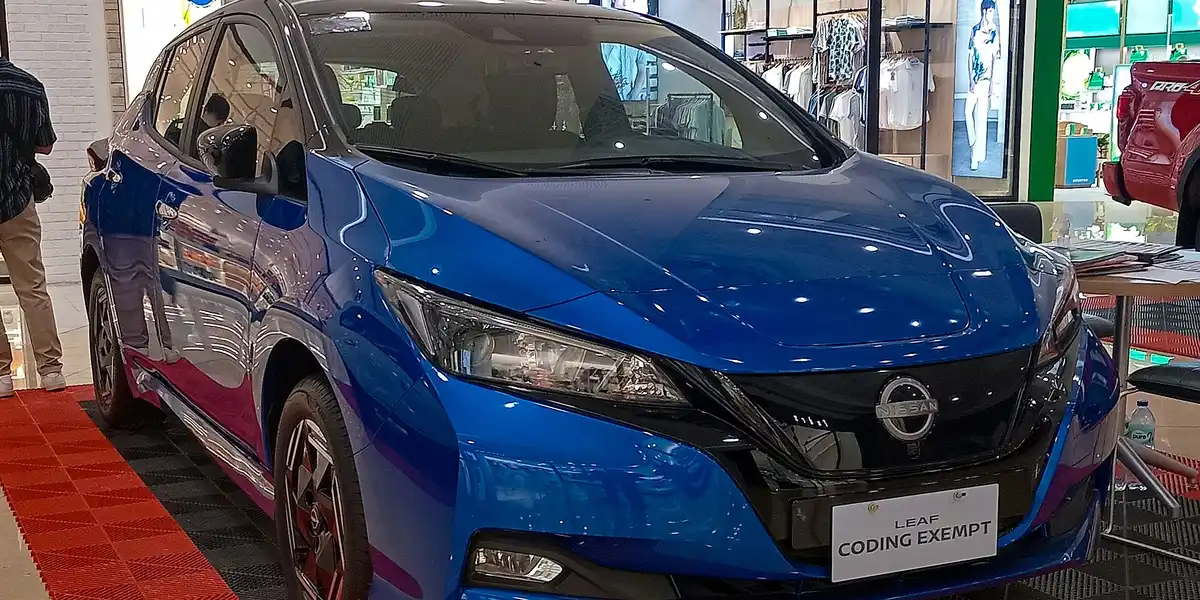
| Nissan (Leaf) | No | Battery software recall R25C8 is performed by dealers |
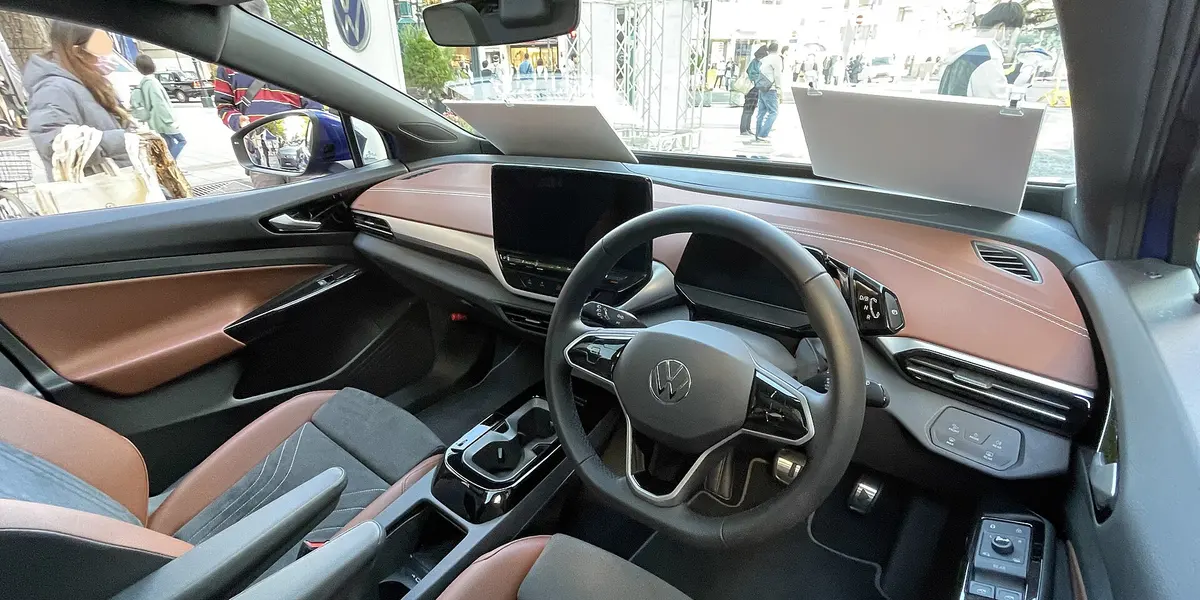
Two entries deserve a line each. Kia is the only maker here whose own owner documentation names the battery management system outright as an OTA-updatable controller — its portal lists “powertrain, electric motor system, battery management system, ADAS, and lighting”, varying by year and trim, with a Kia Connect subscription required. And GM’s example is the freshest: an October 2026 over-the-air update whose stated purpose is EV battery and charging software — start reliability, battery-drain prevention and charging performance — pushed to four Ultium models at once.
What an OTA update can actually change in the battery
Anything that is a number, a curve or a rule inside the BMS is fair game: charge limits, thermal thresholds, estimates and protections.
Charging speed is the most visible. Volkswagen’s 3.0 update did not touch a single cell — it revised thermal management and limits, and the same 77 kWh cars charged at 135 kW instead of 125. Ford’s Lightning update raised the DC current ceiling from 450 to 500 amps. Rivian’s 2025.18 release reworked charging curves using cell-level thermal simulation.
Capacity itself can be software. Tesla’s Irma unlock remains the purest demonstration: cars sold as 60 kWh models carried 75 kWh packs limited in software, and Tesla lifted the limit remotely for owners fleeing the hurricane — the paid version of that unlock normally cost $4,500–$9,000. Estimation improves too: range and state-of-charge algorithms are recalibrated in updates, which is why an EV’s displayed range sometimes changes overnight. For what the firmware layers inside the BMS actually are, see our guide to what BMS firmware is and how it is updated.
What OTA cannot fix — and what still needs a dealer
Software cannot repair hardware, and some software itself is still delivered the old way.
Hyundai’s ICCU recall is the hardware case. The integrated charging control unit — the box that also charges the 12-volt battery — can suffer a failed MOSFET and a blown fuse. The remedy in NHTSA’s recall document is a dealer visit: a diagnostic check, a replacement ICCU and fuse where the fault is found, software where it is not — and it “can only be performed at IONIQ certified dealers”. No update fixes a dead transistor.
The Leaf is the architecture case. Nissan’s OTA story covers the Ariya and infotainment; the Leaf’s battery software is dealer territory. When Nissan recalled 2021–2022 Leafs (campaign R25C8) because lithium deposits could raise resistance and heat the pack during Level 3 charging, the remedy was dealers updating the battery software, free of charge. The fix is software — the delivery van is a workshop.
Even Volkswagen’s OTA story starts in a workshop: early ID. cars needed the 2.4 update installed by a retailer, with a new 12-volt battery fitted, before over-the-air updates could flow. The 12-volt detail is not trivia — an OTA install runs on the low-voltage system while the car sits disabled, and a weak 12-volt battery is exactly what you do not want mid-flash.
The rules behind the updates: UNECE R156
In Europe and other UNECE markets, updating a car’s software — the BMS included — is a regulated act, not a feature.
Regulation No. 156, in force since summer 2022, requires every manufacturer to run a certified Software Update Management System (SUMS) covering the whole update process, in the workshop or over the air. Type-approval-relevant software is tracked by an identifier called RXSWIN, readable from the vehicle, so an authority can tell which approved software a car is running. Updates must be signed so the car can reject anything altered, must run only under safe conditions — stationary, with sufficient power — and must carry a recovery mechanism if they fail.
Two boundaries are worth knowing. The regulation has been mandatory for new vehicle types in the EU since July 2022 and for all new cars produced since 7 July 2024. And the United States and Canada are not parties to the 1958 Agreement behind it — American cars self-certify under FMVSS, so R156 discipline reaches US owners only where a maker applies one global process.
What happens during an install
Every maker’s choreography is the same in outline: download while you drive, install while you definitely cannot.
Tesla’s support page is blunt: you may drive during the download, but not during the install, and a car that is charging stops charging while the update installs, then resumes. Kia’s conditions read like a checklist — parked, lights off, parking brake on, hood closed — and the vehicle is disabled until it finishes. Lucid asks for at least 20% battery, nobody inside (pets included), doors and trunk closed, and no DC fast charging in progress; its process verifies the update’s integrity and source before installing, and if an update fails, the car simply continues on the current software.
That last point is the one to remember. A properly built OTA system treats a failed update as a non-event: the previous software stays in charge. The risk stories belong to systems that skip those steps — which is why the regulation, and the workshop-first stories above, exist.
Frequently asked questions
Can an OTA update increase my EV’s range or charging speed?
It has happened, within hardware limits. Volkswagen raised ID. charging from 125 to 135 kW by software; Ford raised the Lightning’s DC current ceiling; Tesla once unlocked real, physically present capacity that software had hidden. What no update can do is exceed the cells’ and cooling system’s hardware limits — the gains live in the margins the maker originally held back.
Can a BMS update fix a degraded battery?
No. Degradation is physical — lost lithium, worn electrodes. An update can improve how the BMS estimates what remains (owners sometimes see range “come back” when it was really the estimate that improved), and it can change limits and protections, but it cannot restore capacity. What a replacement does require is a different procedure entirely, covered in our BMS reset guide.
Why did my car’s update need a dealer if it has OTA?
Three usual reasons: the update touches hardware diagnostics a technician must run (Hyundai’s ICCU check), the car’s architecture predates full OTA (the Leaf), or the car needs a preparatory step first — early VW ID. cars needed a workshop update and a fresh 12-volt battery before OTA worked.
Is it safe to install an update as soon as it appears?
The systems are built to make it safe: signed files, integrity checks, parked-car conditions, and fall-back to the current software if anything fails (Lucid documents exactly this). Owners who prefer caution can wait a few days — updates roll out in batches (Rivian says so explicitly), so early waves surface any problem before yours arrives.
Do OTA updates cost money?
The update itself is typically free — Volkswagen delivered its 3.0 optimisations free, and Nissan’s dealer-delivered battery reprogram is free under recall. Connectivity can be the catch: Kia’s OTA service requires a Kia Connect subscription, so on some cars the pipe, not the software, is what expires.
Conclusion
Yes, manufacturers can update the BMS over the air — the better question is which parts of your car’s battery behaviour its maker chose to make updatable.
Tesla and Rivian treat battery software as a living product; Volkswagen, Ford, GM and Kia have all shipped documented battery changes over the air; Lucid has the machinery; and the Leaf stands as the reminder that architecture, not willingness, is usually the limit. When a battery problem is hardware — a failed ICCU transistor, a worn-out cell — no signal from the cloud will fix it. But the curve your car charges on, the limits it protects itself with, and the accuracy of the number on its range display are all software now, and software can be rewritten overnight.
