Which EV Battery Chemistry Uses the Least Cobalt?
LFP and sodium-ion use zero cobalt. Every EV chemistry ranked by cobalt per kWh, from 0 to NMC 111’s 0.32 kg — plus what that means in a full pack.

A deep dive into EV battery chemistry: NMC, NCA, LFP, sodium-ion, and solid-state. These articles compare how each chemistry performs on range, cost, safety, and charge cycles, and explain why automakers choose different chemistries for different vehicles. For cell-type-specific coverage, see our dedicated Lithium-Ion Batteries and Solid-State Batteries archives.
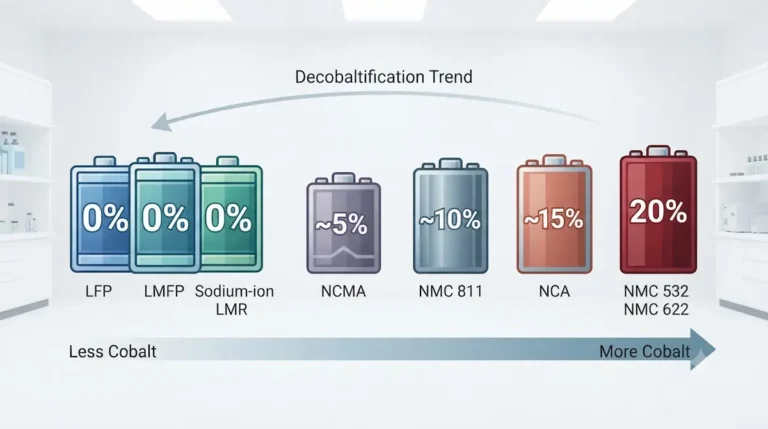
LFP and sodium-ion use zero cobalt. Every EV chemistry ranked by cobalt per kWh, from 0 to NMC 111’s 0.32 kg — plus what that means in a full pack.
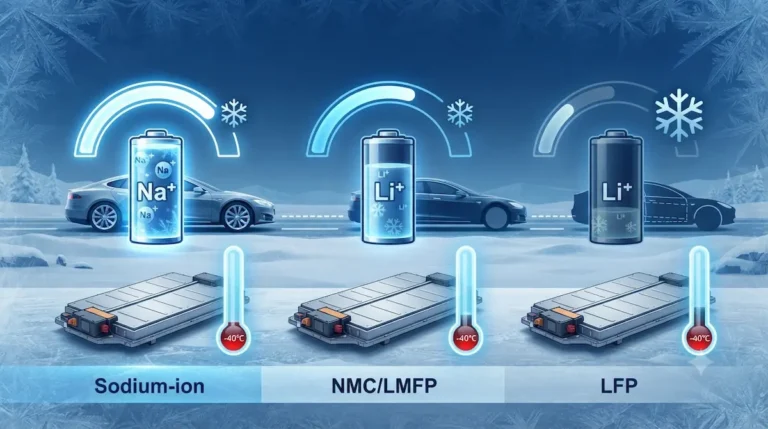
Which EV battery chemistry works best in cold weather? Sodium-ion wins on paper, NMC wins in EVs you can buy today, and LFP loses the most range.
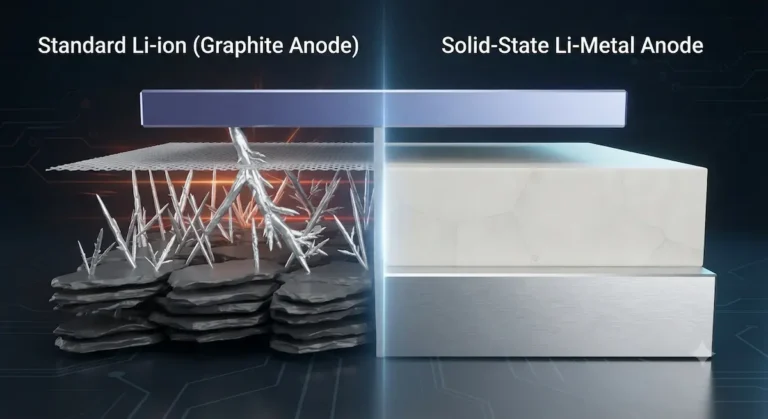
What is lithium dendrite growth and why is it dangerous? Metallic lithium needles that short-circuit batteries — learn how dendrites form, why they threaten solid-state batteries, and the solutions being deployed.
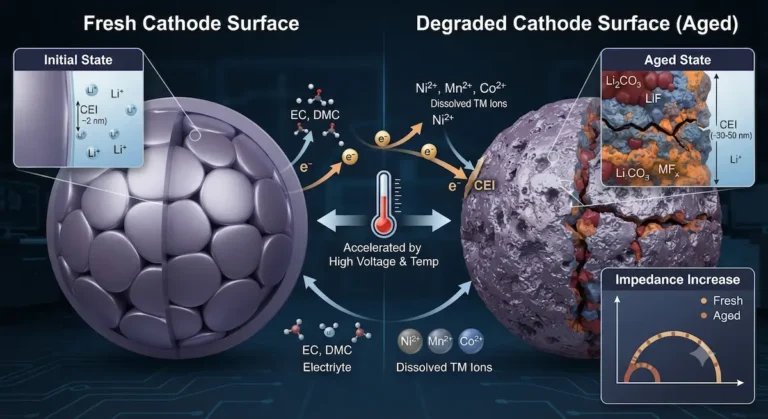
How does electrolyte oxidation degrade EV batteries? CEI growth on NMC cathodes increases impedance and consumes active material. Learn why NMC 811 is most affected and how charging habits help.
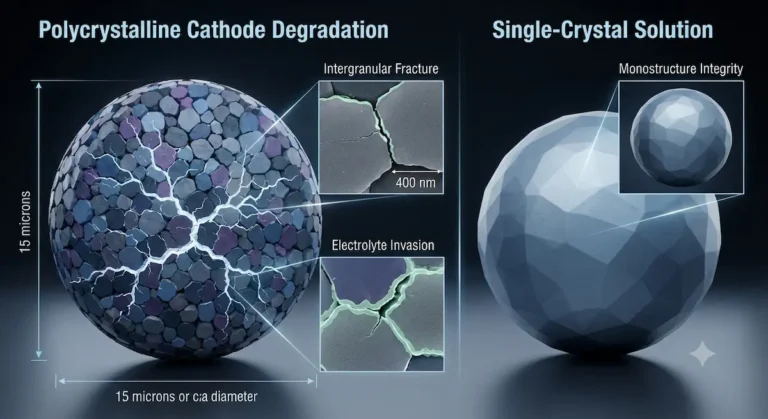
What is cathode cracking in high-nickel EV batteries? Polycrystalline NMC 811 particles fracture during cycling — causing capacity fade and safety risks. Learn causes, mechanisms, and single-crystal solutions.
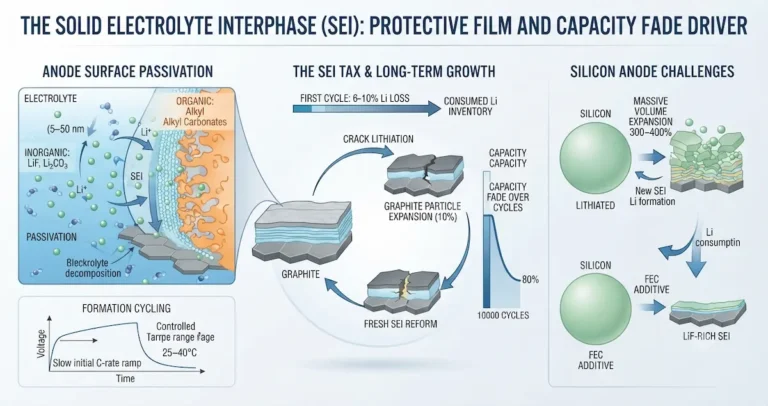
What is SEI layer formation in EV batteries? The Solid Electrolyte Interphase enables long cycle life but also drives capacity fade. Learn how SEI forms, what it’s made of, and how to slow its growth.
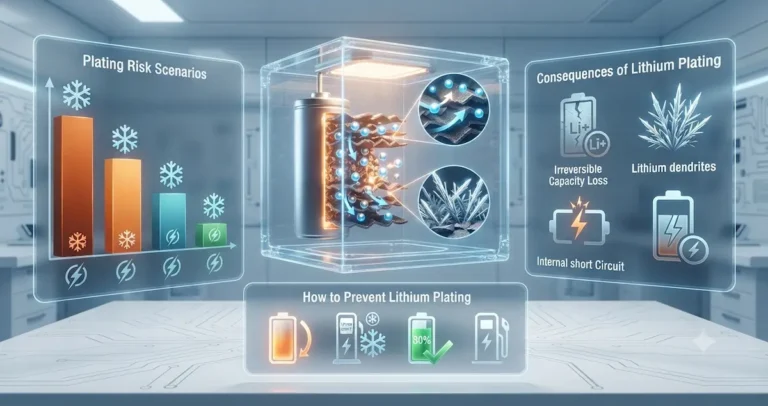
What causes lithium plating in EV batteries? Cold temperatures and fast charging force Li⁰ to deposit on graphite anodes instead of intercalating. Learn the mechanisms, consequences, and prevention.
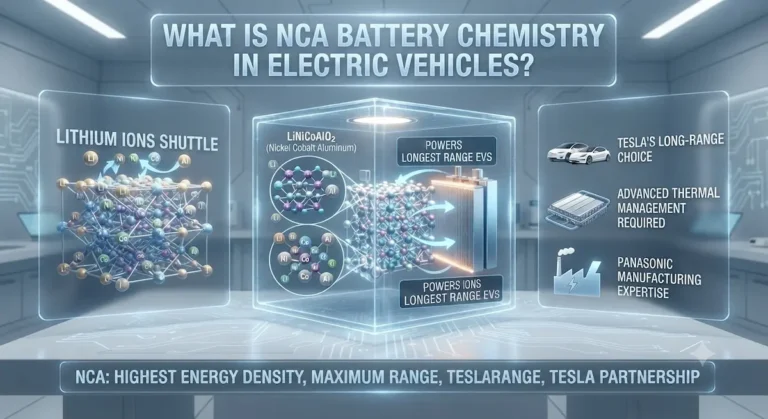
What is NCA battery chemistry in electric vehicles? Learn how nickel cobalt aluminum works, why Tesla uses it, specs vs NMC, and the advantages and limitations of NCA.
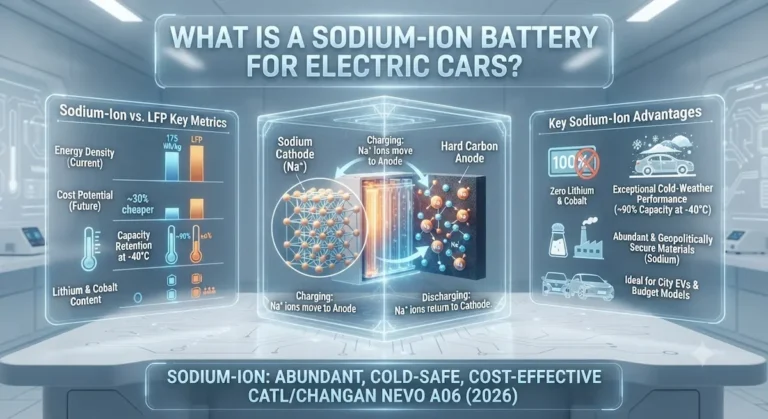
What is a sodium-ion battery? The 2026 EV guide: how it works, 175 Wh/kg Naxtra cells, the cars on sale in China, real costs vs LFP and US availability.
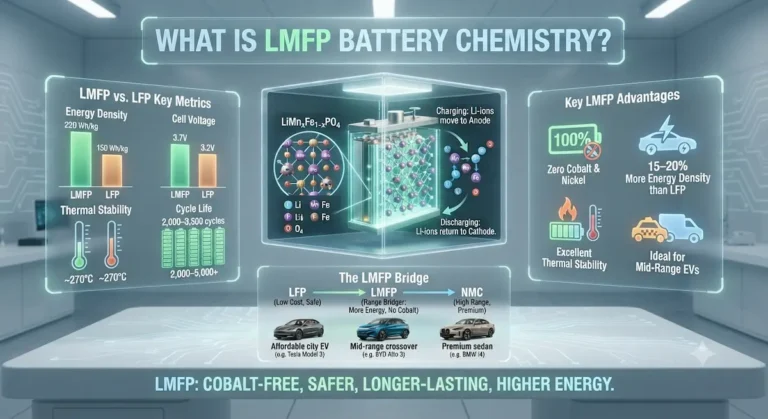
What is LMFP battery chemistry? Lithium manganese iron phosphate adds manganese to LFP, boosting energy density 15–20% while keeping zero cobalt and excellent safety. Full guide here.
End of content
End of content