
NIO ET7 Battery: Complete Guide

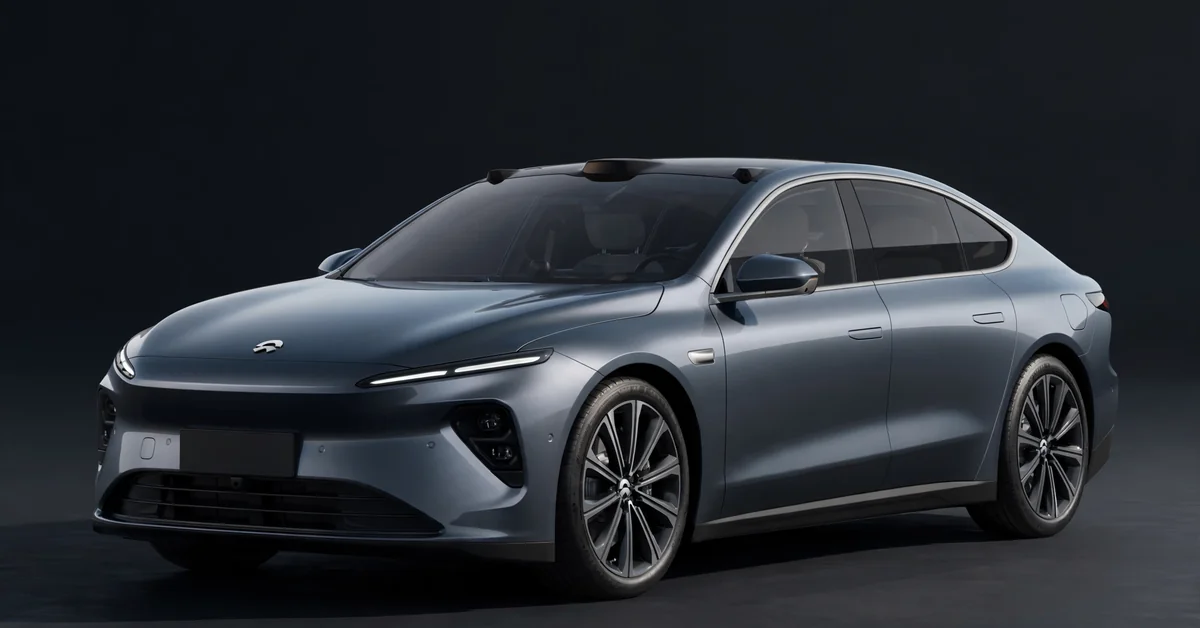
The ET7 is the car that made the West take NIO seriously: a big executive sedan whose party trick is not charging at all, but swapping its battery in less time than a fuel stop. It also hides the most misunderstood battery in the industry — a 150 kWh semi-solid pack that headlines love and that you cannot actually buy.
The NIO ET7 offers three batteries: a 75 kWh pack (originally a hybrid LFP+NMC pack, all-LFP since the 2024 facelift), a 100 kWh NMC pack, and a 150 kWh semi-solid-state pack that is rental-only through NIO’s swap stations. Ranges run from 445 km WLTP (75 kWh, Europe) to a claimed 1,050 km CLTC (150 kWh, China). Every pack can be swapped in about three minutes — 144 seconds at the newest stations — or rented under NIO’s Battery-as-a-Service plan (from €169 a month in Germany).
The three ET7 battery packs, side by side
Two of these packs you can own; the third you can only rent. And every range figure below names its test cycle, because the China and Europe cars are rated differently.
| Pack | Chemistry | Usable | Range (CLTC, China) | Range (WLTP, Europe) | DC peak | 10–80% |
|---|---|---|---|---|---|---|
| 75 kWh | LFP+NMC hybrid, all-LFP from 2024 | 73.5 kWh | 530 km (550 facelift) | 445 km | 140 kW (170 facelift) | ~30 min (27 facelift) |
| 100 kWh | NMC (CATL/CALB) | 90.0 kWh | 675 km (705 facelift) | 580 km | 127 kW | ~40 min |
| 150 kWh | Semi-solid (WeLion cells) | 150 nominal | 1,050 km est. | Not sold in Europe | Not published | Rental only |
A few things the table cannot show. All three packs share the same physical footprint and the same 400-volt architecture, which is exactly why any ET7 can accept any pack at a swap station. The 100 kWh pack is the one most European cars carry; in China the range was simplified in 2025 so the 100 became the standard fit. And the ET7 was never sold in the US, so there is no EPA figure for any of them — anyone quoting you an “EPA range” for this car is inventing it.
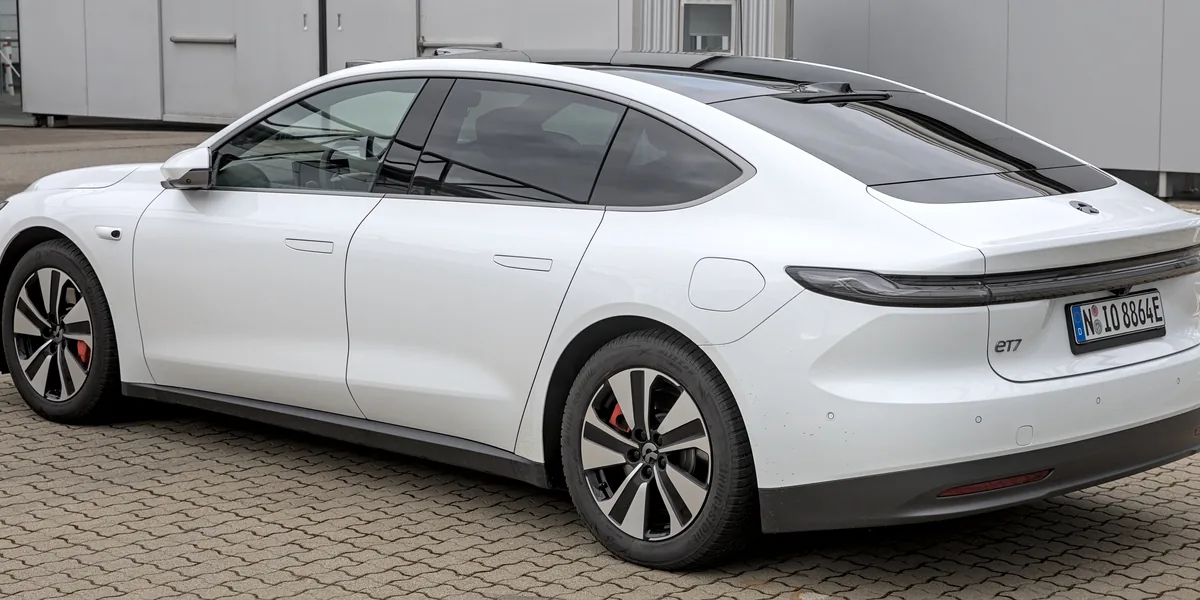
The 150 kWh semi-solid pack: the one you rent, not buy
This is the most famous battery NIO makes — the first mass-produced semi-solid-state pack in a car — and the least available. Understanding how you actually get one explains NIO’s whole strategy.
The cells come from Beijing WeLion, which began delivering them to NIO in mid-2023. The headline number, 360 Wh/kg, is the energy density of the cells; the finished pack achieves 261 Wh/kg, which is still about 44% better than the 100 kWh pack. The clever part is the packaging: at 575 kg the 150 kWh pack weighs only 20 kg more than the 555 kg 100 kWh pack and occupies exactly the same space under the floor, so it drops into any ET7 — which NIO proved by driving one 1,044 km on a single charge in a publicised real-world run, against a CLTC estimate of 1,050 km.
So why can’t you buy it? Because it is extremely expensive to make — NIO’s president has said the pack costs about as much as a whole ET5 sedan. NIO’s answer is to keep ownership and rent the pack by the day through the swap network: since mid-2024, owners in China have been able to upgrade into the 150 for a trip at published daily rates (RMB 150 a day if you normally run the 75 kWh pack, RMB 100 a day from the 100), returning it afterwards at any station. Supply is limited, and NIO has been open about that. Judge the arrangement on its own terms: as a product it is a rental fleet of very expensive packs, shared across owners — which is only possible because the battery was designed to come out in the first place.
Battery swapping and BaaS: how the system actually works
A swap takes about three minutes, the car does the parking itself, and the network behind it is now the largest of its kind in the world.
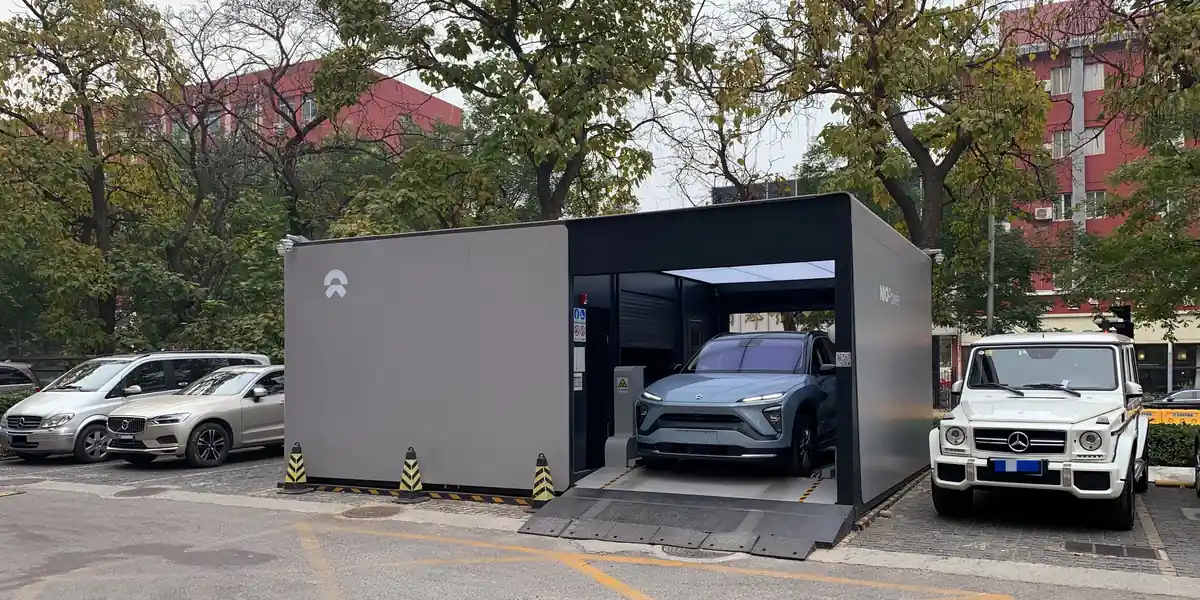
You drive onto the station’s marked bay, tap the screen, and stay in your seat while the car positions itself; the station lifts it, unbolts the depleted pack, and fits a charged one — typically at around 90% or more — with a battery health check performed as part of every swap. The newest, fourth-generation stations complete the exchange in 144 seconds and hold 23 packs each. The network’s scale is the real story: NIO operates over 4,250 swap stations in China (more than a thousand of them on highways) and around 60 in Europe.
Battery as a Service is the financial half of the same idea. In Germany, an ET7 bought under BaaS costs from €57,900 instead of €69,900, and you rent the battery at €169 a month for the 75 kWh pack or €289 for the 100 (buying the battery outright instead costs €12,000 or €21,000). The trade is honest and worth stating plainly: you give up owning the most expensive component, and in return degradation stops being your problem — a tired pack is NIO’s, and the swap station will hand you a healthy one. Whether the maths suits you depends on how long you keep cars and how you value that insurance.
Charging the ET7 without swapping
Swapping gets the headlines, but the ET7 is a 400-volt car with ordinary — not class-leading — plug-in charging speeds.
DC fast charging by pack
The smaller packs charge fastest: the 75 kWh hybrid peaks at 140 kW and covers 10–80% in about 30 minutes, and the all-LFP facelift version raised that to 170 kW and about 27 minutes. The 100 kWh pack peaks at 127 kW and needs around 40 minutes for 10–80% — respectable, but the big Mercedes and BMW rivals on 800-volt systems charge notably quicker, which is precisely the gap NIO answers with swapping rather than with voltage. No official charge rate has been published for the 150 kWh rental pack.
Home charging and preconditioning
AC charging is 11 kW on a Type 2 connector, so a full charge of the 100 kWh pack takes the best part of ten hours — an overnight job, as with most cars of this class. The car preconditions its battery automatically when a charger is set in the navigation, which matters more than the peak figure for real-world winter charging times.
Warranty — and the BaaS exception nobody mentions
European ET7 batteries carry an 8-year warranty with a 70% capacity floor — unless you rented the battery, in which case a different contract applies.
NIO’s European warranty terms give the battery 8 years or 160,000 km, with capacity guaranteed to stay at or above 70% during that period; the car itself is covered for 5 years or 150,000 km. Read the small print, though: the same document states that the battery warranty does not apply to a car bought under Battery as a Service — BaaS batteries are governed by the separate rental contract instead. That is not necessarily worse (a renter can simply swap a weak pack), but it is different, and almost no guide tells you. More battery guides for Chinese and European brands sit in our brand batteries section.
Where the ET7 is sold — and where it is not
China is home, Europe is the export market, and North America was never part of the plan.
In Europe the ET7 remains listed and orderable in Germany, the Netherlands, Norway and Sweden; it no longer appears in Denmark. European spec sites mark the original 2022–2025 listing as ended, which confuses people into reporting the car cancelled — it is the first production run that ended, not the nameplate. Against its German rivals the ET7’s case rests on the swap network and the BaaS maths rather than on charging speed; the closest Chinese rival in format and price is the BYD Han, and among European-market alternatives the Polestar 2 covers similar ground in a smaller body.
Frequently asked questions
How much does a NIO battery swap cost?
There is no single worldwide swap price — it is bundled into how you hold the battery. BaaS subscribers in Germany pay €169 a month (75 kWh) or €289 (100 kWh) for the battery itself and swap within that arrangement; the one set of swap prices NIO publishes openly is for renting the 150 kWh pack in China: RMB 150 a day from the 75 kWh pack, RMB 100 a day from the 100, for the first seven days.
How many battery swap stations does NIO have?
Over 4,250 in China, including more than 1,000 along highways, plus around 60 in Europe. It is by a wide margin the largest battery-swap network in the world.
How long does a NIO battery swap take?
About three minutes at most stations. The newest fourth-generation stations complete the swap in 144 seconds, and you stay in the car throughout.
Can I buy a NIO ET7 in the USA?
No. NIO does not sell cars in the United States; the ET7 is a China-market car that is also exported to four European countries (Germany, the Netherlands, Norway and Sweden).
Conclusion
The ET7’s battery story is really three stories: an ordinary pair of packs, an extraordinary one you can only rent, and a network that makes both arrangements work.
Strip away the swapping and the ET7 is a handsome 400-volt sedan with mid-pack charging speeds and honest ranges. The swapping system — and the rental model it enables, right up to a semi-solid pack rented by the day — is what makes it unlike anything else on sale. Whether that is worth more than a faster plug is the real question the car asks, and it is a fair one.
