
Tesla Battery Recycling Strategy Explained

Every Tesla battery contains valuable materials that do not belong in a landfill. Tesla runs a recycling strategy to turn old batteries into new resources. This plan helps reduce mining, cuts waste, and builds a cleaner future for electric vehicles.
As electric cars become more common, old lithium-ion batteries eventually reach the end of their useful life. Tesla recovers valuable materials like lithium, nickel, cobalt, copper, and aluminum instead of sending retired packs to landfills. The company reuses these items to build future batteries.
This closed-loop system turns old power units into raw materials. The process cuts the need for new mining, lowers manufacturing costs, and supports a sustainable battery supply chain.
Quick Answer
Tesla recycles every lithium-ion battery that reaches the end of its useful life. Before this process starts, workers inspect the battery carefully to see if they can repair or reuse it for energy storage.
If the battery cannot be saved, Tesla safely dismantles it to recover valuable materials like lithium, nickel, cobalt, copper, and aluminum. The company refines these materials and returns them to the battery supply chain to build new units and reduce waste.
When repair is no longer practical, owners may need to consider Tesla battery replacement costs before the battery enters the recycling process.
How Tesla Recycles an Electric Vehicle Battery
Once a Tesla battery reaches the end of its useful life and cannot be repurposed, it enters a carefully controlled recycling process. The goal is simple: recover as many valuable materials as possible while protecting workers and the environment.
Unlike ordinary waste, a lithium-ion battery contains high-voltage components and valuable metals that require specialized handling. Every step is designed to maximize material recovery and minimize waste.
Tesla Battery Recycling Process Step by Step
Tesla follows a structured process to recover valuable materials from retired battery packs. While the exact methods may vary depending on the battery type and recycling facility, the overall process follows the same path.
Step 1: Battery Collection and Transportation
The process begins when a battery is removed from a Tesla vehicle because of age, damage, or reduced performance.
Since EV batteries contain high-voltage systems, they cannot be shipped like regular vehicle parts. They are packed in certified containers and transported under strict safety guidelines to prevent damage during transit.
Proper handling at this stage reduces safety risks and protects the battery until it reaches a recycling facility.
Step 2: Safety Inspection
Before technicians open the battery pack, they perform several safety checks.
They inspect the battery for:
- Physical damage
- Signs of overheating
- Water intrusion
- Voltage levels
- Fire risks
If necessary, the battery is electrically discharged to remove any remaining energy before dismantling begins.
Safety always comes first because damaged lithium-ion batteries can become unstable if handled incorrectly.
Step 3: Battery Pack Disassembly
Once the battery is safe to handle, trained technicians carefully disassemble the pack.
Rather than crushing the entire battery, they separate individual components, including:
- Battery modules
- Battery cells
- Cooling system
- Wiring
- Electronics
- Aluminum casing
- Copper connections
Separating these parts improves recovery rates and allows different materials to be processed more efficiently.
Step 4: Material Separation
After dismantling, recyclable materials are sorted into different groups.
These include:
- Lithium
- Nickel
- Cobalt
- Copper
- Aluminum
- Steel
- Graphite
- Plastics
Each material follows its own recovery process to achieve the highest possible purity.
Step 5: Recovering Valuable Metals
This is the most important stage of battery recycling.
Using advanced recycling methods, valuable metals are extracted from the battery cells.
Tesla focuses on recovering materials that are expensive to mine and essential for manufacturing new batteries.
Recovered materials include:
| Material | Why It Is Important |
|---|---|
| Lithium | Main ingredient for new battery cells |
| Nickel | Improves battery energy density |
| Cobalt | Helps increase battery stability |
| Copper | Used in electrical wiring and connectors |
| Aluminum | Battery casing and structural parts |
| Graphite | Used in battery anodes |
Instead of becoming waste, these materials return to the battery supply chain.
Step 6: Refining the Materials
Recovered metals are not immediately ready for reuse.
They must first be cleaned and refined to achieve battery-grade purity.
High-purity materials are critical because even small impurities can affect battery performance and lifespan.
Once refined, these materials become suitable for manufacturing new lithium-ion battery cells.
Step 7: Manufacturing New Batteries
The final step completes Tesla’s closed-loop recycling strategy.
Recovered battery materials are used to manufacture new battery components instead of relying entirely on newly mined resources.
This approach reduces waste, strengthens the battery supply chain, and supports long-term EV production.
Tesla’s Closed-Loop Battery Recycling System
Tesla’s recycling strategy is built around a closed-loop system.
Instead of following the traditional “mine, manufacture, use, and discard” model, Tesla aims to keep battery materials circulating within the production cycle.
The process works like this:
Raw Materials → Battery Manufacturing → Tesla Vehicle → Battery Evaluation → Second-Life Application (if possible) → Recycling → Material Recovery → New Battery Production
By continuously reusing valuable materials, Tesla reduces waste while lowering the demand for newly mined resources.
Recycling also supports the next generation of Tesla battery technology, where recovered materials can help build future battery cells.
Key Facts About Tesla Battery Recycling
| Feature | Tesla’s Approach |
|---|---|
| Battery landfill policy | Zero battery waste sent to landfill |
| Recycling target | Every scrapped lithium-ion battery is recycled |
| Valuable materials recovered | Lithium, nickel, cobalt, copper, aluminum |
| Recycling model | Closed-loop recycling system |
| In-house recycling | Expanding at Gigafactories |
| Main objective | Recover materials for future battery production |
The Life Cycle of a Tesla Battery
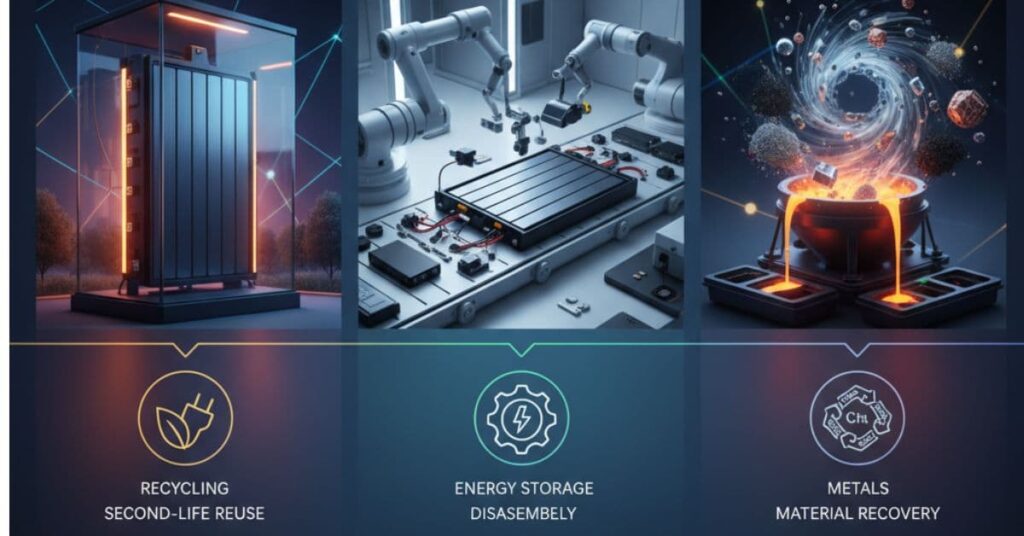
A Tesla battery goes through several stages before its valuable materials are recovered and used again.
Stage 1: Manufacturing
Battery cells are produced using carefully selected materials, including lithium, nickel, graphite, copper, and aluminum. These cells are assembled into battery modules and packs before being installed in Tesla vehicles.
Stage 2: Vehicle Use
Most Tesla batteries are designed to last many years. Depending on driving habits and charging patterns, they can provide reliable performance for well over 200,000 miles.
See how Tesla battery lifespan compares with other EV brands before a battery eventually reaches recycling.
During this period, Tesla’s Battery Management System continuously monitors battery temperature, charging, and overall health to maximize battery life.
Stage 3: Battery Health Evaluation
When a battery no longer delivers enough performance for daily driving, Tesla performs a detailed inspection.
Engineers evaluate:
- Remaining battery capacity
- State of Health (SOH)
- Cell balance
- Internal resistance
- Overall safety condition
This assessment determines the battery’s next step.
Some batteries that still have useful capacity can support Tesla battery storage solutions before being recycled.
Tesla’s Advanced Recycling Technologies
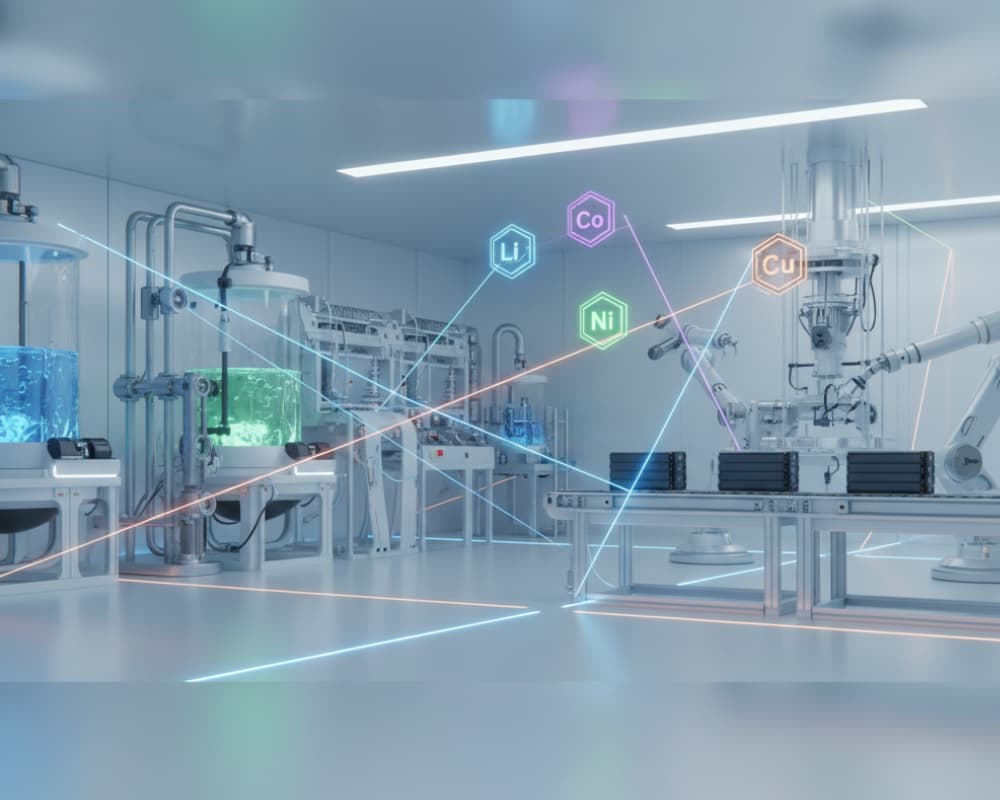
Recovering valuable materials requires more than simply breaking apart old batteries. Tesla relies on modern recycling techniques that maximize recovery while reducing environmental impact.
Two main methods are commonly used throughout the battery recycling industry.
Pyrometallurgy
Pyrometallurgy is one of the oldest battery recycling methods.
The process uses extremely high temperatures to melt battery materials and separate valuable metals.
Advantages
- Proven technology
- Handles different battery chemistries
- Efficient for recovering metals like nickel and cobalt
Limitations
- High energy consumption
- Some valuable materials, especially lithium, may be lost
- Produces more emissions than newer recycling methods
Although effective, this method is gradually becoming less attractive as recycling technology improves.
Hydrometallurgy
Hydrometallurgy uses chemical solutions instead of extremely high temperatures.
Battery materials are dissolved into liquid solutions, allowing valuable metals to be separated with much higher precision.
This process is becoming one of the most important technologies in modern EV battery recycling.
Advantages
- Higher lithium recovery
- Lower energy consumption
- Reduced emissions
- Better material purity
- Supports closed-loop manufacturing
These benefits make hydrometallurgy an attractive solution for recovering battery materials at a larger scale.
Which Tesla Batteries Can Be Recycled?
Every Tesla battery is designed with recycling in mind. Although different Tesla models use different battery chemistries and cell designs, the valuable materials inside them can all be recovered.
NCA Batteries
Nickel Cobalt Aluminum (NCA) batteries have powered many Tesla vehicles for years. They contain high-value materials like nickel and cobalt, making them excellent candidates for recycling.
LFP Batteries
Lithium Iron Phosphate (LFP) batteries are becoming more common in standard-range Tesla models.
Although LFP batteries contain little or no cobalt or nickel, they still contain valuable materials such as lithium, copper, aluminum, and graphite that can be recovered and reused.
Different battery chemistries recover different materials during recycling, making it useful to understand how Tesla battery chemistries compare before looking at the recycling process.
2170 Battery Cells
Tesla uses 2170 cells in many Model 3 and Model Y vehicles. These cells are fully recyclable using modern recovery technologies.
4680 Battery Cells
Tesla’s newer 4680 battery cells are also recyclable.
Their larger design improves manufacturing efficiency, while the valuable materials inside remain suitable for recovery and reuse at the end of the battery’s life.
Learn why 4680 battery cells are important for Tesla’s future vehicles and manufacturing strategy.
Can Tesla Owners Recycle Their Own Battery?
No. Tesla batteries should never be recycled by individual owners.
An EV battery contains high-voltage components that require specialized equipment and trained technicians.
If a Tesla battery reaches the end of its useful life or becomes damaged, the safest option is to contact Tesla or an authorized service center. They will arrange proper inspection, transportation, and recycling through certified facilities.
Attempting to dismantle a battery at home can result in serious injury, electric shock, or fire.
Battery replacement and recycling often happen after warranty coverage ends, so it helps to understand EV battery warranty differences.
Is Tesla Battery Recycling Safe?
Yes, when handled by qualified professionals.
Lithium-ion batteries store a large amount of electrical energy, so safety is a critical part of the recycling process.
Before recycling begins, technicians inspect the battery for damage, discharge any remaining energy if necessary, and follow strict procedures during transportation and disassembly.
These safety measures help prevent:
- Electrical hazards
- Thermal runaway
- Battery fires
- Chemical exposure
- Environmental contamination
Professional handling ensures both workers and the environment remain protected throughout the recycling process.
Conclusion
Tesla runs a battery recycling program to reuse old parts. This plan recovers valuable materials, cuts waste, and builds a clean supply chain.
Tesla checks battery health, gives old batteries a second life, and uses advanced recycling technology to grab key materials. This process keeps critical resources in circulation instead of sending them to landfills.
As electric vehicles grow in number, battery recycling becomes vital for clean travel. Tesla uses closed-loop recycling and material recovery to hit green goals and shape the future of electric driving.
Recycled battery materials also support the growing home energy market, where many homeowners compare Powerwall alternatives before installing battery storage.
FAQs
Are Tesla batteries 100% recyclable?
Yes. Tesla has a strict policy that 100% of their scrapped lithium-ion batteries are recycled. They ensure that none of their batteries end up in a landfill. The materials are recovered and used to make new batteries or other products.
How long does a Tesla battery last before it needs to be recycled?
Tesla batteries are designed to last a very long time. The typical lifespan is 15 to 20 years in a vehicle. Even after that, they can be repurposed for another 5 to 10 years in a stationary energy storage system (like a Powerwall) before the materials are finally recycled.
Does Tesla recycle the batteries themselves, or do they use a third party?
Tesla uses a hybrid approach. They work with specialized third-party recyclers globally, but they are also rapidly building their own in-house recycling capabilities at their Gigafactories. The long-term goal is to handle most of the recycling themselves to create a true closed-loop system.
What materials are recovered from the recycling process?
The main valuable materials recovered are nickel, cobalt, aluminum, copper, and lithium. These are the most expensive and environmentally sensitive components of the battery, and recovering them is the primary goal of the recycling process.
Is battery recycling profitable for Tesla?
While the initial investment in recycling infrastructure is high, it is becoming increasingly profitable. By recovering materials, Tesla reduces its raw material costs and secures a more stable supply. As the volume of retired batteries grows, the economic benefits of recycling will only increase.
