
What Is LMR Battery Chemistry? The Manganese-Rich Cathode, Explained


LMR keeps showing up in GM and Ford headlines, usually next to a big promise. If you want to know what it actually is — and whether the promise holds — start with the short answer.
LMR stands for lithium manganese-rich: a cathode chemistry that swaps most of the expensive nickel in an NMC battery for cheap, abundant manganese, and uses extra lithium plus oxygen chemistry to keep the energy high. GM says its LMR cells store 33% more energy than the best LFP cells at a comparable cost — enough for 400+ miles in an electric truck. The catch that delayed LMR for decades is voltage fade; the first production cars are expected in 2028.
- Cathode: roughly 60–70% manganese, 30–40% nickel, 0–2% cobalt (GM’s figures)
- Projected energy: ~270 Wh/kg at cell level (Argonne) vs ~210 for LFP
- Who: GM with LG (production 2028); Ford is developing its own LMR too
What does LMR stand for — and what is it made of?
LMR means lithium manganese-rich, and the name is the recipe: a lithium-rich cathode built mostly from manganese, the cheap metal other chemistries use only in small doses.
Every cathode chemistry is a trade between three metals. NMC spreads the load across nickel, manganese and cobalt; LFP drops all three for iron. LMR takes a different route — it stays in the layered-oxide family (a cousin of NMC, and of the NCMA chemistry GM uses today), then inverts the proportions. Where a high-nickel NMC cathode runs about 85% nickel, GM’s LMR is expected to run 60–70% manganese, 30–40% nickel and just 0–2% cobalt.
Manganese is the point. It is abundant, cheap, and far less supply-constrained than nickel or cobalt — Argonne National Laboratory, the US lab where LMR was first developed, notes it is also more chemically benign. The lithium-rich part matters just as much: an LMR cathode carries more lithium than a conventional cathode can normally use, and the next section explains the trick that makes that extra lithium reachable.

Why does LMR store more energy than LFP?
Because in an LMR cathode, the oxygen itself does part of the work — a trick no conventional cathode can use, and the reason the chemistry holds so much energy in cheap materials.
In a normal lithium-ion cathode, only the metal gives up electrons as lithium moves. In LMR’s lithium-rich structure, the oxygen in the cathode also participates in the reaction — what researchers call oxygen redox. Argonne’s explanation is that this oxygen participation is a main reason LMR can use larger amounts of lithium, which in turn boosts the energy stored. More lithium moved per charge means more energy per kilogram, without paying for nickel to do it.
Argonne’s latest projections put cobalt-free LMR at roughly 270 Wh/kg at cell level, at around $80 per kWh — against about 210 Wh/kg for LFP at a similar cost. GM’s own headline claim for its cells is framed against LFP too: 33% more energy density than the best-performing LFP cells, at a comparable cost per kWh. Set against high-nickel NMC, LMR’s energy is comparable rather than spectacular — its revolution is doing it with manganese prices.
LMR vs LFP vs NMC: how do they compare?
The short version: LMR aims to sit exactly in the empty chair — LFP’s cost with something close to NMC’s energy.
| LMR | LFP | High-nickel NMC | |
|---|---|---|---|
| Cathode metals | Manganese-rich, little nickel, ~no cobalt | Iron and phosphate | Mostly nickel, some cobalt |
| Cell energy density | ~270 Wh/kg (projected) | ~210 Wh/kg (Argonne average) | ~200–260 Wh/kg |
| Cost position | LFP-like (target) | Cheapest today | Most expensive of the three |
| On sale in EVs today? | No — first cars expected 2028 | Yes, widely | Yes, widely |
| Known weakness | Voltage fade (below) | Lower energy density | Cost, nickel/cobalt supply |
If the LFP-versus-NMC choice is your decision today, our LFP vs NMC comparison covers the cars you can actually buy, and our LFP chemistry explainer covers the incumbent LMR has to beat. One confusion to avoid: LMR is not LMFP. LMFP adds some manganese to an LFP cathode; LMR is a different, lithium-rich structure altogether.
What is GM actually building with LMR?
GM is building large prismatic LMR cells with LG Energy Solution, aimed squarely at its full-size electric trucks and SUVs — and the packaging gains are half the story.
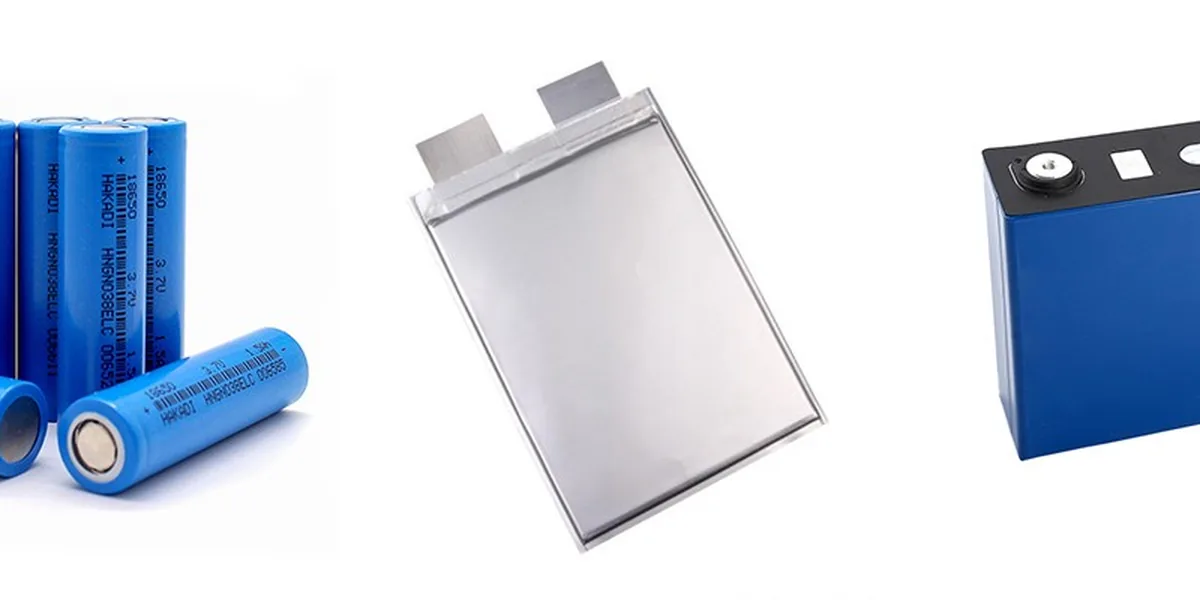
GM’s battery chief Kurt Kelty describes the goal as unlocking “premium range and performance at an affordable cost, especially in electric trucks.” The cells are big rectangular prismatic units, not the pouch cells in today’s Ultium packs, and the format alone is expected to cut pack-level parts by about half. The largest pack, which today stacks 24 modules, would need just six modules of 36 prismatic cells each — a saving of hundreds of pounds in the vehicles that can least afford the weight. GM puts the result at more than 400 miles of range in trucks, with significant cost savings against its current high-nickel pack.
Production is assigned to Ultium Cells — the GM–LG joint venture — at its Spring Hill, Tennessee plant, with GM’s first LMR vehicle expected in 2028. GM has worked on manganese-rich cathodes for over a decade and tested hundreds of large-format cells before committing; the commitment itself is the news, because it moves LMR from a laboratory promise to a dated production programme. How it fits alongside today’s packs is covered in our explainer on the chemistry GM uses in Ultium.
Who else is working on LMR?
Ford — and its programme is further along the bench than most coverage suggests. Ford develops its own LMR at its Ion Park facility, where second-generation LMR cells are already rolling off the pilot line.
Ford’s stated goal mirrors GM’s: more affordable, long-range EVs before the end of the decade, without the nickel bill. Behind both carmakers sits the same research root — Argonne’s manganese-rich cathode work, which Argonne has licensed to manufacturers worldwide for years. That two of America’s biggest automakers are racing for the same chemistry tells you where the industry thinks the cost curve bends next: not toward exotic metals, but toward the cheap one it used to treat as a filler.

What held LMR back: voltage fade
Voltage fade — also called voltage decay — is the flaw that kept LMR in laboratories for decades: an LMR battery’s voltage, and with it its usable energy, sags as it cycles.
Argonne describes the underlying problem as hysteresis: with LMR materials, the energy needed to charge is greater than the energy obtained on discharge, and the structure shifts as lithium and oxygen move — each cycle leaves the cathode slightly less able to deliver its original voltage. Add manganese’s effect on stability, and early LMR cells aged too fast for a car.
The progress since is measurable, which is why carmakers are moving now. LG Energy Solution and Seoul National University, publishing in Nature Communications, improved the reversibility of the oxygen reaction from 86% to 97% and lowered the charging voltage it demands; a 40 Ah large-format LMR cell in their work kept 92.2% of its capacity after 883 cycles. GM, for its part, says the life and voltage-decay problems that held its programme back are the very ones it has now solved. That claim gets its real test in customers’ trucks, not in a press release — but the direction of the evidence is no longer in much doubt.
When can you buy an LMR EV?
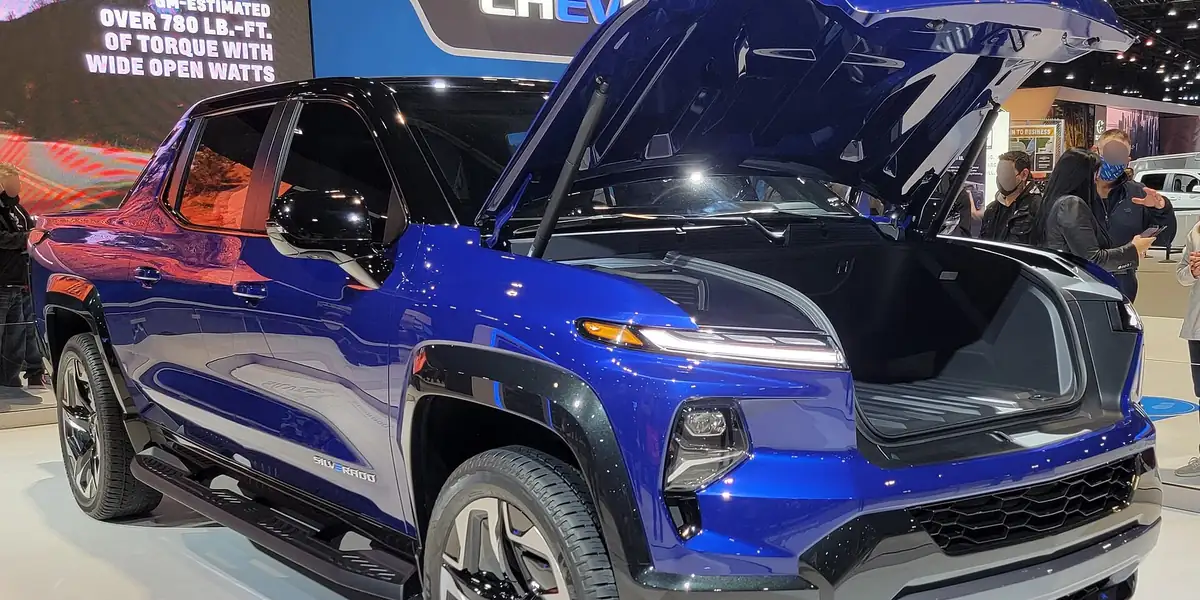
Not yet. GM’s first LMR vehicle is expected in 2028, and Ford’s affordable LMR EVs are promised before the end of the decade. Nothing with an LMR battery is on sale today.
So LMR is a reason to watch the next generation of American trucks, not a reason to delay buying this one. If you are choosing an EV now, your real chemistry choice remains the one on the table above — LFP for cost and longevity, NMC for maximum range — with LMR as the first credible attempt to give you both in one pack.
Frequently asked questions
What does LMR stand for in batteries?
Lithium manganese-rich. It names a cathode family that is rich in both lithium and manganese — typically 60–70% manganese with a fraction of the nickel and almost none of the cobalt used in conventional NMC cathodes.
Do LMR batteries contain cobalt?
GM’s LMR is expected to contain 0–2% cobalt — effectively a cobalt-free design at the bottom of that range, and Argonne’s research target for LMR is a fully cobalt-free cathode. That is the sharpest contrast with older NMC chemistries, which could carry around 10% cobalt or more.
Is LMR better than NMC?
On cost and materials, yes — LMR reaches comparable energy with far cheaper, more abundant metals. On maturity, no — NMC is proven in millions of cars and LMR has still to survive its first production decade, with voltage fade as the known risk. “Better” depends on whether the durability claims hold.
How is LMR different from LFP?
LFP uses an iron-phosphate cathode; LMR uses a lithium- and manganese-rich layered oxide. Argonne projects LMR at roughly 270 Wh/kg against about 210 Wh/kg for LFP, at a similar cost per kWh — that energy gap is the entire reason LMR exists.
When will LMR batteries be in EVs?
GM’s first LMR vehicle is expected in 2028, with cells built by Ultium Cells in Tennessee. Ford’s LMR programme targets affordable long-range EVs before the end of the decade.
Conclusion
LMR is the battery industry’s attempt to stop choosing between cheap and far. Its recipe — manganese doing the heavy lifting, oxygen doing the extra work, cobalt essentially gone — reads like a wish list, and for decades voltage fade kept it one. What has changed is not the idea but the evidence: a national lab’s numbers, a published fix for the oxygen problem, and two American carmakers with plants and dates attached. The verdict arrives with the first trucks in 2028. Until then, LMR is the most important chemistry you cannot buy yet.
Quick view: LMR (lithium manganese-rich) trades nickel for manganese and uses oxygen redox to hold ~270 Wh/kg at LFP-like cost. GM and LG start production in Tennessee for 2028 trucks; Ford runs its own programme. Voltage fade is the risk being engineered away.
