
Which Car Companies Are Working on Solid-State Batteries?

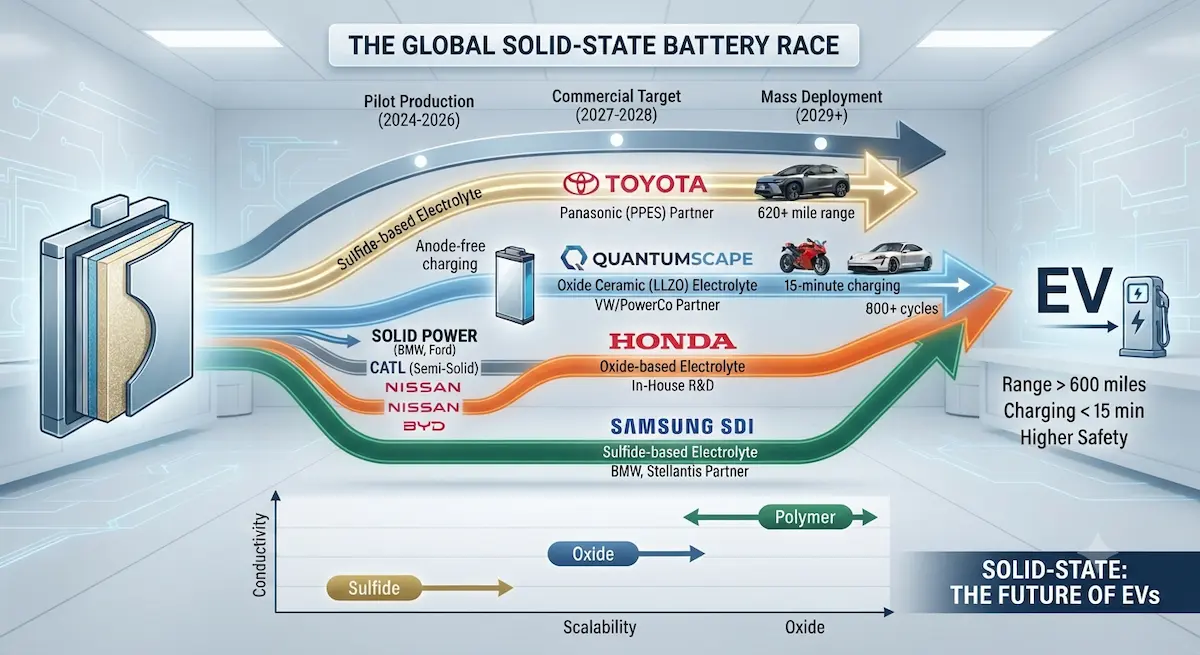
Every major automaker is investing in solid-state battery technology — because whoever masters it first gains a decisive competitive advantage in range, safety, and charging speed. Toyota, Honda, Samsung SDI, QuantumScape (backed by VW), Solid Power (backed by BMW and Ford), and CATL are the leading players. Each is taking a different approach to the core engineering challenge: making solid electrolytes work at automotive scale, affordably, and reliably.
For the deepest dive into the current leader’s progress, see our full status update on Toyota’s solid-state battery.
The field has also widened since this race began. Mercedes-Benz has road-tested Factorial Energy’s cells in a modified EQS, which drove 749 miles on a single charge in 2025. BYD now puts its first solid-state cars at around 2027. The table below tracks the nine programs that matter most, with every status checked as of late 2026.
Quick answer
No car company sells a true solid-state EV today. The closest programs are Toyota (first cars targeted for 2027-2028), Samsung SDI (mass production targeted for 2027) and QuantumScape with VW’s PowerCo (2028 or later). Semi-solid cells are already on the road in China, in NIO cars using WeLion cells.
Key figures:
Programs tracked 9 – Closest launch Toyota, 2027-2028 – On sale today Semi-solid only (NIO/WeLion) – Solid-state cars in the US None yet
Solid-State Battery Leaders by Company
| Company | Electrolyte Type | Key Partner | Target Date | Status |
|---|---|---|---|---|
| Toyota | Sulfide-based | Idemitsu (electrolyte), Sumitomo Metal Mining (cathode) | 2027–2028 | Electrolyte plant under construction in Chiba; most advanced OEM program |
| Honda | Not publicly specified | In-house | Late 2020s | Demonstration production line running since January 2025 |
| Samsung SDI | Sulfide-based | BMW, Stellantis | 2027 | Pilot line running; mass production targeted for 2027 |
| QuantumScape | Oxide ceramic (proprietary) | VW/PowerCo | 2028+ | Eagle Line pilot opened February 2026; QSE-5 cells in customer sampling |
| Solid Power | Sulfide-based | BMW, Ford | 2028+ | Supplying electrolyte; BMW is testing its cells in a demonstration car |
| CATL / WeLion (semi-solid) | Semi-solid (composite) | NIO (WeLion) | Already commercial | Semi-solid cells already in NIO cars; CATL targets small all-solid-state batches around 2027 |
| BYD | Sulfide-based | In-house | First cars ~2027; mass production ~2030 | First demonstration cars targeted around 2027 |
| Nissan | Sulfide-based | In-house | 2028 | Pilot line running in Yokohama; production targeted for fiscal 2028 |
| Mercedes-Benz | Lithium-metal (Factorial FEST) | Factorial Energy | Before 2030 | EQS test car drove 749 miles on one charge in 2025; road testing continues |
Toyota: The Most Advanced OEM
Toyota has invested more in solid-state battery R&D than any other automaker — holding the world’s largest portfolio of solid-state battery patents. Toyota’s target: commercial production in 2027–2028 of a solid-state battery delivering 620+ miles range and 10-minute 10–80% charging. Toyota uses sulfide-based solid electrolytes, developed through its Prime Planet Energy & Solutions (PPES) joint venture with Panasonic. The specific engineering breakthrough that enabled Toyota to advance is proprietary — but they claim to have solved the key dendrite suppression challenge.
QuantumScape: The Silicon Valley Approach
QuantumScape uses an anode-free design — the lithium metal anode forms in place during the first charge, rather than being pre-manufactured. This simplifies production and maximizes energy density. The solid electrolyte is an oxide ceramic (LLZO family). QuantumScape’s cells demonstrated 15-minute 10–80% charging at 800+ charge cycles in independent testing. VW’s PowerCo battery subsidiary is the primary commercial partner. QuantumScape and PowerCo publicly powered a Ducati motorcycle with solid-state lithium-metal batteries at the IAA Mobility Show in September 2025.
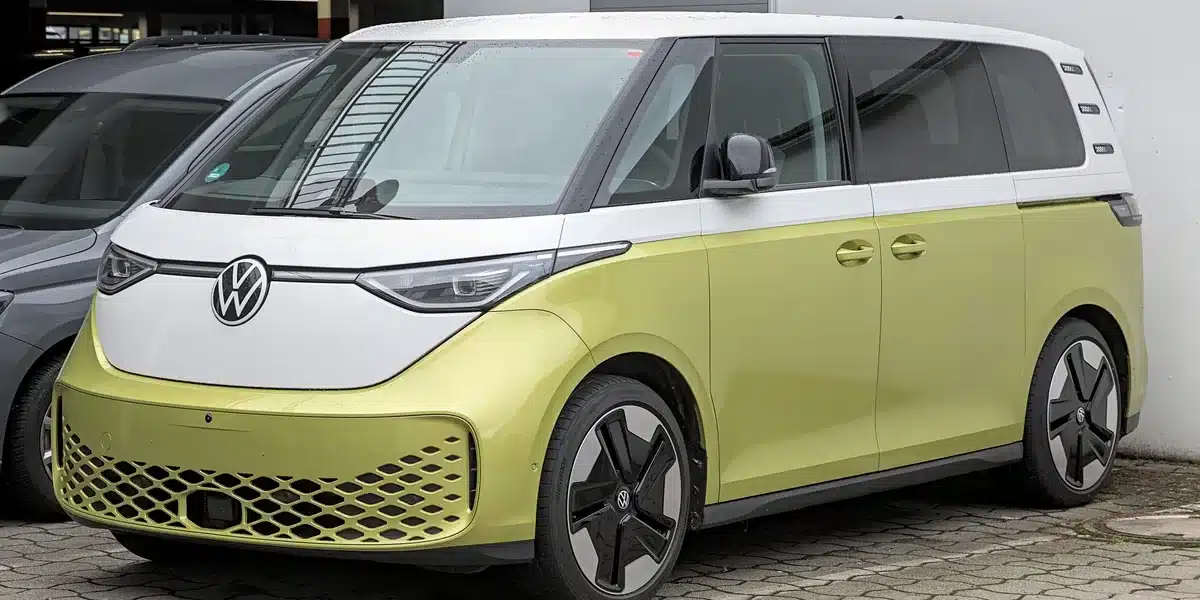
For the full progress update on this program specifically, see our guide on QuantumScape’s solid-state battery.
Why Solid-State Is Taking Different Paths
There is no single “right” solid electrolyte material:
- Sulfide-based: Best ionic conductivity (closest to liquid), but reacts with moisture. Toyota’s and Samsung SDI’s approach.
- Oxide ceramic (LLZO): Very stable, safe, but brittle and harder to manufacture thin. QuantumScape’s approach.
- Polymer: Flexible and manufacturable, but lower conductivity — mainly viable at elevated temperatures. European academic and startup focus.
To see the process in practice, here is how a solid-state battery is actually made (video) — the home demo cell and the factory stages, in under three minutes.
Frequently Asked Questions
Which car companies are working on solid-state batteries?
Toyota, Honda, Nissan, Samsung SDI, BYD and CATL are developing their own solid-state cells, while QuantumScape (with VW’s PowerCo), Solid Power (with BMW and Ford), Factorial Energy (with Mercedes-Benz and Stellantis) and WeLion supply the technology. Toyota and Samsung SDI are closest to production, both targeting first volumes in 2027.
Is QuantumScape the only solid-state battery company?
No. QuantumScape is the best-known pure-play name in the United States, but it is one of many. Solid Power and Factorial Energy work a similar supply-and-licensing model, and the largest programs sit inside Toyota, Samsung SDI, CATL and BYD. By manufacturing scale, the big Asian battery makers are far larger than QuantumScape today.
What vehicles in the US are using solid-state batteries?
None that you can buy. As of late 2026, no production car sold in the United States uses a true solid-state battery. The only solid-state cells in real customer cars today are semi-solid packs in China, in NIO models using WeLion cells, plus test cars like Mercedes-Benz’s solid-state EQS. The first US-sold candidates are Toyota’s premium models, targeted for 2027-2028.
Who leads solid-state battery technology?
By patents, investment and timeline, Toyota leads among carmakers, with first cars targeted for 2027-2028. Samsung SDI leads the cell makers’ race to mass production, with a 2027 target, and CATL runs the deepest research program. Among specialists, QuantumScape is furthest along the licensing path, through VW’s PowerCo.
Is Toyota’s solid-state battery real?
Yes. Toyota has working prototype cells, a production plan certified by Japan’s METI in September 2024, an electrolyte plant under construction with Idemitsu, and more than 1,300 solid-state patents. The remaining challenge is manufacturing at scale, not proving the chemistry works.
When will the first solid-state battery car go on sale?
The first limited-production cars are expected in 2027-2028, led by Toyota’s premium models, with BYD’s first solid-state cars in the same window. Mercedes-Benz has already proven the technology on the road, driving a solid-state EQS 749 miles on one charge. Mainstream, affordable solid-state EVs are a 2030s story.
Conclusion
Virtually every major car company is working on solid-state batteries — recognizing it as a technology that will reshape EV competitiveness in the 2030s. Toyota leads with the most advanced OEM program, targeting 2027–2028 production. QuantumScape, Samsung SDI, and Solid Power lead the cell supplier side. Each is taking a different electrolyte approach — sulfide, oxide, or polymer — reflecting the reality that no single material has yet proven definitively superior at commercial scale. The race is real, the technology is advancing, and the timeline — while longer than early promises suggested — is now measurable in years rather than decades.
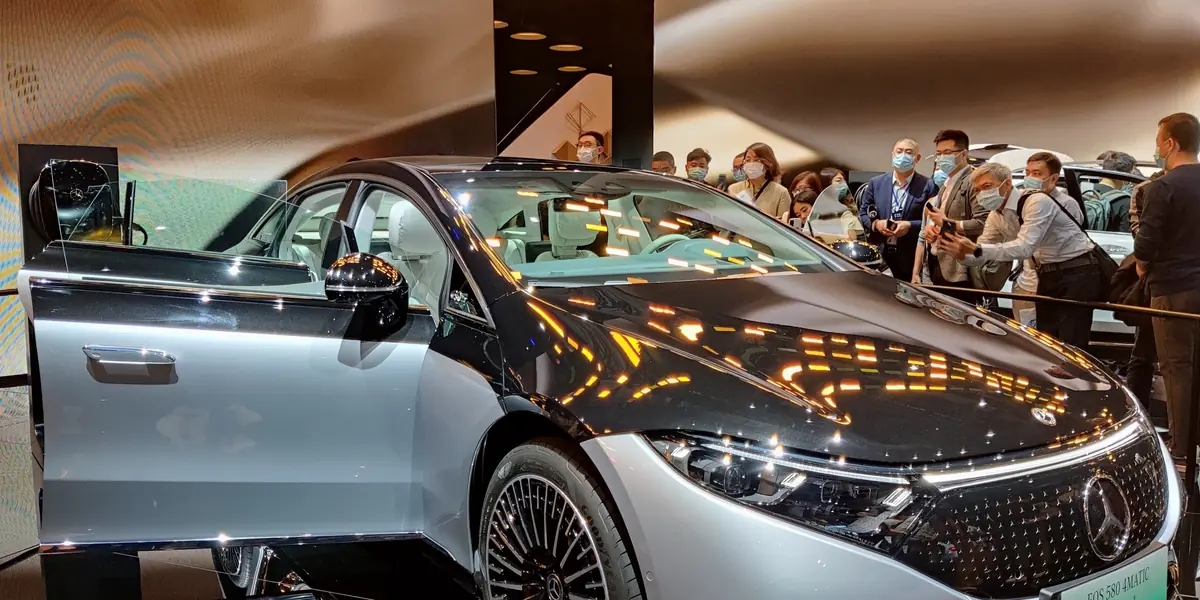
Semi-solid technology is already commercial today — WeLion’s cells power NIO’s longest-range pack — see our explainer on what a semi-solid-state battery is.
