
Which EV Battery Chemistry Is Most Recyclable?

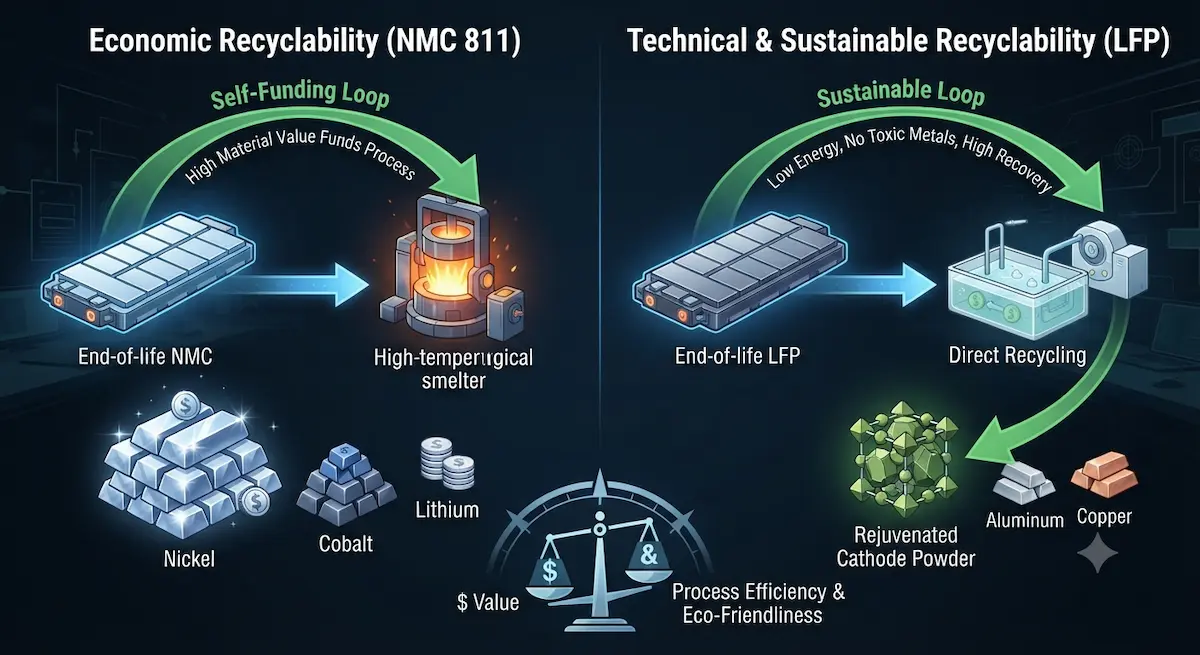
No single EV battery chemistry is most recyclable in every dimension — the answer depends on what ‘most recyclable’ means. Ask the question three ways and you get three different winners, and the honest answer is all three.
It depends which scoreboard you use. By money: NMC and NCA — the nickel and cobalt inside a 75 kWh pack are worth $2,000+ in recoverable metals, so recyclers compete for these packs. By technique: LFP — its stable chemistry suits direct recycling, where laboratory processes have recovered over 95% of its lithium, iron and phosphorus. By footprint: LFP again — no cobalt or nickel to mine, and a long second life in storage before recycling. Every claim behind those three answers is unpacked below.
Recovering more from spent packs starts with getting more lithium in the first place — see our guide on what direct lithium extraction is and how it helps EVs.
How EV batteries are recycled: the three methods
Before comparing chemistries, understanding the three primary battery recycling methods clarifies how chemistry affects recyclability:
1. Pyrometallurgy (Smelting)
High-temperature (1,200–1,500°C) smelting process that burns off organic materials (binder, electrolyte, separator) and reduces metals to alloy or oxide forms. Advantages: handles all battery chemistries without sorting, tolerates damaged or contaminated batteries, high-throughput. Disadvantages: high energy consumption, recovers only high-value metals (Ni, Co, Cu) efficiently — lithium is typically lost to slag at less than 60% recovery, and LFP’s iron and phosphate have no economic recovery value in this process.
2. Hydrometallurgy (Chemical Leaching)
Battery cells are first mechanically processed (shredding, screening) to produce “black mass” — a mixture of cathode active material, anode graphite, and metal fragments. The black mass is then leached in acid solutions (sulfuric acid + reducing agents) that dissolve the cathode metals, followed by solvent extraction, precipitation, and purification steps to recover individual elements as battery-grade salts. Hydrometallurgy achieves 95–99% Ni/Co recovery and 85–95% Li recovery — significantly better lithium recovery than pyrometallurgy. Redwood Materials and Li-Cycle use hydrometallurgical processes in North America, achieving 95% lithium recovery and 98% cobalt recovery.
3. Direct Recycling
The most chemically sophisticated approach — recovering cathode active material particles with their crystal structure largely intact, then rejuvenating them for reuse without complete chemical dissolution. LFP is particularly well-suited to direct recycling because its olivine structure is thermodynamically stable — LFP cathode particles can be recovered from spent cells, relithiated (replacing the lithium inventory lost during cycling), and returned to essentially new performance specifications. Direct recycling of LFP achieves 95%+ recovery with 1–2 processing steps — significantly less energy and chemical input than hydrometallurgical processing of the same chemistry.
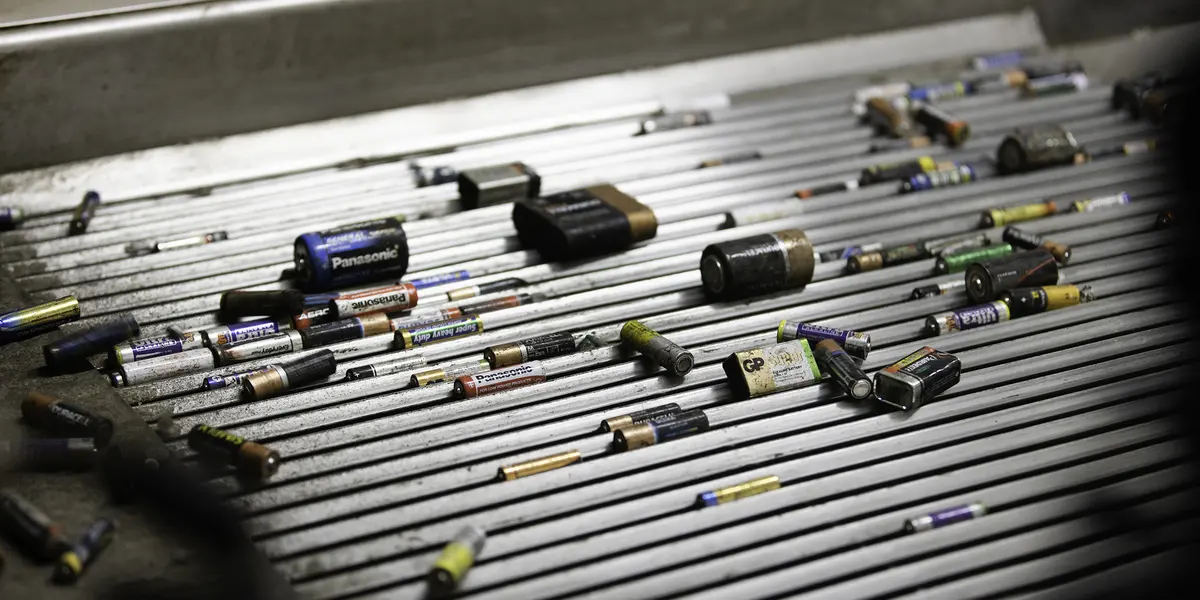
The unglamorous step nobody designs for.
Before any method runs, someone has to take the pack apart — and packs are not standardised. A Tesla, BMW and Nissan pack differ in size, cell format and construction, held together with welds and adhesives that must be broken, in packs that must first be safely discharged because a damaged lithium battery can catch fire in storage. MIT’s materials researchers name this variability — chemistry and form factor together — as one of the significant challenges in battery recycling, and it applies to every chemistry equally.
Recyclability by Chemistry: Full Comparison
| Chemistry | Economic Value of Recoverable Metals (75 kWh) | Best Recovery Method | Lithium Recovery Rate | Key Metals Recovered |
|---|---|---|---|---|
| NMC 811 | ~$2,000 (Ni, Co, Li, Cu at 2026 prices) | Hydrometallurgy | 85–95% | Ni, Co, Mn, Li, Cu, Al |
| NCA | ~$2,200 (higher Co content) | Hydrometallurgy | 85–95% | Ni, Co, Al, Li, Cu |
| NCMA | ~$1,800–2,100 | Hydrometallurgy | 85–95% | Ni, Co, Mn, Al, Li, Cu |
| LFP | A small fraction of NMC’s value (Li, Cu, Al — no Ni/Co) | Direct recycling (best) or hydro | 95%+ (direct recycling) | Li, Fe, P (limited economic value), Al, Cu |
| Sodium-ion | ~$50–150 (no Li, no Co/Ni) | Mechanical + hydro | N/A (no lithium) | Na, Fe/Mn, Al (both current collectors) |
The Economic Recyclability Paradox: NMC Funds Its Own Recycling
A 75 kWh NMC pack contains approximately $2,000 in recoverable materials (nickel, cobalt, lithium, copper, aluminum) at 2026 LME spot prices. This economic value means NMC battery recycling is self-funding — the recovered materials are worth more than the recycling process costs, creating a positive economic incentive for responsible recycling. At recent prices the metals inside a 75 kWh NMC pack — nickel, cobalt, lithium, copper, aluminium — carry a gross value of roughly $35–40 per kWh, which is how the $2,000+ figure is built. One worked example, a ~75 kWh Tesla pack, puts the recoverable metal value at about $2,500–2,700, and the net value after processing at roughly $1,900–2,200 when packs arrive in bulk. Two honest limits: that is the metals’ value at scale, not a cheque for one owner — a single pack shipped alone can cost more in hazardous-goods transport than its metals return — and the figure moves with metal prices, which is why it is stated as a range, not a promise. Recyclers actively compete to obtain end-of-life NMC packs because they are profitable to process.
An LFP pack’s metals are worth a small fraction of that. Its iron and phosphate are worth almost nothing, leaving mainly the lithium, copper and aluminium to pay for processing — and at North American prices LFP recycling can run at negative value, with recyclers charging a gate fee. That is why LFP collection leans on extended producer responsibility rules rather than the market, and why LFP economics improve sharply whenever the lithium price spikes. This low material value means LFP recycling may be net-cost rather than net-revenue at current lithium prices — potentially requiring regulatory mandates (such as the EU Battery Regulation’s extended producer responsibility requirements) to ensure collection rates remain high. When lithium prices spike (as they did in 2022 at $80,000+/tonne and again in 2025–2026), LFP recycling economics improve substantially because lithium recovery value rises proportionally.
LFP vs NMC recycling: the head-to-head
Put the two chemistries side by side on recycling alone and the trade is simple: NMC is worth more dead, LFP is easier to process.
- Value of the dead pack: NMC wins clearly — nickel and cobalt give its black mass (the shredded cathode material recyclers trade) a real market price; LFP black mass trades far lower, a difference the industry data firm DNV has also flagged.
- Ease and energy of processing: LFP wins — no valuable metals to separate out means simpler, lower-energy routes, and direct recycling can restore its cathode almost as-is.
- What the recycler wants: an NMC pack is an asset a recycler bids for; an LFP pack is a stream a recycler handles at scale, under contract or regulation.
- The direction of travel: as LFP’s share of new EVs grows, more of the recycling stream is the low-value kind — which is exactly why regulators are writing recovery mandates instead of trusting the market.
The wider chemistry comparison — range, cost, life in the car — is in our LFP vs NMC guide; this page keeps only the recycling half of that story.
LFP’s Technical Recyclability Advantage: Direct Recycling
Despite LFP’s lower economic recycling value, it has a significant technical advantage: its olivine crystal structure makes it ideal for direct recycling — the most energy-efficient and resource-conserving recycling method. The evidence is laboratory-stage but strong. In a 2022 study in ACS Sustainable Chemistry & Engineering, a direct-recycling process on spent LFP powder recovered over 95% of the lithium, iron and phosphorus, with the restored material keeping up to 97.3% of its capacity. Earlier, a 2020 Joule study showed spent LFP cathodes restored to the same composition, structure and performance as new material. Neither is yet how most LFP is recycled at industrial scale — today most recycling of every chemistry is still pyro- or hydrometallurgical — but LFP is the chemistry direct recycling fits best, because there is nothing valuable enough inside it to justify dissolving it. Lithium iron phosphate can be recovered from spent cells, relithiated using simple lithium salt treatments, and returned to essentially new cathode performance with minimal processing.
Hydrometallurgical recycling of NMC, while economically viable, is more complex and energy-intensive: it requires acid leaching to dissolve all metals, followed by complex solvent extraction and precipitation steps to separate nickel, cobalt, manganese, and lithium — each requiring different pH conditions, temperatures, and chemical reagents. The process generates chemical waste streams requiring treatment. On a lifecycle environmental basis, LFP produces fewer environmental burdens from both mining (no cobalt or nickel) and recycling (lower energy, simpler process) — even accounting for its lower economic recycling value.
Proof it can close the loop: GM’s recycled-material EVs
The strongest evidence in this field is not a study — it is cars already delivered.
In 2026 GM described a completed pilot with recycler Cirba Solutions: 80 end-of-life GM packs were turned into black mass, then into more than 12 metric tons of cathode material made with 100% recycled nickel, cobalt and manganese. Cells built with it were tested to the same quality, performance and safety standards as cells from virgin material, and the first vehicles using them — Cadillac Lyriq and Escalade IQ, Chevrolet Silverado EV and GMC Sierra EV models — went to customers. GM also designs its remanufacturing to reuse more than 70% of a pack’s components before recycling is even considered, and is deploying roughly 10,000 second-life GM batteries with Redwood Materials, including the largest second-life battery microgrid in North America. This is nickel-chemistry recycling working end to end — and it works because the metals pay for it.
Regulatory Landscape: EU Battery Regulation Mandates
The EU Battery Regulation (effective 2023, additional provisions through 2031) sets mandatory recycling efficiency targets:
- Recycling efficiency (for lithium-based batteries): 65% by 2025, 70% by 2030 (by weight)
- Cobalt and nickel recovery: 90% by 2027, 95% by 2031
- Lithium recovery: 50% by 2027, 80% by 2031
- Carbon footprint declaration: Required from February 2025
- Battery Passport: Mandatory from 2027 — tracking chemistry, origin, carbon footprint, and recycling status
These regulations are particularly relevant for LFP: while LFP easily meets the cobalt recovery target (zero cobalt to recover), its low material value makes voluntary collection less economically certain. The extended producer responsibility (EPR) provisions — requiring manufacturers to fund and organize collection and recycling — ensure LFP packs are recycled regardless of spot lithium value, addressing the economic recyclability gap.
From August 2031, a new EV battery sold in the EU must contain at least 16% recycled cobalt, 6% recycled lithium and 6% recycled nickel; by 2036 those rise to 26%, 12% and 15%. The US has no equivalent federal mandate — which is why the EPA, in its 2026 report to Congress on battery collection, could only say that there is no widely accepted US lithium-ion recycling rate and that the current rate is assumed to be low.
Second-Life Applications: Another Form of Recyclability
Before physical recycling, “second-life” use — repurposing retired EV battery packs for grid-scale energy storage — extends battery utility without material processing. LFP is better suited for second-life than NMC because:
- LFP’s 3,000–5,000+ cycle life means a retired EV pack with 80% capacity may still have 2,000+ cycles of useful grid storage life remaining
- LFP’s safety profile (no oxygen release, high thermal runaway threshold) is acceptable for stationary grid storage without automotive-grade thermal management
- NMC’s 1,000–2,000 cycle life means more capacity is typically depleted by end-of-EV-service — and NMC’s thermal management requirements in stationary applications add cost
ScienceDirect’s 2023 analysis found second-life EV batteries provide value for grid storage applications — substantially recovering LFP’s economic value before the pack needs physical recycling. This second-life value effectively compensates for LFP’s lower physical recycling value and makes LFP the better chemistry for circular economy applications overall.
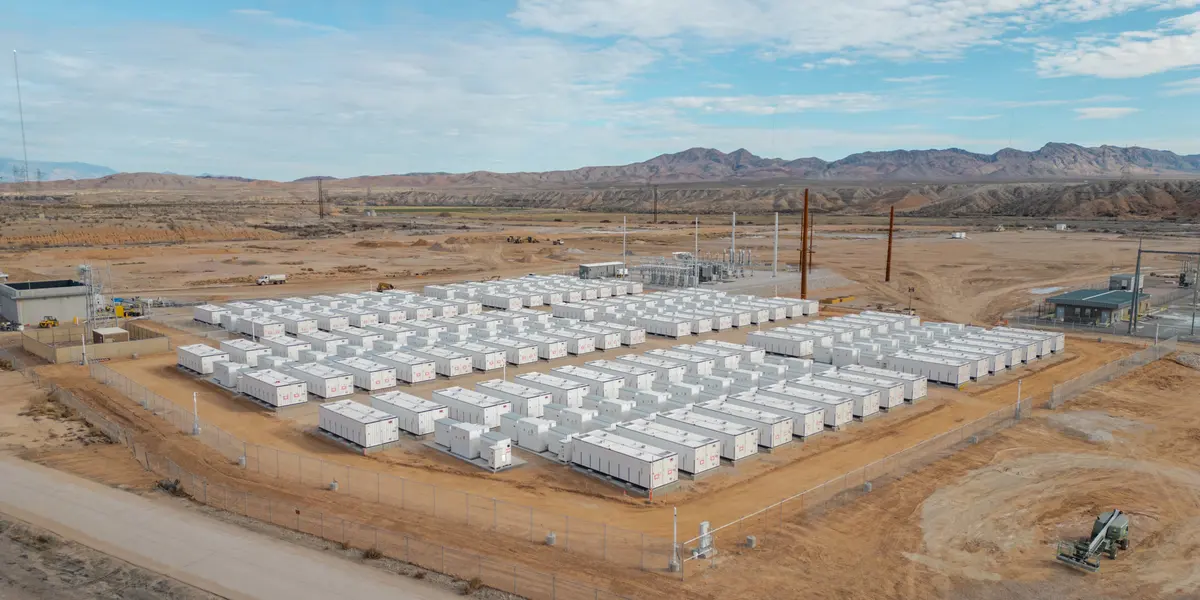
The industry rule of thumb, per second-life marketplace data, is that an LFP pack can still qualify for stationary duty at about 75% remaining health, while an NMC pack typically needs 80% or more — below that, its remaining cycle life rarely justifies the integration cost, and it goes straight to recycling, where its metal value gives it a firm floor price. GM’s roughly 10,000 second-life batteries with Redwood Materials show the same order at manufacturer scale: refurbish, redeploy, and only then recover the materials.
Frequently Asked Questions
Which EV battery chemistry is most recyclable?
It depends on the definition. NMC/NCA are most economically recyclable — containing $2,000+ per 75 kWh pack in nickel, cobalt, and lithium that fund commercial recycling operations. LFP is most technically recyclable — laboratory direct-recycling processes have recovered over 95% of its lithium, iron and phosphorus (2022 study in ACS Sustainable Chemistry & Engineering), with the restored material keeping up to 97.3% of its capacity. LFP is also most sustainable overall at the lifecycle level, as it contains no toxic metals and benefits from simpler, lower-energy recycling combined with excellent second-life potential for grid storage.
Is LFP hard to recycle?
LFP is technically easy to recycle — its stable olivine structure enables direct recycling, with laboratory processes recovering over 95% of its lithium, iron and phosphorus (2022 ACS Sustainable Chemistry & Engineering study). The challenge is economic: LFP contains no cobalt or nickel, so its recoverable material value — a small fraction of an NMC pack’s value — is much lower than NMC ($2,000+). Extended producer responsibility regulations — the EU Battery Regulation’s producer-responsibility rules — ensure LFP is collected and recycled regardless of economic incentive by making manufacturers responsible for end-of-life costs.
What happens to the materials recovered from recycled EV batteries?
Recovered materials re-enter the battery supply chain: nickel sulfate and cobalt sulfate go back to cathode precursor manufacturers for new NMC cells; lithium carbonate or hydroxide returns to cathode and electrolyte production; copper from anode current collectors goes to wire and electronics manufacturing; aluminum from cathode current collectors and pack casings goes to general aluminum recycling. Redwood Materials in the U.S. and Umicore in Europe have built integrated recycling-to-battery-materials supply chains — directly closing the battery material loop.
What percentage of EV batteries are actually recycled?
Nobody can give you a verified number — and any site that states one confidently is repeating a myth. The US EPA’s 2026 report to Congress states plainly that there is no widely accepted US lithium-ion recycling rate, only that it is assumed to be low; industry groups estimate under 15% for lithium-ion overall. The famous ‘less than 5%’ figure traces to 2010 data about the European Union, quoted in a 2019 editorial, and a peer-reviewed paper has disputed it ever since. What is certain is the timing: EV packs last 10–15 years, so the great wave of end-of-life packs has not arrived yet — the IEA expects around 1.2 million EV batteries to reach end of life in 2030, and 14 million in 2040.
Are Tesla batteries 100% recyclable?
No EV battery is 100% recycled, Tesla’s included. The valuable metals can be recovered at very high rates — up to 95% for nickel, cobalt and manganese in modern processes — but a pack also contains plastics, adhesives, electrolyte and other fractions that are not all recovered; some material is lost in processing or sent to landfill, as MIT’s recycling researchers point out. ‘Recyclable’ on a spec sheet means the materials can be recovered by an industrial process, not that every gram of every pack is.
Conclusion
EV battery recyclability is a complex topic without a single-chemistry winner — the answer depends on economic value, technical recovery rates, energy efficiency, and second-life potential simultaneously. NMC and NCA fund their own recycling through valuable nickel and cobalt content, but require more complex, energy-intensive hydrometallurgical processing. LFP enables simpler, more energy-efficient direct recycling that laboratory work has shown can recover over 95% of its key materials, benefits from excellent second-life grid storage potential, and avoids the environmental burden of mining toxic metals in the first place. EU Battery Regulation mandates are systematically closing the gap by ensuring both chemistries are collected and recycled at high rates regardless of market economics. The most recyclable EV battery is ultimately the one that combines long first-life service, valuable second-life repurposing, and complete end-of-life material recovery — a combination where LFP’s durability and direct recyclability give it a meaningful circular economy advantage.
All of these material and processing costs ultimately flow into the cell price — see our guide on how battery chemistry affects manufacturing cost.
