
How Does Cold Weather Affect EV Batteries?


Electric cars rely on batteries to store and supply the electrical power required to drive. These batteries, typically lithium-ion, operate via chemical reactions that are strongly temperature-dependent. Cold
temperatures directly hinder chemical energy processes, thereby weakening the battery’s ability to deliver power.
Quick answer: Cold weather can cut an EV’s driving range by 12–41% at 20°F (AAA dynamometer testing of 5 EVs vs 75°F; 41% with the cabin heater on), mainly because cold slows battery chemistry and cabin heating drains energy. The loss is temporary — range returns when temperatures rise.
How are electric vehicles affected in Cold Weather?
1. Impact on Battery Efficiency
Electric vehicle (EV) batteries often struggle to deliver their normal power output when temperatures drop. Just as very hot weather affects them, freezing weather also causes batteries to perform less well than they should. Several factors reduce battery performance in cold weather.
Slower Chemical Reactions
Cold weather slows the chemical reactions inside an electric vehicle’s battery. Because of slower reactions, the battery cannot charge or discharge as quickly as usual. When the temperature is cold, the battery takes much longer to recharge. As a result of the longer recharge time, the vehicle’s driving range decreases.
Reduced Energy Output
When temperatures drop, a battery struggles to release its stored energy. Drivers experience a common problem: the car loses power while driving. As a result, the vehicle does not respond as quickly as usual.
Read understanding car battery voltage too high: causes, symptoms & how to fix it for battery electrical problems.
2. Shorter Driving Range
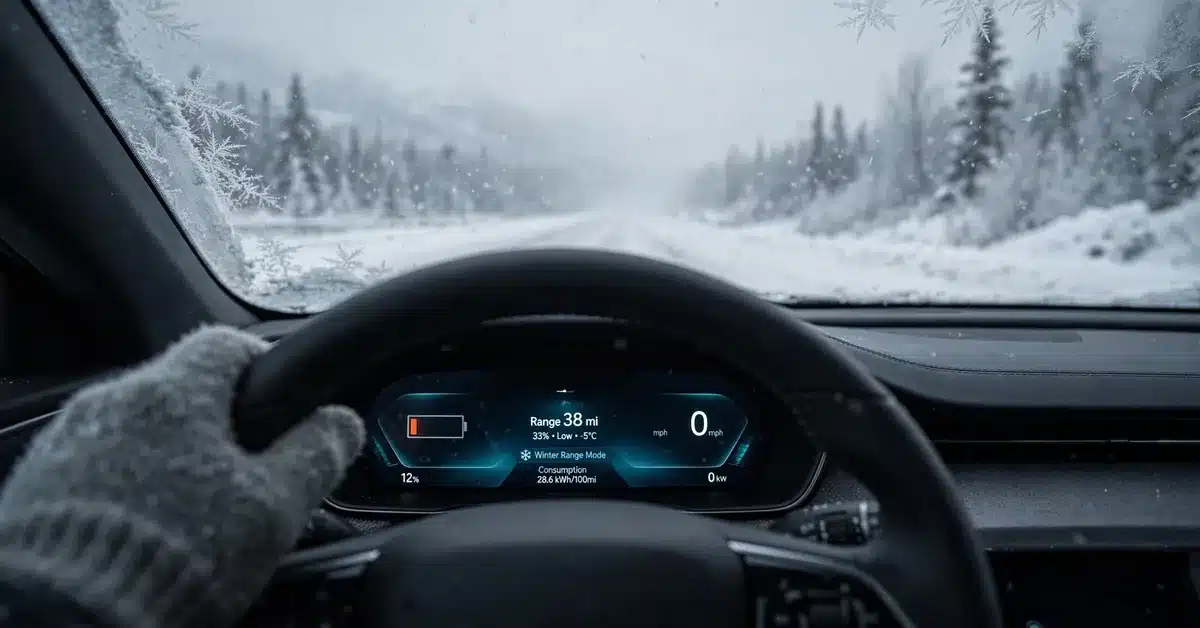
Cold weather greatly impacts the driving range of electric vehicles (EVs). EVs generally face battery range challenges, and winter worsens the problem. Lithium-ion batteries typically deliver high energy output. However, cold temperatures temporarily reduce battery capacity.
Reduced battery capacity directly translates to a lower estimated driving distance. AAA tested five EVs (BMW i3s, Chevrolet Bolt, Nissan Leaf, Tesla Model S 75D, Volkswagen e-Golf) on a dynamometer at 20°F versus 75°F: average range fell 12% with the heater off and 41% with the cabin heater on. Separately, Recurrent’s analysis of 18,000+ real-world EVs found an average range loss of about 20% at 32°F or below — with heat-pump-equipped models like the Tesla Model X (89% retained) and Model 3 (87%) faring far better than models without heat pumps, such as the Volkswagen ID.4. The exact reduction depends on how severe the cold becomes. It’s also worth noting that cold affects battery chemistry differently depending on the type. Some tests suggest LFP batteries lose more range in cold than NMC batteries, though results vary by model and thermal management. For a full breakdown of how these two chemistries compare, see our guide to LFP vs NMC battery performance.
Want your number? Try our EV Range Calculator to estimate your real-world winter range.
3. Longer Charging Times
Cold is one of several factors that slow EV charging — battery size, charge level, charger power, and whether the battery was preconditioned all matter too — but a cold battery accepts charge much more slowly than a warm one.
Slower Ion Movement
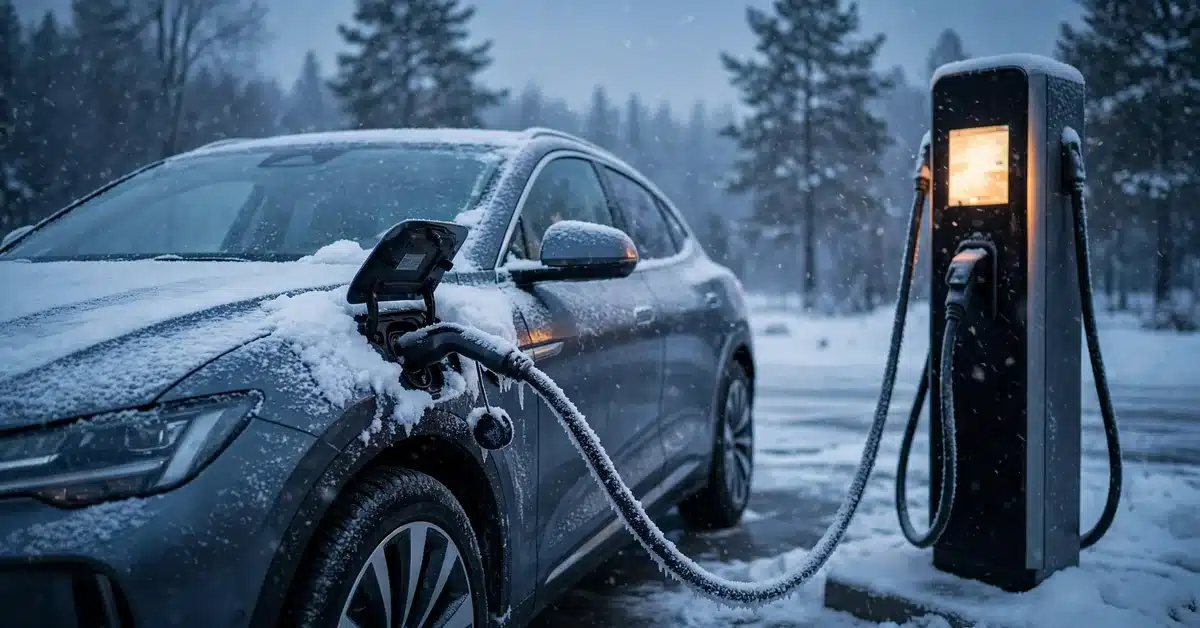
In cold temperatures, lithium ions move more slowly through the battery’s electrolyte, so the pack accepts charge at a lower rate. On top of that, the battery management system deliberately caps charging speed in the cold to protect the cells — which is why a DC fast-charging stop that takes 25 minutes in summer can take far longer at 20°F.
Battery Protection Mechanisms
Modern electric vehicles (EVs) include a battery management system. The system prevents the battery from charging too quickly in cold weather. However, the protection means the charging process takes longer.
Also, read about EVs having a 12V battery too to understand the auxiliary battery’s role during winter.
See how cold affects your charge sessions with our EV Charging Time Calculator.
4. Is Cold Damage Permanent?
When temperatures drop, an EV battery temporarily loses some usable range — but the effect is reversible. Data from Recurrent’s winter range studies of 10,000–18,000+ US EVs shows range returns to normal once temperatures rise, with no long-term damage from the cold itself. The real winter risk is practical, not chemical: a smaller usable range plus slower charging means more planning, not a damaged battery.
How to Protect Your EV Battery in Cold Weather?
Park Indoors
If you can, park your electric vehicle (EV) inside a garage or under a covered area. Protecting the car from very cold weather helps it maintain a better temperature, which in turn helps the battery perform better in chilly conditions.
Pre-Condition Your EV
Warm up your EV while it is still plugged in — most EVs (including Tesla, Ford, and Hyundai models) let you schedule this from the phone app. AAA specifically recommends heating or cooling the car while plugged in so the energy comes from the wall, not the battery. On the road, use seat and steering-wheel heaters instead of blasting cabin heat; they use far less energy.
Keep the Battery Charged
Avoid letting the battery sit at a very low charge in freezing weather, and keep the car plugged in when parked for extended periods so thermal management can draw wall power.
Use a Battery Warmer
EV owners use battery warmers to boost their vehicle’s battery power. These helpful devices keep batteries working well instead of allowing them to become inactive in cold weather.
Drive Smoothly
Avoid rapid acceleration or heavy braking in cold weather. Driving gently can help preserve battery life and range.
Explore what regenerative braking is and how it charges the battery to improve winter driving efficiency.
Comparing EV Performance in Cold vs. Warm Climates
Factor | Cold Weather | Warm Weather |
|---|---|---|
Battery Range | Drops 12–41% at 20°F vs 75°F (AAA) | Optimal performance |
Charging Speed | Slower charging | Faster charging |
Cabin Heating | Uses more energy | Less energy required |
Battery Wear | Increased battery stress in extreme cold | Minimal impact under normal temperatures |
Tip: If you live in a colder climate, choose an EV with a strong thermal management system.
Final Thoughts
- Cold weather slows battery power, resulting in reduced range and slower charging.
- Warm your battery before driving (“preconditioning”).
- Park in a garage if possible.
- Don’t let the battery get too low.
- EVs have systems to manage temperature.
- Smart habits keep your EV working well in winter.
FAQs
Q: How much EV range will I lose in winter? A: It depends on temperature and heater use. AAA measured a 12% range drop at 20°F with the heater off and 41% with the heater on (vs 75°F). Recurrent’s real-world data across 18,000+ EVs shows about 20% average loss at 32°F or below. Drivers in the coldest states — Alaska, Minnesota, North Dakota — should plan for the high end of that range.
Q: Does cold weather permanently damage my EV battery? A: No. The range loss is temporary — Recurrent’s data shows range returns to normal when temperatures rise. Cold does not cause long-term battery damage.
Related Guides
- Explore more guides in this category
- Ev Battery Warranty
- Ev Battery Recycling Cost
- Ev Battery Replacement Cost
Sources: AAA Electric Vehicle Range Testing (dynamometer study, 5 EVs); Recurrent winter range reports (telematics data, 10,000–18,000+ EVs).
