
Tesla Battery Storage Renewable Energy Solutions

Renewable energy needs a way to store power for later use. Solar panels and wind turbines only work when the weather cooperates, which often wastes clean electricity. Tesla battery storage systems solve this problem by saving extra energy and supplying it when homes and the power grid need it most.
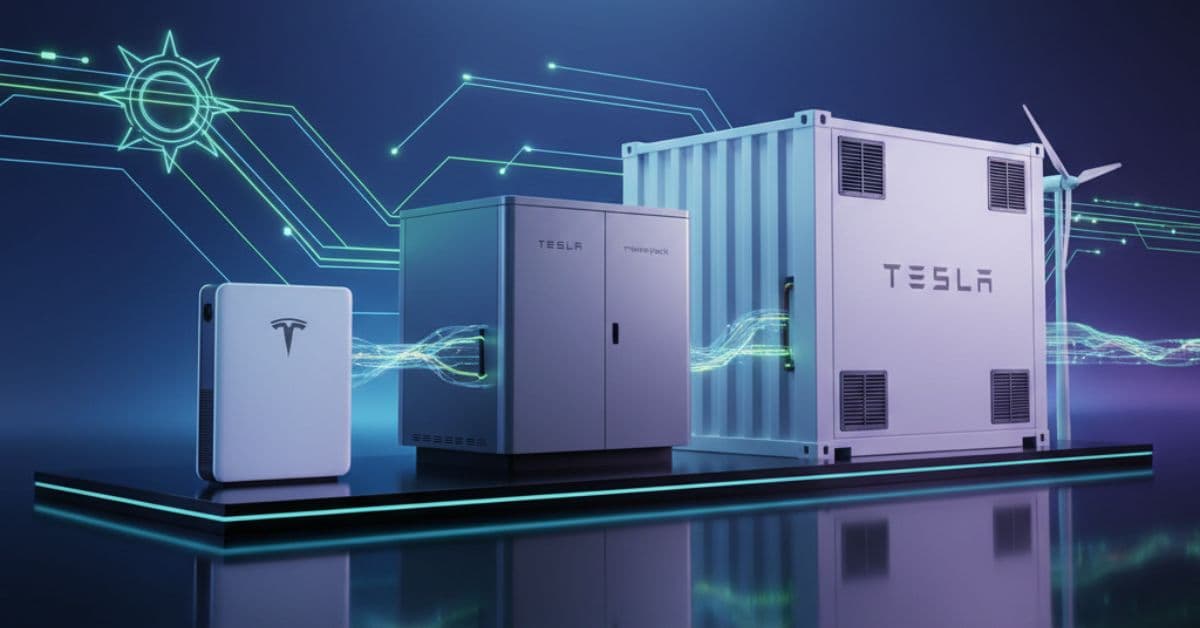
Tesla built a full energy ecosystem to fix this gap. This lineup includes Powerwall for homes, Powerpack for commercial sites, and Megapack for utility-scale projects. Together, these systems improve energy reliability, cut reliance on fossil fuels, and build a cleaner electrical grid.
Tesla uses different battery chemistries across its energy products and electric vehicles, so understanding NCA vs NMC vs LFP: Which Tesla Battery Is Best? makes it easier to see why each battery is designed for a different purpose.
Why Renewable Energy Needs Battery Storage
Renewable energy is one of the best ways to reduce carbon emissions and produce cleaner electricity. Solar farms and wind turbines generate power without burning fossil fuels, making them an important part of the world’s energy future.
Despite these benefits, renewable energy has one major limitation. Electricity is not always produced when people need it.
For example, solar panels generate the most electricity around midday, but many homes use the most power during the evening. Wind farms often produce more electricity at night when demand is lower.
Without battery storage, utilities must either waste the extra renewable energy or rely on natural gas and coal plants to supply electricity when renewable generation drops.
Tesla battery storage systems solve this problem by storing excess renewable energy and delivering it later. Instead of letting clean electricity go unused, batteries make it available whenever demand increases.
This simple concept makes renewable energy more dependable and helps utilities reduce fossil fuel generation without sacrificing grid reliability.
Challenges In Renewable Energy
We must first understand the challenges of using a lot of renewable energy to understand why battery storage is important.
1. Intermittency Of Solar And Wind
Traditional power grids were built around “dispatchable” power sources. Power sources like coal and natural gas can be turned on or off to match the amount of power people need. Solar and wind are non-dispatchable power sources. Weather conditions control how much power solar and wind can produce.
- Solar: Production peaks around noon but drops to zero in the evening, precisely when residential energy demand peaks (the “duck curve” phenomenon).
- Wind: Production is often highest at night or in off-peak hours, when demand is low.
Without storage, the mismatch means the grid wastes good renewable energy. Or, the grid must use fossil fuel plants to make up the missing power. Relying on fossil fuels hurts the goal of a clean energy system.
Many of these large-scale storage systems rely on innovations explained in Tesla Battery Technology: The Future of Power.
2. Grid Instability and Frequency Regulation
The electrical grid runs at a specific rate called frequency (like 60 Hz in North America). A fast change in power coming in or power being used can make this frequency change. For example, this happens when a big cloud covers a solar farm or the wind suddenly slows down.
Old power plants help the grid stay steady with “inertia” and “frequency regulation.” When people add more solar and wind power that turns on and off, the grid becomes less stable. Tesla Battery Storage Renewable Energy systems, like the Megapack, are built to act very quickly. They give or take power instantly. This keeps the grid frequency steady. The service is faster and cleaner than using an old-style power generator.
4. Peak Electricity Demand
Electricity demand changes throughout the day.
During evenings, people return home, cook meals, charge electric vehicles, and run household appliances at the same time.
This period is known as peak demand.
Meeting peak demand has traditionally required expensive power plants that operate only a few hours each year.
These “peaker plants” often burn natural gas, increasing electricity costs and carbon emissions.
Tesla battery storage provides a cleaner solution.
Instead of building additional fossil fuel plants, utilities can store renewable electricity during off-peak hours and release it during peak demand.
This approach lowers operating costs while reducing emissions.
3. Renewable Energy Curtailment
Many people assume every kilowatt-hour generated by a solar or wind farm reaches consumers. In reality, that is not always true.
Sometimes renewable power plants generate more electricity than the grid can accept. Since electricity must remain balanced every second, utilities may intentionally reduce renewable generation.
This process is called renewable energy curtailment.
Without storage, clean electricity that could have powered homes or businesses is simply lost.
Tesla battery storage systems capture that surplus energy instead of allowing it to go to waste.
The stored electricity can later support the grid during periods of high demand, improving the overall efficiency of renewable energy projects.
How Tesla Battery Storage Works
Tesla battery storage systems follow a simple but highly effective process that makes renewable energy available whenever it is needed.
Step 1: Generate Clean Electricity
Solar panels or wind turbines produce electricity whenever weather conditions allow.
If a home or business has rooftop solar, the electricity first powers lights, appliances, and other electrical devices.
For utility-scale projects, electricity flows directly into the grid.
Step 2: Store Excess Energy
When renewable generation produces more electricity than immediate demand, Tesla batteries store the extra energy instead of sending it to waste.
This stored electricity remains available for later use.
For homeowners, this means extra solar energy generated during the afternoon can power the home after sunset.
For utilities, thousands of megawatt-hours of renewable electricity can be stored until demand increases.
Step 3: Supply Electricity When Needed
As electricity demand rises or renewable generation decreases, Tesla batteries automatically discharge stored energy.
This process happens within seconds or even milliseconds.
The transition is seamless, allowing homes, businesses, and entire communities to continue receiving reliable electricity.
Step 4: Balance the Electrical Grid
Battery storage does much more than provide backup power.
Tesla’s large-scale battery systems continuously monitor grid conditions and respond to changing electricity demand.
When demand suddenly increases, batteries release stored energy.
When renewable generation exceeds demand, batteries recharge.
This constant balancing helps maintain stable voltage and frequency while reducing stress on the electrical grid.
Smart Energy Management
Tesla combines advanced battery hardware with intelligent software to manage energy automatically.
The system analyzes electricity demand, renewable generation, weather forecasts, and utility pricing.
Instead of simply storing electricity, Tesla software decides the best time to charge or discharge batteries.
This intelligent energy management improves efficiency, lowers operating costs, and increases the value of renewable energy systems.
Why Battery Storage Is the Missing Piece of Renewable Energy
Solar panels and wind turbines generate clean electricity, but battery storage makes renewable energy practical on a much larger scale.
Without batteries:
- Solar energy produced during the afternoon may never be used.
- Wind energy generated overnight may exceed demand.
- Utilities must continue relying on fossil fuel power plants.
- Grid stability becomes more difficult as renewable generation increases.
With Tesla battery storage:
- Renewable electricity is available day and night.
- Less clean energy is wasted.
- Homes gain backup power during outages.
- Businesses reduce electricity costs.
- Utilities improve grid reliability.
- Countries can increase renewable energy adoption without sacrificing dependable electricity.
Battery storage transforms renewable energy from an intermittent power source into a reliable energy solution that supports homes, businesses, and entire electrical grids.
Tesla’s Three-Tier Battery Storage Solution
Tesla has developed a comprehensive suite of battery products to address energy storage needs at every level, from the individual home to the utility grid.
| Tesla Battery Product | Scale of Deployment | Primary Function in Renewable Energy | Typical Use Case |
|---|---|---|---|
| Powerwall | Residential (Home) | Maximizing solar self-consumption and providing home backup power | Storing solar energy for night-time use; powering a home during a blackout |
| Powerpack | Commercial & Industrial (C&I) | Peak shaving, demand charge reduction, and microgrid formation | Storing energy for use during a business’s most expensive utility rate hours |
| Megapack | Utility-Scale (Grid) | Grid stabilization, frequency regulation, and replacing fossil fuel peaker plants | Storing massive amounts of solar/wind energy to be dispatched to cities |
1. Powerwall for Homes
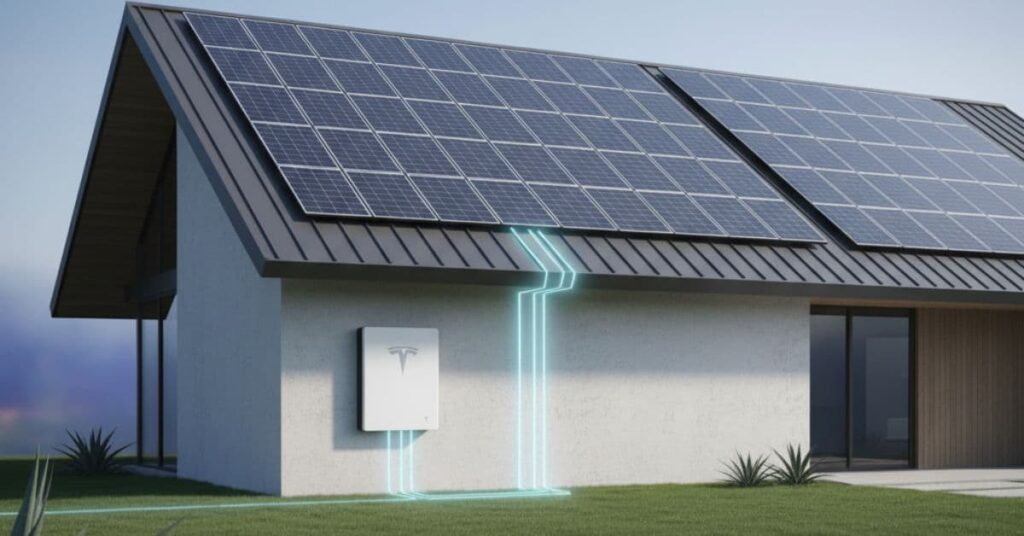
The Powerwall acts as the base for Tesla’s battery storage for clean energy in homes. When people connect it with a solar system on their house, it helps them become very energy independent. The Powerwall keeps extra solar power that the system makes during the day. It lets the person use that clean power at night.
Furthermore, thousands of Powerwalls can also connect together to make a Virtual Power Plant (VPP). In a VPP, the power company can take small amounts of power from each home’s battery during a power crisis. This creates a large, distributed power source that helps the whole town.
Powerwall Residential Benefits
- Home Energy Independence: Powerwall works with a solar system. It helps homes use the energy they generate. Powerwall stores extra energy during the day. It lets people use the stored energy at night. It also gives backup power when the electricity goes out.
- Virtual Power Plant Integration: Powerwalls can connect to form VPPs. A VPP lets the utility take power from home batteries. Utilities take power during power emergencies. Taking power helps keep community energy reliable.
Homeowners planning a complete Tesla energy setup should also read Tesla Solar Roof and Powerwall: A Complete Energy Solution to see how solar generation and battery storage work together.
2. Powerpack for Businesses
The Powerpack works for businesses, schools, and factories. These customers often pay high “demand charges” to electric companies. Demand charges are extra fees for using the most electricity at one time. Businesses can save money by using the Powerpack to store energy.
The Powerpack then gives out the stored energy during those peak times. Powerpacks are also very important for microgrids. They let remote locations or critical buildings use only renewable energy without relying on the main power grid.
Powerpack Commercial Benefits
- Reducing Demand Charges: Businesses can use Powerpack to store energy and discharge during peak usage hours, lowering expensive utility demand charges.
- Microgrid Support: Powerpacks support microgrid formation, allowing critical facilities or remote locations to operate independently on renewable energy.

The batteries used in commercial and utility storage are produced through the manufacturing process explained in How Tesla Gigafactories Power EV Battery Production.
3. Megapack for Utility-Scale
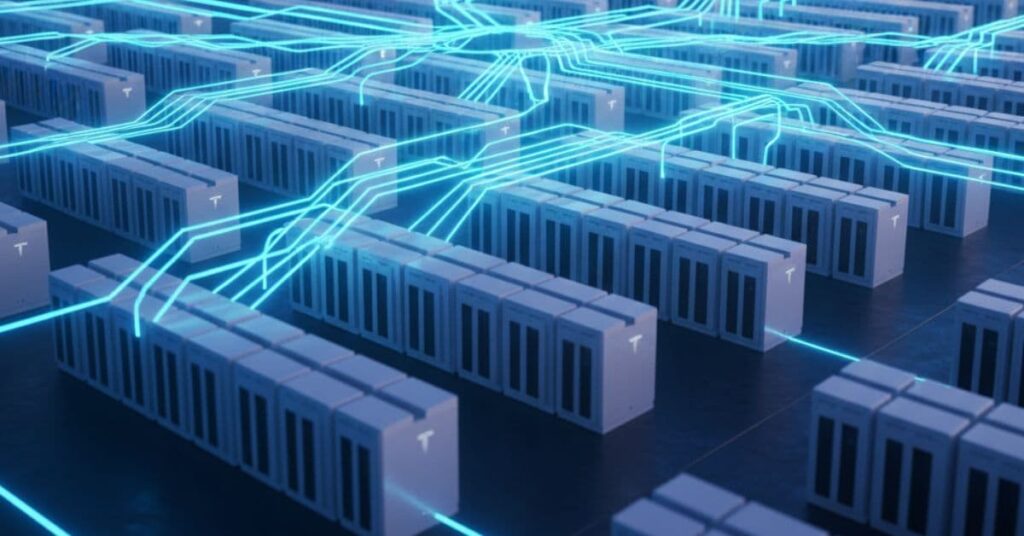
The Megapack is Tesla’s very large battery for power companies. It helps solve the problem when solar or wind power stops working at the largest scale. One Megapack can hold enough energy to give power to thousands of homes for several hours.
The primary function of the Megapack in Tesla Battery Storage Renewable Energy is to act as a massive energy buffer. It soaks up excess solar and wind power and releases it instantly when the grid needs it. This ability to “time-shift” renewable energy is what allows utilities to rely less on traditional, polluting power plants.
Megapack Utility Benefits
- Grid Stabilization: Megapacks provide large-scale energy storage to stabilize the grid, replacing fossil fuel peaker plants and maintaining a reliable electricity supply.
- Time-Shifting Renewable Energy: They store excess solar or wind energy and release it when demand is high, enabling utilities to integrate renewable energy reliably.
Benefits of Tesla Battery Storage for Renewable Energy
Tesla battery storage does much more than store electricity.
It improves how renewable energy is generated, delivered, and used across the entire electrical system.
Some of the biggest advantages include:
- Stores excess solar and wind energy instead of wasting it.
- Provides electricity after sunset or during calm weather.
- Reduces dependence on fossil fuel power plants.
- Improves grid reliability and stability.
- Responds to changing electricity demand within milliseconds.
- Supports homes during power outages.
- Helps businesses lower operating costs.
- Enables Virtual Power Plants.
- Increases the value of renewable energy investments.
- Supports the transition to cleaner electricity.
Together, these benefits make renewable energy more practical for homes, businesses, and utility companies.
Tesla Battery Storage vs Traditional Energy Storage
Battery storage is changing how electricity systems operate.
Compared with older energy storage methods, Tesla batteries offer several important advantages.
Feature | Tesla Battery Storage | Traditional Energy Storage |
|---|---|---|
Response time | Milliseconds | Minutes or longer |
Installation | Factory-built and faster to deploy | Often requires major construction |
Scalability | Easy to expand by adding battery units | Expansion is usually more complex |
Renewable energy integration | Excellent | Limited in many systems |
Maintenance | Lower mechanical maintenance | Higher maintenance for large mechanical equipment |
Carbon emissions | Zero emissions during operation | Some systems rely on fossil fuels |
Grid flexibility | Very high | Moderate |
Traditional storage technologies still play an important role, especially for long-duration energy storage. However, Tesla battery systems offer the speed, flexibility, and scalability needed to support today’s rapidly growing renewable energy projects.
Tesla Energy Software: The Intelligence Behind Battery Storage
Battery hardware is only part of Tesla’s energy solution.
The company also develops software that continuously monitors battery performance, electricity demand, renewable energy production, and market conditions.
This software helps every battery operate more efficiently and automatically.
Autobidder
Autobidder is Tesla’s AI-powered energy trading and optimization platform.
Instead of requiring operators to manually control large battery systems, Autobidder analyzes electricity markets and grid conditions in real time.
The software decides when batteries should:
- Store electricity
- Supply electricity
- Support the grid
- Participate in electricity markets
This helps utilities maximize battery performance while improving overall grid efficiency.
Smart Energy Optimization
Tesla software also monitors several factors at the same time, including:
- Renewable energy production
- Electricity demand
- Battery charge levels
- Weather forecasts
- Utility pricing
- Grid conditions
Using this information, the system automatically determines the best time to charge or discharge battery storage.
The result is greater efficiency, lower operating costs, and improved renewable energy utilization.
Remote Monitoring and Control
Tesla’s energy platform allows operators to monitor battery systems remotely.
Instead of visiting every installation, operators can:
- Track battery performance
- Identify maintenance needs
- Monitor electricity production
- Review system health
- Optimize battery operation
Remote monitoring helps reduce maintenance costs while improving overall reliability.
As more large battery systems reach the end of their service life, Tesla Battery Recycling Strategy Explained shows how valuable materials can be recovered and reused.
Practical Steps To Integrate Tesla Battery Storage
Installing a battery storage system is more than adding a battery. A well-planned installation improves performance, reduces costs, and increases long-term value.
For Homeowners
If you own a home with rooftop solar panels, battery storage can help you get more value from your renewable energy system.
Evaluate Your Energy Usage
Review your monthly electricity consumption and identify which appliances you want to keep running during a power outage.
This information helps determine the right battery capacity for your home.
Maximize Solar Self-Consumption
Instead of exporting all extra solar energy to the grid, store it in the Powerwall.
Using your own stored electricity during the evening can lower electricity bills and reduce dependence on the grid.
Join a Virtual Power Plant Program
If your local utility offers a Virtual Power Plant (VPP) program, participating may provide additional financial benefits while helping improve grid reliability.
Monitor Battery Performance
Use the Tesla mobile app to monitor energy production, battery charge levels, and household electricity usage.
Regular monitoring helps you understand how your system performs throughout the year.
For Businesses and Utilities
Commercial facilities and utility companies require a different approach because they manage much larger energy systems.
Analyze Energy Demand
Study daily electricity usage to identify peak demand periods.
Battery storage delivers the greatest value when it reduces expensive peak electricity consumption.
Combine Battery Storage with Renewable Energy
Pairing battery storage with solar or wind projects increases renewable energy utilization and reduces wasted electricity.
Use Intelligent Energy Management
Tesla’s energy software automatically manages charging and discharging based on electricity demand and market conditions.
This improves efficiency while reducing operating costs.
Plan for Future Growth
Energy demand often increases over time.
Battery systems should be designed with future expansion in mind so additional storage can be added as needed.
Limitations of Tesla Battery Storage
Tesla battery storage offers many advantages, but it is not a perfect solution for every situation.
Understanding its limitations helps users make informed decisions.
High Initial Investment
Battery storage requires a significant upfront investment.
Although lower electricity bills and energy savings can offset some costs over time, the initial installation may not fit every budget.
Installation Requirements
Not every home or business is immediately ready for battery storage.
Some properties may require electrical upgrades, additional space, or changes to existing solar systems before installation.
Battery Degradation
Like all lithium-ion batteries, Tesla batteries gradually lose some storage capacity as they age.
The process is slow, but performance naturally decreases after years of regular charging and discharging.
Recycling and Raw Materials
Battery manufacturing depends on materials such as lithium, nickel, and other critical minerals.
While recycling technology continues to improve, recovering these materials efficiently remains an important challenge for the energy industry.
Not a Complete Replacement for the Grid
Battery storage increases energy independence, but most homes and businesses still remain connected to the electrical grid.
Long periods of cloudy weather or unusually high electricity demand may require additional grid power.
Conclusion
Tesla Battery Storage Renewable Energy systems like Powerwall, Powerpack, and Megapack change how people use solar and wind power. They fix power gaps, stabilize the electric grid, and provide clean energy all day and night.
These batteries make renewable energy reliable and affordable for homes and large utility projects. They serve as a key part of building a sustainable future.
If you’re comparing residential battery systems before investing, Tesla Powerwall Alternatives: Which Home Battery Is Best? explains how Tesla compares with other leading home energy storage brands.
FAQs
What is the difference between Powerwall and Megapack?
The main difference is size and use. The Powerwall is a small battery. It holds 13.5 kWh of power. People use it for their homes. The Megapack is a huge battery. It can hold up to 3.9 MWh of power in one unit. Power companies use it to make the electric grid steady and store power for whole cities. Both batteries use the same kind of lithium-ion technology, but people put them together and run them for different jobs.
How does Tesla battery storage help the environment?
Tesla Battery Storage Renewable Energy helps the environment in two main ways: first, by enabling more solar and wind power to be used, reducing the need for fossil fuel generation. Second, by replacing “peaker” plants—gas-fired power plants that only run during high-demand periods—which are typically the least efficient and most polluting generators on the grid.
What is a “peaker” plant, and how does Megapack replace it?
A peaker plant is a power station. It runs only when people need a lot of electricity. Peaker plants often do not work well and make a lot of air pollution. The Megapack stores energy. It can release energy fast to meet these high demands. Megapack does the same job as a peaker plant but makes no pollution. It is a cleaner and cheaper way to meet energy needs.
