
Can EV Batteries Explode?

Statistics checked against EV FireSafe’s global incident database, Sweden’s MSB fire data, NHTSA safety guidance, NFPA testing and the AutoInsuranceEZ analysis of NTSB/BTS figures — each number below is labelled with its source, its country and its year.
Type “EV battery explosion” into a news site and you will find dramatic photos. What you will almost never find is an explosion — because what EV batteries overwhelmingly do is catch fire, through a process called thermal runaway, and a fire and an explosion are different events with different risks.
A true battery explosion — a vapour-cloud explosion, where flammable gases vented from failing cells build up and ignite all at once — is real but genuinely rare: EV FireSafe, which studies every documented EV battery fire worldwide, has verified 14 such incidents since 2010, out of more than a thousand battery fires studied. This guide explains the difference, gives the fire statistics with their sources attached (this topic recycles more bad numbers than almost any in the EV world), and ends with the warning signs and actions that actually keep owners safe.
EV batteries catch fire; they almost never explode. A battery fire is thermal runaway — cells overheating and igniting one after another. A true vapour-cloud explosion needs vented gas to accumulate in a confined space first: EV FireSafe has verified 14 cases worldwide since 2010, about 10.8% of battery fires it has studied. Per vehicle, EVs catch fire far less often than petrol cars — Sweden’s MSB counted fires in 0.004% of EVs vs 0.08% of petrol/diesel cars in 2022.
Key figures: 14 verified explosions since 2010 · 0.004% vs 0.08% annual fire share (Sweden 2022) · ~700 litres of vent gas per kWh in a failing pack
What Does “Explode” Actually Mean for a Battery?
Four different events get called an “explosion” in headlines — only the last one deserves the word.
When a lithium-ion cell fails, it vents hot flammable gas. What happens next decides the event: (1) the gas may simply hiss out and disperse — venting; (2) it may ignite as it leaves, producing the fierce jet-like flames of a battery fire; (3) neighbours overheat and fail in sequence — thermal runaway propagation, which is why pack fires build over minutes rather than detonating in an instant; or (4) the vented gas first collects in a confined space — a closed garage, a car park, a shipping container — and then ignites at once.
Only that fourth event, a vapour-cloud explosion, produces a blast, and EV FireSafe’s data shows it is the rare branch of the tree: 14 verified cases, roughly two-thirds of them in enclosed spaces, against a backdrop of more than a thousand studied battery fires. A failing pack releases on the order of 700 litres of vent gas per kWh, which is why the confined-space scenario is the one firefighters plan around — outdoors, the same gas usually burns off progressively instead.
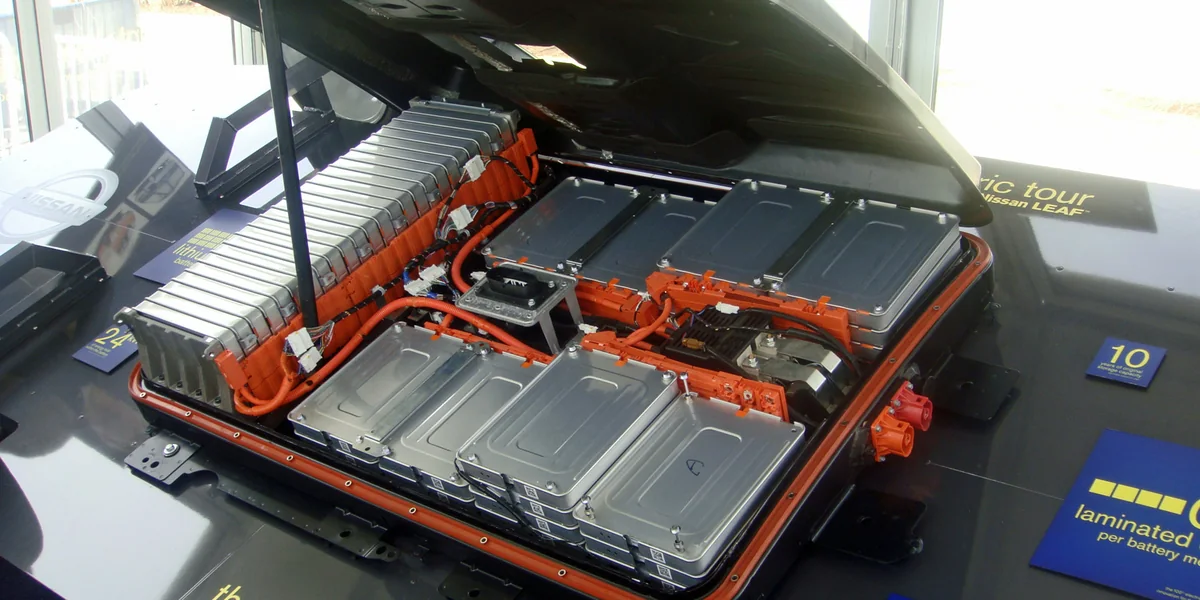
The mechanism underneath — how a cell slides from self-heating into runaway — is a subject of its own, covered in depth in our guide to thermal runaway in EV batteries. This page’s subject is the risk itself: how often it happens, what starts it, and what to do about it.
How Often Do EV Batteries Catch Fire? The Numbers, With Sources
Every serious dataset agrees on the direction — EVs burn far less often per vehicle than petrol cars — but the exact figures depend on the dataset, so here they are labelled.
Dataset | EV / battery-electric | Petrol/diesel | Hybrid |
|---|---|---|---|
AutoInsuranceEZ analysis of NTSB/BTS data (US, 2021) — fires per 100,000 vehicles sold | 25.1 | 1,529.9 | 3,474.5 |
MSB, Sweden (2022) — share of the fleet that caught fire | 0.004% (23 of ~611,000) | 0.08% (~3,400 of ~4.4M) | — |
EV FireSafe global database (2010–2023) — passenger-vehicle battery-fire rate | 0.0012% | 0.1% (ICE vehicles) | — |
Read the table the way an analyst would. The AutoInsuranceEZ row is the most quoted and the most criticised: its denominator is vehicles sold, which flatters EVs because the petrol fleet is much older (around 12.5 years on average against roughly 3.5 for EVs), and NTSB itself publishes no such rates — the study is an insurance-marketing analysis of NTSB, BTS and recall data, so treat its “61 times” headline as an estimate with a bias, not a measurement.
The Swedish and global rows avoid that flaw and reach the same conclusion by a quieter road: Sweden’s civil contingencies agency counted EV fires at about one-twentieth the petrol/diesel rate in 2022, and EV FireSafe’s worldwide database puts the passenger-EV battery-fire rate at roughly 0.0012% against about 0.1% for internal-combustion vehicles.
One more comparison, correctly attributed this time: Tesla’s own published comparison puts its cars at about 5 fires per billion miles driven against roughly 55 per billion for US cars overall — a Tesla-built figure on NFPA data, covering Tesla’s fleet only, and worth citing as exactly that.
What Causes an EV Battery Fire?
Almost every case traces to one of four triggers — and the two famous ones were manufacturing defects, not owner behaviour.
- Crash damage — a severe impact deforms cells or the pack structure; ignition can be immediate or, rarely, delayed by days or weeks.
- A manufacturing defect — a flawed cell can short internally without any external trigger. This caused the two largest EV fire events in history, below.
- Charging and electrical faults — damaged cables, faulty charging equipment or a compromised pack; EV FireSafe finds about 18% of studied incidents were connected to charging.
- Saltwater flooding — immersion corrodes and bridges connections inside the pack, sometimes igniting the car weeks after the water recedes.
The Chevrolet Bolt: the defect that defined the risk
Two rare flaws in the same LG cell — a torn anode tab and a folded separator — put about 142,000 cars under recall.
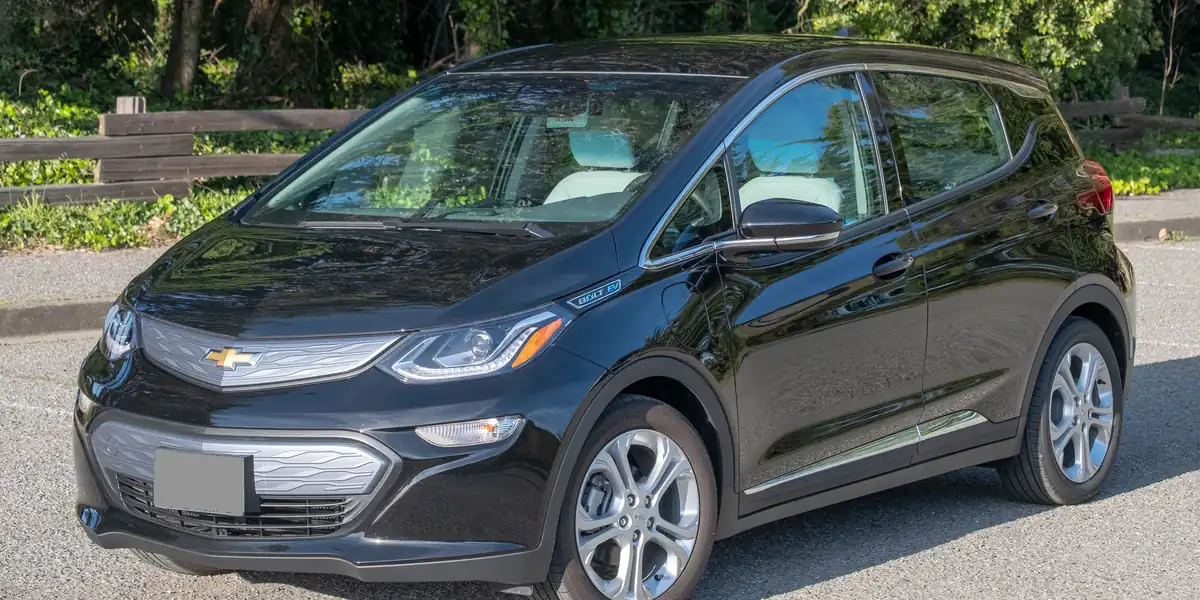
In August 2021 GM expanded its Bolt EV recall (NHTSA 21V-650) to every Bolt built, roughly 142,000 cars, advising owners at the height of it to park outside. The root cause, established by GM and LG, was the simultaneous presence of two manufacturing defects in a single cell — a combination that could short the cell from inside.
The episode cost about $2 billion, of which LG reimbursed $1.9 billion, and its lasting effect was healthy: it proved the failure mode was specific and fixable, not inherent to EVs. Hyundai’s Kona Electric followed a smaller parallel path — about 81,701 cars recalled in February 2021 after some 15 fires, with Korea’s transport ministry finding cell defects (LG disputed the causation). Both stories share a shape: a named defect, a named fix, and a fire rate that fell once the cells were replaced.
Saltwater: the flood scenario
Hurricane Ian left the clearest modern record — and the published counts genuinely disagree, so here are both.
After Hurricane Ian flooded Florida’s Gulf Coast in September 2022, a number of submerged EVs caught fire in the following weeks — salt water had bridged and corroded connections inside packs, a mechanism NHTSA has since documented in detail. The Florida State Fire Marshal confirmed 8 such fires in November 2022; NHTSA’s later teardown study (November 2024) reported 21 Ian-related EV fires.
Both figures are real; they count differently, at different times, by different methods — and any page that prints one number without its source is hiding that. The operational rules, though, are unambiguous and come from NHTSA: a flood-submerged EV should be parked at least 50 feet from structures and other vehicles, never charged or driven until inspected, and treated as a fire risk for weeks, not days.
The Warning Signs of a Battery in Trouble
A failing pack usually announces itself — by sound, by smell, and by a cloud that is not smoke.
EV FireSafe’s responder guidance lists the signs that precede or accompany a battery event:
- Hissing, whistling or popping sounds from the pack — gas venting under pressure
- A white or grey vapour cloud that looks like smoke but behaves differently — this is vented electrolyte gas, and it is the flammable ingredient of the rare explosion scenario
- A sweet, chemical smell — responders describe it as cherry or bubblegum-like
- Sparks, projectiles or sudden heat from under the car
Treat any of these as an emergency in progress: get people away from the vehicle, move at least 50 feet back (NHTSA’s distance for a damaged EV), and call 911 rather than reaching for a garden hose. Do not drive the car “to the dealer to check” — a venting pack is the one EV problem that must not be driven on.
Why Are EV Battery Fires Harder to Fight?
Not because they burn hotter — NFPA testing says they don’t — but because the battery keeps making its own heat and can restart itself.
Fire-service testing reported by NFPA in 2023 found EV and petrol-car fires burn at similar temperatures; the “EVs burn hotter” line repeated online is not supported by those tests. The real difficulties are different. A pack in runaway generates heat inside a sealed steel box that water struggles to reach, so crews cool for a long time: NHTSA-cited incidents typically use 3,000–8,000 gallons of water, and the extreme tail — a 2021 Texas case — ran to roughly 30,000 gallons over four hours.
And the event may not be over when the flames are: EV FireSafe counts 10.5% of studied incidents involving delayed or secondary runaway, which is why damaged EVs are quarantined outdoors after an incident. The 2011 precedent still taught to firefighters is the Chevrolet Volt that caught fire three weeks after a government crash test — the event that created today’s post-crash monitoring rules.

Which Battery Chemistry Is Safest?
The phosphate chemistry (LFP) is meaningfully harder to push into a fire; no chemistry is immune.
Chemistry | Thermal runaway onset (approx.) | Behaviour in failure |
|---|---|---|
LFP (lithium iron phosphate) | ~270°C | Cathode does not release oxygen; slower, cooler event |
NMC / NCA (nickel-based) | ~150–210°C, by variant | Cathode releases oxygen as it breaks down, feeding the fire |
That onset gap is the whole safety story in one line — an LFP pack tolerates far more heat before the failure cascade starts, which is one reason the chemistry dominates buses and standard-range cars. The full trade-off between the families is on our LFP vs NMC comparison; the point here is narrower: chemistry shifts the odds, while the triggers in the causes section above decide the day.
How Modern EVs Prevent All This
Layers, watched by software and increasingly required by law.
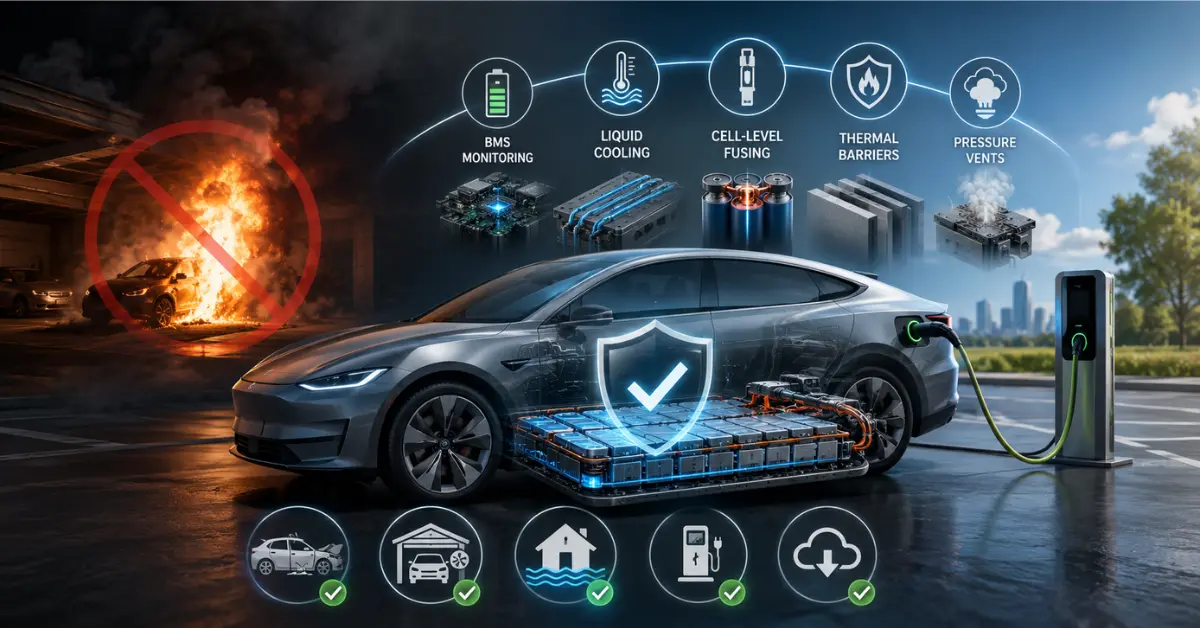
Every modern pack runs a battery management system that watches cell voltages and temperatures and can disconnect the pack in milliseconds; crash structures and skid plates shield the cells; pyro-fuses sever the high-voltage circuit in an impact; and cell spacing plus firewalls slow any propagation that does start. Regulation is formalising the last layer — warning time.
UN Regulation No. 100 requires an EV to give occupants a warning at least 5 minutes before a thermal event endangers the cabin, and China’s GB 38031-2025 standard, applying from July 2026, goes further with a “no fire, no explosion” requirement for packs after internal failure. The direction of travel in rulemaking is the same as in engineering: assume a cell can fail, and make sure nothing about that failure can surprise the people in the car.
What Should You Actually Do? A Short Owner Checklist
Five habits cover nearly all of the real-world risk.
- Respect recalls and software updates — the Bolt lesson is that defect risk is found and fixed by VIN; check yours on NHTSA’s recall lookup.
- Inspect after any hard impact or underbody strike — a pack that took a hit gets looked at before it gets charged, and parked outside until it is.
- Charge on sound equipment — undamaged cables, properly installed circuits, and stop using any charger that overheats or behaves oddly.
- After flooding, do nothing — do not charge, do not drive, park 50 feet from structures and call the manufacturer and your insurer; the risk window runs for weeks.
- Learn your car’s warning signs — the hissing, vapour cloud and sweet smell from the section above mean get out, get back 50 feet, and call 911.
Frequently Asked Questions
Can a Tesla explode?
A Tesla can catch fire in a severe crash or a rare defect case, like any EV — Tesla’s own published comparison puts its fleet at about 5 fires per billion miles, against roughly 55 per billion for US cars overall (NFPA-based data). A vapour-cloud explosion requires vented gas to build up in a confined space and is a different, far rarer event — 14 verified cases across all EV brands since 2010.
Will an EV explode while it is parked?
Parked, undamaged EVs essentially do not self-ignite; the documented parked-car cases involve a pre-existing condition — a manufacturing defect (the Bolt recall population), crash damage that was never inspected, or saltwater flooding. EV FireSafe’s database puts delayed or secondary runaway at 10.5% of studied incidents, which is why damaged or flooded cars are quarantined rather than garaged.
Can an EV battery explode in a flood?
Flooding itself does not explode a battery; salt water corrodes and bridges the pack’s internals and can start a fire days or weeks later, as after Hurricane Ian (8 fires confirmed by Florida’s Fire Marshal; NHTSA’s later study counted 21). NHTSA’s rule for a submerged EV: park it at least 50 feet from structures, and do not charge or drive it until it has been inspected.
Do EV batteries explode while charging?
About 18% of the incidents in EV FireSafe’s database were connected to charging — but “connected to charging” overwhelmingly means a fire during or after charging (a faulty pack, damaged equipment, a compromised cable), not an explosion. Use sound equipment, stop if anything overheats or behaves strangely, and never charge a crash-damaged or flood-damaged car.
Are EVs more likely to catch fire than gas cars?
No — by every labelled dataset, substantially less likely per vehicle. Sweden’s MSB counted fires in 0.004% of EVs against 0.08% of petrol/diesel cars in 2022; EV FireSafe’s global rate is 0.0012% against about 0.1% for combustion vehicles. EV fires are harder to extinguish once started, which is a firefighting challenge, not a higher fire risk.
What does a battery about to fail sound and smell like?
Hissing, whistling or popping from the pack; a white-grey vapour cloud that is not ordinary smoke; and a sweet, chemical, cherry-bubblegum smell (EV FireSafe’s responder list). Any of those means: leave the vehicle, move at least 50 feet away, and call 911.
Can an EV battery explode in hot weather?
Heat alone does not explode a healthy pack — cars are tested for climates far hotter than any US summer, and the battery management system limits charging and power to protect the cells. Extreme heat matters as an accelerant only when something else is already wrong: a damaged, defective or flooded pack. Cold is the charging problem (slower charging below freezing); heat is a stress, not a trigger.
How much explosive force is in an EV battery?
Effectively none, in the bomb sense. A pack’s energy is stored chemically and releases as heat over minutes during runaway — there is no detonation and no blast wave from the battery itself. The one exception is indirect: if vented flammable gas (about 700 litres per kWh) accumulates in a sealed space and then ignites, that vapour-cloud ignition can break windows and doors — which is why a venting car belongs outdoors, never in a closed garage.
Conclusion
The honest answer to the title is: an EV battery can burn, and only in a narrow, well-documented set of circumstances can the gases it vents explode — 14 verified times in fifteen years of global EV use.
The risk that remains is real but specific: defective cells (found and fixed by recall), uninspected crash damage, and saltwater flooding. Against it stand per-vehicle fire rates that every labelled dataset places far below petrol cars, safety systems that watch every cell, and regulations that now require minutes of warning before a cabin is ever at risk. Know the warning signs, respect the 50-foot rule after damage or flooding, and the explosion question mostly answers itself.
