
Tesla Semi Battery: Size, Range, and Complete Guide

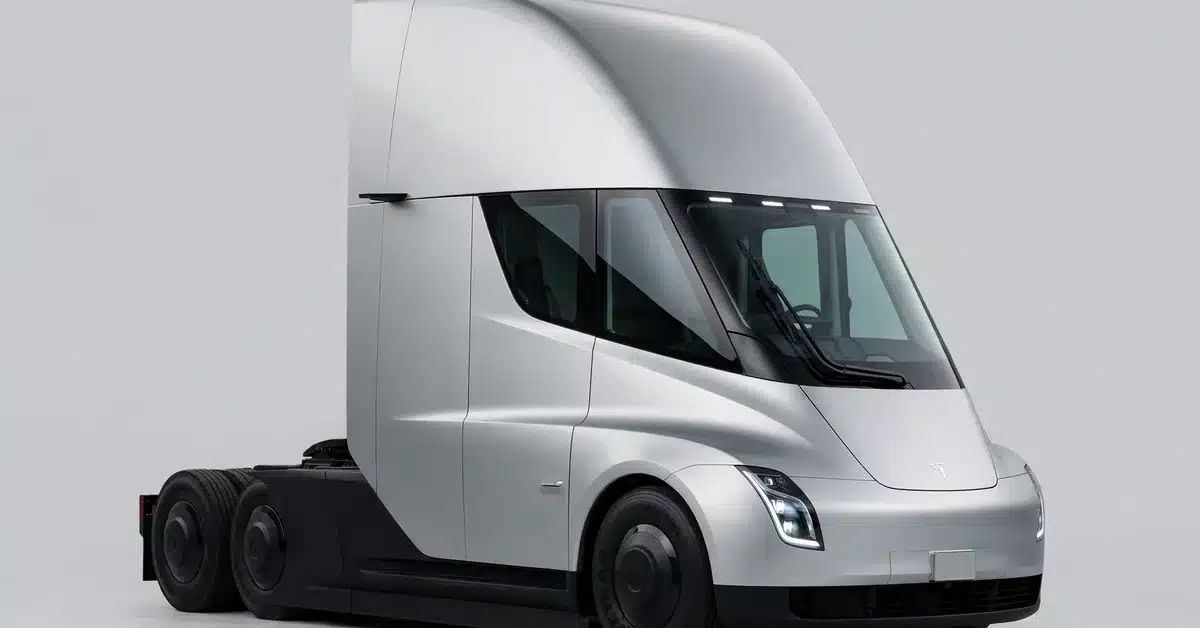
The Tesla Semi is the most capable electric Class 8 truck ever built — and its battery is the reason why. Official CARB filings confirmed in May 2026 that the Long Range Semi carries an 822 kWh usable battery pack and the Standard Range carries 548 kWh. Both use Tesla’s 4680 NCMA cells and support 1.2 MW Megacharging. This is the complete guide to the Tesla Semi battery — what it holds, how it charges, who builds it, and what it means for the future of electric freight.
Tesla Semi Battery: H1 Overview
The Tesla Semi battery uses NCMA (Nickel Cobalt Manganese Aluminum) lithium-ion chemistry in Tesla’s large-format 4680 cylindrical cells. All cells are manufactured at Gigafactory Nevada in the same facility where the truck is assembled. The integration of 4680 cell production and truck assembly eliminates supply chain delays that held back the program for years before high-volume production launched in April 2026.
Tesla Semi Battery Specs: Standard Range vs Long Range
| Specification | Standard Range | Long Range |
|---|---|---|
| Battery chemistry | NCMA (4680 cells) | NCMA (4680 cells) |
| Usable battery capacity | 548 kWh | 822 kWh |
| EPA range (82,000 lb GCW) | ~325 miles | ~500 miles |
| Peak motor output | 525 kW (703 hp) | 800 kW (1,072 hp) |
| Sustained output | 525 kW | 800 kW |
| Charging standard | MCS 3.2 | MCS 3.2 |
| Max charge rate | 1.2 MW (1,200 kW) | 1.2 MW (1,200 kW) |
| Energy efficiency | ~1.7 kWh/mile | ~1.64 kWh/mile (real-world) |
| Gross combination weight | 82,000 lb | 82,000 lb |
| Electrical architecture | 48V low-voltage | 48V low-voltage |
| Curb weight (truck only) | Under 20,000 lb | ~23,000 lb |
What Are 4680 NCMA Cells?
4680 cells get their name from their size — 46mm diameter and 80mm tall. They are significantly larger than Tesla’s older 2170 cells, holding roughly six times more energy per cell. NCMA (Nickel Cobalt Manganese Aluminum) is the cathode chemistry inside each cell — using approximately 89% nickel, 5% cobalt, 5% manganese, and 1% aluminum for structural stability.
This chemistry delivers exceptionally high energy density — around 250–280 Wh/kg at the cell level. Combined with the tabless electrode design inside each 4680 cell, internal resistance is reduced and heat generation during fast charging is kept lower than earlier cell designs.
Tesla manufactures these cells in-house at Gigafactory Nevada. This vertical integration is a key cost advantage — no external supplier markup on the most expensive component in the truck.
How Does the Tesla Semi Battery Charge?
The Tesla Semi uses Megacharging — Tesla’s proprietary ultra-high-power charging system for the Semi. The MCS (Megawatt Charging System) 3.2 connector supports up to 1,200 kW (1.2 MW) of charging power. This means the Long Range Semi can recover approximately 70% of its charge in about 30 minutes — fitting within a federally mandated driver rest break under DOT Hours of Service rules.
The first public Semi Megacharger opened in Los Angeles in early 2026. Tesla is expanding Megacharger locations along major freight corridors in the U.S., starting with Interstate 5 (California), I-80 (Nevada to Utah), and I-10 (southwest routes).
| Charging Method | Standard Range (548 kWh) | Long Range (822 kWh) |
|---|---|---|
| Megacharger at 1.2 MW | ~27 min (10–80%) | ~40 min (10–80%) |
| 70% state of charge recovery | ~22 min | ~30 min |
| Full charge (0–100%) | ~38 min | ~57 min |
Tesla Semi vs Diesel Truck: Energy Economics
A diesel Class 8 truck consumes the energy equivalent of roughly 5.5 kWh per mile. The Tesla Semi averages 1.64 kWh per mile in real-world pilot fleet operations — approximately three times more efficient than diesel. At current electricity rates vs diesel prices, fleet operators report estimated fuel savings of $0.50–$0.65 per mile.
Over 500,000 miles of operation, that adds up to over $300,000 in fuel savings per truck. For fleets running 50 Semis, the fleet-level savings exceed $15 million before factoring in lower maintenance costs from fewer moving parts and regenerative braking reducing brake wear.
| Cost Factor | Diesel Class 8 | Tesla Semi Long Range |
|---|---|---|
| Energy consumption per mile | ~5.5 kWh equivalent | ~1.64 kWh |
| Fuel/energy cost per mile | ~$0.50–0.70 (diesel) | ~$0.10–0.20 (electricity) |
| Estimated savings per mile | — | $0.50–$0.65 |
| Savings over 500,000 miles | — | ~$300,000+ |
| Engine maintenance | High (oil, filters, coolant) | Minimal (no oil changes) |
Tesla Semi Battery: Key Engineering Decisions
Tesla made several deliberate choices that shaped the Semi’s battery design. First, they chose NCMA over LFP because maximum energy density was the priority — squeezing 822 kWh into a truck that still fits under 82,000 lb GCW with a full load demanded the highest-density cells available.
Second, the production Semi weighs nearly 1,000 lb less than the 2022 prototype. This weight reduction allowed Tesla to use a smaller-than-expected battery (822 kWh vs Elon Musk’s original 900 kWh estimate) while still hitting the 500-mile range target. Less truck weight means less energy needed per mile.
Third, the 48V low-voltage electrical architecture (same as Cybertruck) replaces the traditional 12V systems used in conventional trucks. This reduces power losses in auxiliary systems, contributing to overall efficiency gains.
Tesla Semi Battery vs Competitors
| Truck | Battery Size | Range (Loaded) | Max Charge Rate |
|---|---|---|---|
| Tesla Semi Long Range | 822 kWh | 500 miles | 1,200 kW (1.2 MW) |
| Tesla Semi Standard Range | 548 kWh | 325 miles | 1,200 kW (1.2 MW) |
| Freightliner eCascadia | 438 kWh | ~230 miles | 600 kW |
| Kenworth T680E | 396 kWh | ~150 miles | 150 kW |
| Volvo VNL Electric | ~540 kWh | ~275 miles | 250 kW |
Who Is Buying Tesla Semi and How Are the Batteries Holding Up?
PepsiCo was the first major fleet customer, receiving the initial 100 Semis in December 2022. Their Modesto, California distribution hub has been running Semis on local and regional routes since then. PepsiCo reported in 2025 that the Semis had delivered over 3 million miles collectively, with battery performance described as tracking closely to Tesla’s projections.
Walmart, UPS, and several other major U.S. carriers have placed orders. High-volume production ramp at Sparks, Nevada began in April 2026. Tesla targets 50,000 Semis per year at full production capacity from the Nevada facility.
Tesla Semi Battery Warranty and Longevity
Tesla has not yet published a formal Tesla Semi battery warranty document at the time of this writing. Commercial EV warranties typically follow fleet-specific negotiated terms rather than consumer warranty structures. For context, Tesla’s passenger vehicle NMC/NCMA batteries carry 8-year warranties — the Semi’s commercial warranty terms are expected to follow similar principles but with higher annual mileage tolerance given freight use.
NCMA 4680 cells are rated for approximately 1,500–2,000 charge cycles before significant degradation. At 500 miles per cycle for the Long Range, that projects to 750,000–1,000,000 miles before the battery falls below 80% capacity — well beyond a typical truck’s useful commercial life of 500,000–800,000 miles.
Conclusion
The Tesla Semi battery is a landmark achievement in commercial electric vehicle engineering — 822 kWh of NCMA energy in a truck that still hits 500 miles at full 82,000 lb load, charges at 1.2 MW, and saves fleet operators over $300,000 per truck in fuel over 500,000 miles. The CARB-confirmed specs from May 2026 remove the last major unknown from the Semi story. With production now ramping at Gigafactory Nevada and Megacharger corridors expanding, the Tesla Semi battery is proving that electric freight is not a future concept — it is a present reality.
