
Ford Mustang Mach-E Battery: Complete Guide

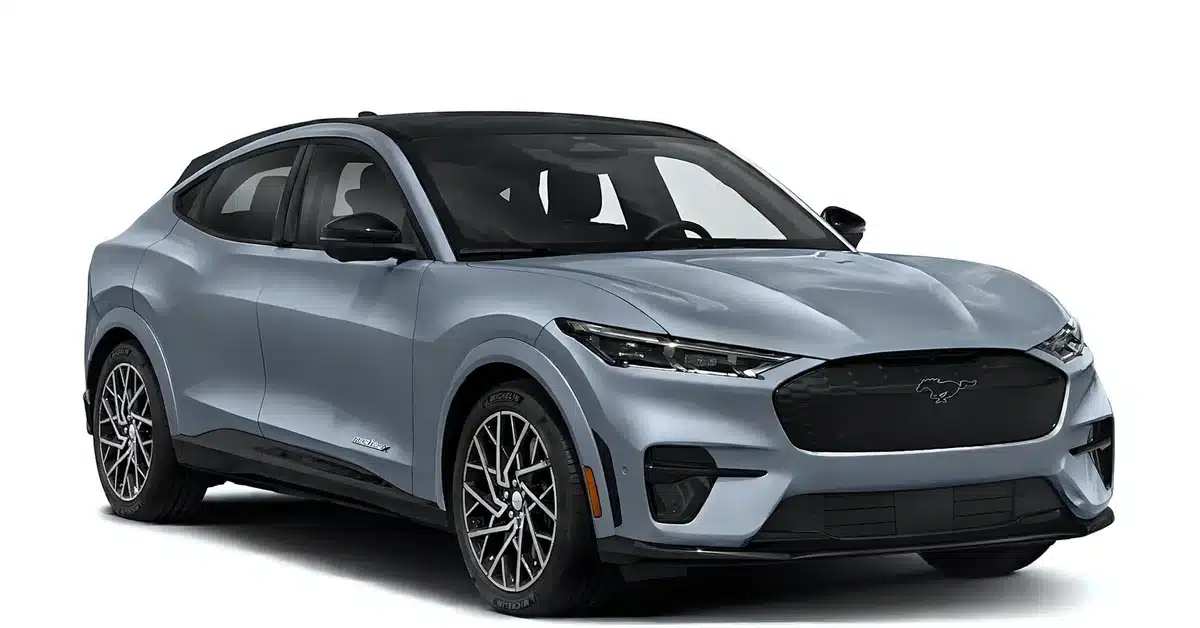
Specs and guidance checked against Ford’s published US specifications and the Mustang Mach-E owner’s manual, the EPA ratings listed on fueleconomy.gov, EV Database measurements and NHTSA recall records.
The Mustang Mach-E does not have one battery story — it has three, and they sit on top of each other. There are two chemistries (LFP and NCM), three usable pack sizes on the current US spec sheet (73, 88 and 91 kWh), and a chemistry change partway through 2023 that means two identical-looking used cars can have different batteries, different charging rules and different winter behaviour. Most guides still print one blended version of that story. This one separates the layers.
Two newer evidence sets matter more than anything written about this car in its early years. Ford has now published degradation data from more than 36,000 real Mach-Es, and it is better than the early headlines suggested. And the recall picture has settled into one battery issue that used buyers genuinely need to check, plus a software fix nearly every car needs. Both are covered below with their numbers attached.
Every current Mustang Mach-E runs one of two chemistries: LFP in the Standard Range cars (73 kWh usable) and NCM in the Extended Range cars (88 kWh usable — 91 kWh in the GT and Rally). EPA range runs from 240 to 320 miles depending on the pack and drive layout. Ford’s own settings are simple once you know your pack: charge an NCM car to 90% for daily use, and charge an LFP car to 100% at least once a month. Every pack is covered for 8 years or 100,000 miles down to 70% capacity — and Ford’s fleet data shows an average of 92% capacity remaining after about five years.
Key figures: 73 / 88 / 91 kWh usable · 320 miles maximum EPA range · 150 kW DC charging peak · 8 years / 100,000 miles warranty, 70% floor
Mustang Mach-E Battery Specs: Every Trim and Pack
The current US line-up uses three pack sizes across four trims — here is the whole table, with the years fenced.
| Trim | Battery (usable) | Chemistry | Drive | EPA range |
|---|---|---|---|---|
| Select | 73 kWh | LFP | RWD | 260 miles |
| Select | 73 kWh | LFP | eAWD | 240 miles |
| Premium | 73 kWh | LFP | RWD / eAWD | 260 / 240 miles |
| Premium | 88 kWh | NCM | RWD | 320 miles |
| Premium | 88 kWh | NCM | eAWD | 300 miles |
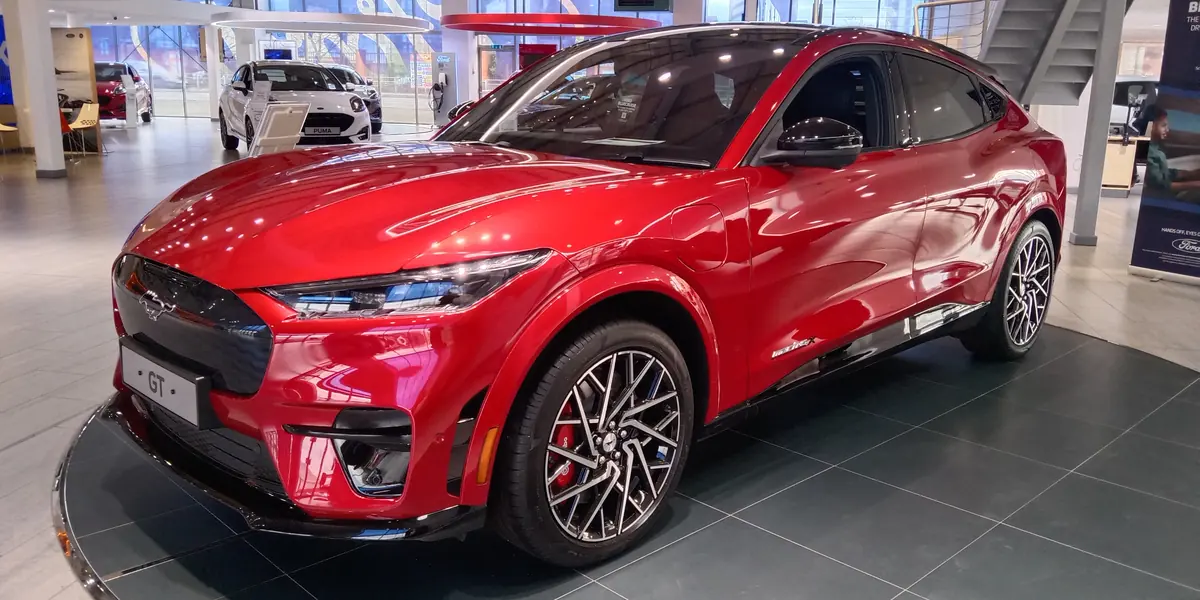
| GT | 91 kWh | NCM | eAWD | 280 miles |
| Rally | 91 kWh | NCM | eAWD | 265 miles (2025) · 255 miles (2026) |
Ford’s US figures for the 2025–2026 line-up; EPA ratings from fueleconomy.gov. Read the footnotes before quoting the table: Ford’s 2026 spec sheet lists the Premium Extended Range pack at 88 kWh usable, while Extended Range cars sold from 2022 through 2025 were rated at 91 kWh usable (2021 cars: 88). EV Database independently measures the LFP pack at 72.6 kWh usable, from roughly 78 kWh total. The pack under the car did not change three times — the published window did, and the next section explains the real change, which was chemistry.
How the trims stack up
The shape of the range is easy to hold onto. The Select is Standard Range only. The Premium is the flexible trim — it can be built with either pack. The GT and Rally are Extended Range only, and they keep the 91 kWh rating on Ford’s 2026 sheet. If you are shopping used, the table above is the current picture, not the historical one — a 2021 or 2022 car follows the older ratings in the chemistry section below.
Two Chemistries: The LFP and NCM Packs
Which chemistry a Mach-E carries decides its charge limit, its winter manners and much of its lifespan — and it changed mid-production.
The Extended Range pack is the original Mach-E battery: a nickel-cobalt-manganese (NCM) pack of about 98.8 kWh total, built from LG Energy Solution pouch cells, with 91 kWh usable on cars sold from 2022 onward. The Standard Range pack began life as a smaller NCM pack (75.7 kWh total, 70 kWh usable; 68 kWh usable on 2021 cars). Then, partway through 2023, the Standard Range car changed chemistry entirely — which is why “Standard Range” on its own no longer tells you what battery a Mach-E has.
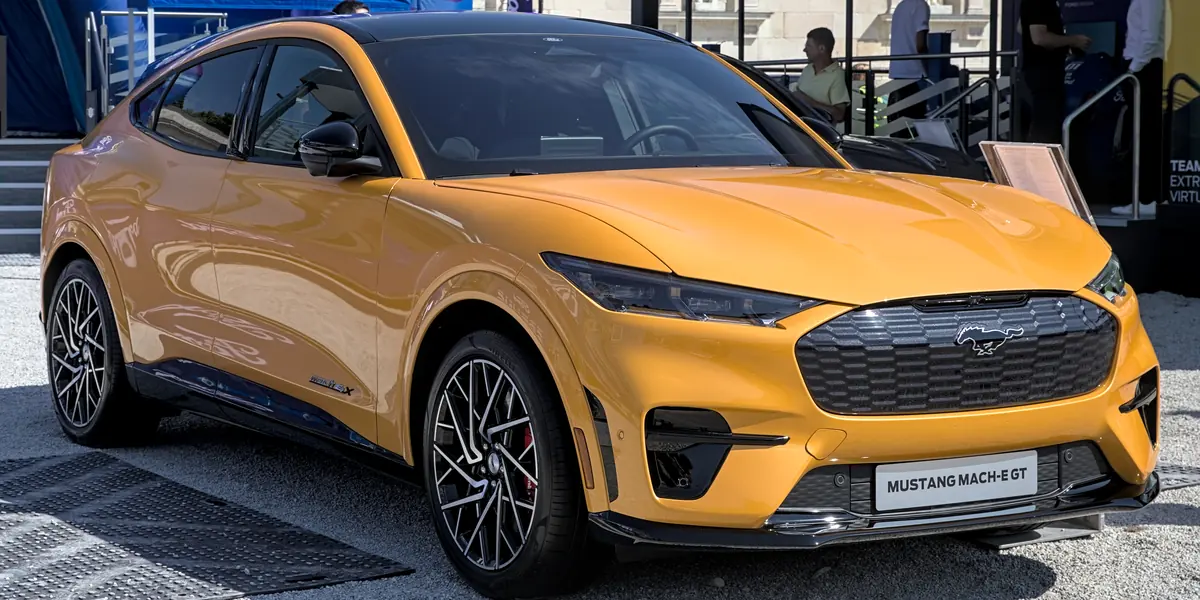
The 2023 switch: Standard Range goes LFP
From spring 2023, every new Standard Range Mach-E carries a lithium iron phosphate (LFP) pack — announced by Ford on February 13, 2023, and in cars from that spring as late-2023 models.
The LFP cells are CATL prismatic cells, bought in from CATL while Ford builds its own LFP plant in Michigan under CATL licence. The switch was about cost and charging behaviour, not range: EPA estimates actually rose slightly at the change, from 247 to 250 miles (RWD) and 224 to 226 (AWD) on the 2023 rating. Ford’s own pitch for the LFP car was that it “can be topped off to 100% daily if desired — something not recommended for the NCM chemistries”. That one sentence is the ownership difference in miniature, and the charging-settings section below turns it into exact numbers.
Which pack does a used Mach-E have? The VIN test
Ford prints the answer in the owner’s manual: check the 8th digit of the VIN — a 4 or a 5 means LFP; any other digit or letter means NCM.
This matters more than any other used-buying check on this car, because listings get it wrong in both directions. A Standard Range car built before the 2023 switch is NCM and wants a 90% daily limit. The same badge built after it is LFP and wants regular 100% charges. The two cars also behave differently in deep cold (next section) and their packs age differently. If a seller cannot tell you which pack the car has, the VIN can — thirty seconds with the manual’s rule beats a guess.
LFP vs NCM in daily use
Neither chemistry is “the good one” — they trade blows in specific, predictable places.
- LFP (Standard Range, mid-2023 on): tolerates full charges as routine, has the longer cycle life and the calmer thermal profile. Its costs are weight (less range per kWh) and cold: an LFP pack loses more in deep cold and charges slowly when cold-soaked, which Ford itself flagged at the launch.
- NCM (Extended Range, and all early cars): more range from the same space, better cold-weather charging, and the 320-mile headline figures. Its cost is discipline: it wants a 90% daily ceiling and does not reward sitting at 100%.
The chemistry trade-off in full — cycle life, thermal behaviour, cost per kWh — is in our LFP vs NMC battery comparison. For this car, the practical summary is: commuters who charge at home every night are well served by the LFP car; drivers who road-trip in winter want the NCM pack and its range headroom.
Range: EPA Figures and What Owners Actually Get
The EPA table is exact — 240 to 320 miles by configuration — and your real number will sit below it on the highway and further below it in winter.
The ratings in the specs table are the EPA’s, as listed on fueleconomy.gov, and they are worth restating by pack because the pack is what a buyer chooses: Standard Range, 260 miles (RWD) or 240 (eAWD). Extended Range, 320 miles (RWD) or 300 (eAWD). GT, 280 miles. Rally, 265 miles as a 2025 car and 255 as a 2026 — the only rating that changed between the two years. The 320-mile Premium is the range flagship of the line and one of the longest-rated electric SUVs Ford has sold.
On the highway, and in real use
Treat the sticker as a mild-weather, mixed-driving number. Sustained highway speed is the first tax: the Mach-E’s efficiency sits around 3.0–3.3 miles per kWh on the EPA cycle, and a long 75 mph run pulls it down from there. Independent real-range estimates land roughly a tenth below the sticker in mixed use — EV Database, for example, estimates about 235 miles of real range for the Standard Range car against its 260-mile EPA rating. None of that makes the car inefficient; it makes the EPA figure a comparison tool rather than a promise.
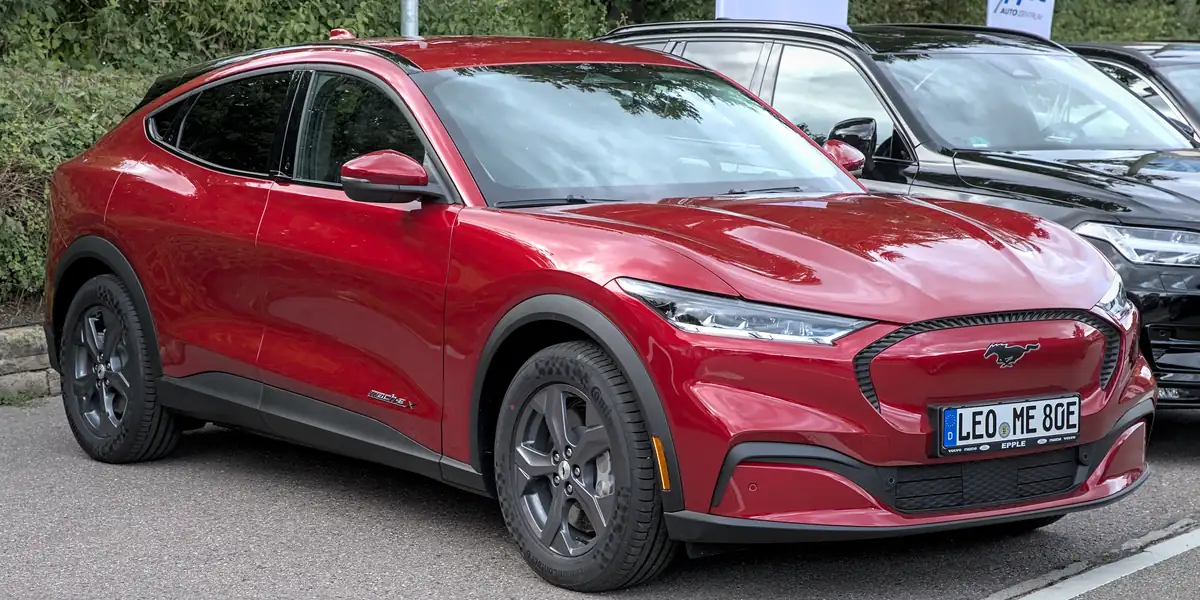
Winter range and the heat pump
Cold costs every Mach-E range, it costs the LFP cars more, and from 2025 a standard heat pump claws some of it back.
Two separate things happen in winter. The battery itself delivers less and accepts charge more slowly when cold — and this effect is stronger in LFP chemistry than in NCM, the honest price of the Standard Range car’s other virtues. Separately, heating the cabin is a direct energy drain. Recurrent’s fleet-wide winter analysis puts the average EV at roughly 78% of its rated range at freezing temperatures, and the Mach-E is not exempt from that physics.
Ford’s countermeasure arrived with the 2025 model year: a heat pump became standard, replacing simple resistive heating and cutting the cabin-heat penalty. Earlier cars heat resistively and feel winter harder. Whatever the year, the working habits are the same — precondition the cabin and battery while the car is still plugged in, and expect a DC fast charge on a cold-soaked pack to start slowly until the pack warms.
Charging the Mach-E: Fast, Home and Tesla Plugs
The Mach-E is a 400-volt, 150 kW car: not the fastest charger in its class, and honest about it once you look past the peak.
DC fast charging: the 150 kW peak and the taper behind it
Peak rate is 150 kW on Extended Range cars and on the LFP Standard Range cars (115 kW on the original NCM Standard Range cars) — but the average across a session is the number that plans your stop.
Ford’s quoted 10–80% times for 2024-and-later cars are about 32 minutes for the Standard Range LFP car and 36 minutes for the Extended Range car — the 2024 model year brought roughly 20% faster DC charging. The original Extended Range cars were rated at about 45 minutes for the same window when new, so an early car’s roadside manners are a generation behind its badge. What governs all of them is the taper: the rate holds near its best early in the session and falls away steeply past 80%, which is why experienced owners unplug at 80% and drive.
Home charging times
At home the Mach-E charges at up to about 11 kW (48 amps), and Ford publishes the full-charge times itself.
- Ford Connected Charge Station (48 A, 240 V): a full charge takes about 7.8 hours on the Standard Range pack and about 9.6 hours on the Extended Range pack, per Ford’s own figures; the EPA’s records list up to 10.2 hours for the Extended Range all-wheel-drive cars. Either way, it is an overnight charge with hours to spare.
- Ford Mobile Power Cord on 240 V (32 A): the middle path — meaningfully slower than the wall station but still an overnight fill for most drivers’ daily use.
- Mobile cord on a household 120 V outlet: a trickle of roughly 3 miles of range per hour. It keeps a commuter alive in a pinch; it is not a way to refill a 91 kWh pack.
Tesla Superchargers: an adapter, not a native plug
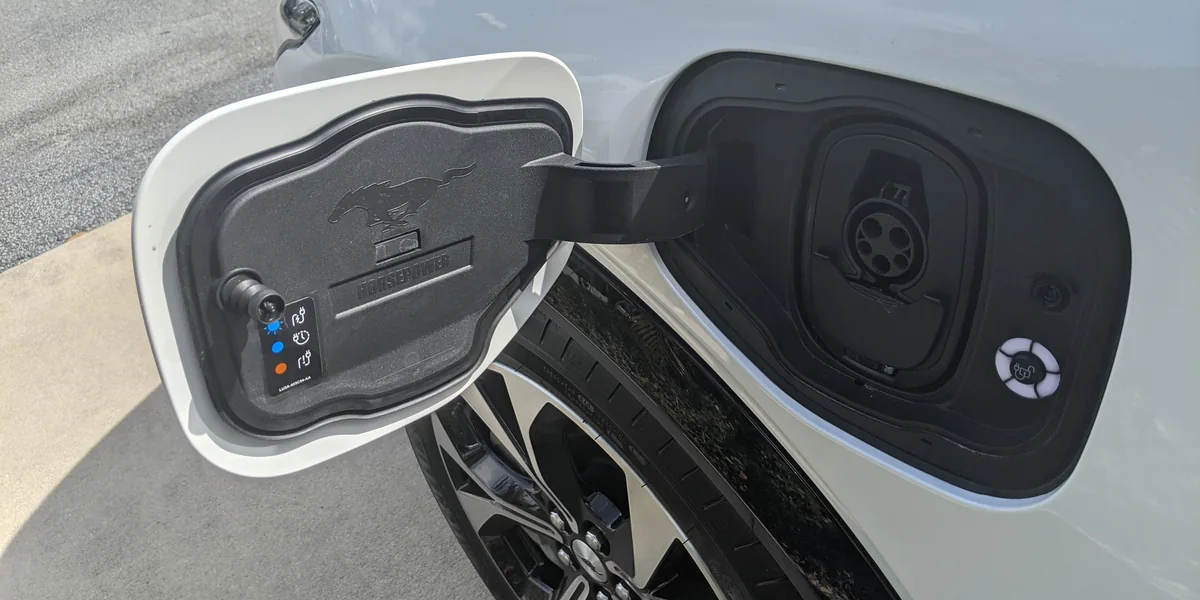
Since February 29, 2024, the Mach-E can charge at Tesla Superchargers — Ford’s drivers were the first non-Tesla owners with access — but every Mach-E ever built has a CCS1 port, so an adapter is always part of the story.
The Ford Fast Charging Adapter clips the car’s CCS1 port to a Tesla NACS plug. It was free to reserve until June 30, 2024, and sold for $230 after that (around $200 more recently). It works at V3 Superchargers, not the older V2 stalls, and Tesla only approves listed adapters — the Ford unit is the safe buy. Some guides claim the Mach-E switched to a native Tesla-style port for 2025. It did not: open the charge door on any Mach-E, current model year included, and you will find CCS1. Budget for the adapter if Supercharger access matters to you, and treat it as part of the car.
How to Charge Each Pack: Ford’s Own Settings
Ford’s owner’s manual gives the two packs different orders — follow your pack’s settings, not generic internet advice.
The guidance below is Ford’s, from the manual’s “Preserving Your High Voltage Battery” section (2024 US edition), and it splits cleanly by chemistry:
- NCM packs (every Extended Range car, plus Standard Range cars built before the 2023 switch): set the maximum charge level to 90% for everyday use — Ford’s words are that this “reduces strain on the battery”. Let the pack cool before charging: set the schedule to start at least 2–3 hours after you plug in. Save 100% for trips, and drive soon after a full charge rather than letting the car sit full.
- LFP packs (Standard Range cars from mid-2023): set the maximum charge level to 100%, and — in the manual’s exact words — “charge to 100% at least once per month to maintain range accuracy”. The flat voltage curve of LFP is why: the car needs occasional full charges to know where its own battery stands. Daily 100% charging is within this pack’s design intent; the monthly full charge is a calibration duty, not a treat.
- Both packs: if the car will sit unused for more than about 30 days, park it near 50% charge. If it ever reaches 0%, recharge as soon as possible. And use the departure-time settings while plugged in — warming or cooling the pack and cabin from the wall is free range and free battery life.
Ford’s settings are the floor, not the whole subject — the general habits that apply across brands (charge timing, storage, fast-charge frequency) are in our guide to the best EV charging habits to extend battery life.
Degradation: Ford’s 36,000-Car Answer
Ford measured its own fleet, and the headline is 92%: after about five years, the average 2021 Mach-E still holds 92% of its original battery capacity.
This is the strongest degradation evidence available for any EV on sale, because it is not a survey or a sample — it is Ford’s own data from more than 36,000 2021 Mustang Mach-Es in the US and Canada, cars that had together covered over 2 billion miles at the time of the study. The spread matters as much as the average: 95% of the cars sat between 87% and 97% of original capacity. Degradation on this car is a narrow distribution, not a lottery.
What happens past 100,000 miles
The high-mile numbers hold up the same way. More than 2,000 of the studied cars had passed 100,000 miles on their original batteries and averaged over 91% capacity remaining. The 30-plus cars past 200,000 miles averaged 88%. Ford says the packs were designed to retain at least 90% at 100,000 miles, and the fleet is landing on that design target rather than below it. The extreme case makes the same point at single-car scale: one 2022 Mach-E passed 316,000 miles on its original pack still showing 92% battery health and about 300 miles of range on a full charge.
What this means if you are buying used
What this means in practice: a five-year-old Mach-E showing around 90% state of health is a normal car, not a worn-out one, and a used buyer should be suspicious of claims in either direction — a car far below the band deserves a hard question, and the warranty floor of 70% sits so far under the observed curve that reaching it means a defective pack, not an old one. For the mileage-by-mileage breakdown and how to check a specific car’s state of health, see our dedicated Mustang Mach-E battery degradation guide.
Read more: how long EV batteries last across brands — and where the Mach-E’s numbers sit in that wider picture.
Battery Warranty: 8 Years, 100,000 Miles, 70% Floor
Ford covers every Mach-E battery — LFP and NCM alike — for 8 years or 100,000 miles, and guarantees at least 70% of original capacity inside that window.
If the pack falls below 70% within the coverage, Ford repairs or replaces it at its cost. The terms are the industry’s standard US EV battery promise — the same shape as Tesla’s and the federal expectation — and on this car the fleet data reframes what the promise is for. With the average five-year-old car at 92%, the 70% floor is not a wear allowance you are expected to consume; it is a defect guarantee. A healthy Mach-E pack should never come near it.
How much warranty is left on a used Mach-E?
The used-buying arithmetic follows directly. A 2021 car is covered until 2029 or 100,000 miles, whichever arrives first — and on most early cars the miles will end the cover before the years do. When you shop, the two numbers to write down are the car’s in-service date and its odometer; together they tell you exactly how much of Ford’s promise is still attached to the car.
Our EV battery warranty guide explains how these guarantees work and what they leave out.
What a Replacement Battery Actually Costs
Out of warranty, a full Mach-E pack replacement at a dealer is a five-figure event — roughly $12,000–$17,000 for the Standard Range pack and $15,000–$22,000 for the Extended Range pack, parts and labour included.
Those ranges come from independent 2026 replacement-cost guides rather than a Ford list price, and individual quotes move with the pack, the dealer and whether a remanufactured unit is available. Read them as the planning number for the worst case, not as a quote.
The cheaper repair: a module, not the whole pack
The more realistic repair is smaller: the Mach-E pack is modular, and a failed module can be replaced on its own — roughly $2,000–$7,000 depending on how many modules are involved. The junction-box and contactor faults behind the big recall were likewise component repairs, not new packs.
Should the replacement cost worry you?
Context decides whether any of this should worry you. Inside the warranty window, a pack that fails or falls below 70% is Ford’s bill. Outside it, Ford’s own fleet data says degradation alone is not going to present you with this invoice — at 92% after five years, the rest of the car will wear out around a healthy pack. The honest summary: replacement cost is a reason to check a used car’s warranty status carefully, not a reason to avoid the car. Our cross-brand EV battery replacement cost guide puts these figures beside Tesla, Hyundai and others.
Recalls to Check Before You Buy (or Book In)
One recall defines this car’s battery history: the high-voltage contactor recall — and the used-buying rule is to verify the hardware fix, not just the software one.
Act one: the 2022 contactor recall (22V-412)
It arrived in two acts. In June 2022, Ford recalled 48,924 Mach-Es from the 2021–2022 model years (NHTSA 22V-412) because the high-voltage battery’s main contactors could overheat under DC fast charging and repeated hard acceleration; a damaged contactor could open and cut drive power without warning. The first remedy was software — updates that watch contactor temperature and trim power to protect it. Then the failures kept coming on already-fixed cars: NHTSA opened a formal query (RQ23-004) after a dozen owner complaints, and Ford’s own count of post-fix overheating events reached 107.
Act two: the junction-box fix (23S56)
So in October 2023 came the hardware remedy: recall 23V-687 (Ford 23S56), covering 34,762 Extended Range cars, under which dealers replace the high-voltage battery junction box — the assembly that houses the contactors — free of charge. Cars that received only the 2022 software update still need the box. On a used 2021–2022 Extended Range car, ask for paperwork with 23S56 on it, or run the VIN and check that the recall shows completed; “the recall was done” meaning the software is not the answer you want.
The 12-volt recall: doors that can stay locked (25V-404)
The second recall nearly every Mach-E needs is about the small battery, not the big one.
In June 2025 Ford recalled 197,432 cars from 2021–2025 (NHTSA 25V-404): if the 12-volt battery runs down below about 8.4 volts, the electronic door latches can stay locked after the front occupants get out — a genuine entrapment risk for a child in the back seat. The fix is a software update, and it briefly put new cars under a stop-sale. It is also a useful reminder that every EV still depends on a conventional 12-volt battery — our explainer on why EVs have a 12-volt battery too covers what it runs.
Two smaller items complete the VIN check: a windshield and panoramic-roof bonding recall on early 2021 cars, and a December 2025 software recall (25V-863) for a park-module fault on 2024–2026 cars. Run any Mach-E’s VIN through NHTSA’s free recall lookup before money changes hands — it takes two minutes and settles every item in this section at once.
Frequently Asked Questions
What size battery does the Mustang Mach-E have?
Three sizes on the current US spec sheet: a 73 kWh usable LFP pack in Standard Range cars, an 88 kWh usable NCM pack in the Premium Extended Range, and a 91 kWh NCM pack in the GT and Rally. Older cars differ: Extended Range cars sold from 2022 to 2025 were rated 91 kWh usable (2021 cars 88), and pre-LFP Standard Range cars were 70 kWh usable (68 in 2021).
Is the Mach-E battery LFP or NMC?
Both, depending on the pack and the build date. Extended Range cars are always NCM. Standard Range cars are NCM if built before the spring 2023 switch and LFP after it. Ford’s owner’s manual gives the test: if the 8th digit of the VIN is a 4 or a 5, the car has the LFP battery; anything else means NCM.
How long does a Mustang Mach-E battery last?
Ford’s data from more than 36,000 cars shows an average of 92% capacity remaining after about five years, with cars past 100,000 miles averaging over 91% on their original packs. The packs were designed to retain at least 90% at 100,000 miles. The warranty guarantees the floor — 70% within 8 years or 100,000 miles — and real cars are running far above it.
Should I charge my Mach-E to 90% or 100%?
It depends on the pack, and Ford’s manual is explicit. NCM cars: set a 90% maximum for everyday use and save 100% for trips. LFP cars (Standard Range, mid-2023 onward): set the limit to 100% and charge fully at least once a month, which the car needs to keep its range estimate accurate.
How much does a Mach-E battery cost to replace?
Independent 2026 cost guides put a full dealer replacement at roughly $12,000–$17,000 for the Standard Range pack and $15,000–$22,000 for the Extended Range pack, parts and labour included. Replacing individual modules instead of the whole pack runs roughly $2,000–$7,000. Inside the 8-year/100,000-mile warranty, a pack below 70% capacity is Ford’s cost, not yours.
Which Mustang Mach-E has the longest range?
The Premium with the Extended Range battery and rear-wheel drive: 320 miles on the EPA cycle, for both the 2025 and 2026 model years. The all-wheel-drive version of the same car is rated at 300 miles, and the GT at 280.
Can the Mustang Mach-E charge at Tesla Superchargers?
Yes — since February 29, 2024, using Ford’s Fast Charging Adapter, and Ford’s drivers were the first non-Tesla owners with access. The adapter works at V3 Superchargers, not V2 stalls. The Mach-E’s port is CCS1 on every model year, so the adapter is always required; claims of a native Tesla-style port on newer cars are wrong.
What recalls affect the Mach-E battery?
The significant one is the high-voltage contactor chain on 2021–2022 cars: recall 22V-412 (software remedy, 2022) followed by 23V-687 (junction-box replacement on 34,762 Extended Range cars, 2023) — a used car should have the hardware fix completed. Separately, the 2025 recall 25V-404 covers a 12-volt battery condition that can leave the door latches locked on 2021–2025 cars. Check any car’s VIN on NHTSA’s lookup to confirm its status.
Conclusion
The Mach-E’s battery story, separated into its layers, is simpler than the blended version: pick the chemistry that matches how you charge, and the car takes care of the rest.
If your life is a home charger and a daily commute, the LFP Standard Range car is the low-effort choice — plug it in, charge it fully, and let its longer cycle life work. If your life includes winter road trips, the NCM Extended Range car earns its keep with 320 miles and better cold manners, at the price of one setting: 90% for the daily charge.
Over both sits the evidence that settled the argument the early recalls started — 36,000 real cars, 92% capacity after five years, and a warranty floor the fleet is nowhere near touching. Check the VIN for the junction-box fix on an early car, set the charge limit your pack asks for, and this is one of the more durable battery propositions in the class.
