
Audi Q6 e-tron Battery: Complete Guide

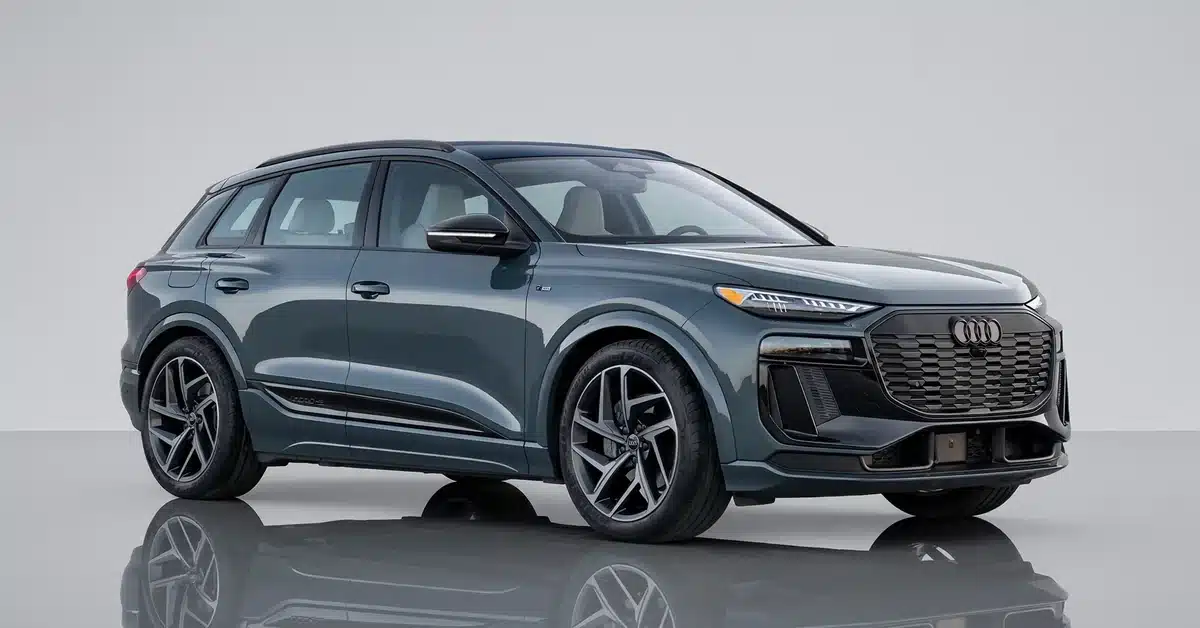
Researched from Audi USA and Audi AG specifications, EV Database measurements, Battery Design’s pack analysis and Car and Driver’s 75-mph highway test, November 2026.
The Audi Q6 e-tron runs on an 800-volt PPE-platform battery: 100 kWh gross in every US car (94.4 kWh usable by Audi USA’s figure), NMC chemistry, charging at up to 270 kW. Europe also gets a smaller 83 kWh pack the US never received. US range tops out at 325 miles EPA for the 2027 quattro; European cars are rated up to 679 km WLTP. Its signature trick is bank charging — the pack splits in two to charge at up to 135 kW on older 400-volt stations, including Tesla Superchargers.
Audi Q6 e-tron Battery Specs at a Glance
Two packs exist; which one you get depends on your continent — America only ever received the big one.
| Pack | Usable capacity | Cells / modules | DC peak | Where it is sold |
|---|---|---|---|---|
| 100 kWh (gross) | 94.9 kWh (94.4 in US spec) | 180 prismatic / 12 modules | 270 kW | US and Europe |
| 83 kWh (gross) | 75.8 kWh | 150 prismatic / 10 modules | 225 kW | Europe only |
One documentation wrinkle is worth knowing before the rest of this guide: Audi’s German and global materials list the big pack at 94.9 kWh usable, while Audi of America’s own specifications say 94.4 kWh. It is the same physical battery — the difference is in how the two organisations publish the figure. This guide uses 94.9 for European cars and 94.4 for US cars, exactly as each market’s own Audi importer states it. Both packs are nominally 800-volt (the big pack’s nominal voltage is 662 V) and both use prismatic cells in a flat underfloor layout shared with the A6 e-tron and the Porsche Macan Electric.
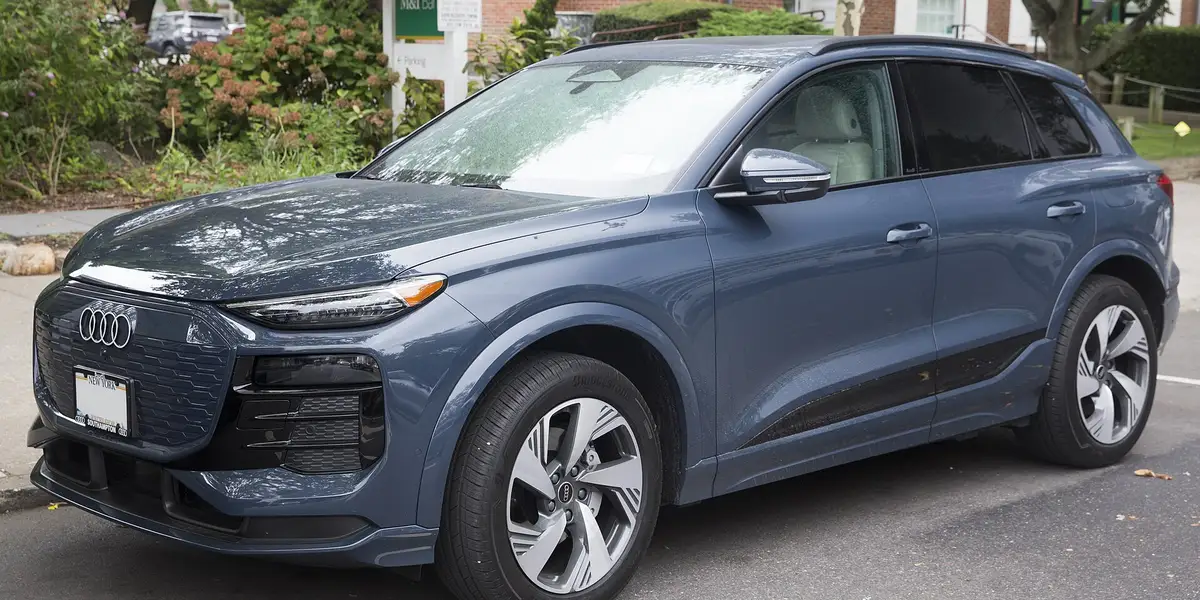
Inside the Pack: NMC Cells, 180 of Them
The chemistry question has a clean answer — NMC, in an 8:1:1 nickel-rich ratio — but the supplier question honestly does not.
Audi’s own material describes the cathode as a nickel-manganese-cobalt mix at roughly an 8:1:1 ratio, which puts the Q6’s cells in the NMC811 family — the same high-nickel chemistry as most premium EVs of its generation, and the direct answer to the “LFP or NMC?” question searchers keep asking: it is NMC, in every market and every variant. There is no LFP Q6. The 100 kWh pack arranges 180 prismatic cells of about 151 Ah each across 12 modules; the 83 kWh pack uses 150 cells in 10 modules.
Who manufactures those cells is where the record splits. Audi has never named a supplier. Battery Design’s detailed pack analysis and Wikipedia attribute the cells to CATL; CarExpert’s Australian specification database lists LG Energy Solution. Both are plausible — the Volkswagen Group buys from both — and this guide reports the disagreement rather than picking a winner, because no primary source settles it. On energy density, Audi publishes no Wh/kg figure at all; Battery Design’s analysis puts the pack at 169.5 Wh/kg (590 kg for 100 kWh), which is the only sourced number available, and it is a pack-level figure from a third-party analysis, not an Audi claim.
Bank Charging: The 400-Volt Trick
On a 400-volt charger, the Q6’s pack splits itself into two half-packs and charges both at once — up to 135 kW where an ordinary 800-volt car would crawl.
This is the Q6’s most distinctive engineering feature, and Audi’s own description is precise: when the car detects a 400-volt station, battery-management switching divides the pack into two “banks” of equal voltage, equalises their charge levels first if needed, then charges both in parallel in lockstep. The result is up to 135 kW on hardware that limits most 800-volt cars to a fraction of their peak. Our 400V vs 800V explainer covers why that voltage gap exists in the first place.
For US owners this is not a curiosity — it is how the car uses Tesla’s network. Superchargers are 400-volt-class hardware, so a Q6 at a Supercharger is bank charging. Audi gained access on September 9, 2025; the official NACS adapter (part 8B3054411, $200) is supplied free as a port-installed option on new Q6s, the car’s own port remains CCS1, and sessions are activated through the Tesla app. On an 800-volt charger none of this matters: the full pack takes up to 270 kW, as the next section details.
Charging Speeds and Times
Audi claims 21 minutes for 10–80%; independent charging-curve data says 23 minutes at a 186 kW average — both are printed here, because the gap between them is the honest story.
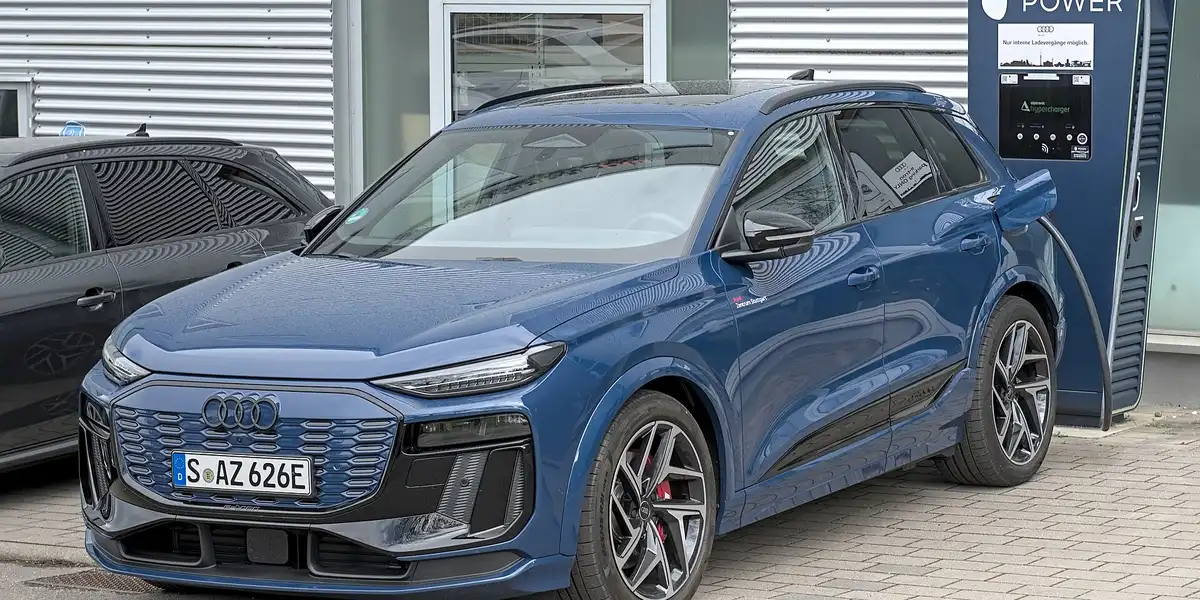
The big pack peaks at 270 kW; the 83 kWh European pack peaks at 225 kW and averages about 150 kW across 10–80% by EV Database‘s figures. Audi’s headline claim for the 100 kWh car is 10–80% in 21 minutes; EV Database’s measured curve averages 186 kW and completes the same window in about 23 minutes. Treat the claim as the best case and the measurement as the planning figure — a two-minute gap is small, but it is real, and it widens in cold weather.
At home, every Q6 charges at 11 kW AC (about nine and a half hours for a full charge of the big pack). There is no 22 kW onboard-charger option — if a listing or review mentions 22 kW for this car, it is describing a charging cable’s rating, not the car’s. Plug & Charge is supported on compatible networks in both markets.
Range: EPA, WLTP and What Testers Actually Measured
Rate the car by your own market’s number — 325 miles EPA in the US, up to 679 km WLTP in Europe — and plan real journeys on the measured figures below both.
US EPA ratings: the 2025 launch cars scored 321 miles (rear-wheel drive), 307 miles (quattro) and 275 miles (SQ6). For 2027 — there was no 2026 model year; Audi skipped it — the quattro is rated at 325 miles and the SQ6 at 285 miles in Audi USA’s own specifications. European WLTP ratings run higher, as WLTP always does: the SUV is rated from 533 km (83 kWh) through 641–642 km (100 kWh quattro, depending on model year) to a 679 km maximum for the latest rear-drive performance version, with the Sportback’s sleeker body adding a few kilometres (up to 656 km in earlier ratings).
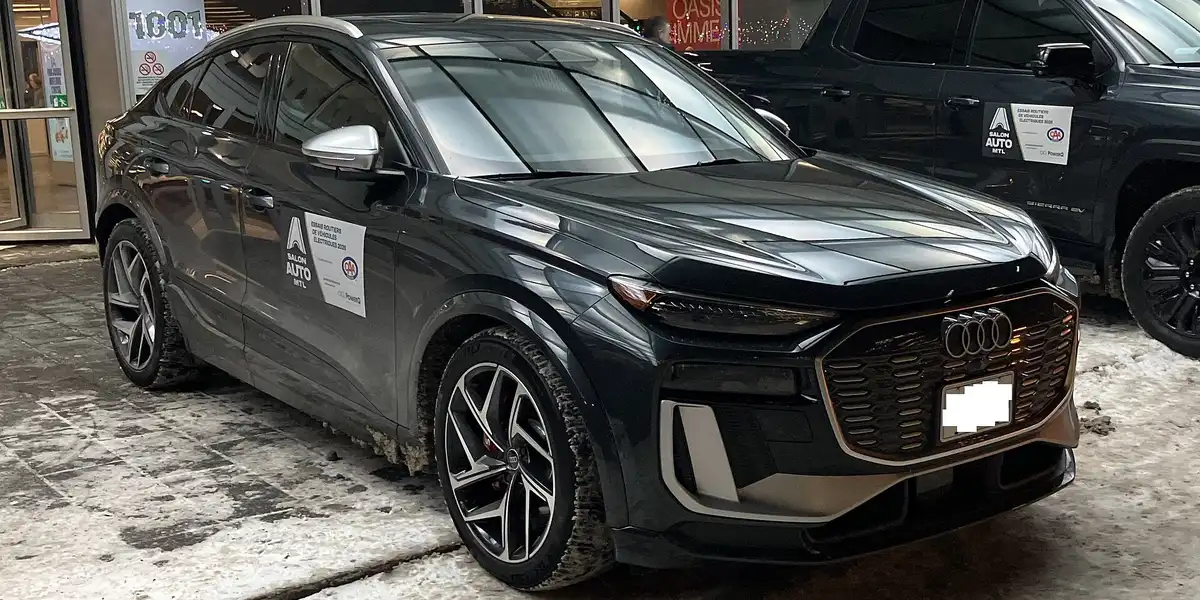
Independent measurements sit below both official scales, as they should. Car and Driver’s 75-mph highway test returned 250 miles for a US quattro car; MotorTrend’s 70-mph test managed 285. EV Database estimates 480 km of real mixed range for the big-pack car, and about 405 km in cold conditions. None of this is a Q6 failing — it is the normal distance between laboratory cycles and the road, and it is why this guide prints the measured numbers alongside the rated ones rather than instead of them.
US Pricing and the Line-Up Americans Actually Get
For 2027 the US range is quattro-only, from $64,500 plus $1,395 destination — and there is no cheaper small-battery car coming.
The American story in brief: the Q6 launched for 2025 with a rear-drive car at $63,800, Audi skipped the 2026 model year entirely (listings advertising a “2026 Q6” are selling carryover 2025 stock), and the car returns for 2027 in quattro form from $64,500, with the Sportback quattro at $68,300 and the SQ6 above both. Every US car has the 100 kWh pack — the 83 kWh entry car that anchors European pricing (the range starts at €63,500 in Germany for 2027) is not offered in America. Shoppers cross-shopping within the brand should know the Q6 sits between two relatives this site has already covered in depth: the smaller Audi Q4 e-tron and the larger, older Audi Q8 e-tron.
Degradation, Warranty and the 12-Volt Battery
The warranty paperwork differs by market in one important way: Europe guarantees a 70% capacity floor in writing; Audi’s US booklet, unusually, states no percentage at all.
- US battery warranty: 8 years / 100,000 miles — with no capacity percentage stated in the warranty booklet, per a close reading of the document (most rivals print 70%)
- UK/EU battery warranty: 8 years / 160,000 km with an official 70% capacity guarantee
On degradation, the honest position mirrors the supplier question: no published state-of-health dataset for the Q6 exists, and the generic “1–2% per year” figures quoted for it elsewhere are fleet-wide models, not measurements of this car. What Audi does commit to is repairability at module level — replacing individual modules is a documented dealer procedure — plus a second-life pathway for retired packs through its BattMAN analysis system.
And the small battery: like almost every EV, the Q6 carries a separate 12-volt auxiliary battery in the front compartment for its low-voltage systems (our 12-volt explainer covers why). Audi’s official rescue documentation confirms the unit’s presence and location but never publishes its chemistry; aftermarket fitment data specifies a conventional AGM lead-acid battery (H6 size), which is the best available evidence — probable, but not factory-confirmed. Do not confuse it with the e-tron GT’s lithium 12-volt unit; that is a different car.

Q6 e-tron vs Porsche Macan Electric
Same platform, same pack, same charging — the Macan costs about $16,000 more to start and gives a little of it back in highway range.
| Car | Battery (usable) | DC charging | US range (EPA) | US starting price |
|---|---|---|---|---|
| Audi Q6 e-tron quattro | 94.4 kWh | 270 kW, ~21–23 min | 325 mi (2027) | $64,500 |
| Porsche Macan Electric (RWD) | 94.4 kWh (same pack) | 270 kW, ~21 min | Up to 332 mi | From $80,300 (2026) |
The Macan Electric is the Q6’s platform sibling — identical battery hardware, identical bank-charging trick — tuned and priced as a Porsche: its rear-drive car reaches 332 miles EPA and returned 260 miles in the same Car and Driver highway test where the Q6 managed 250. Buyers choosing between them are paying for chassis tuning, interior and badge, not for battery technology. The other sibling worth one line: the Audi A6 e-tron uses these exact packs — same gross and usable capacities, same module counts, same charging — in a lower sedan body, which is why its range figures run slightly higher on the same energy.
Frequently Asked Questions
Is the Audi Q6 e-tron battery LFP or NMC?
NMC — a nickel-rich 8:1:1 ratio (NMC811 family), in every variant and every market. There is no LFP version of the Q6 e-tron.
How big is the Audi Q6 e-tron battery?
100 kWh gross — 94.9 kWh usable in European specification, 94.4 kWh in Audi USA’s published figure — with 180 prismatic cells in 12 modules. Europe also gets an 83 kWh pack (75.8 usable, 150 cells, 10 modules) that was never sold in the US.
What is the energy density of the Q6 e-tron battery?
Audi does not publish one. Battery Design’s pack analysis calculates 169.5 Wh/kg at pack level (590 kg for the 100 kWh pack). Any cell-level Wh/kg figure quoted for this car has no traceable source.
What is bank charging?
On a 400-volt charger, the car switches its pack into two equal-voltage banks and charges them in parallel, reaching up to 135 kW — far more than most 800-volt cars manage on older hardware. It is also how the Q6 charges at Tesla Superchargers, which are 400-volt-class stations.
How long does the Q6 e-tron battery last?
No measured dataset exists for this model yet. Europe’s warranty guarantees 70% capacity for 8 years or 160,000 km; the US warranty runs 8 years or 100,000 miles but states no capacity percentage. Generic per-year degradation percentages quoted for the Q6 are models, not measurements.
Does the Q6 e-tron have the same battery as the A6 e-tron?
Yes — identical packs: the same 100 and 83 kWh batteries with the same usable capacities, module counts and charging speeds. Only the bodies and the resulting range figures differ.
What type of 12-volt battery does the Q6 e-tron have?
Audi confirms a 12-volt auxiliary battery in the front compartment but does not publish its chemistry. Aftermarket fitment specifies a conventional AGM lead-acid unit (H6) — the best available evidence, though not factory-confirmed. It is not the lithium unit used in the e-tron GT.
Can the Q6 e-tron use Tesla Superchargers?
Yes, since September 9, 2025, with Audi’s official NACS adapter (part 8B3054411, $200, supplied free as a port-installed option on new Q6s). The car’s port remains CCS1, sessions run through the Tesla app, and at the Supercharger’s 400-volt-class hardware the car charges via bank charging at up to 135 kW.
Conclusion
The Q6 e-tron’s battery story is one of honest numbers published inconsistently: a strong 800-volt NMC pack whose own maker quotes two different usable capacities on two continents.
Strip the paperwork away and the hardware is genuinely good — 270 kW charging that independent curves nearly match, a bank-charging system that turns the world’s 400-volt infrastructure from a weakness into a non-issue, and range that survives contact with a 75-mph highway test better than most. What a buyer must do is read the right market’s sheet: EPA miles and 94.4 kWh in America, WLTP kilometres and 94.9 in Europe, a written 70% floor only on the European warranty. This guide has kept those sheets separate throughout, because on this car, that separation is the whole job.
