
BYD Dolphin Surf Battery: Complete Guide


Battery figures are BYD Europe’s published launch specification, cross-checked against EV Database; charging and consumption measurements are ADAC’s; safety ratings are Euro NCAP’s; warranty terms are BYD’s January 2026 European release.
The BYD Dolphin Surf is the smallest and cheapest electric car BYD sells in Europe — and it is not a version of the BYD Dolphin. The Surf is the European name for the Seagull, the city car BYD has sold in China since 2023, and it sits a full size class below the Dolphin hatchback it shares a showroom and half a name with. Keeping the two cars apart matters, because their batteries, ranges and charging speeds are completely different.
BYD launched the Dolphin Surf in Berlin on 21 May 2025, and the car arrived with a headline already attached: in April 2025 its Chinese-market twin had been named the 2025 World Urban Car of the Year. Every version uses a lithium iron phosphate (LFP) Blade Battery in one of two sizes — 30 kWh or 43.2 kWh — and the car is not sold in the United States in any form. This guide covers the European car: its verified battery specifications, how far it really travels, how fast it really charges, what it costs, and what its battery warranty actually promises.
Key figures: 30 / 43.2 kWh LFP · 220–322 km WLTP · DC 65 / 85 kW · AC 11 kW · from £18,650 · warranty 8 yr / 250,000 km.
Battery Sizes and Specifications
The Dolphin Surf has exactly two batteries, and both are LFP Blade packs: 30 kWh in the Active, and 43.2 kWh in the Boost and Comfort.
| Trim | Battery | WLTP range (combined) | WLTP range (city) | Motor | 0–100 km/h | DC charging peak |
|---|---|---|---|---|---|---|
| Active | 30 kWh LFP | 220 km (137 mi) | 356 km | 65 kW (88 PS) | 11.1 s | 65 kW |
| Boost | 43.2 kWh LFP | 322 km (200 mi) | 507 km | 65 kW (88 PS) | 12.1 s | 85 kW |
| Comfort | 43.2 kWh LFP | 310 km (193 mi) | 460 km | 115 kW (156 PS) | 9.1 s | 85 kW |
BYD publishes a single capacity figure for each pack and does not split it into gross and usable values. EV Database treats BYD’s figures as the usable capacity and estimates the nominal capacity at about 32 kWh for the smaller pack and 46 kWh for the larger one; those nominal figures are EV Database estimates, not BYD numbers. Green NCAP’s test documentation for the Boost records 43.2 kWh as both the declared usable and the installed capacity.
The European Version: A Seagull, Rebuilt for Europe
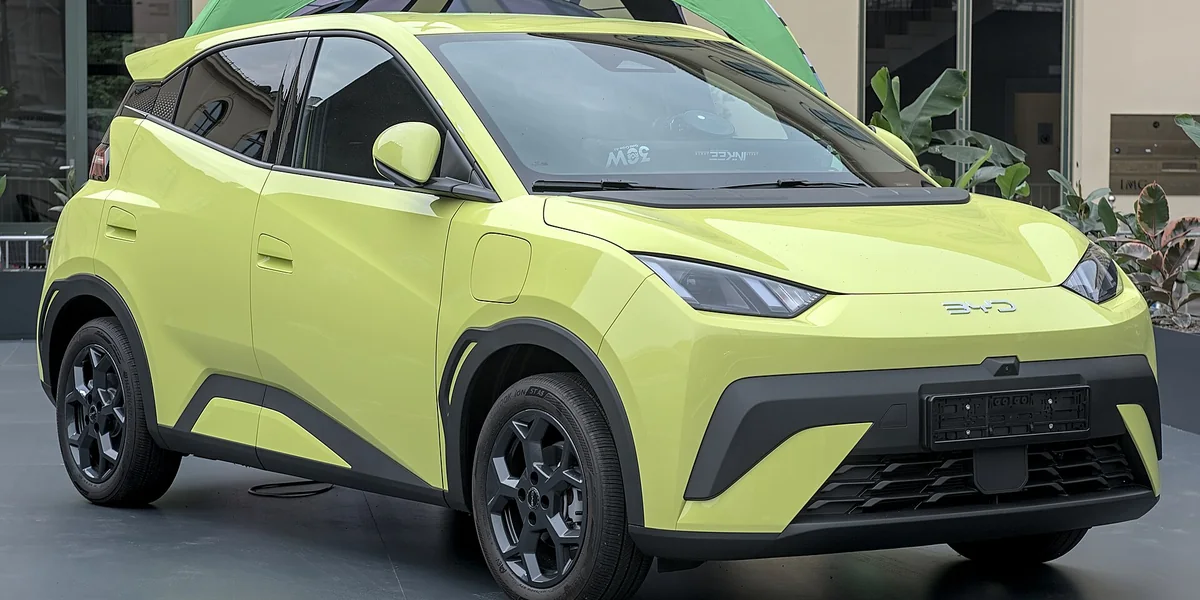
The European car is 210 mm longer than the Chinese Seagull and considerably quicker, and it carries a battery China does not get.
The Seagull has been on sale in China since 2023 with a 55 kW motor and packs of 30.08 and 38.88 kWh. For Europe, BYD stretched the car to 3,990 mm, fitted a 65 kW motor as standard and a 115 kW motor in the Comfort, and added the 43.2 kWh pack — a battery that is not sold in China, though it is also fitted to the same car in Australia and New Zealand, where the Surf is sold as the BYD Atto 1.
In Latin America the Chinese-specification car is sold as the Dolphin Mini. The original European car seats four; five-seat versions of the Boost and Comfort were added for the 2026 model year, alongside equipment changes, with the batteries and charging unchanged.
The Blade Battery: LFP, Built Into the Pack Floor
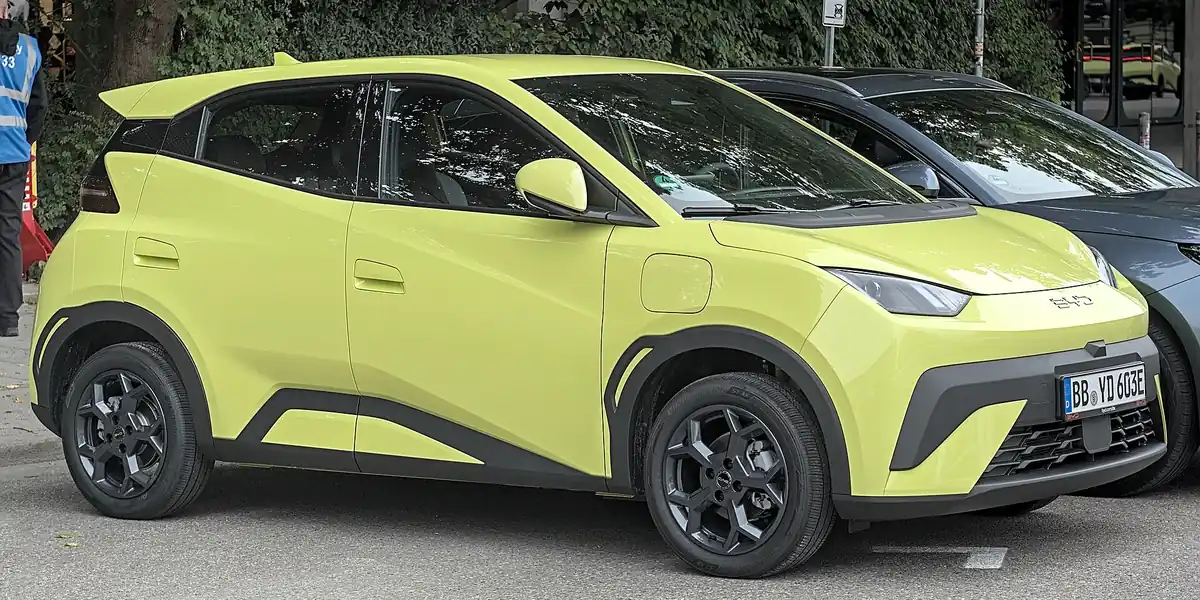
Both Dolphin Surf batteries are lithium iron phosphate Blade packs, built cell-to-pack with no modules in between.
The Blade Battery uses long, thin LFP cells that span the width of the pack and form part of its structure, which is how a car this small fits a 43.2 kWh battery under its floor. LFP chemistry brings two ownership advantages that suit a city car: it tolerates being charged to 100% regularly, and BYD recommends periodic full charges so the battery management system can calibrate its state-of-charge estimate.
BYD’s own claim for the Blade Battery, made in its January 2026 warranty release, is a cycle life exceeding 3,000 charge cycles; that is the manufacturer’s claim, stated as such. BYD demonstrated the Blade pack’s abuse tolerance at the battery’s 2020 launch with a nail-penetration demonstration in which the pierced pack produced no fire. Our guide to the Blade Battery explains the design in full.
Real-World Range: What Drivers Actually Get
Expect roughly 260–270 km from the 43.2 kWh car in mixed real-world driving, and about 190 km from the 30 kWh Active.
EV Database estimates the Boost’s real-world range at about 270 km combined, with scenario estimates of 245 km on the highway in mild weather and 190 km on the highway in cold weather; its estimate for the Active is about 190 km combined. ADAC’s instrumented test of the Boost measured consumption of 19.2 kWh per 100 km including charging losses — about 23% above the car’s WLTP rating — which works out to roughly 260 km against the 322 km WLTP figure, and ADAC warned that cold motorway driving may return little more than 150 km.
An Irish Times test of the Comfort returned about 250 km against its 310 km WLTP rating. The pattern is the usual one, only more visible in a small car: the WLTP figure is a best case, city driving comes closest to it, and winter motorway work is where the range falls furthest.
Charging: The Claim and the Measurement
BYD claims 10–80% in about 30 minutes; ADAC measured 45 minutes, and an honest guide has to carry both numbers.
What does BYD claim, and what did ADAC measure?
The Active peaks at 65 kW DC and the Boost and Comfort at 85 kW. BYD’s published claim is a 10–80% charge in around 30 minutes for all three versions. EV Database models the Boost at about 32 minutes, assuming a 60 kW average across the charge. ADAC’s Autotest, however, measured 45 minutes for the same 10–80% charge on the Boost — a reminder that the peak rate is held only briefly on a small, inexpensive pack. At home, all three versions charge at 11 kW AC, which fills the 43.2 kWh battery in about 4 hours 45 minutes.
What is missing — and what does V2L offer?
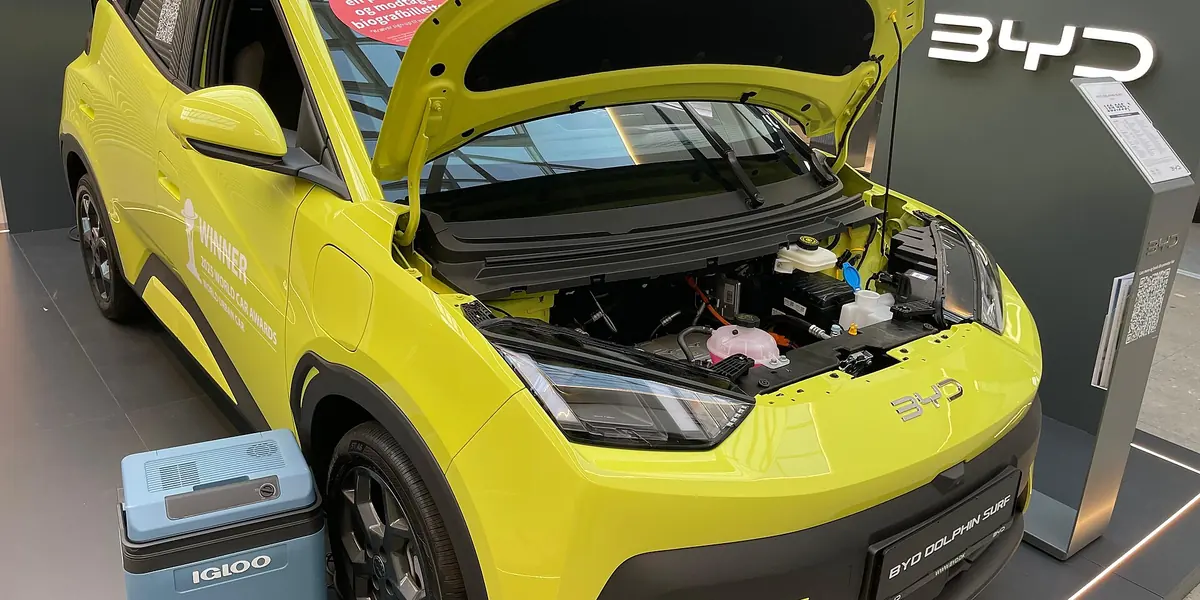
Two absences are worth knowing about. The Dolphin Surf has no battery preconditioning: the BYD app can warm or cool the cabin before a journey, but it cannot warm the battery on the way to a charger, so a cold pack charges more slowly. Nor is a heat pump fitted as standard in Europe — heating is by a PTC element, which is part of why winter range falls. The Boost and Comfort do offer vehicle-to-load (V2L) output at 3.3 kW through a Type 2 adapter, enough to run tools, lights or a cool box from the car.
Prices in the UK and Europe
The Dolphin Surf launched as one of Europe’s cheapest electric cars, from £18,650 in the UK.
UK launch prices in June 2025 were £18,650 for the Active, £21,950 for the Boost and £23,950 for the Comfort; UK listings in 2026 sit slightly higher, at £18,675, £21,975 and £23,975. German list prices at launch were €22,990, €26,990 and €30,990 for the same three trims, and Spanish list prices were lower again, from €19,990. In Australia the identical car, badged Atto 1, launched as the country’s cheapest EV at A$23,990 for the 30 kWh Essential and A$27,990 for the 43.2 kWh Premium. There is no single European price — always check the figure for the market you are buying in.
Battery Replacement Cost: No Official Price Exists
BYD does not publish a replacement-pack price for the Dolphin Surf, and no European dealer price for this model has surfaced — any specific figure you see quoted for it is invented.
That is the honest answer for a car that has been on sale since mid-2025 and sits under an 8-year battery warranty: almost no owner has had to buy a pack, so no real price list exists. The one widely shared story comes from Brazil, where a Dolphin Mini owner with accident damage was quoted R$130,000 by a dealer for a full pack — more than the car cost new — a figure later reported to have been revised to R$77,000.
It is a single disputed dealer quote for a damaged car, not a price, and it says more about early-parts pricing than about what a warranty-era replacement would cost. For how replacement pricing works across EVs in general, see our EV battery replacement cost guide.
Lifespan and Degradation: Too New to Measure
No real degradation dataset exists for the Dolphin Surf yet, because the car has only been on sale since 2025.
What can be said rests on the chemistry and the warranty rather than on fleet data. LFP packs degrade slowly in cycle terms, BYD claims a cycle life above 3,000 cycles for the Blade Battery, and the warranty guarantees at least 70% of capacity for 8 years or 250,000 km — a floor BYD would not offer if typical packs fell anywhere near it early in life. Charging to 100% regularly is normal practice for this chemistry and helps the charge estimate stay accurate. Anything more precise — a percentage per year, or a mileage at which the pack reaches 80% — would be a guess dressed as data, and this guide will not print one until measured evidence exists.
Warranty and Recalls
The battery warranty is 8 years or 250,000 km with at least 70% capacity guaranteed, and it improved after the car went on sale.
What is the Dolphin Surf battery warranty?
At the car’s June 2025 UK launch, the European mileage cap was 200,000 km. BYD raised the UK figure to 250,000 km (155,342 miles) in August 2025, and on 15 January 2026 extended 8 years / 250,000 km across the EEA, Switzerland and the UK, retroactively to existing owners — the Dolphin Surf is covered.
The vehicle warranty is 6 years or 150,000 km, and the drive unit 8 years or 150,000 km. In Australia, the Atto 1’s battery warranty is 8 years or 160,000 km. One caution from the launch period: the “five years of free servicing” offered in the UK in 2025 was a time-limited promotion on cars ordered in August and September of that year, not a standard part of the warranty.
Has the Dolphin Surf or Seagull been recalled?
On recalls, there is no battery recall for this car in any market. The Seagull’s one Chinese recall, in 2024, covered 16,666 early cars for a reversing-camera software fault, fixed over the air. A larger 2024 BYD recall that is sometimes attached to this model — 96,714 cars for a steering-column component — covered the larger Dolphin and the Yuan Plus, not the Seagull or the Surf. No EU Safety Gate alert or UK recall for the Dolphin Surf was on record as of November 2026.
Dolphin Surf or Dolphin: Two Different Cars
Choose the Surf for price and city work; the Dolphin is the bigger, longer-range car — they are not trim levels of one model.
The BYD Dolphin is a C-segment hatchback with usable batteries of 44.9 and 60.4 kWh, WLTP ranges of 340 and 427 km, and faster DC charging — a car for buyers who regularly leave the city. The Dolphin Surf is smaller in every dimension, cheaper by several thousand pounds, and built for urban and suburban use, where its WLTP city figures (up to 507 km on the Boost’s city cycle) flatter it for a reason.
If your driving is a commute and a weekly shop, the Surf’s smaller battery is not a compromise; if you run motorway miles weekly, the Dolphin’s larger pack earns its price. Our BYD Dolphin battery guide covers the bigger car in full.
The Other Cars Called Seagull
Three related cars wear this shape with different specifications, and their figures do not belong to the European Surf.
The original Chinese Seagull (2023) uses packs of 30.08 and 38.88 kWh rated on China’s CLTC cycle at 305 and 405 km, with DC charging of just 30 and 40 kW — noticeably slower than the European car, and the source of many wrong figures published about the Surf. In October 2026 BYD launched a second-generation Seagull in China: a larger, five-seat car with 30.1 and 39.2 kWh second-generation Blade packs and claimed five-minute flash charging.
It is a China-only car for now, with no export name or date announced, and it is not the car on sale in Europe. Finally, South Africa sells a car actually badged Dolphin Surf — but in Chinese specification, with the 38.8 kWh pack and the smaller motor. Same badge, different car: never merge their numbers.
Frequently Asked Questions
What battery sizes does the BYD Dolphin Surf have?
Two. The Active has a 30 kWh battery with a 220 km WLTP combined range; the Boost and Comfort have a 43.2 kWh battery with WLTP ranges of 322 km and 310 km. Both are lithium iron phosphate (LFP) Blade batteries.
Is the Dolphin Surf battery LFP or NMC?
LFP. Every Dolphin Surf, Seagull and Atto 1 uses BYD’s LFP Blade Battery; there is no NMC version of this car in any market.
How far does the Dolphin Surf really go on a charge?
EV Database estimates about 270 km of real-world range for the 43.2 kWh Boost and about 190 km for the 30 kWh Active. ADAC’s measured test of the Boost worked out to roughly 260 km, and cold motorway driving can return little more than 150 km.
How long does the Dolphin Surf take to charge?
BYD claims 10–80% in about 30 minutes on a DC charger, at peaks of 65 kW (Active) and 85 kW (Boost and Comfort). ADAC measured 45 minutes for 10–80% on the Boost. On an 11 kW home charger, a full charge of the 43.2 kWh battery takes about 4 hours 45 minutes.
Does the Dolphin Surf have battery preconditioning?
No. The car has no battery preconditioning function; the BYD app can precondition the cabin only. A cold battery will charge more slowly until it warms up in use.
Should I charge the Dolphin Surf to 100%?
Yes, regularly — that is normal for an LFP battery, and BYD recommends periodic full charges so the battery management system can calibrate its range estimate. The car has no heat pump, so winter consumption will rise regardless of charging habits.
What does a replacement Dolphin Surf battery cost?
There is no official price. BYD publishes no pack price for this car, and no European dealer price has surfaced; the car is also covered by an 8-year, 250,000 km battery warranty. A widely reported Brazilian dealer quote for a crash-damaged Dolphin Mini was an anecdote, not a price list.
How long is the Dolphin Surf battery warranty?
Eight years or 250,000 km (155,342 miles) in Europe and the UK, with at least 70% of the battery’s capacity guaranteed across the term. BYD raised the limit from 200,000 km after the car went on sale — in the UK in August 2025 and across Europe in January 2026 — and applied the longer limit to existing owners as well. In Australia, where the car is sold as the Atto 1, the battery warranty is 8 years or 160,000 km.
What 12V battery does the Dolphin Surf use?
BYD does not publish a specification for the Dolphin Surf’s 12V auxiliary battery, and no authoritative source for its type or capacity could be found. If yours needs replacement, the rating is printed on the battery itself and any BYD dealer can match it.
Is the Dolphin Surf sold in the United States?
No. The car is sold in Europe and the UK as the Dolphin Surf, in Australia and New Zealand as the Atto 1, in Latin America as the Dolphin Mini and in China as the Seagull. It has never been offered in the US.
Is the Dolphin Surf a hybrid?
No. It is a battery-electric car only; there is no petrol engine, hybrid or plug-in hybrid version in any market. BYD’s plug-in hybrids wear the DM-i badge on larger models.
Conclusion
The Dolphin Surf’s battery story is simple once the right car is being described: two LFP Blade packs, honest city-car range, modest charging speeds that fall short of BYD’s claim in independent testing, and one of the longest battery warranties in Europe — all in the cheapest package BYD sells. Get the specification right, and it is an easy car to recommend for the driving it was built for. If you are comparing small BYD models, our BYD Atto 2 battery guide covers the next size up.
