
Mercedes EQC Battery: Complete Guide

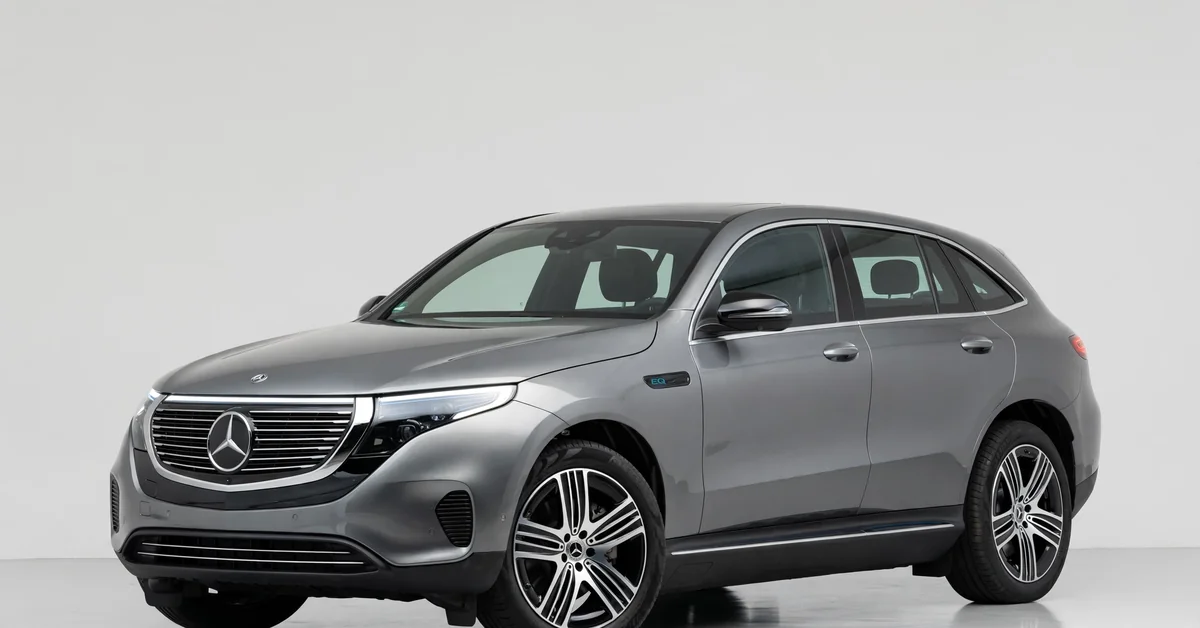
Researched from Mercedes-Benz launch and press material, EV Database measurements, Electrifying’s used-car health checks and UK fleet health studies, November 2026.
Quick answer
The Mercedes EQC has one battery: an 80 kWh usable NMC pack (about 85–86 kWh in total) weighing roughly 650 kg. Expect about 230 miles in real mixed driving, and measured fast charging of 36 minutes for 10–80% — slightly better than Mercedes claimed. The ownership story is unusually good: checked used cars at 30,000 miles were still showing 99% battery health. Two things to know before buying: cars ordered before November 2020 charge at home at only 7.4 kW, and there is no official replacement-battery price.
Mercedes EQC Battery Specs at a Glance
Every EQC 400 left the factory with the same battery and motors — the table below is the whole car.
| Item | Specification |
|---|---|
| Battery (usable / total) | 80.0 kWh / ~85–86 kWh (sources differ on the total) |
| Chemistry / cells | NMC622, 384 pouch cells in 6 modules |
| Pack weight | ~650 kg |
| Voltage | ~350 V nominal (400 V class) |
| Motors | Two induction motors, AWD — 300 kW (402 hp), 760 Nm |
| 0–62 mph / top speed | 5.1 seconds / 112 mph |
| WLTP range | Up to 269 miles, down to 231 miles by configuration |
| DC / AC charging | 110 kW claimed / 7.4 kW, or 11 kW from Nov 2020 orders |
| Production | May 2019 – mid-2023, Bremen, Germany |
The EQC was Mercedes’ first EQ car, launched in May 2019 and built on a converted GLC platform rather than a purpose-built EV architecture. That origin explains both its character — quiet, heavy, conventional to drive — and its limitations, because the battery had to fit a floor designed for a petrol car. Production ended in the second quarter of 2023, so every EQC is now a used car, and this guide is written for the people buying and running them. A detuned EQC 350 (210 kW, same battery design) was sold in Asian markets only; UK and European buyers will meet it, if at all, as an import.
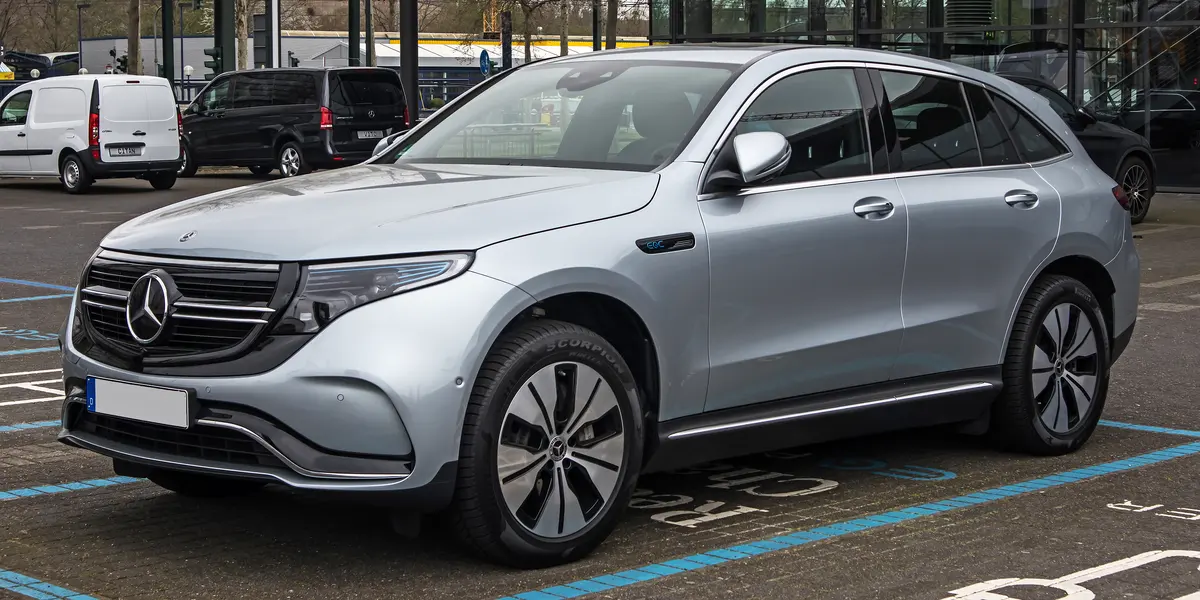
The Battery: NMC622 Pouch Cells, Assembled in Kamenz
The pack is 384 flat pouch cells in six modules, and its chemistry is NMC622 — a 2019-era nickel-rich recipe, not LFP.
EV Database lists the cathode as NMC622. The cells themselves were reported by DrivingElectric’s visit to the Kamenz plant as coming from outside suppliers including South Korea’s LG Chem — Mercedes has never published a single named supplier for the European car, so treat the LG Chem attribution as well-sourced reporting rather than a Mercedes statement. Assembly was in-house: Deutsche Accumotive, Mercedes’ own battery subsidiary in Kamenz, built the packs for European cars. China-built EQCs used locally sourced cells (Chinese data lists CATL) in a pack rated slightly differently, which is why Chinese specification tables do not quite match European ones.
Two design details matter for ownership. The pack is liquid-cooled and heated, with a heat pump fitted as standard, so winter charging and range behave better than the car’s age suggests. And the usable window is protected by a buffer of about 5–6 kWh between the 80 kWh you can use and the 85–86 kWh total — one of the reasons the health data in the battery-life section looks as good as it does. Our LFP vs NMC comparison covers how this chemistry family differs from the LFP packs that dominate cheaper EVs today.
Real-World Range: 230 Miles, and the Tests Agree
The honest planning number is about 230 miles in mixed driving — every serious test lands within a few miles of it.
The official ratings first: up to 269 miles WLTP in the most efficient configuration, down to 231 miles in the least, which is why older guides quote anything from 245 to 269. EV Database’s real-range estimate works out at 230 miles on average, dropping to about 196 miles in cold combined driving and rising to roughly 261 in mild weather. Cold motorway driving is the worst case it models, at about 168 miles.
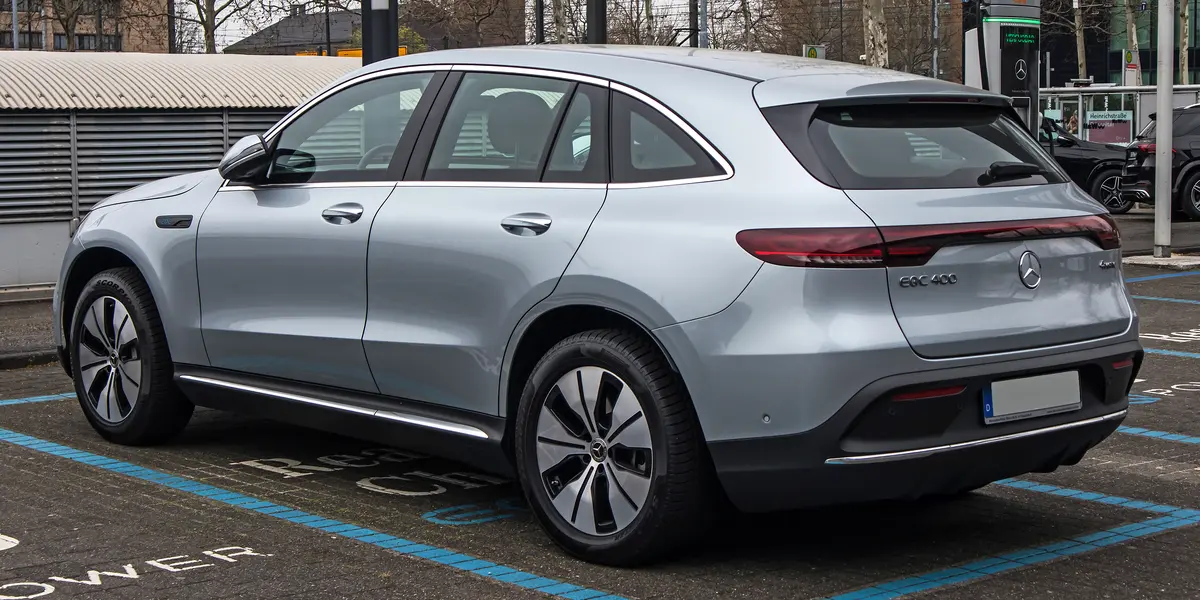
Named tests fill in the picture rather than contradicting it. Bjørn Nyland’s winter test, on winter tyres in wet conditions, returned 242 miles at 90 km/h and 176 miles at 120 km/h — strong cold-weather numbers for a car of this weight. Carwow measured 2.7–2.8 mi/kWh overall and 2.3 mi/kWh on its motorway test, and concluded that with motorway use the car is “more like 200 miles”. At the pessimistic end, the owner fleet on Spritmonitor averages 30.2 kWh/100 km — about 2.06 mi/kWh — a reminder that how the car is driven moves the answer by a fifth either way.
230 miles — the EQC’s independently estimated real range in mixed driving, against a best-case 269 miles on the WLTP sticker.
Charging: Measured Figures Beat the Brochure
Mercedes claimed 110 kW and 40 minutes; independent measurement found 112 kW peak, a 99 kW average and 36 minutes — this is one claim the car beats.
How fast does the EQC charge on a rapid charger?
EV Database’s charge-curve data (from Fastned sessions) records a 112 kW peak and, more usefully, a 99 kW average held across the 10–80% window, giving 36 minutes for that charge. For a 2019 design on a 400 V system that is respectable rather than slow — what dates the car is not the peak but the comparison with newer rivals holding 150 kW and more. Mercedes’ own care guidance for this EQ generation is the standard nickel-chemistry advice: charge to an average of about 80% day to day, use rapid charging when you need it rather than by default, store the car between 30% and 50% if it will sit for weeks, and do not leave it plugged in permanently.
Why do some EQCs charge at 7.4 kW and others at 11 kW?
This is the specification split that catches used buyers out, and older guides — including this page’s previous version — got it wrong. Launch cars, ordered before November 2020, have a 7.4 kW single-phase onboard charger only. From orders placed in November 2020, Mercedes made an 11 kW three-phase charger standard (its own press release confirms the change), cutting a 10–100% charge to about 7.5 hours on a three-phase supply.
One UK nuance keeps the split in proportion: most British homes have a single-phase supply, where both versions charge at 7.4 kW. The 11 kW car earns its advantage at three-phase homes, workplaces and 22 kW street posts. Either way, the charger’s version is decided by the car’s order date, and it belongs on the checklist in the buying section below.
Battery Life: What the Health Data Actually Shows
The EQC’s degradation story is the strongest part of the car — and unusually, it rests on checked cars rather than a formula.
Electrifying’s used-EQC review did the work most guides skip: they checked State of Health data from used EQCs on sale at various outlets, and found cars showing 30,000 miles at three years old still had 99% of their original capacity. No EQC-specific degradation curve has been published since, and any page quoting a precise percentage per year for this model is estimating. What exists beyond the EQC sample is fleet evidence across brands, labelled as such:
- Arval (8,300 battery health certificates on used EVs it sold): average health ~93% at 70,000 km, and still close to 90% beyond 200,000 km
- TÜV Nord / Carly (about 50,000 cars analysed): median health 96%, with older Mercedes-Benz cars commonly between 90% and over 95%
- Generational (8,000+ UK cars): average health 95.15%; eight-to-nine-year-old cars at a median of 85%
Is 89% battery health bad on a used EQC?
No — and this question gets asked often enough to deserve a direct answer. At the mileages most used EQCs now show (60,000–100,000 miles), 89% sits squarely inside the fleet norms above: it matches the roughly 88%-at-100,000 km benchmark in ADAC’s large plug-in study almost exactly. In usable terms, 89% of 80 kWh is about 71 kWh, worth roughly 205 real-world miles instead of 230. It would only count as below par on a genuinely low-mileage car, judged against Electrifying’s 99%-at-30,000-miles sample — and any quoted figure is only as good as the measurement behind it, which is why the buying section insists on a dealer readout rather than a seller’s screenshot.
Replacement Cost: There Is No Official Price
Mercedes does not publish a price for a new EQC battery — it said so on the record in 2025 — so every figure below is labelled for exactly what it is.
Asked about repairability and battery pricing by AutoEvolution, Mercedes-Benz stated that it “does not publicly disclose fixed pricing for battery pack replacements”, because costs vary by model, battery type and region. What owners report is sobering: on PistonHeads, owners whose packs were replaced under warranty describe the full battery costed at about £53,000 — one at 100% covered by Mercedes, another quoted as “£53k plus labour” — and owners say dealers now quote around £55,000, against roughly £25,000–£30,000 fitted a few years earlier. Set that against used EQCs retailing from about £16,500, and the arithmetic explains itself.
Two qualifications keep that figure honest. First, owners quoting the current battery-certificate terms report that a warranty claim’s repair cost is capped at the car’s current market value — so even an in-warranty failure on an old car may not mean a free £53,000 battery. Second, replacement is not the only route: Mercedes supplies reconditioned batteries under its circular-economy programme, and independent specialists have repaired EQC packs at module and electronics level in documented cases where the dealer route was a full replacement. For a car out of warranty, those are the realistic paths — not a new pack at three times the car’s value.
The Warranty: 8 Years, With Two Caps to Understand
The battery certificate runs 8 years or 100,000 miles in the UK (160,000 km in Europe) with a 70% capacity floor, and it transfers to the next owner.
What that means in 2026 depends on the car’s first registration, because the clock started then:
- A 2019 car is covered into 2027 — the remaining cover is real but short
- A 2021 car is covered into 2029, a 2023 car into 2031
- The mileage cap can end cover first: a high-mileage car can be out of warranty on miles while still young in years
- Owners report the certificate also caps a claim’s cost at the car’s current market value
The United States is the exception that confuses people: the EQC was never sold there. Mercedes delayed the US launch, then cancelled it in February 2021, so there is no US warranty, no US specification — and the “220-mile EPA range” figure some sites quote comes from the car’s aborted pre-launch certification, not from a car Americans could buy.
Buying a Used EQC in 2026: The Checks That Matter
Most EQC checks are the usual used-EV ones; three are specific to this car, and they are the first three on this list.
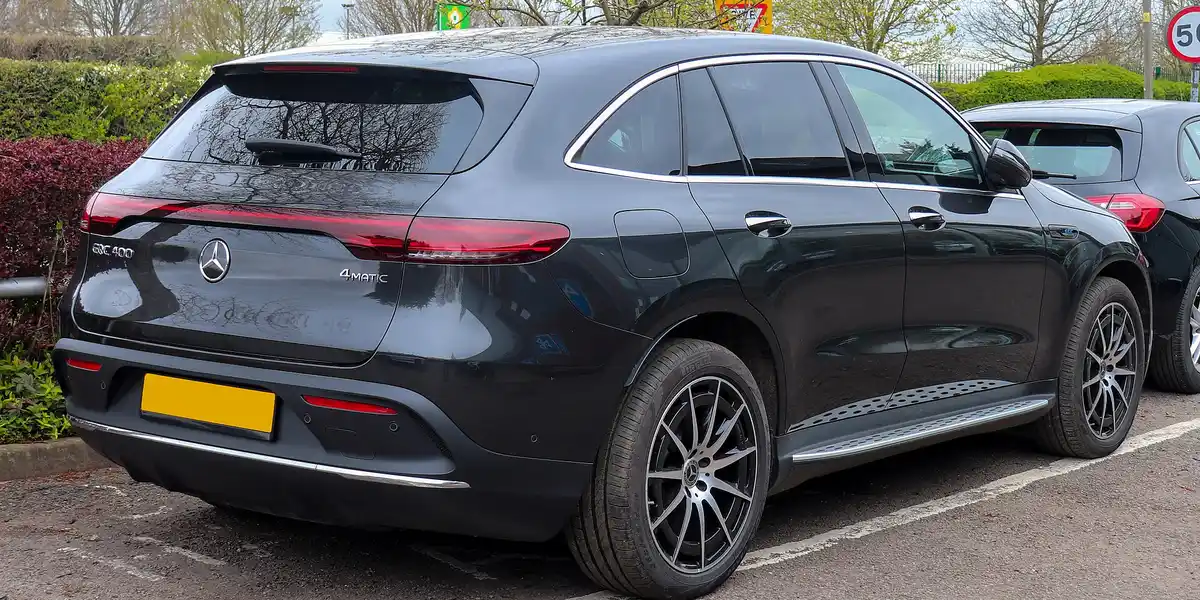
- Check which onboard charger the car has. Ordered before November 2020 means 7.4 kW single-phase only; ordered after means 11 kW three-phase. Ask for the build or order date, not the registration date.
- Get a dealer battery health readout. A common claim says the car’s MBUX screens can show battery health — they cannot show a health percentage. The real check is a dealer diagnostic (XENTRY) readout, or an independent specialist’s health report, before you buy.
- Confirm the front differential bolt recall has been done. Electrifying flags this recall on used examples; a dealer can confirm completion from the VIN.
- Test rapid charging on two different chargers. Slow or inconsistent DC charging can indicate a module problem — but rule out a slow network first by trying a second charger.
- Verify the remaining battery warranty by VIN. Check both caps (years and miles) and ask how the value cap would apply to this car.
- Check the service history. Cars serviced at Mercedes workshops receive the latest software, which affects battery and charging management; services are annual or about every 15,000 miles, at roughly £300 (minor) and £450 (major).
- Budget for weight. At roughly two and a half tonnes, the EQC wears tyres and suspension; check tyre life and ride quality, and price tyres into the deal.
- Know the failure pattern. A sudden range collapse or reduced-power mode with a module fault is the documented failure mode of at least one real car; dealers default to full-pack replacement, while independents may repair — which is why the health readout comes before the deposit, not after.
EQC vs the Used Rivals It Actually Competes With
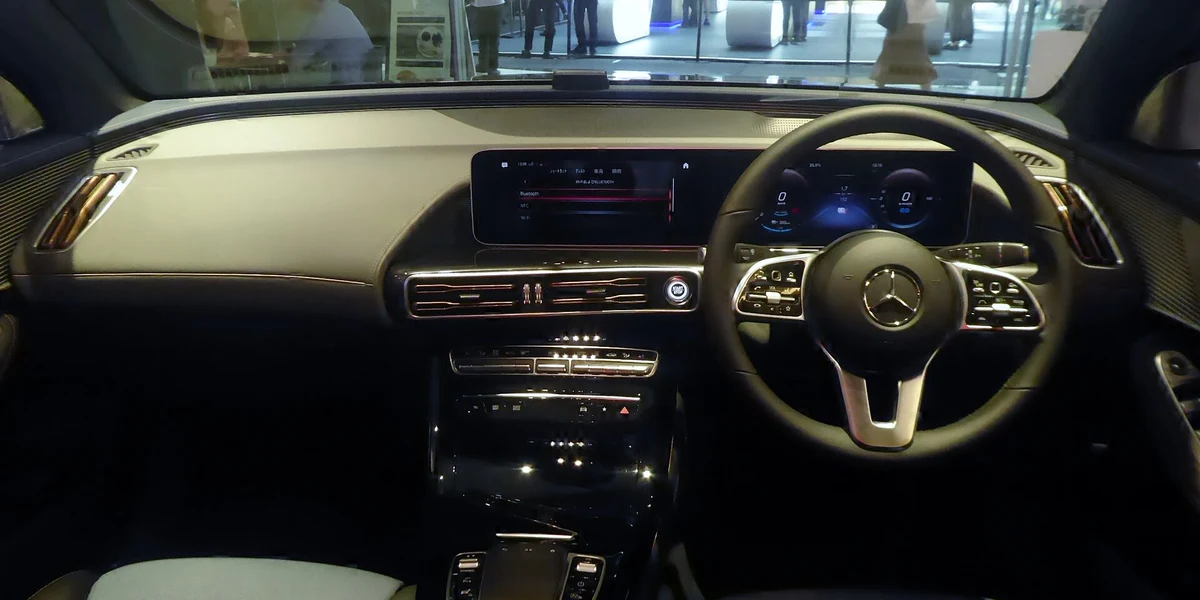
On the used market the EQC’s rivals are its 2019-era peers, and the honest summary is: it matches them on range, loses to Audi on charging, and beats all of them on cabin.
| Car | Battery (total / usable) | Real range (est.) | DC charging (peak / avg / 10–80%) | Years |
|---|---|---|---|---|
| Mercedes EQC 400 | ~85–86 / 80.0 kWh | ~230 mi | 112 / 99 kW / 36 min | 2019–2023 |
| Audi e-tron 55 | 95 / 86.5 kWh | ~227 mi | 155 / 147 kW / 26 min | 2019–2022 |
| Jaguar I-Pace | 90 / 84.7 kWh | ~235 mi | 104 / 83 kW / 45 min | 2018–2024 |
| BMW iX3 | 80 / 74.0 kWh | ~235 mi | ~150 / 94 kW / ~35 min | 2020–2025 |
The e-tron is the charging rival — it adds half as much range again per stop; its successor is covered in our Audi Q8 e-tron guide. The I-Pace matches the EQC’s real range from a bigger usable battery but charges slowest of the four and carries a patchier reliability reputation. The iX3 is the efficiency pick — similar real range from 6 kWh less usable capacity — but it is rear-wheel drive only, where the EQC buyer gets all-wheel drive and the Mercedes interior.
Frequently Asked Questions
How big is the Mercedes EQC battery?
80 kWh usable, from a total of about 85–86 kWh (sources differ slightly on the total). It is the same pack in every EQC 400: 384 pouch cells, NMC622 chemistry, weighing roughly 650 kg.
How long does the EQC battery last?
The warranty guarantees at least 70% capacity for 8 years or 100,000 miles (160,000 km in Europe). The checked evidence is better than the guarantee: used cars at 30,000 miles and three years old were still at 99% health in Electrifying’s sample, and fleet studies put high-mileage EVs of this era around 88–93%.
Is 89% battery health bad on an EQC?
No. At typical used-EQC mileages it is normal fleet behaviour — about 71 kWh usable, or roughly 205 real-world miles. It would only be a concern on a low-mileage car, or if the figure came from a seller’s claim rather than a dealer diagnostic readout.
How much does a replacement EQC battery cost?
There is no official price — Mercedes states it does not publish fixed pack pricing. Owners whose packs were replaced under warranty report figures around £53,000 for the battery (one “plus labour”), with recent dealer quotes reported near £55,000. Reconditioned packs and independent module-level repairs are the realistic out-of-warranty routes.
Does the EQC have 11 kW AC charging?
Cars ordered from November 2020 onwards do, as standard. Earlier cars are 7.4 kW single-phase only. On a UK single-phase home supply both versions charge at 7.4 kW; the 11 kW version’s advantage shows at three-phase posts and workplaces.
What range does the EQC get in the real world?
About 230 miles in mixed driving, around 196 miles in cold weather and up to roughly 261 in mild conditions, against WLTP ratings of 231–269 miles depending on configuration. Sustained motorway use brings it closer to 200 miles.
Was the Mercedes EQC sold in the USA?
No. Mercedes delayed the American launch and then cancelled it in February 2021. Every EQC is a European- or Chinese-market car, and the “220-mile EPA” figure sometimes quoted comes from the pre-launch certification of a car that was never sold there.
How much does the EQC battery weigh?
About 650 kg — roughly a quarter of the car’s kerb weight, and a large part of why the EQC feels as solid as it does, wears tyres as it does, and manages the range it does from 80 kWh.
Conclusion
The EQC is a first attempt that aged better than its sales suggested: an ordinary battery specification carried by unusually good health data and a cabin nothing at used prices matches.
Buy it for the right reasons and check the three things that are specific to it — the charger’s build date, a proper dealer health readout, and the recall — and the numbers support the purchase: 230 real miles, 36-minute measured rapid charging, and a battery that the checked evidence says keeps its capacity. Its in-range replacement, the Mercedes EQE SUV, charges faster and goes further, but it costs more used and its battery story is still being written. The EQC’s is already written, and it reads well.
