
Should You Charge Your EV Every Night?

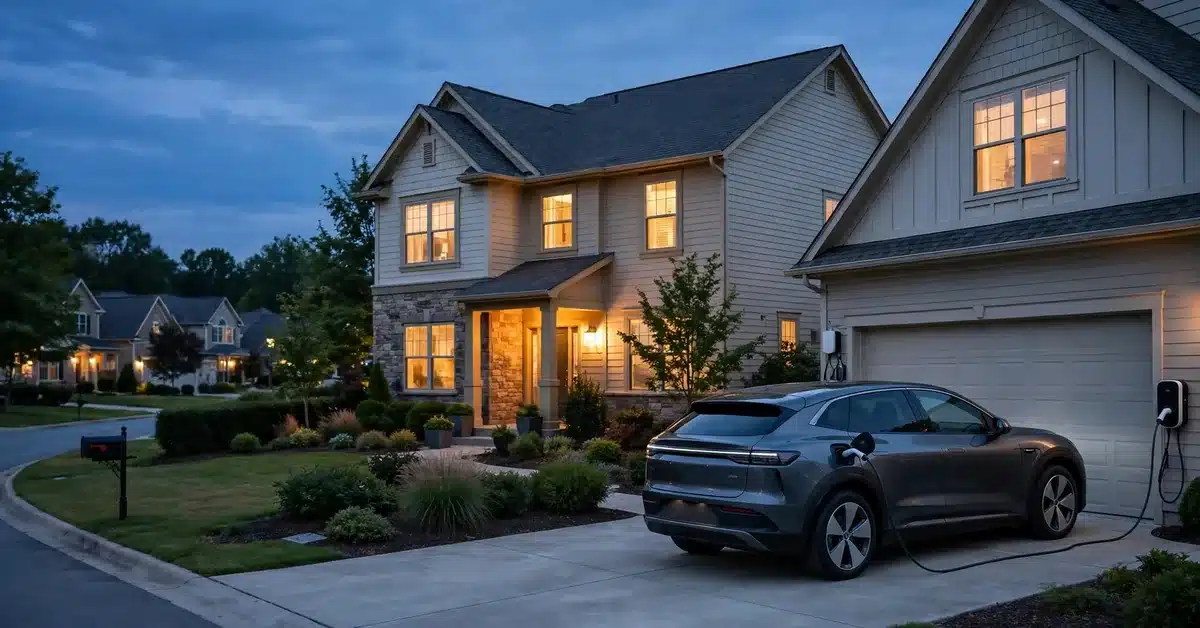
Yes — you should charge your EV every night, and for most drivers, it is the single best charging habit you can develop. Charging nightly means you always start the day with a full battery, eliminates range anxiety, and keeps daily charge cycles shallow — which actually extends battery life rather than harming it. Think of it exactly like charging your phone overnight: you wouldn’t let it die each day before recharging it. The same logic applies to your EV.
Why You Should Charge Every Night
- You always start full: Waking up to a full battery (or 80% for NMC EVs) removes all range anxiety — you know exactly how far you can go every morning
- Shallow daily cycles extend battery life: Charging from 50–80% nightly (shallow cycles) is far easier on battery cells than deep cycles (10–90%) every few days
- Overnight off-peak rates save money: Charging during off-peak hours (11pm–7am) on a TOU plan saves 30–50% on electricity — maximised by nightly charging habits
- 90% of EV owners charge at home: According to multiple studies including the International Energy Agency, approximately 80–90% of all EV charging happens at home overnight — this is the normal and recommended pattern
Set the Right Charge Limit First
Before establishing a nightly charging habit, set the correct daily charge limit in your car or app. For most EVs with NMC (nickel-manganese-cobalt) batteries — which includes the majority of EVs — set the daily limit to 80%. This prevents the top 20% of the battery from experiencing chronic high-voltage stress that accelerates degradation. For EVs with LFP (lithium iron phosphate) batteries — Tesla Standard Range, some BYDs, Chevy Equinox EV — charge to 100% daily. LFP chemistry actually benefits from regular full charges for BMS calibration.
| Battery Chemistry | EVs That Use It | Daily Charge Limit | When to Charge to 100% |
|---|---|---|---|
| NMC (Nickel Manganese Cobalt) | Tesla Long Range, Hyundai Ioniq 5, Kia EV6, BMW i4, VW ID.4 | 80% | Before road trips only |
| LFP (Lithium Iron Phosphate) | Tesla Model 3 SR, Chevy Equinox EV, BYD models, Leapmotor B10 | 100% | Every night — recommended |
Does Charging Every Night Wear Out the Battery Faster?
No — nightly charging with an 80% limit for NMC batteries does not wear out the battery faster. In fact, the opposite is true. Battery cells degrade primarily through deep discharge-recharge cycles (from very low SoC to very high SoC). Shallow cycles (50% to 80% nightly) create far less internal stress per cycle than deep cycles. A battery that cycles from 50–80% each night accumulates far less degradation than one that cycles from 10–90% every three days — even though the total energy throughput may be similar.
What If You Don’t Drive Every Day?
If you don’t drive daily — for example on weekends or during holidays — you don’t need to charge every night. Plug in when you get home from driving and set a scheduled charging time. If the car will sit for more than a few days, store it at 40–60% SoC rather than 100% for best long-term cell health. Parking at 100% for several days stresses NMC cells more than storing at a moderate charge level. Most smart charger apps allow you to schedule charging for specific days only.
Is It OK to Leave the EV Plugged In Overnight?
Yes — leaving your EV plugged in overnight (and even all day) is completely safe and actually recommended. Modern EVs stop drawing power when they reach their set charge limit. The car monitors battery temperature and activates preconditioning or cooling as needed while plugged in — all using grid power rather than the battery. Staying plugged in allows the car to maintain optimal battery temperature without drawing down stored energy.
Can You Charge Too Often?
There is no such thing as “charging too often” with Level 2 home charging. The concern about overcharging is eliminated by modern Battery Management Systems that stop charging at the set limit automatically. Plugging in every night — even after a short 10-mile trip — is perfectly healthy. The key variable is the charge limit (80% for NMC, 100% for LFP), not the frequency of plugging in.
Conclusion
Charging your EV every night is not only safe but the recommended best practice. Plug in when you get home, set the charge limit to 80% (NMC) or 100% (LFP), and let the car handle the rest overnight. Nightly shallow charging cycles extend battery life, off-peak overnight rates minimise cost, and waking up to a full battery every morning eliminates the mental friction of managing EV range. It really is as simple as charging your phone — plug in, go to sleep, and start fresh every morning.
