
Does Charging an EV Increase Your Electric Bill?

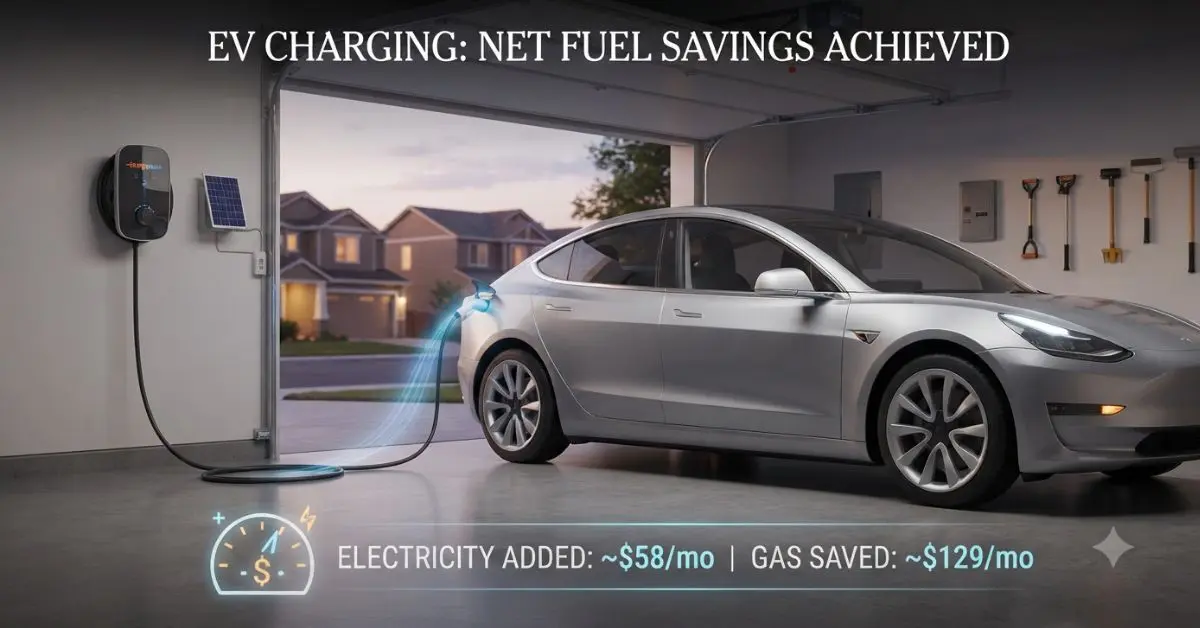
Yes, charging an EV increases your electric bill, typically by $40 to $75 per month for a driver covering 1,000 miles monthly at U.S. average electricity rates. But this increase is much smaller than the gas savings it replaces. Most EV owners see their total monthly transportation fuel costs drop by $60 to $130 after switching from gas to electric. The result is a lower overall fuel bill, even after accounting for the increase in electricity costs.
Want to shrink that increase further? See our tips on how to reduce EV charging costs at home.
How Much Does EV Charging Add to Your Electric Bill?
| Monthly Miles | EV Efficiency | kWh Added | Cost at $0.17/kWh | Cost at $0.25/kWh |
|---|---|---|---|---|
| 500 miles | 3.5 mi/kWh | ~143 kWh | ~$24 | ~$36 |
| 1,000 miles | 3.5 mi/kWh | ~286 kWh | ~$49 | ~$71 |
| 1,200 miles (US avg) | 3.5 mi/kWh | ~343 kWh | ~$58 | ~$86 |
| 1,500 miles | 3.5 mi/kWh | ~429 kWh | ~$73 | ~$107 |
EV Electricity Cost vs Gas Savings: The Full Picture
The important question is not “Does my electric bill increase?” but “Does my total fuel cost decrease?” For most EV drivers, the answer is a clear yes.
A driver covering 1,200 miles per month in a 30 mpg gas car spends about $157 per month on gas at $3.92 per gallon (AAA, June 2026). The same driver in an EV spends about $58 per month on home electricity, saving around $99 per month, or nearly $1,200 per year.
Drivers who use off-peak electricity rates save even more. A driver on a Time-of-Use (TOU) plan paying $0.10 per kWh overnight spends about $34 per month on charging. That increases monthly savings to about $123 compared with a similarly equipped gas car. Over five years, the savings can reach about $7,380, helping offset the higher purchase price of an EV.
State-by-State Impact on Your Electric Bill
| State | Avg. Electricity Rate | Monthly Bill Increase (1,000 mi) | Monthly Gas Savings (vs 30 mpg) | Net Monthly Savings |
|---|---|---|---|---|
| Washington | ~$0.11/kWh | ~$31 | ~$129 | ~$98/month |
| National Average | ~$0.17/kWh | ~$49 | ~$129 | ~$80/month |
| California | ~$0.31/kWh | ~$89 | ~$129 | ~$40/month |
| Hawaii | ~$0.41/kWh | ~$117 | ~$129 | ~$12/month |
Ways to Reduce the Increase in Your Electric Bill
Enroll in a Time-of-Use (TOU) Electricity Plan
Off-peak rates of $0.07 to $0.12 per kWh can reduce charging costs by 50% to 70% compared to standard flat rates. This is one of the best ways to lower EV charging costs.
Charge Overnight
Set your wall charger or EV to begin charging at 11:00 PM or during your utility’s off-peak hours. This helps you automatically get the lowest electricity rates.
Install Solar Panels
Solar panels can reduce EV charging costs to nearly zero once the system has paid for itself. They also greatly reduce the increase in your monthly electric bill.
Use a Smart Level 2 Charger
Smart chargers such as JuiceBox, ChargePoint, and Emporia can automatically schedule charging during the cheapest electricity hours without manual setup.
Real EV Owner Experiences
Real EV owners on Reddit, InsideEVs forums, and owner surveys consistently report monthly electricity bill increases of $40 to $80 for typical driving.
One common experience is: “My bill went up $55 per month, but I stopped spending $140 per month on gas. I’m saving $85 every month.”
Tesla owners commonly report an increase of about $35 to $55 per month when driving 1,000 to 1,200 miles and charging at home with a Level 2 charger. Owners who regularly use free workplace charging often report little to no increase in their home electricity bill.
For a deeper look at exact usage, see how much electricity charging an EV uses per month.
Conclusion
Charging an EV does increase your electric bill by about $40 to $75 per month for a typical U.S. driver using average electricity rates. However, that increase is much smaller than the money saved on gasoline. Most EV owners save about $80 to $100 per month on total transportation fuel costs, while drivers in areas with lower electricity rates can save more than $120 per month. Enrolling in a time-of-use electricity plan and charging overnight are the easiest ways to reduce charging costs and increase overall savings.
A smart WiFi charger makes off-peak scheduling automatic — see our picks for the best home EV chargers with WiFi and app control.
FAQs
Does charging an EV always increase your electric bill?
Yes. Charging an EV increases your electricity use, but the added cost is usually much lower than what most drivers spend on gasoline.
How much does it cost to charge an EV at home each month?
For most U.S. drivers traveling about 1,000 miles per month, home charging typically costs around $40 to $75, depending on local electricity rates.
Can I reduce my EV charging costs?
Yes. Charging during off-peak hours, using a time-of-use electricity plan, installing solar panels, and using a smart Level 2 charger can significantly lower charging costs.
