
Vauxhall Corsa Electric Battery: Sizes, Range, Life & Cost

Researched from Vauxhall’s own pages and warranty terms, Stellantis’s launch and 2025 enhancement releases, EV Database’s measured figures and UK reliability surveys. Where a number comes from a quote index rather than Vauxhall, the text says so.
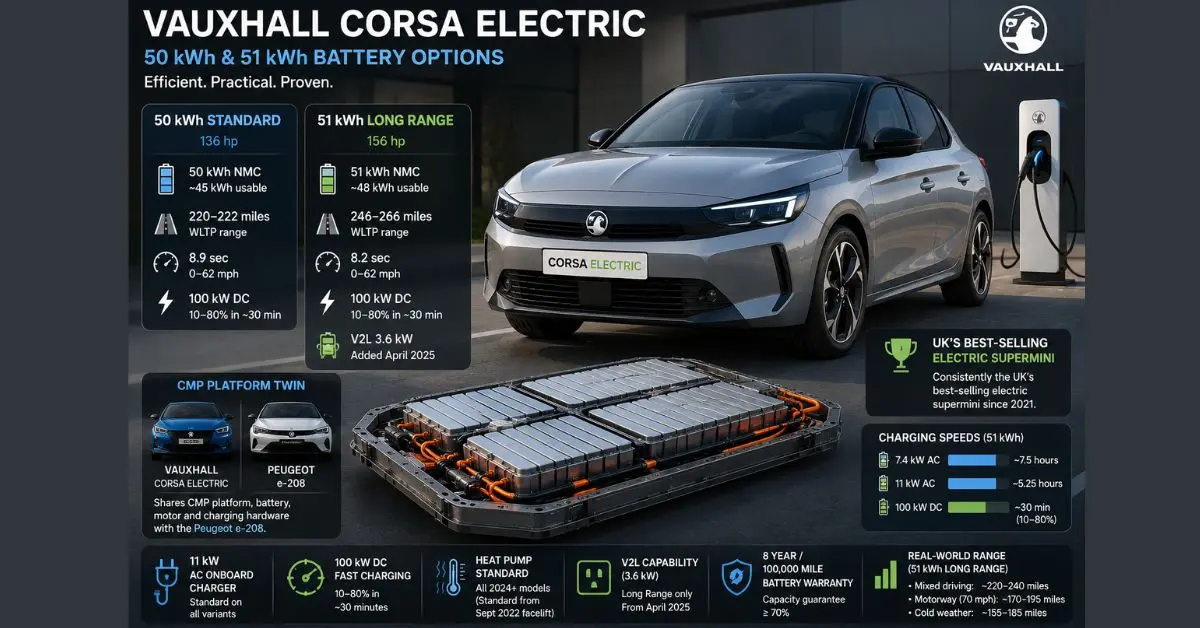
The Corsa Electric has used two batteries. Cars from 2020–2023 carry a 50 kWh pack (46.3 kWh usable, up to 222 miles WLTP). The facelift Long Range car from 2023 carries a 54 kWh pack that Vauxhall sells as “51 kWh” — its usable figure — with up to 266 miles WLTP on current cars. Both charge at up to 100 kW DC and carry an 8-year/100,000-mile battery warranty with a 70% capacity floor.
- Pack 1 (2020–2023): 50 kWh gross · 46.3 usable · 136 PS · 222 miles
- Pack 2 (2023– ): 54 kWh gross · 50.8 usable · 156 PS · up to 266 miles
- Charging: 100 kW DC · 11 kW AC · about 28 minutes 10–80%
- Warranty: 8 years / 100,000 miles / 70%, transferable
What battery does the Corsa Electric use?
Two lithium-ion packs across the car’s life — and the change came with the 2023 facelift, not a model-year trickle.
If you are buying used, the pack is the first thing to identify, because it decides the range, the motor and whether the car can power external devices.
| 50 kWh car (2020–2023) | Long Range (2023– ) | |
|---|---|---|
| Gross capacity | 50 kWh | 54 kWh |
| Usable capacity | 46.3 kWh | 50.8 kWh |
| Chemistry | NMC622 | NMC811 |
| Motor | 136 PS (100 kW) | 156 PS (115 kW) |
| WLTP range | up to 222 miles | 246 miles at launch; up to 266 miles on current cars |
Both packs sit under the floor on Stellantis’s e-CMP platform, shared with the Peugeot e-208 and the Vauxhall Mokka Electric. The bigger pack is not just larger: its NMC811 chemistry and a more efficient motor are why the Long Range car’s advantage is bigger than the 4 kWh difference suggests.
50, 51 or 54 kWh? Why the numbers disagree
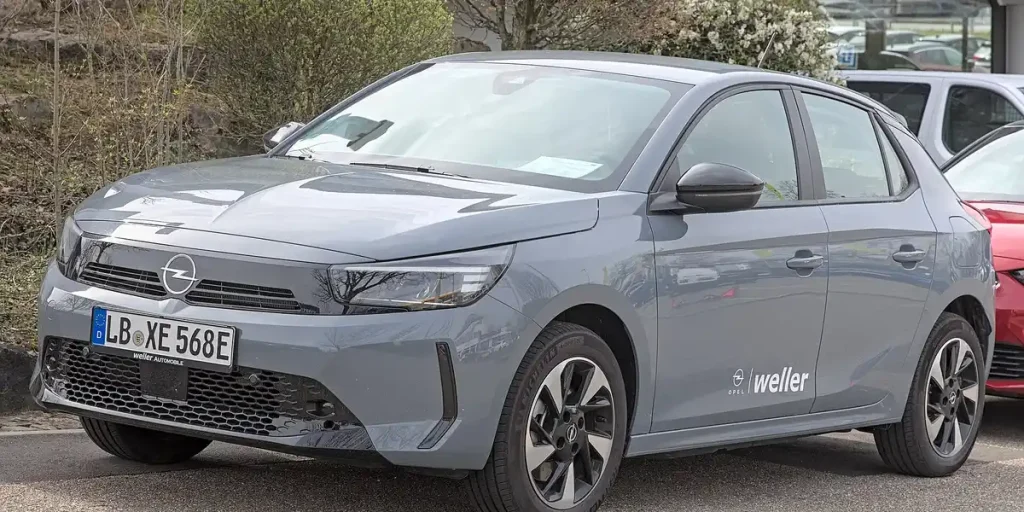
All three numbers describe the same facelift battery — 54 is the gross capacity, 51 is (roughly) the usable capacity, and Vauxhall markets the usable one.
The original car is simpler: 50 gross, 46.3 usable, and nobody markets the 46.
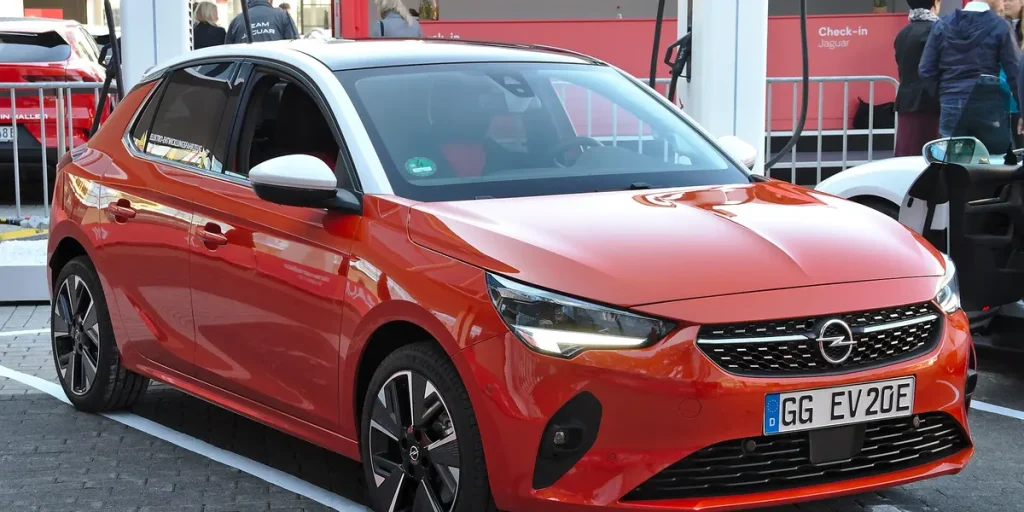
Gross capacity is everything the cells can hold; usable capacity is what the car lets you spend, the difference being the protective buffers at the top and bottom that keep the pack healthy. When a listing, a review and Vauxhall’s own site give you three different figures for one car, they are usually quoting different sides of that buffer.
The practical rule: compare usable figures when you compare cars, because usable capacity is what turns into miles.
Range: WLTP figures and real-world miles
The official figures run from 222 miles (50 kWh) through 246 miles (first Long Range cars) to 266 miles on the current Long Range — and the honest real-world band is lower.
Vauxhall’s own FAQ puts real-world range at often 155–217 miles depending on the car and conditions. The 266 figure arrived with an April 2025 enhancement — better NMC technology and drivetrain efficiency added 14 miles without a bigger battery. Reviews quoting 251 miles are describing the pre-enhancement car, not making an error.
In winter motorway use, plan on the bottom of that real-world band. The car has a standard heat pump on current models, which softens the cold-weather penalty but does not remove it.
Charging: what 100 kW really delivers
The claim is 100 kW DC with a 20–80% charge in 25 minutes (50 kWh) or 27 minutes (Long Range) — and measured charging is unusually close to the brochure. Fastned-based measurements recorded through EV Database show peaks of 101 kW and 107 kW on the two packs, with 10–80% averages of 74 kW and 79 kW across roughly 28 minutes.

Home and destination charging
The onboard charger is 11 kW (three-phase) on current cars, filling the 50 kWh pack in about five hours where a three-phase supply exists; on a typical UK 7.4 kW home wallbox, expect an overnight charge of roughly seven to eight hours. Battery preconditioning is fitted but is not triggered automatically by the navigation — set the car to condition the pack before a planned rapid stop in cold weather.
Vehicle-to-load (V2L)
From May 2025, Long Range cars can power external devices at up to 3.6 kW through a V2L gun accessory sold by Vauxhall retailers. The 50 kWh car cannot do this at all — one more reason to identify the pack before buying.
How long does the Corsa Electric battery last?
There is no Corsa-specific degradation dataset — but the warranty writes the floor down in black and white: at least 70% of capacity for 8 years or 100,000 miles, and the cover transfers to the next owner.
A pack that falls below that line inside the term is Vauxhall’s problem, not yours. Both packs are liquid-cooled, which is the single biggest design factor in slow degradation. Fleet-wide data from Geotab puts the average modern EV’s capacity loss at about 2.3% per year — a generic figure, not a Corsa measurement, but it is the honest context: a five-year-old Corsa Electric should still hold the large majority of its original range, and a health check (available from Vauxhall dealers and independent EV specialists) settles any individual car.
The car underneath is shared with the Peugeot e-208, whose battery we cover in depth here — same platform, same pack family, same ownership maths.
Battery warranty in plain terms
Eight years, 100,000 miles, 70% of capacity guaranteed, transferable between owners.
That is Vauxhall’s own wording, and the transferability matters: a used Corsa Electric keeps whatever remains of the term, which is a concrete number you can ask for before buying — the car’s first registration date starts the clock. What the warranty does not promise is zero degradation. Losing range gradually inside the 70% line is treated as normal wear on every EV warranty, Vauxhall’s included.
Replacement cost: the honest UK picture
Vauxhall does not publish a battery price — so be wary of any site that quotes one as official.
The best UK evidence is a 2026 quote index built from 1,846 real replacement quotes, which prices the 51 kWh car at about £8,140 fitted at a main dealer, £5,880 at an independent specialist, or £3,680 for a refurbished pack. Treat those as market quotes, not list prices.
The same index puts a typical module repair at around £960 — the realistic path for most owners, because packs usually fail by module, not wholesale. Set against used Corsa Electrics starting around £9,000 (average about £13,000), a full-pack replacement on an older car rarely makes economic sense; a health-checked car under warranty makes all of this somebody else’s problem.
Reliability: what the surveys actually say
The survey record is mixed, and this guide will not pretend otherwise.
Driver Power placed the Corsa Electric near the bottom of its table (48th of 50) with about a fifth of owners reporting a fault; What Car?’s Reliability Survey has also been unkind to the model. What Car?’s used-buying review, on the other hand, describes generally good reliability with mostly minor electrical complaints — and that split is the fair summary.
The faults owners report cluster around electrical niggles, 12-volt battery failures and charging faults rather than failed traction packs, which is consistent with the battery warranty claims picture. Buy the individual car, health check first, rather than the reputation either way.
The 12-volt battery (and the other Corsa)
Like every EV, the Corsa Electric also has a small 12-volt battery for the car’s electronics — and it is the most common cause of a “dead” car that will not wake up — the full story is in our guide to EV 12-volt batteries.
If you arrived here looking for a starter battery for a petrol or diesel Corsa (2014–2019 Corsa E included), parts retailers list roughly 52 Ah standard batteries, or 60–70 Ah EFB/AGM types for start-stop cars. That is a different part for a different car — a parts shop will sort you out in minutes.
Corsa Electric vs Peugeot e-208
Same platform, same packs, same charging — the differences are styling, cabin and price.
The e-208 launched with the identical 50 kWh arrangement and received its own version of the bigger pack, so everything in the table above has a French twin. Choose on the deal in front of you and which interior you prefer living with; the battery ownership experience is interchangeable.
Frequently asked questions
What is the battery size of the Vauxhall Corsa Electric?
Two sizes: a 50 kWh pack (46.3 kWh usable) on 2020–2023 cars, and a 54 kWh pack (50.8 kWh usable) on Long Range cars from 2023 — the bigger one is the battery Vauxhall markets as “51 kWh”.
How much does it cost to replace the battery in a Vauxhall Corsa Electric?
Vauxhall publishes no price. A 2026 UK quote index puts a fitted new pack for the 51 kWh car at about £8,140 at a main dealer or £5,880 at an independent, with refurbished packs around £3,680 and typical module repairs around £960.
What type of battery does a Vauxhall Corsa Electric use?
A lithium-ion pack with NMC chemistry — NMC622 in the 50 kWh car, NMC811 in the Long Range — liquid-cooled and mounted under the floor.
How long does a Vauxhall Corsa Electric battery last?
The warranty guarantees at least 70% capacity for 8 years or 100,000 miles. There is no model-specific degradation dataset, but liquid cooling and fleet-wide averages (about 2.3% loss per year across modern EVs) point to a pack that should serve well beyond the warranty term.
What is the range of the Vauxhall Corsa Electric 50 kWh?
Up to 222 miles WLTP when new; Vauxhall’s own real-world guidance across the range is often 155–217 miles depending on weather, speed and driving style.
Conclusion
The Corsa Electric’s battery story is two packs, one confusing label, and a warranty that does the reassuring.
Identify which pack a car has — 50 kWh or the “51” that is really 54 gross — check the health and the warranty clock, and the UK’s best-selling electric supermini of 2023 and 2024 is a straightforward used buy. The numbers above are the ones Vauxhall itself publishes, with the quote-index figures labelled for what they are.
