
How Does a BMS Measure Battery Current?

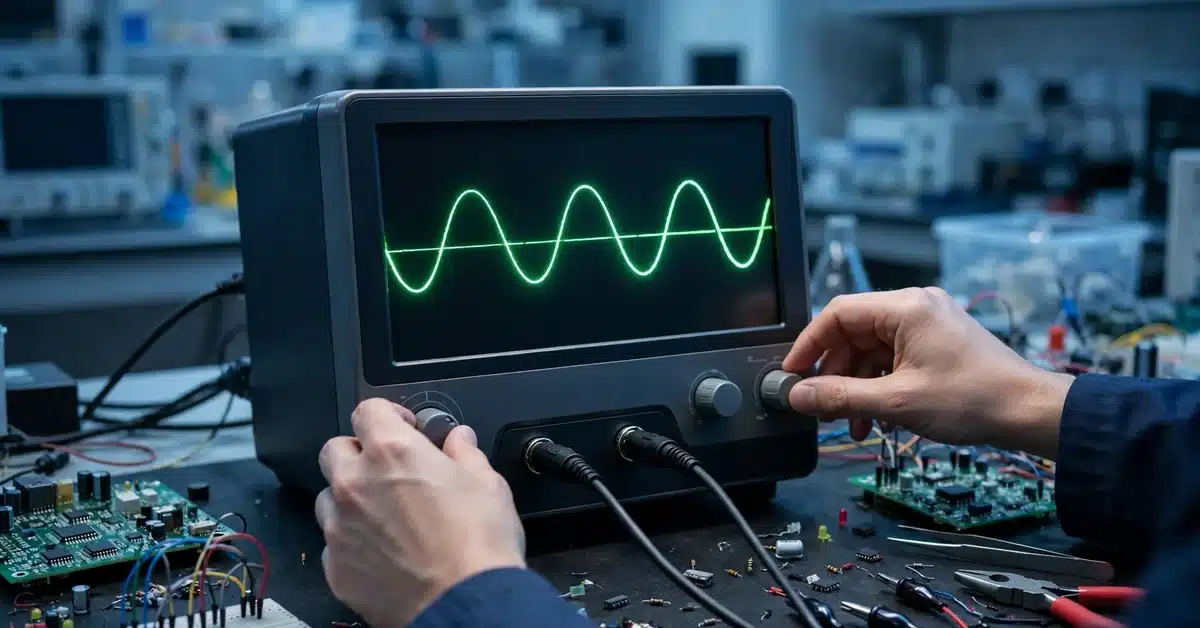
A BMS measures battery current using either a shunt resistor or a Hall-effect sensor, both placed in the main current path so the system can track exactly how much energy flows in and out of the pack. This current data, paired with voltage readings, is what allows the BMS to calculate state of charge and enforce safe charging and discharging limits.
Why Current Measurement Matters as Much as Voltage
Voltage tells the BMS the condition of individual cells. Current tells it how much energy is actually moving. Together, they’re the two inputs behind almost every core BMS function, from range estimates to overcurrent protection. EV packs can draw or accept currents in the hundreds of amps, which makes accurate, fast current sensing a genuinely difficult engineering problem.
Shunt Resistor Current Sensing
How a Shunt Works
A shunt is a precision, very low-resistance resistor placed directly in the current path. As current flows through it, it creates a small voltage drop that’s directly proportional to current, based on Ohm’s Law. The BMS reads that tiny voltage drop and calculates current from it.
Why Shunts Are the Industry Standard
Shunt-based sensing is the mainstream approach in modern EV BMS architecture. It’s simple, highly linear, and, combined with a high-resolution ADC, can achieve accuracy within a fraction of a percent. Response times are also extremely fast, which matters when a short circuit needs to be caught in microseconds, not milliseconds.
Hall-Effect Current Sensing
How a Hall Sensor Works
Instead of measuring a voltage drop, a Hall-effect sensor measures the magnetic field generated by current flowing through a nearby conductor. This is a contactless measurement, meaning the sensor isn’t wired directly into the current path.
Why Hall Sensors Are Still Used
Hall sensors offer built-in electrical isolation, since they don’t touch the high-current path directly. Many EV designs use a Hall sensor as a redundant, secondary current measurement alongside a primary shunt, specifically to meet higher automotive safety standards through sensor redundancy.
Shunt vs Hall: How Automakers Choose
Shunts dominate primary current sensing in EV battery packs today, largely due to cost, accuracy, and response speed. Hall-based sensing continues to close the accuracy gap and remains valuable anywhere galvanic isolation is required or as a backup measurement path.
How the BMS Uses Current Data
Coulomb Counting for State of Charge
By continuously integrating current over time, the BMS tracks how much energy has entered or left the pack, which is one of the core methods used to estimate state of charge.
Overcurrent Protection
If current spikes beyond a safe threshold, from a short circuit or electrical fault, the BMS can react within microseconds to interrupt the circuit before damage occurs.
Charge and Discharge Rate Limiting
Real-time current readings let the BMS enforce dynamic charge and discharge limits based on temperature and state of charge, which is why fast-charging speed can vary session to session.
| Method | How It Works | Typical Use |
|---|---|---|
| Shunt resistor | Measures voltage drop across a precision resistor | Primary current sensing in most EV packs |
| Hall-effect sensor | Measures magnetic field from current flow | Isolation or redundant secondary sensing |
Conclusion
A BMS measures battery current primarily through shunt resistors, and often backs that up with Hall-effect sensors for isolation and redundancy. This current data drives some of the BMS’s most important functions, from calculating state of charge to catching a dangerous short circuit within microseconds. Without accurate current sensing, nearly every other BMS calculation would be unreliable.
FAQs
Which is more accurate: shunt or Hall-effect sensing?
Shunt resistors are generally more accurate and faster-responding, though modern Hall sensors with digital compensation have closed much of that gap.
Why does an EV need two current sensors?
Redundant sensing improves safety compliance and lets the BMS cross-check readings to catch a faulty sensor.
How does current measurement affect range estimates?
Current data feeds coulomb counting, one of the core methods the BMS uses to calculate state of charge, which directly determines the range shown on the dashboard.
