
How Does a BMS Prevent Overcharging?

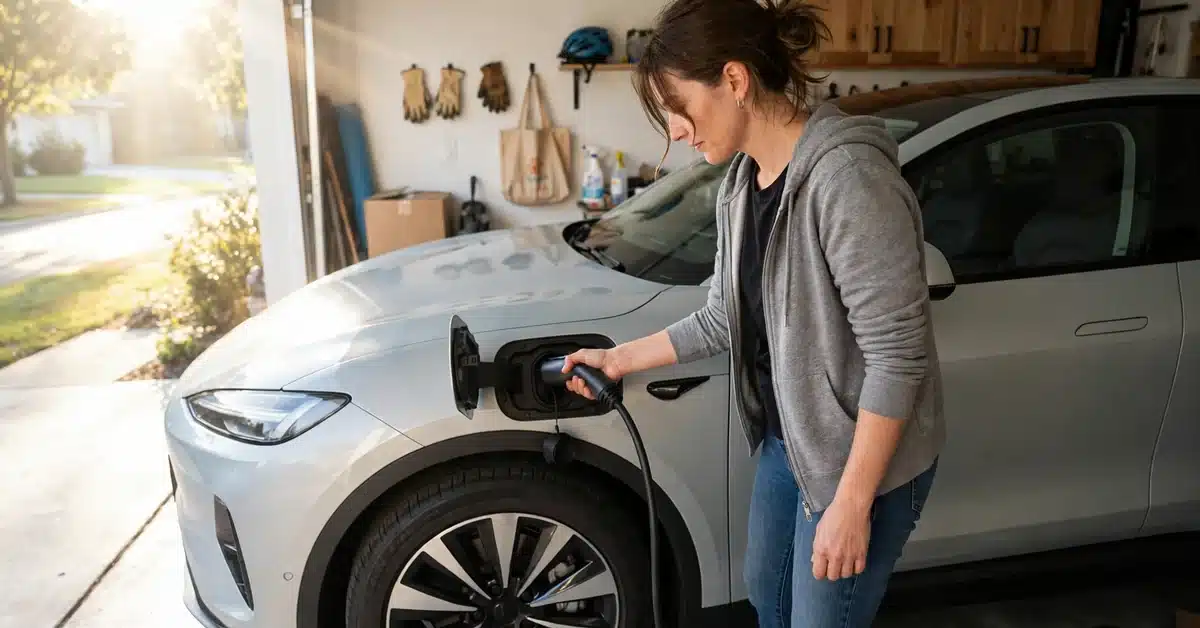
A BMS prevents overcharging by continuously monitoring each cell’s voltage and cutting or tapering charge current the moment any cell approaches its safe upper limit, typically around 4.2V for common EV chemistries. This single function is one of the most important things a BMS does, since overcharging is one of the most common paths to thermal runaway.
Why Overcharging Is So Dangerous
Lithium-ion cells are engineered to operate safely within a specific voltage window. Push a cell above its upper limit and the internal chemistry becomes unstable, generating excess heat and gas. In the worst case, this triggers a self-reinforcing chain reaction that can damage the cell or spread to its neighbors. Overcharge protection exists specifically to make sure that condition never occurs in the first place.
How the BMS Sets Its Voltage Thresholds
Every BMS is configured with upper and lower voltage thresholds based on the specific battery chemistry it’s protecting. For a common lithium-ion cell, the charge cutoff is usually set around 4.2V per cell, with some chemistries like LFP using a different, generally more stable, threshold. These limits are built into the BMS’s firmware, tied directly to the cell manufacturer’s safety specifications.
How the BMS Actually Stops Overcharging
Continuous Per-Cell Voltage Monitoring
Rather than watching only the total pack voltage, the BMS tracks every individual cell. This matters because a pack-level reading can look perfectly normal even while one specific cell is dangerously close to its limit.
Cutting the Charging Circuit
The instant any cell reaches its set upper threshold, the BMS communicates with the charger or vehicle’s charging system to reduce or fully cut charging current, stopping the process before that cell crosses into unsafe territory.
Tapering Current Near Full Charge
Rather than an abrupt stop, most EVs use a constant-current, constant-voltage (CC-CV) charging profile. As cells approach full charge, the BMS gradually reduces current, which is why charging visibly slows above roughly 80%.
The Voltage Gap Between Trigger and Recovery
Well-designed BMS units include a deliberate voltage gap between the point where overcharge protection triggers and the point where it resets. This prevents a rapid on-off cycling pattern that could itself stress the cells.
Does the BMS Protect Against a Faulty Charger Too?
Yes. The BMS’s overcharge protection operates independently of the charger’s own logic. Even if a charger malfunctions or attempts to push more current than it should, the BMS is designed to cut the circuit based on its own direct cell readings, not on trusting the charger to behave correctly.
Does Overnight Charging Risk Overcharging?
With an OEM-matched charger and a healthy battery, leaving an EV plugged in overnight does not typically trigger overcharge issues, since the BMS’s cutoff voltage is set below what the charger would ever attempt to output. As cells age and lose consistency, the BMS’s protective response may activate slightly more often, which is a sign of aging cells doing exactly what they’re supposed to do — being protected.
| Protection Layer | How It Works |
|---|---|
| Per-cell voltage monitoring | Tracks every individual cell, not just pack total |
| Charge cutoff threshold | Set based on cell chemistry, typically ~4.2V for common Li-ion |
| CC-CV tapering | Gradually reduces current as cells near full charge |
| Trigger/recovery gap | Prevents rapid on-off cycling near the cutoff point |
Conclusion
A BMS prevents overcharging by watching every individual cell’s voltage in real time and cutting or tapering current before any cell crosses its safe upper limit. This protection works independently of the charger, uses a deliberate buffer to avoid rapid cycling, and is one of the single most important safety functions in the entire battery system.
FAQs
Can overcharging still happen despite a BMS?
It’s extremely rare with a properly functioning BMS and OEM-matched charging equipment, since the protection operates independently of the charger.
Does the BMS overcharge protection wear out?
The protection circuitry itself is very durable, though aging cells may trigger it more frequently as their consistency degrades over time.
What voltage triggers overcharge protection?
It depends on chemistry, but common lithium-ion cells are typically protected around 4.2V per cell.
