
What Is BMS Data Logging in Electric Vehicles?

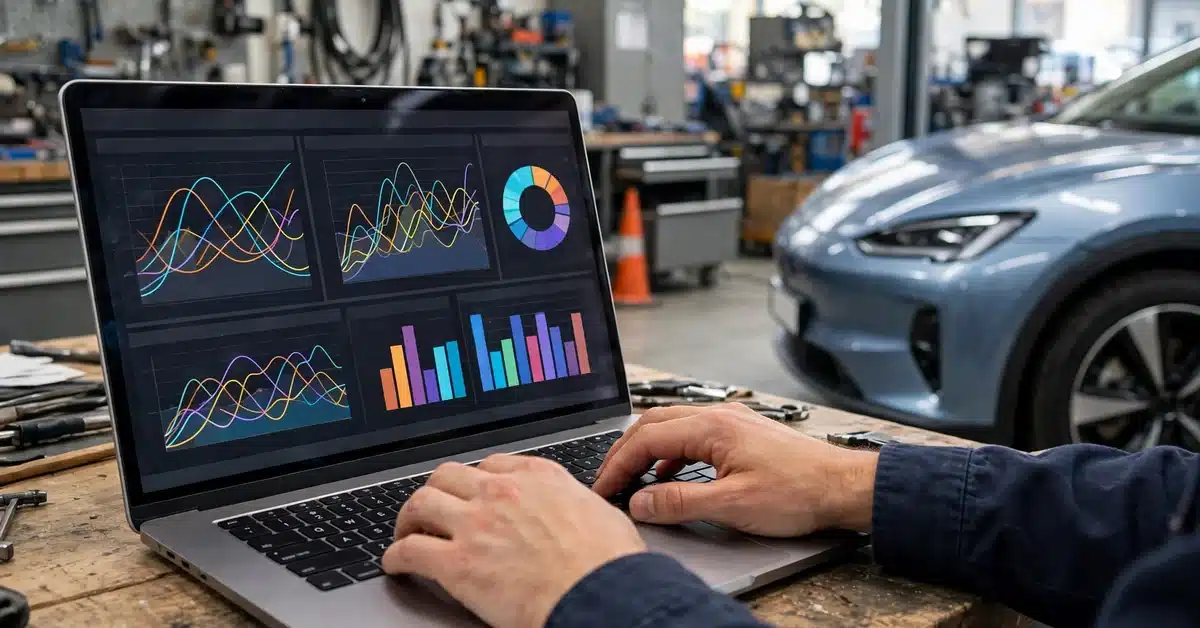
BMS data logging in electric vehicles is the continuous recording of voltage, current, temperature, state of charge, and fault events over time, creating a historical record used for diagnostics, warranty evaluation, and long-term battery health tracking. It’s the difference between the BMS reacting only in the moment and the vehicle actually remembering what the battery has been through.
What Data Gets Logged
Most automotive BMS platforms record a consistent set of parameters, often at sampling rates around 1 Hz or faster during active driving and charging:
- Individual and pack-level cell voltages
- Current during charging and discharging
- Maximum and minimum temperatures across the pack
- State of charge and state of health estimates
- Charge cycle counts
- Fault codes and protection events
Where This Data Actually Goes
Onboard Storage
The BMS itself stores a rolling history of recent events and fault codes, accessible to technicians through diagnostic tools connected to the vehicle’s CAN bus.
Cloud Telematics Platforms
Many modern EVs and fleet vehicles transmit BMS data to cloud platforms via cellular or WiFi connectivity, enabling remote monitoring without physically connecting to the car.
Manufacturer Diagnostic Systems
Automakers collect aggregated BMS data across their fleet to spot patterns, catch design issues early, and support over-the-air software improvements.
Why Data Logging Matters for Warranty Claims
Recorded history, including cycle count, extreme voltage or temperature events, and charging patterns, gives manufacturers an evidence-based way to evaluate whether a battery has been used within normal parameters. This data can support a legitimate warranty claim or reveal that a battery was subjected to conditions outside its intended use.
How Logged Data Improves Diagnostics
Individual real-time readings only tell part of the story. A trend over weeks or months, gradual voltage drift in one cell, a slow rise in internal resistance, or increasingly frequent fault events, often reveals a developing problem long before it becomes a noticeable symptom. This is where logged historical data adds value that a single snapshot reading can’t.
Fleet-Level Uses of BMS Data Logging
For commercial EV fleets, aggregated BMS data supports predictive maintenance planning, informs vehicle replacement timing, and helps identify which usage patterns are accelerating degradation across the fleet. Operators can catch a developing issue in one vehicle before it causes downtime, rather than reacting after a failure.
Data Logging and Machine Learning
Modern BMS platforms increasingly feed logged data into machine learning models that estimate state of health and predict remaining useful life more accurately than physics-based formulas alone, especially for cells that age in unexpected ways. Cloud connectivity also allows these models to learn from fleet-wide patterns, not just a single vehicle’s history.
| Use Case | How Logged Data Helps |
|---|---|
| Warranty evaluation | Provides evidence of normal vs abusive usage patterns |
| Predictive maintenance | Reveals gradual trends before failure occurs |
| Fleet management | Informs replacement planning and usage optimization |
| Software improvement | Feeds machine learning models for better SOH estimates |
Conclusion
BMS data logging in electric vehicles turns real-time sensor readings into a historical record that supports diagnostics, warranty decisions, and long-term battery health management. Whether stored onboard or streamed to the cloud, this data lets manufacturers, fleet operators, and technicians catch developing problems and validate battery condition long after the moment those readings were first taken.
FAQs
Can I access my own EV’s BMS data log?
Some manufacturers offer app-based access to basic data, while full diagnostic-level logs typically require a technician with proper diagnostic equipment.
How long does a BMS retain logged data?
It varies by manufacturer, though many systems retain a rolling history plus permanent records of significant fault events.
Does data logging affect battery performance?
No. Logging is a passive background function that doesn’t interfere with the BMS’s real-time protective operations.
