
How Does BMS Protect Battery During Fast Charging?

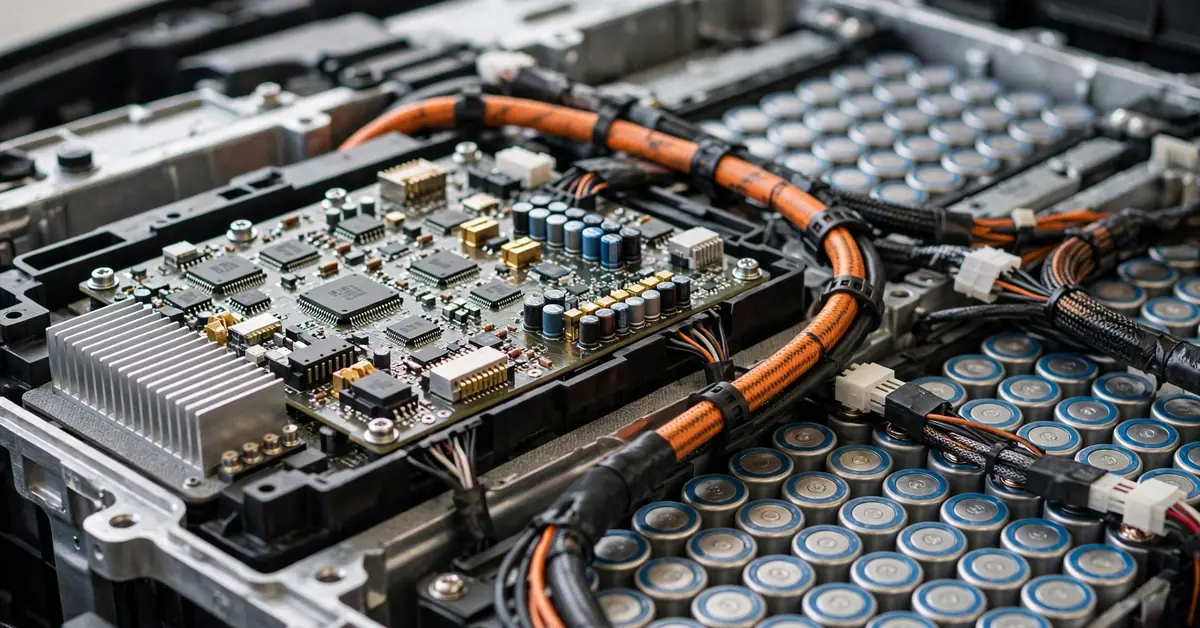
A BMS protects the battery during fast charging through layered safeguards, per-cell voltage monitoring, aggressive thermal management, dynamic current tapering, and instant cutoff capability, all working simultaneously to handle the much higher stress fast charging places on the pack compared to routine charging. These protections run continuously throughout the entire session, not just as a backup in case something goes wrong.
Why Fast Charging Demands More Protection Than Standard Charging
DC fast charging pushes far more current directly into the pack than typical home charging, generating substantially more heat and placing every cell under more electrical stress in a much shorter window of time. The BMS has to protect against a compressed, higher-intensity version of every risk it manages during normal charging.
Per-Cell Voltage Protection
Even during aggressive fast charging, the BMS continues monitoring every individual cell’s voltage, not just the pack average, ready to reduce current or halt charging entirely the moment any single cell approaches its safe upper limit, regardless of how the rest of the pack is performing.
Active Thermal Management
Fast charging’s heat generation makes active cooling essential, not optional. The BMS commands increased coolant flow or refrigerant-based cooling throughout the session, and if the cooling system can’t remove heat quickly enough, reduces charge current directly rather than allowing temperature to climb unchecked.
Dynamic Current Tapering
Rather than delivering constant maximum current throughout, the BMS continuously recalculates the safe current ceiling based on real-time temperature and state of charge, tapering current as the pack warms or approaches full charge, which protects cells from sustained high-stress conditions.
Overcurrent and Short-Circuit Protection
The higher currents involved in fast charging make robust overcurrent protection especially important. The BMS continuously monitors for current spikes beyond expected levels and can interrupt the circuit through contactors within microseconds if a genuine fault is detected.
Communication-Based Safeguards
Throughout a fast-charging session, the BMS and charger maintain continuous digital communication. If that communication link fails or reports an inconsistency, the charging session is designed to halt safely rather than continue on potentially stale or incorrect limit data.
Protecting Against Repeated Fast-Charging Stress
Beyond single-session protection, the BMS’s thermal throttling behavior also protects against the cumulative stress of repeated back-to-back fast-charging sessions, reducing available charging speed on subsequent sessions if the pack hasn’t had adequate time to cool between them.
Why This Layered Approach Matters
No single protection mechanism is treated as sufficient on its own. Voltage monitoring, thermal management, current tapering, and overcurrent protection all operate simultaneously and independently, so that if one layer somehow missed a developing issue, another has a genuine chance to catch it before conditions become unsafe.
| Protection Mechanism | What It Guards Against |
|---|---|
| Per-cell voltage monitoring | Individual cells exceeding safe voltage limits |
| Active thermal management | Excessive heat buildup during high-current charging |
| Dynamic current tapering | Sustained high-stress conditions on cells |
| Overcurrent protection | Short circuits and electrical faults |
| Communication safeguards | Charging continuing on stale or incorrect data |
Conclusion
A BMS protects the battery during fast charging through multiple simultaneous safeguards, per-cell voltage monitoring, active thermal management, dynamic current tapering, and robust overcurrent protection, all specifically scaled up to handle the higher stress fast charging places on the pack. This layered, continuously active approach is what allows fast charging to deliver genuinely rapid charging speeds without compromising battery safety or long-term health.
FAQs
Is fast charging inherently harder on a battery than slow charging?
It does generate more heat and stress, but the BMS’s active protections are specifically designed to manage that added stress within safe limits.
Can the BMS stop a fast-charging session mid-way if something goes wrong?
Yes, it can reduce current or halt the session entirely at any point if it detects an unsafe condition.
Does frequent fast charging require extra protective measures?
The BMS’s thermal throttling naturally accounts for this, reducing available charging speed on subsequent sessions if the pack hasn’t adequately cooled.
