
How Does BMS Isolate a Faulty Cell?

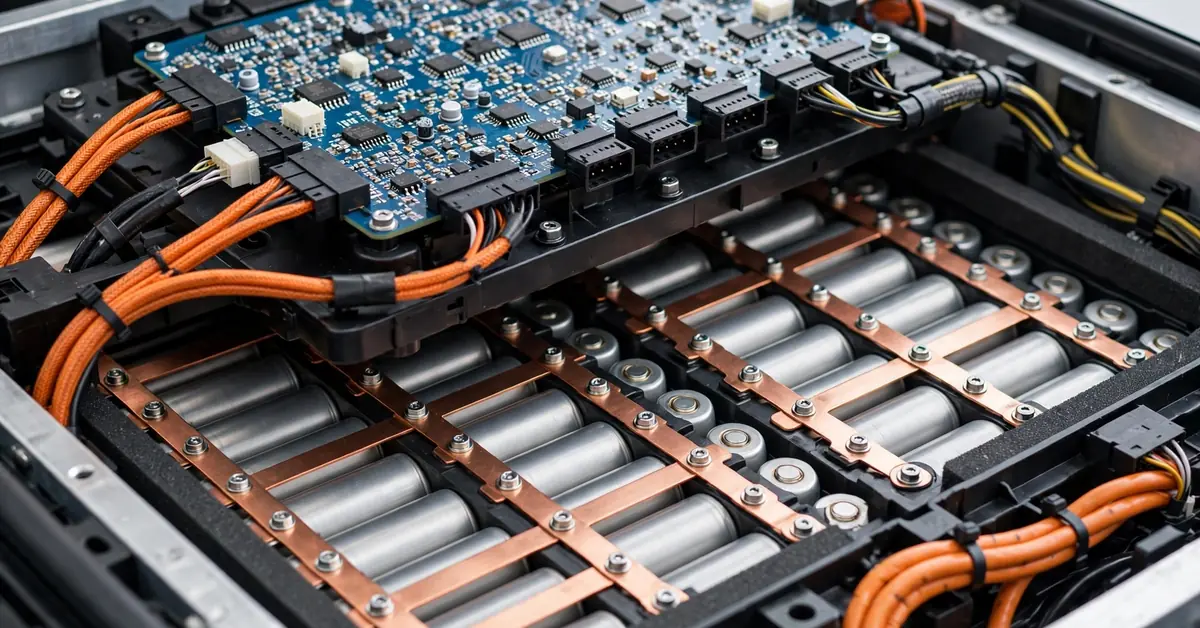
A BMS isolates a faulty cell by electrically disconnecting it, or the module containing it, from the rest of the pack using dedicated switching components, preventing a localized problem from spreading electrical stress or heat into otherwise healthy sections of the battery. Not every architecture supports this level of granular isolation, but where it exists, it’s a meaningful safety advantage.
Why Isolation Matters More Than a Full Pack Shutdown
A full contactor shutdown protects the vehicle by disconnecting the entire pack, but it also strands the driver and takes the whole battery offline, even if only one small section has an actual problem. Cell or module-level isolation offers a more targeted response, addressing the specific fault without necessarily sacrificing the rest of the pack’s usable capacity.
Which BMS Architectures Support Cell-Level Isolation
This capability depends heavily on the underlying architecture. Distributed and modular BMS designs, where individual modules have their own dedicated monitoring and control hardware, are generally better positioned to isolate a specific faulty section than a purely centralized design managing the entire pack through one controller.
How Module-Level Isolation Actually Works
In architectures that support it, each module or group of cells can have its own switching components, separate from the main pack contactors, allowing the BMS to electrically disconnect that specific section while the rest of the pack continues operating. This requires additional hardware complexity compared to a design with only one master disconnect point for the whole pack.
What Triggers Isolation of a Specific Cell or Module
The same fault detection signals used more broadly, voltage divergence, abnormal temperature, or resistance changes, can trigger a more targeted isolation response when the affected cell or module can be identified specifically and the architecture supports isolating it independently from the rest of the pack.
The Tradeoff Between Isolation and Full Capacity
Isolating a faulty section inevitably reduces the pack’s total usable capacity, since the isolated cells or modules are no longer contributing. This is generally considered an acceptable tradeoff compared to either continuing to use a genuinely faulty cell or shutting down the entire pack over a localized issue.
When Isolation Isn’t Possible or Sufficient
If a fault is severe enough, or if the architecture doesn’t support fine-grained isolation, a full contactor shutdown remains the fallback protective response. Isolation is a more surgical tool available in some designs, not a universal substitute for the pack-wide shutdown capability every BMS needs regardless of architecture.
Why This Capability Is Becoming More Valued
As EV packs grow larger and stranding a vehicle over a single localized fault becomes an increasingly costly outcome for both drivers and manufacturers, the ability to isolate rather than fully shut down is a meaningful design advantage, and one reason distributed and modular architectures continue gaining favor for larger battery systems.
| Response Type | Impact |
|---|---|
| Module-level isolation | Removes faulty section, pack continues at reduced capacity |
| Full contactor shutdown | Entire pack disconnected, vehicle unable to drive |
Conclusion
A BMS isolates a faulty cell or module by using dedicated switching hardware to electrically disconnect that specific section from the rest of the pack, a capability more available in distributed and modular architectures than purely centralized designs. This targeted approach protects the vehicle from a localized fault without necessarily sacrificing the entire pack’s usable capacity, reserving full contactor shutdown for faults too severe or widespread for isolation alone to handle.
FAQs
Can every EV isolate a single faulty cell without shutting down entirely?
No, this capability depends on the specific BMS architecture; some designs only support full pack shutdown.
Does isolating a faulty module reduce my EV’s range permanently?
It reduces available capacity until the faulty module is repaired or replaced, since the isolated cells are no longer contributing to usable energy.
Is cell isolation always safer than a full shutdown?
Not necessarily for the most severe faults — isolation is best suited to genuinely localized issues, while widespread or serious faults may still require a full shutdown.
