
Does a BMS Reset After Battery Replacement? Traction Pack and 12V Answers

Checked against Tesla’s service manual and service-mode documentation, EVs Enhanced’s Nissan Leaf pairing-tool instructions, Ford’s service message SSM 54388, OBDeleven’s battery-registration guide and specialist reporting on GM, BMW and VW procedures. Where a claim rests on a single weaker source, the text says so.
No — a battery management system does not simply reset itself when a battery is replaced, but the honest answer splits in two. After a high-voltage pack swap, every brand we checked needs a pairing or configuration step done with a tool: the car has to be told it has a new battery. After a 12-volt swap, only cars that track the small battery’s age need a reset or registration — Ford, BMW and VW among them; many EVs need nothing at all.
Key figures:
• Nissan Leaf pack swap: fault code P3102 stays until the pack is paired
• Ford 12V reset: a 30-second owner procedure, no tools
• BMW 12V registration: about $80–$120 at a dealer, or an app and an adapter at home
• Tesla: the one brand with a documented owner-level BMS recalibration
First, which battery do you mean?
“BMS reset” searches mix two different jobs, and the answers are opposites — so this page answers both, separately.
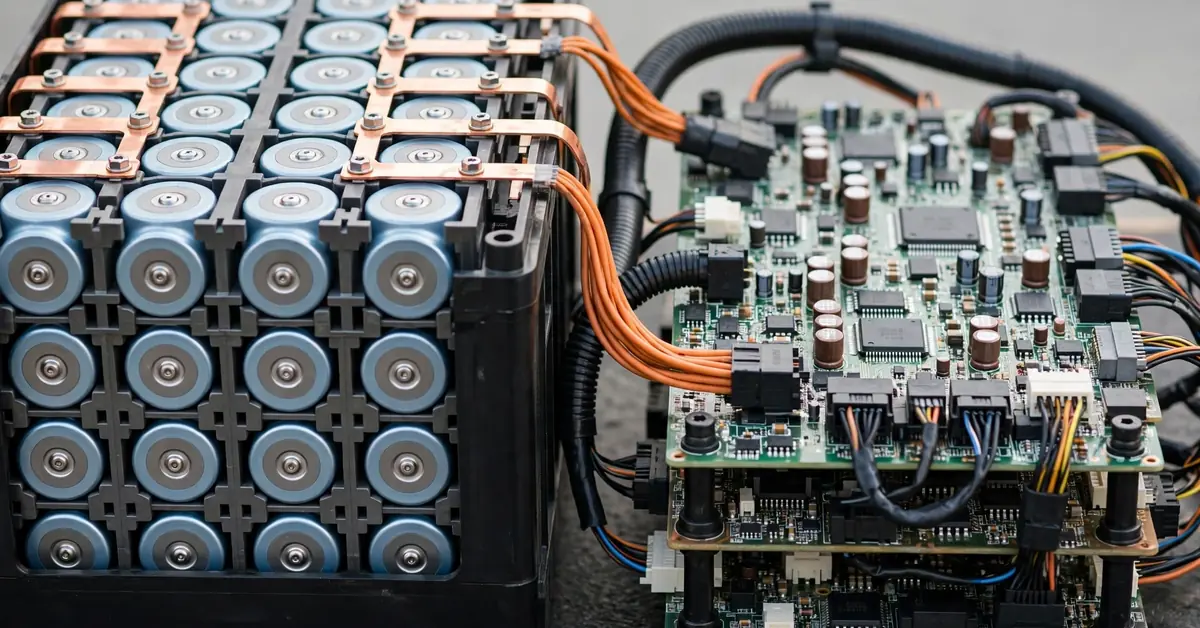
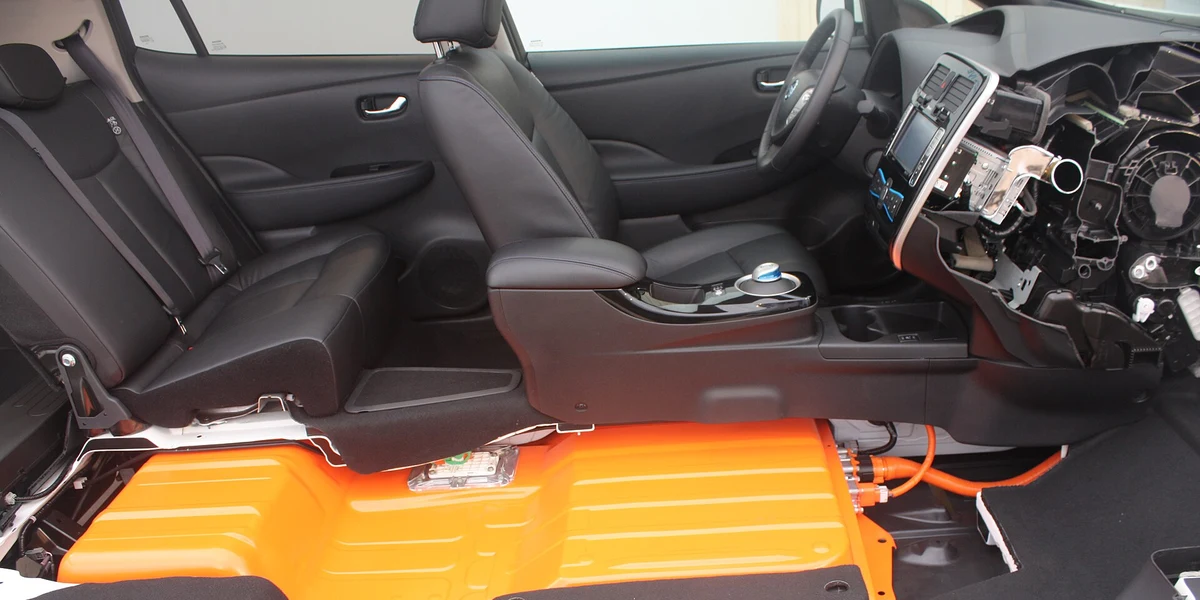
The high-voltage traction pack is the big battery under the floor; its management system holds the car’s learned capacity, its range estimate and, on some cars, the pack’s identity. The 12-volt battery is the small one that runs the electronics; on cars that monitor it, the car tracks its age and type to decide how to charge it. The guide to whether EVs have a 12-volt battery explains that second battery’s role. Everything below is labelled so you can jump straight to your case.
After a traction pack replacement: the car must be told
A new pack fitted without the configuration step leaves the car working from the old pack’s data — or, on a Leaf, carrying a fault code.
What the system holds is more than an on/off switch. Tesla’s documentation describes a BMS that calculates range, battery level and capacity, with estimates that drift as cell voltages shift. GM’s service routines for its Battery Energy Control Module include a “Battery Pack Capacity Fast Learn” and a “Hybrid/EV Range Reset” — learned values a technician refreshes after pack work. Ford’s battery controller tracks state of health per module. A replacement pack changes all of that at once, which is why no brand we checked treats the swap as fit-and-forget.
Nissan Leaf: pairing, and fault code P3102
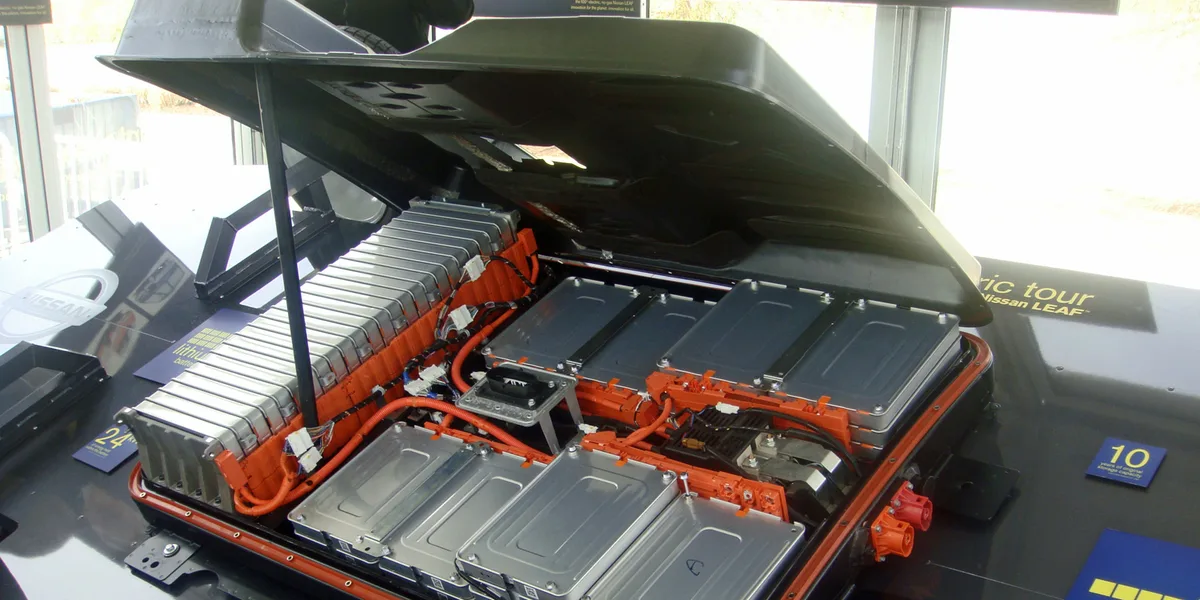
On a ZE0 or AZE0 Leaf (2011–2017), a replacement pack leaves fault code P3102 in the Vehicle Control Module until the pack is paired to the car. The detail that surprises owners: LeafSpy does not do the pairing — it is the diagnostic app used to check the fault codes first. Pairing itself needs a dedicated hardware tool (EVs Enhanced sells one, holding 30 pairing licences) that follows the procedure Nissan designed but restricted, often even from its own dealers. Fitting a later-generation pack into an early car needs an additional CAN-bus translator. The Nissan Leaf battery guide covers the packs themselves.
Tesla: a service procedure, plus the one owner-level re-learn
A Tesla pack swap is a service-centre job run through Tesla’s Toolbox software. But Tesla is also the only brand here with a documented owner-level recalibration for a drifting BMS estimate: run the battery below 10%, let it rest at least an hour, then charge to 100% and leave it until the car stops taking energy — or use Controls > Service > Battery Health Test, which drains and recharges the car over about 24 hours. Owners do this when the displayed range or percentage starts behaving strangely, and it is calibration of the estimate, not a repair.
GM, Ford, Hyundai and Kia: dealer tools
GM’s documented path after Ultium pack work runs through its dealer systems — capacity fast-learn and range-reset routines — and GM sanctions complete pack replacement rather than individual module swaps; technician reporting indicates there is no procedure to commission a single replacement wireless module. Ford’s service message for the Mach-E and E-Transit has the technician confirm a module replacement inside its FDRS “battery health” application afterwards. For Hyundai and Kia, no public manufacturer document was found; specialist sources describe dealer diagnostic equipment (GDS) performing the state-of-charge learning, which we report as the picture from those sources rather than factory documentation.
After a 12-volt replacement: only some cars care
If your car tracks the 12-volt battery’s age, the new one must be registered or the car keeps charging it like the old, worn one.
Ford: the 30-second owner reset
Ford’s battery monitoring system has needed a reset after any 12-volt replacement since 2011 — and owners can do it themselves: ignition on (engine off), flash the high beams five times, press the brake pedal three times, and watch for the battery light to blink in confirmation. A scan-tool app (FORScan) does the same job. Skip it and the car undercharges or overcharges the new battery, with warning lights and start-stop faults reported.
BMW and VW: registration and coding
BMW cars with an Intelligent Battery Sensor need the new battery registered — resetting the age counter the charging system works from; changing capacity or chemistry (say, to AGM) needs coding as well. Dealer registration runs about $80–$120; owners do it with an app and an OBD adapter for less. Volkswagen’s ID models need the new 12-volt coded in with its serial number, chemistry and capacity (OBDeleven or VCDS) — and a dashboard full of temporary warnings right after the swap is normal.
Tesla and the rest
Tesla’s service manual asks for a configuration step only when the 12-volt battery TYPE changes (lead-acid to lithium, for example), set in Service Mode. For many other EVs, no registration requirement is documented at all — but “not documented” is the honest phrasing, not a promise for every model.
What happens if the step is skipped?
The car doesn’t usually stop — it just starts lying to you, or charging the new battery as if it were the old one.
The verified examples are specific: a Leaf keeps fault code P3102 until pairing is done. A Ford charges a fresh 12-volt as though it were the degraded one it replaced, shortening its life. A Tesla’s range and percentage estimates drift — sudden drops while parked, charging past the set limit, a full-charge range figure that shrinks or grows oddly. Broader claims (“the car won’t start”, “the range will be wrong forever”) circulate online, but we found no sourced case for them, so this page doesn’t repeat them. If warning lights persist after any battery swap, the BMS warning light guide explains what they mean.
Frequently asked questions
Do I need to reset the BMS after replacing my EV battery?
For the high-voltage pack: yes — a pairing or configuration step is part of the job on every brand checked (Nissan, Tesla, GM, Ford, Hyundai/Kia). For a 12-volt battery: only on cars that track its age, such as Ford, BMW and VW models.
Can I reset the BMS myself?
The Ford 12-volt reset, yes — it is an owner procedure. Tesla’s BMS recalibration, yes — it is a charge-cycle procedure, not a reset of a replaced pack. Traction-pack pairing and BMW/VW registration need tools: a specialist pairing tool, dealer software, or an app-plus-adapter setup.
Does the BMS reset itself over time?
Tesla’s estimate recalibrates through the charge-cycle procedure above. For the other brands checked, no source describes a replaced pack being learned automatically through ordinary driving — the steps are tool- or procedure-initiated.
What does a BMS reset or registration cost?
BMW 12-volt registration is the priced example: roughly $80–$120 at a dealer, $40–$90 at an independent, or about $65–$100 once for the app and adapter to do it yourself. Pack-pairing and dealer configuration costs vary and are not published.
Will LeafSpy pair a replacement Leaf battery?
No. LeafSpy Pro checks the fault codes before pairing; the pairing itself is done by a dedicated hardware tool.
Conclusion
A BMS does not reset itself after a battery replacement — somebody, or some tool, has to tell the car.
For a traction pack that step is part of the replacement job itself; for a 12-volt battery it depends entirely on whether your car tracks the small battery’s age. The 30 seconds it takes on a Ford, or the registration on a BMW, is cheap insurance against a new battery being treated like the old one.
