
Does BMS Limit Charging to Protect Battery Longevity?

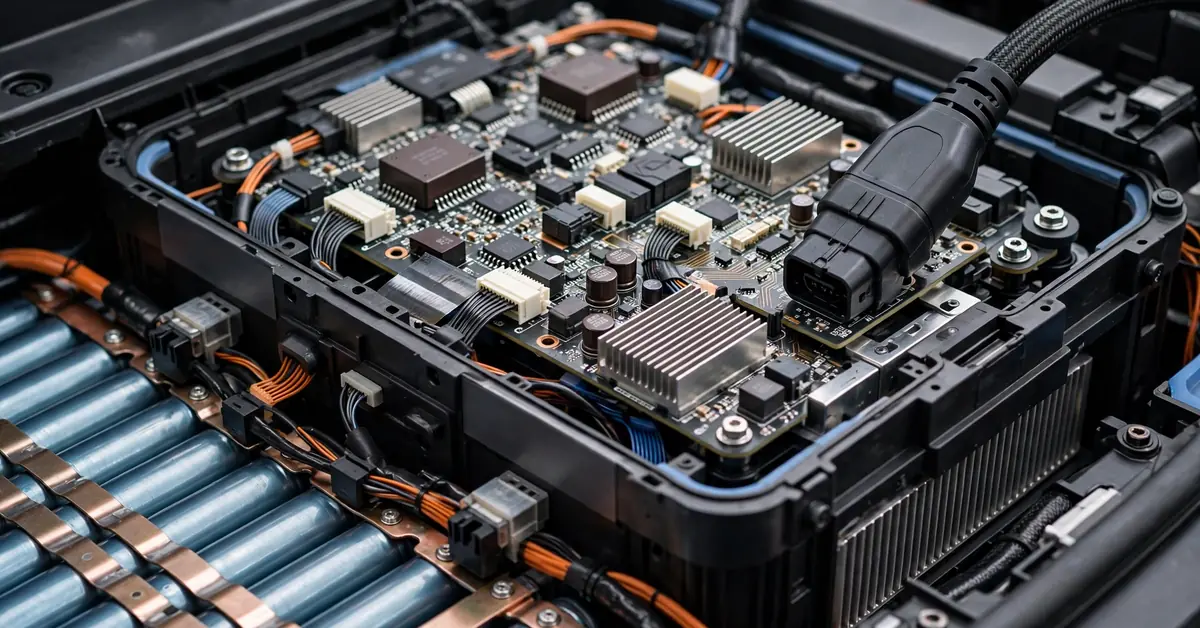
Yes, a BMS deliberately limits charging in several ways specifically to protect battery longevity, including reserving a capacity buffer near full charge, tapering current as cells approach their voltage ceiling, and restricting charge rate based on temperature, all of which sacrifice some charging speed or usable capacity in exchange for slower long-term degradation. These aren’t limitations to work around; they’re intentional longevity tradeoffs.
The Capacity Buffer: Why “Full” Isn’t Really Full
Many manufacturers configure the BMS to reserve a small percentage of the pack’s true capacity at both the top and bottom of the range, meaning the dashboard’s 100% doesn’t represent the cells’ absolute maximum voltage. This buffer specifically avoids the most degradation-prone extreme voltage states, trading a small amount of usable capacity for meaningfully slower long-term capacity fade.
Charge Rate Limiting Near Full Charge
As cells approach full, the BMS tapers charging current following a constant-current, constant-voltage profile, specifically because sustained high current near maximum voltage accelerates degradation more than the same current would at a lower state of charge. This is exactly why charging visibly slows in the final portion of a session.
Temperature-Based Charge Restrictions
Charging a cold battery aggressively risks lithium plating, a permanently damaging condition. By restricting charge current until the pack reaches a safer temperature, the BMS trades some charging speed in cold weather for protection against this specific, irreversible form of damage.
Recommended Charge Limits and Owner Settings
Many EVs let owners set a daily charging limit below 100%, often defaulting to or recommending around 80% for regular use, reserving a full charge for occasions when maximum range is actually needed. This isn’t a hard BMS-enforced limit in most cases, but it’s a longevity-focused recommendation built around the same voltage-extreme-avoidance principle as the built-in capacity buffer.
Why the BMS Doesn’t Just Maximize Charging Speed Always
It would be technically possible to design a BMS that prioritizes maximum charging speed and full capacity access at all times, but this would come at a real cost to long-term battery health. Manufacturers consistently choose to build in these longevity-focused limitations because a battery that degrades noticeably faster creates a worse overall ownership experience than one that charges slightly slower but retains more capacity for years longer.
How These Limits Adapt as the Battery Ages
Some BMS designs adjust their charging limits and buffer sizing over the vehicle’s life, responding to actual measured state of health rather than applying identical rules regardless of battery condition, aiming to continue balancing performance against longevity appropriately as the pack’s real characteristics change over time.
| Charging Limitation | Longevity Benefit |
|---|---|
| Capacity buffer (100% isn’t truly full) | Avoids most degradation-prone voltage extremes |
| CC-CV tapering near full charge | Reduces high-current stress at high voltage |
| Cold-weather charge restriction | Prevents lithium plating damage |
| Recommended daily charge limits (e.g. 80%) | Reduces time spent at high voltage extremes |
Conclusion
A BMS does limit charging in several deliberate ways specifically to protect battery longevity, reserving a capacity buffer, tapering current near full charge, and restricting charging in cold weather, all trading some charging speed or accessible capacity for meaningfully slower long-term degradation. These built-in limitations reflect a consistent industry design philosophy: prioritizing years of usable battery life over maximizing every possible charging metric in the short term.
FAQs
Should I always charge to 100% to get the most out of my battery?
For most daily use, charging to around 80% is often recommended to reduce time spent at high-voltage extremes, reserving 100% for when you actually need the extra range.
Does the BMS’s capacity buffer mean I’m not getting the full battery I paid for?
The buffer is a deliberate design choice to protect long-term battery health, and manufacturers factor this into the advertised usable range from the start.
Can I disable these charging limitations to charge faster?
Generally no, these protections are built into the BMS firmware and aren’t designed to be user-disabled, since they exist specifically to protect the battery you depend on.
