Which EVs Use NMC Batteries?
Which EVs use NMC batteries? Full list including Tesla, Hyundai, Kia, BMW, Mercedes, VW, Rivian, Lucid, and more. Learn which NMC suppliers power each brand.

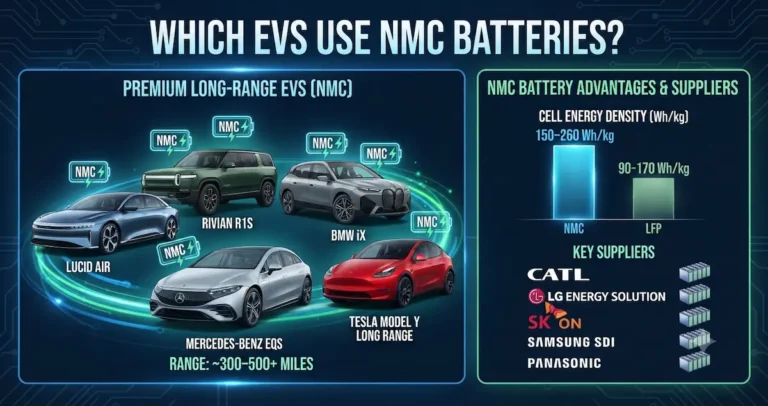
Which EVs use NMC batteries? Full list including Tesla, Hyundai, Kia, BMW, Mercedes, VW, Rivian, Lucid, and more. Learn which NMC suppliers power each brand.
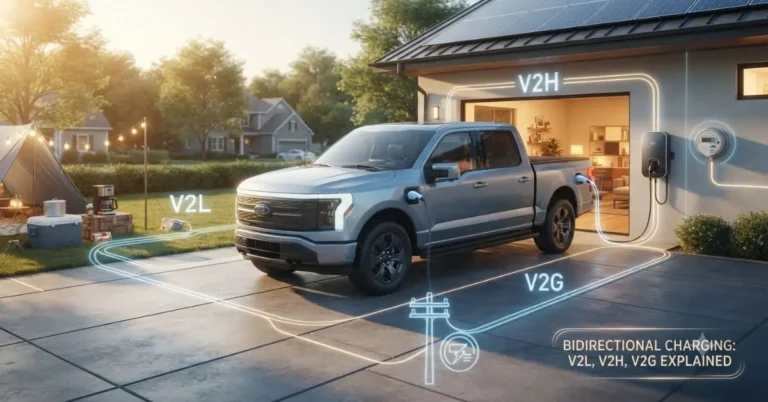
Bidirectional EV charging explained: V2L (Vehicle-to-Load, powers appliances via adapter, 1.5–3.6 kW), V2H (Vehicle-to-Home, powers house during outage, 2–3 days on 75 kWh), V2G (Vehicle-to-Grid, earns $200–$800/year in bill credits). Compatible EVs, equipment needed, and how each technology works in 2026.

What are the downsides of NCA batteries? Higher cobalt content, lower thermal threshold, faster degradation at 100% charge, and higher cost — the full NCA limitations explained.
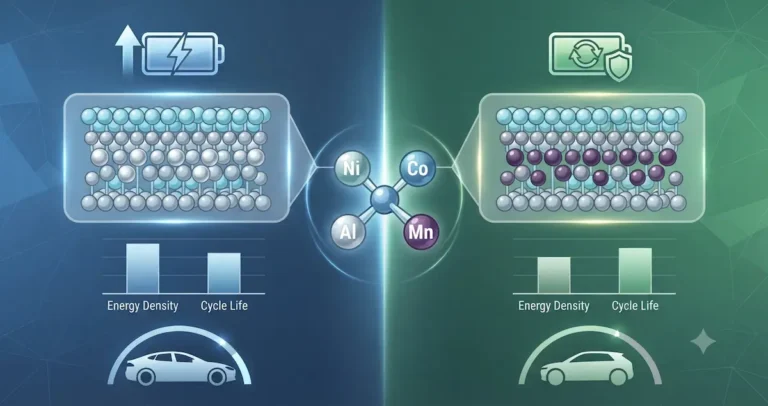
NCA vs NMC battery: what’s the key difference? Aluminum vs manganese as the third metal. Learn how energy density, cycle life, and thermal stability compare between these two EV chemistries.
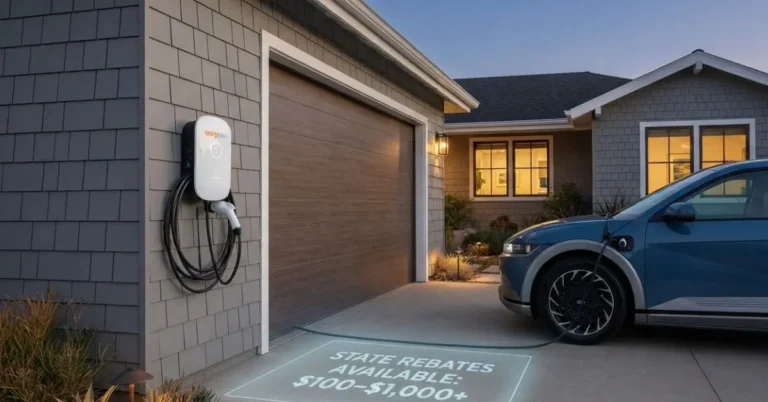
State rebates for home EV charger installation range from $100–$1,000. California (PG&E), Colorado (Xcel), New York (NYSERDA), Maryland, Oregon, Texas (Oncor), and Illinois (ComEd) all have programmes. Combined with 30% federal credit, effective out-of-pocket cost can drop to under $200. How to find and apply in 2026.
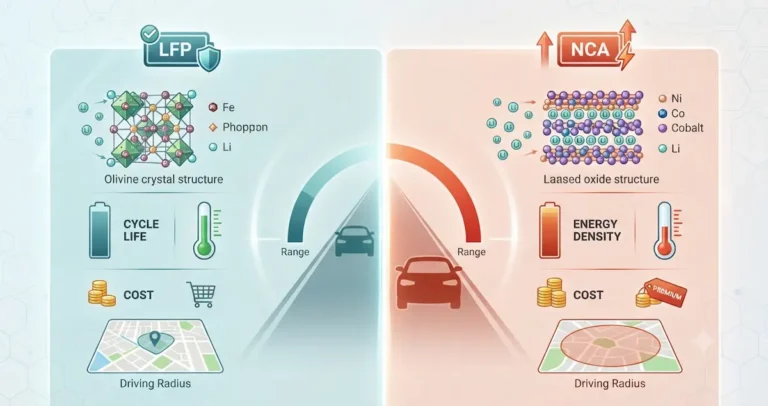
LFP vs NCA battery range: NCA delivers 405 miles (Tesla Model S) vs LFP’s 260–300 miles. But LFP wins on cost, safety, and cycle life. Full comparison of both EV battery chemistries.
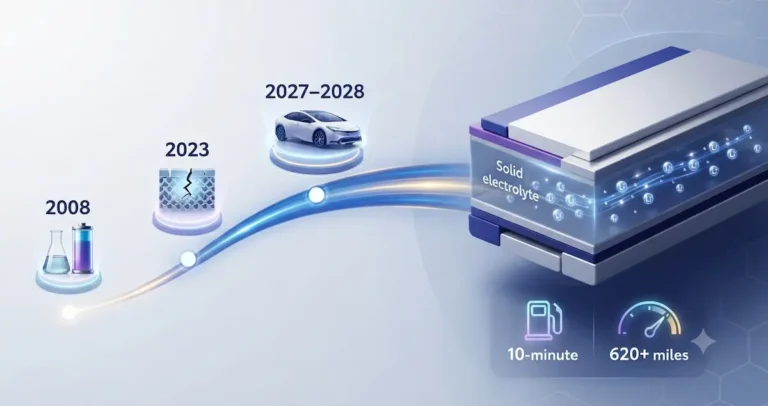
Toyota solid-state battery status: 620+ miles of range, 10-minute charging, the 2027-2028 launch target, sulfide electrolyte, and Idemitsu’s pilot plant.
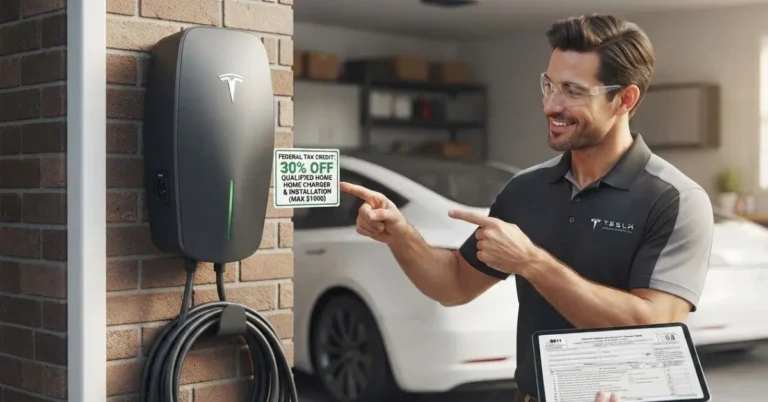
Federal tax credit for EV home charger installation: 30% of equipment + installation costs (up to $1,000 residential, $100,000 commercial) via IRS Form 8911. Important: 2023 IRA added census tract location requirement. State rebates on top. How to claim, what qualifies, and limits explained for 2026.
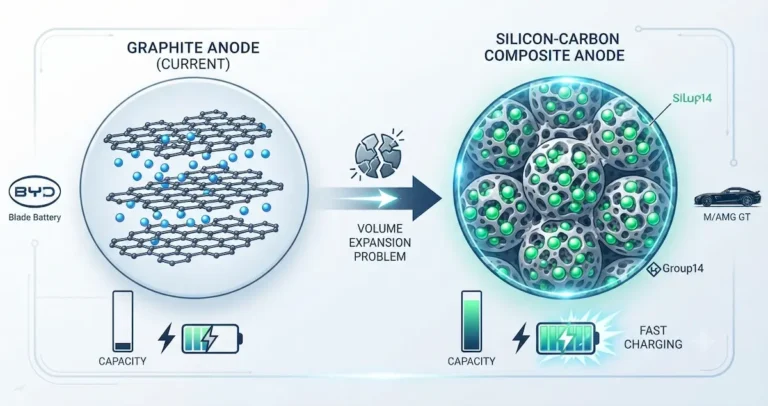
What is a silicon anode battery? Silicon stores 10x more lithium than graphite — enabling 15–55% more range and faster charging. Learn how silicon-carbon composites work and which EVs use them in 2026.
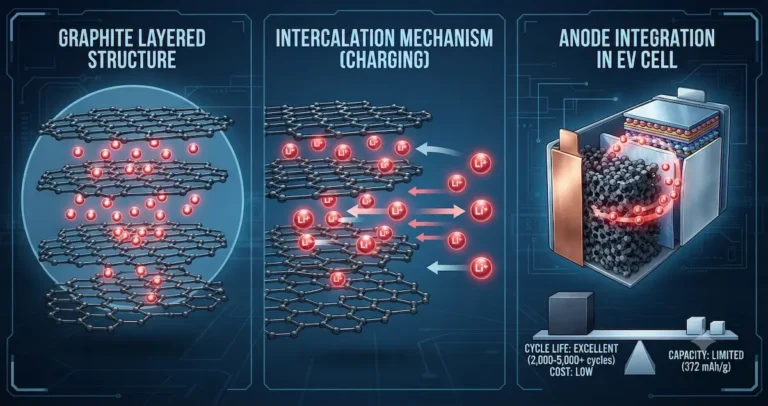
What is a graphite anode in an EV battery? Learn how graphite stores lithium via intercalation, why it dominates EV batteries, natural vs synthetic graphite, limitations, and silicon alternatives.
End of content
End of content