
EV Charging Problems and Solutions: Complete Troubleshooting Guide

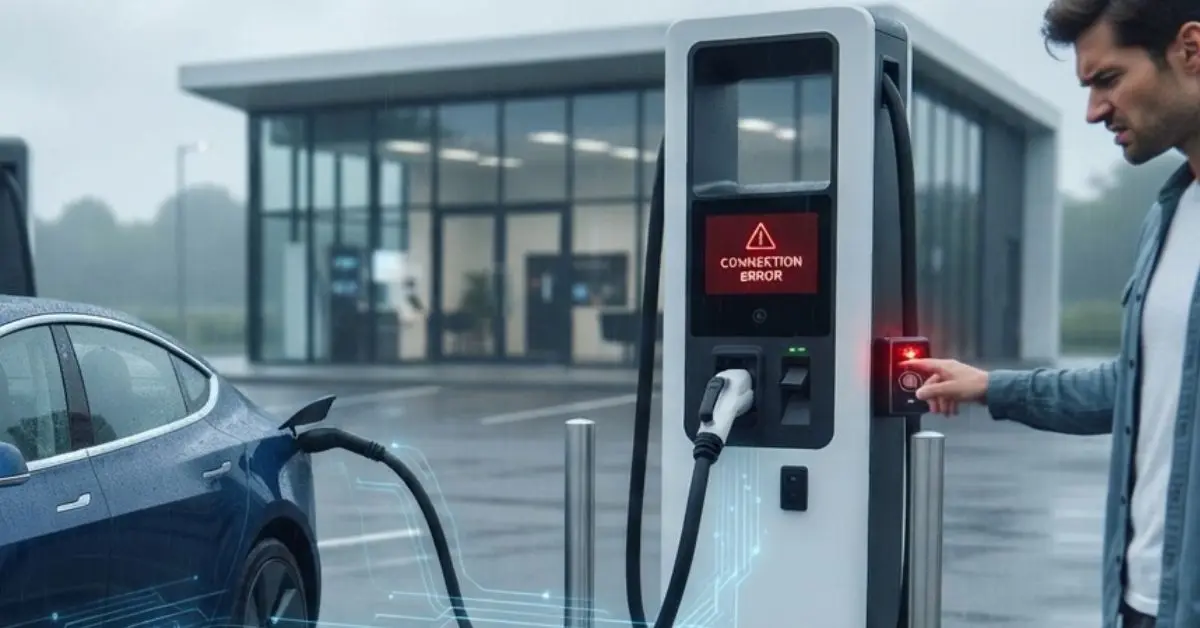
A charging problem can ruin your trip, but most EV charging issues have a simple fix. Before calling for help, use this guide to identify the problem and get back on the road quickly.
EV charging problems fall into a handful of predictable categories, and most have straightforward solutions. The most common issues are that the charger won’t start, the charging speed is slower than expected, the session stops unexpectedly, the app won’t connect, and the car won’t charge at all. This complete troubleshooting guide covers every common EV charging problem with step-by-step solutions for both home Level 2 and public DC fast charging scenarios.
Cold weather is one of the most common culprits behind these issues — see our guide on how weather affects EV charging.
EV Charging Problems Quick Diagnosis
| Problem | Most Likely Cause | First Step to Fix |
|---|---|---|
| Charger won’t start at public station | Payment/auth issue; stall fault | Try credit card tap; try different stall |
| Charging speed much slower than expected | Cold battery; stall pairing; above 80% SoC | Check battery temp; move to unpaired stall |
| Session stops unexpectedly | Overheating battery; payment timeout; charger fault | Check car display for error; restart session |
| Home charger won’t start | WiFi offline; car not recognizing charger; breaker tripped | Check breaker; restart charger; check app |
| Car won’t charge at home at all | 12V auxiliary battery dead; charging port fault | Check 12V battery; try Level 1 EVSE |
| App shows charging but no power going in | Car set to scheduled charging; charge limit already reached | Check charge limit and scheduled start time in car settings |
| Charging port won’t open | 12V battery low; locked charge port; software issue | Use key fob/app to unlock port; try manual port release |
Problem 1: Public Charger Won’t Start
Try a Different Payment Method
If the app is not working, tap your credit card directly on the payment terminal. Most 2024 and newer charging stations accept contactless card payments without using an app.
Try a Different Charging Stall
Hardware faults often affect only one charging stall. The stall next to it may work without any issue.
Check the Connector Connection
Make sure the connector is fully inserted until it clicks into place. A loose connection can prevent charging from starting.
Contact the Charging Network Support
Every charging station displays a support phone number. The support team can often restart the charger remotely.
Problem 2: DC Fast Charging Is Slower Than Expected
Battery Is Too Cold
A cold battery is the most common reason for slow DC fast charging. Always use your vehicle’s built-in navigation to route to the charger so the battery can precondition before arrival.
Power Sharing Between Charging Stalls
Older Tesla V2 stations and some other chargers share power between paired stalls. Move to an unpaired stall or wait until the nearby vehicle finishes charging.
Battery State of Charge Is Above 80%
Charging speed naturally slows after the battery reaches 80% to protect battery cells. This is normal behavior. Continue your trip once the battery reaches 80%, if possible.
Charger Is Delivering Less Than Its Maximum Rating
Check the charger’s display for the actual charging power. Some 350-kW chargers deliver only 150 kW to vehicles with a 400-V battery system.
Problem 3: Home Charger Won’t Start or Is Offline
Check the Circuit Breaker
Open your electrical panel and confirm the charger’s dedicated breaker has not tripped. Reset it by switching it completely off and then back on.
Check the WiFi Connection
Smart chargers need WiFi for app control. If your router restarted or your WiFi settings changed, reconnect the charger through its setup process.
Restart the Charger
Turn off power to the charger, wait 30 seconds, and turn it back on. This often clears temporary software issues.
Check the Vehicle Charge Limit
If your vehicle’s charging limit is set to 80% and the battery is already above that level, charging will not begin. Increase the limit or temporarily remove it.
Problem 4: Car Won’t Charge at All (Home or Public)
A 12V auxiliary battery often causes an electric vehicle to stop charging. This small battery powers your car’s electronic systems, which include the charging controls. If this battery is weak or dead, the car cannot start charging.
This issue occurs most often in cars over four years old or after long periods of idle time. Cold weather can also cause this battery to fail. Replacing this battery usually costs between $80 and $200. This simple fix often repairs charging problems before you need more expensive service.
Problem 5: Level 1 EVSE Not Working
Test the Power Outlet
Plug another device, such as a lamp or phone charger, into the same outlet. If it does not work, the problem is with the outlet or electrical circuit, not the EVSE.
Check for a Tripped GFCI
Outdoor outlets may have GFCI protection that trips during wet weather. Press the reset button on the outlet or reset the GFCI breaker in your electrical panel.
Avoid Using an Extension Cord
Connect the Level 1 EVSE directly to a wall outlet. Extension cords create extra resistance, generate heat, and can trigger charging faults.
Struggling to locate a working charger in the first place? See our guide on how to find public EV charging stations near you.
Conclusion
Most EV charging problems have simple solutions. Try another charging stall, check the 12V battery, confirm the charge limit, or precondition the battery before DC fast charging. Public charging reliability has improved significantly in 2026, but individual charging stalls can still fail. Checking the charger status before you arrive can save time. If the problem continues, contact your vehicle manufacturer’s roadside assistance or the charging network’s support team.
The right app can help you avoid many of these issues in the first place — see our roundup of the best apps for finding EV charging stations.
FAQs
Why is my EV charging slower than normal?
The most common reasons are a cold battery, charging above 80% state of charge, power sharing at the station, or charger limitations.
Why won’t my EV charge at any charger?
A weak 12V auxiliary battery, a charging system fault, or a charging port issue can prevent your EV from charging at both home and public stations.
Why does my home EV charger keep going offline?
The charger may have lost its WiFi connection, experienced a software issue, or had its circuit breaker trip.
