
How Does BMS Enable Vehicle-to-Grid (V2G) Charging?

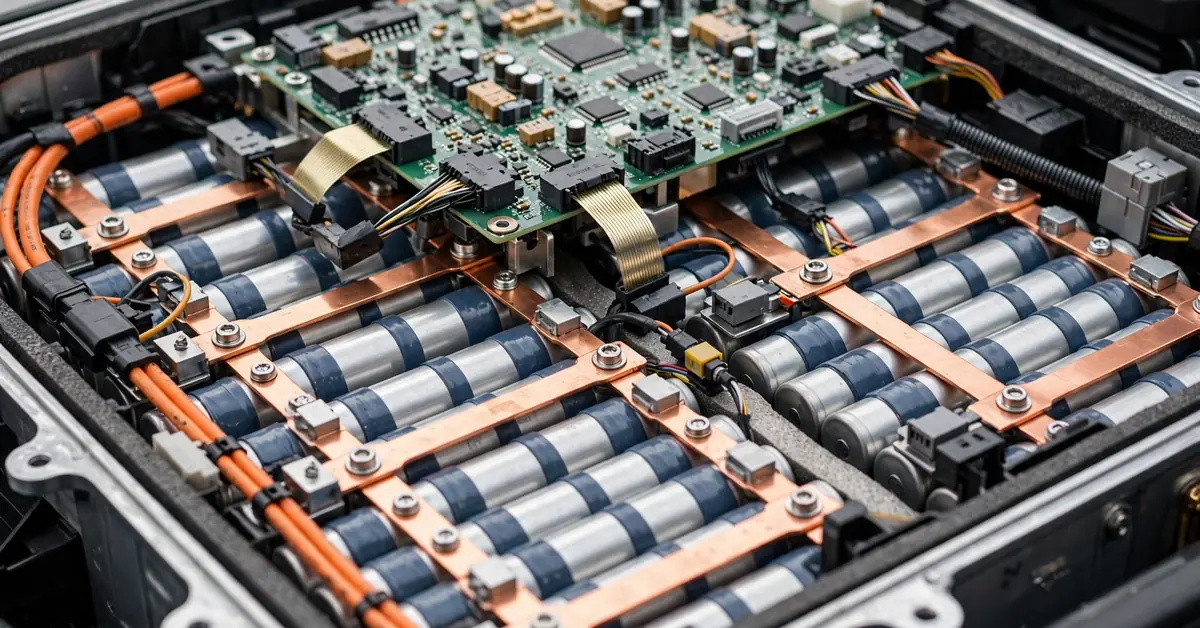
A BMS enables vehicle-to-grid (V2G) charging by managing safe bidirectional current flow, monitoring the same voltage and temperature limits during discharge back to the grid as it does during normal charging, and coordinating with bidirectional power electronics and grid communication protocols to keep the process both safe and grid-compliant. V2G asks the BMS to protect the battery in both directions of energy flow, not just one.
What V2G Actually Requires Beyond Normal Charging
Standard EV charging only moves energy in one direction: from the grid into the battery. V2G requires the reverse capability too, safely moving energy from the battery back out to the grid, which means the BMS has to manage discharge-side protection with the same rigor it already applies to charging.
How the BMS Manages the Discharge Side of V2G
Preventing Over-Discharge During Grid Export
Just as with normal driving discharge, the BMS enforces a low-voltage cutoff during V2G discharge, ensuring the battery isn’t drained below a safe level just because the grid is requesting power.
Managing Discharge Current Limits
The same dynamic current-limiting logic that governs how much power a battery can safely deliver for acceleration applies during V2G discharge as well, based on temperature, state of charge, and battery health.
Thermal Management During Extended Discharge
Sustained energy export to the grid, potentially for hours during a peak demand event, generates heat similarly to extended driving or fast charging, requiring the BMS to manage thermal conditions throughout the discharge session.
Coordinating With Bidirectional Power Electronics
V2G requires bidirectional converters capable of both drawing AC power from the grid and converting DC battery power back into grid-compliant AC. The BMS works alongside this power electronics system, providing the battery-side limits and status the inverter needs to operate safely and within the battery’s real capabilities.
Grid Compliance Requirements
Feeding power back into the grid isn’t simply a matter of battery safety, it also has to meet strict grid compliance requirements, including grid-frequency measurement and voltage matching, functionality that typically lives in the vehicle’s onboard power electronics working in coordination with BMS data about available battery capacity and limits.
Why a Reliable, Accurate BMS Is Considered Essential for V2G
Because V2G asks the battery to operate across a much wider and more dynamic usage pattern, charging at night, discharging during peak demand, then charging again, accurate real-time state estimation becomes even more important than in standard one-directional use. A BMS with imprecise SOC or SOH tracking could allow unsafe discharge depth or inaccurate available-capacity reporting to the grid operator.
Impact on Long-Term Battery Health
V2G participation adds extra charge-discharge cycling beyond what normal driving alone would require, and how much this affects long-term battery health depends heavily on how conservatively the BMS manages the added cycling, keeping discharge depth and current within ranges that don’t meaningfully accelerate degradation.
| BMS Responsibility | How It Applies to V2G |
|---|---|
| Low-voltage cutoff | Prevents over-discharge during grid export |
| Dynamic current limiting | Sets safe discharge rate for grid power delivery |
| Thermal management | Manages heat during extended discharge sessions |
| Accurate SOC/SOH reporting | Informs grid operator of genuinely available capacity |
Conclusion
A BMS enables vehicle-to-grid charging by extending its normal protective functions, voltage limits, current control, and thermal management, to cover discharge back into the grid, not just charging from it. Combined with bidirectional power electronics and grid communication protocols, this expanded BMS role is what makes it possible for EVs to safely function as mobile energy storage assets without compromising battery protection.
FAQs
Does V2G wear out an EV battery faster?
It adds extra cycling, though a well-managed BMS keeps discharge depth and current within ranges designed to limit additional degradation.
Can any EV support V2G with just a software update?
No, V2G typically requires bidirectional power electronics hardware that not all vehicles have, in addition to compatible BMS software.
Does the BMS treat V2G discharge differently from normal driving discharge?
The core protective logic is similar, though V2G discharge sessions can be more sustained and predictable than the variable demands of driving.
