
How Does BMS Manage Battery During Long-Term Storage?

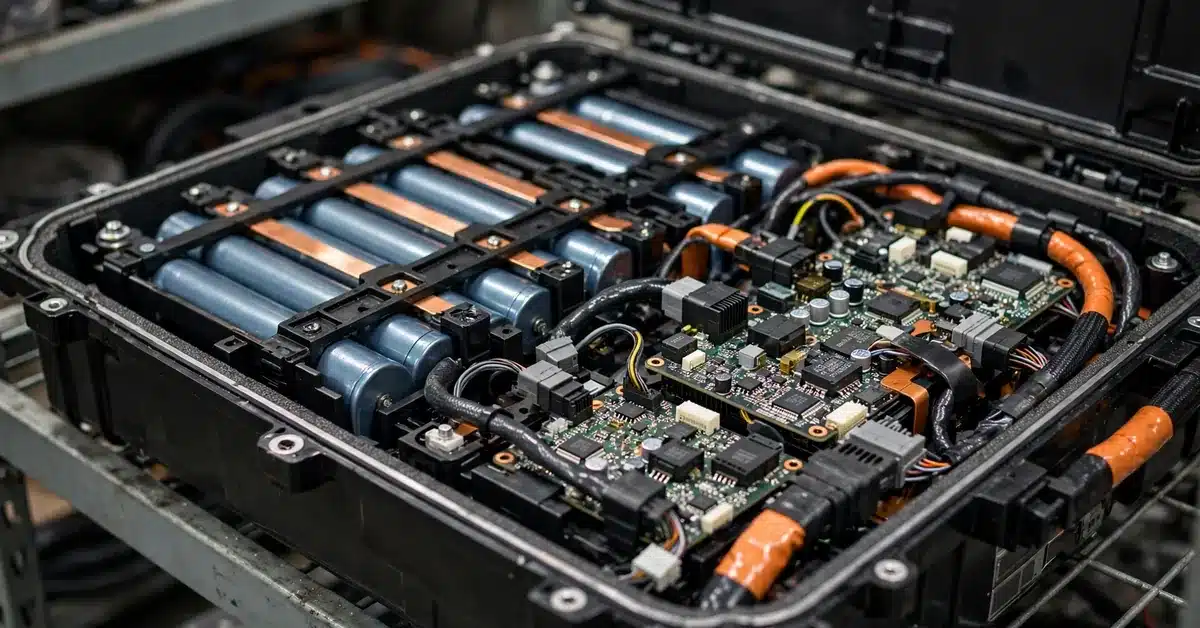
A BMS manages battery during long-term storage by periodically waking from a low-power sleep state to check voltage and temperature, correcting cell imbalance if needed, and, in some designs, alerting or automatically maintaining charge level if it drops toward a concerning threshold. Storage management is about minimizing the very slow, ongoing risks of extended inactivity, not active driving or charging stress.
Why Long-Term Storage Presents Its Own Distinct Risk
An EV sitting unused for weeks or months still has a BMS drawing some small amount of power to maintain basic monitoring capability, and the battery itself continues to self-discharge slowly even with no active use. If storage duration is long enough and starting charge level low enough, this slow drain could theoretically bring cells toward an unsafe undervoltage condition.
How the BMS Operates During Storage
Entering a Low-Power Sleep State
Rather than remaining fully active, the BMS enters a reduced-power standby mode during extended inactivity, conserving energy while still retaining enough capability to periodically check on the pack’s condition.
Periodic Wake-Up Checks
At defined intervals, the BMS wakes briefly to check voltage and temperature across the pack, verifying nothing has drifted into a concerning range, then returns to its low-power state if everything looks normal.
Balancing During Storage Wake-Ups
If a wake-up check reveals cell imbalance has developed, some BMS designs will perform limited balancing even during storage, helping keep the pack reasonably aligned even without active driving or charging.
Why Manufacturers Recommend a Specific Storage Charge Level
Storing a battery at very high or very low charge for extended periods accelerates degradation more than storing it at a moderate level, often cited in the general range of 40-60% for many chemistries. This is why manufacturers typically recommend against leaving a vehicle plugged in and fully charged, or letting it sit for months near empty, before long-term storage.
What Happens If Charge Drops Too Low During Storage
If self-discharge combined with the BMS’s own small power draw brings the pack toward a concerning low-voltage level, some vehicles will alert the owner remotely if connectivity allows, while others may simply continue monitoring until physically reconnected to a charger. In the most severe, prolonged neglect scenarios, cells can potentially be damaged by extended deep discharge.
Why Periodic Charging During Storage Matters
For genuinely extended storage, weeks to months, periodically connecting the vehicle to a charger, even briefly, helps offset natural self-discharge and gives the BMS an opportunity for its normal balancing and calibration checks, rather than leaving the pack entirely unattended for the full storage duration.
| Storage BMS Function | Purpose |
|---|---|
| Low-power sleep state | Minimizes BMS’s own power draw during inactivity |
| Periodic wake-up checks | Verifies voltage/temperature remain in safe range |
| Storage-level balancing | Keeps cells aligned even without active use |
| Remote alerts (where supported) | Notifies owner if charge drops toward concerning levels |
Conclusion
A BMS manages battery during long-term storage by minimizing its own power draw through a low-power sleep state, periodically checking voltage and temperature, and performing limited balancing if needed, all aimed at preventing the slow risks of extended inactivity rather than managing active driving stress. Following manufacturer storage-charge recommendations and periodically reconnecting to a charger for extended storage periods both meaningfully support what the BMS is already trying to do on its own.
FAQs
What charge level should I leave my EV at for long-term storage?
Many manufacturers recommend a moderate level, often cited around 40-60%, rather than fully charged or nearly empty.
Can an EV battery be damaged by sitting unused for months?
In extreme, prolonged neglect scenarios with very low starting charge, yes, though normal storage practices and occasional charging significantly reduce this risk.
Does the BMS drain the 12V battery during storage too?
The BMS and other systems do draw some power from the vehicle’s low-voltage system during standby, which is one reason very long storage periods can also affect the 12V auxiliary battery.
