
How to Charge an Electric Car: Complete Beginner’s Guide

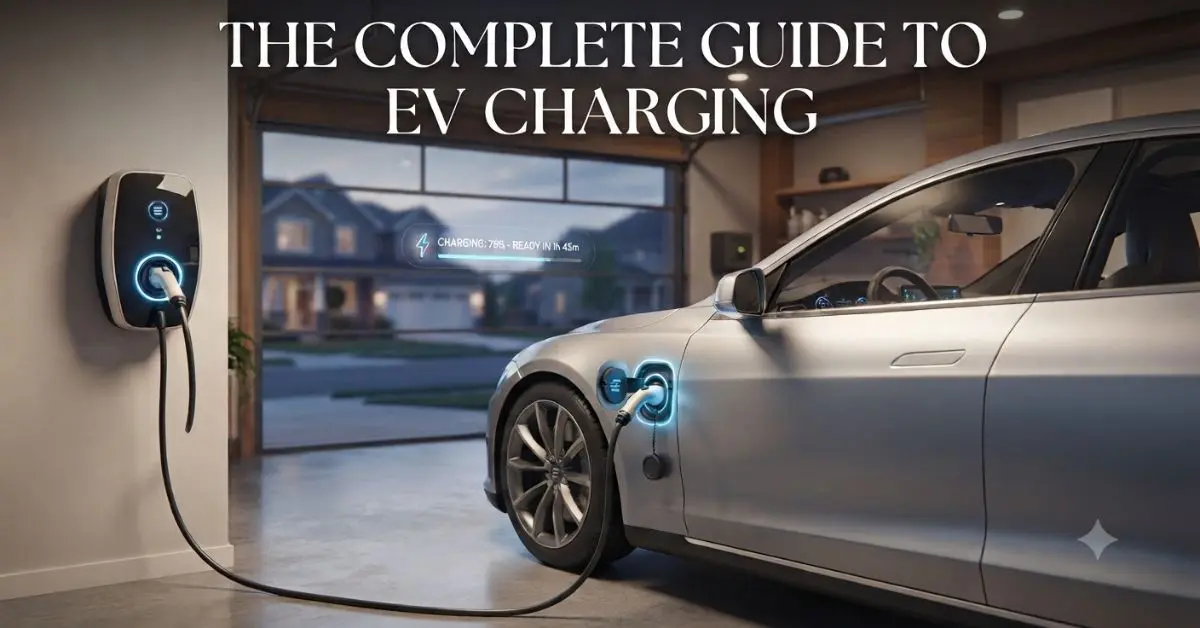
Charging an electric car is simple. You just plug it in and unplug it when you finish. Most electric car owners charge at home while they sleep. This means they no longer need to visit a gas station.
This guide explains how to charge your car. It covers everything from your first time plugging in to fast charging on road trips. You will also find real costs and simple steps to help you.
How to Charge an Electric Car
Every EV can be charged using three different methods — called charging levels. Each level delivers power at a different speed and uses different equipment. Knowing which level fits your daily life is the most important first step for any new EV owner.
| Charging Level | Voltage | Speed | Where Used | Miles Added Per Hour |
|---|---|---|---|---|
| Level 1 | 120V | Slowest | Standard home outlet | 3–5 miles |
| Level 2 | 240V | Medium | Home wallbox / public stations | 15–35 miles |
| Level 3 (DC Fast) | 480V+ | Fastest | Public fast charging stations | 100–350+ miles |
Find Your EV Charging Port
Every electric vehicle (EV) has a charging port. You will usually find it on the front fender, rear fender, or rear bumper. To start, open the port cover. Most cars let you open them from the touchscreen or your key fob.
Most new EVs in the U.S. use the NACS (North American Charging Standard) port. This plug works directly with Tesla Superchargers. Older EVs may use a CCS1 or CHAdeMO connector. If you are not sure which plug your car uses, check your owner’s manual.
Choose the Right EV Charging Method
How to Charge an EV at Home (Level 1)
Level 1 charging uses a standard 120V household outlet. You use these same outlets for a lamp or a phone charger. Every electric vehicle comes with a portable charger, also called an EVSE, in the box.
You simply plug one end into your wall outlet and the other end into your car’s charging port. This adds about 3 to 5 miles of range every hour. This speed works well for people with short daily commutes.
Charge Your EV at Home with a Level 2 Wallbox
A Level 2 home charger, also called a wallbox or EVSE, plugs into a 240V outlet. This is the same type of outlet that powers a dryer or an oven. The charger adds 15–35 miles of range every hour and fills most EVs overnight in 6–10 hours.
Most owners install a Level 2 wallbox at home. The unit costs $200–$800, and professional installation costs another $200–$800. A 30% federal tax credit significantly lowers these total costs.
Charge Your EV at a Public Charging Station
Public charging stations are found at shopping centers, workplaces, hotels, and along highways. Most stations are networked — you pay via an app, credit card, or RFID card. Pull up next to the charger, plug in the appropriate connector, and start the session on the station’s screen or your car’s app. DC fast chargers at highway stations can add 100–200 miles in just 20–30 minutes.
Set the Right Charging Limit
Most electric vehicles let you set a daily charge limit in their settings or app. For normal daily driving, set this limit to 80%. This habit protects your battery and helps it last much longer.
Only charge to 100% when you are going on a long road trip and need extra range. Most electric vehicles use NMC batteries, which stay healthier with this 80% limit. However, if your car uses an LFP battery, such as the Tesla Model 3 Standard Range or some BYD models, you can safely charge to 100% every day.
Safely Unplug Your EV After Charging
Your EV stops drawing power automatically when it reaches the set charge limit. To unplug, press the release button on the charging cable handle.
The car must be unlocked for the charge port latch to release. Always press the button to release the latch before you remove the cable. Never yank the cable, as this can damage both the cable and the charge port.
How Much Does It Cost to Charge an Electric Car?
Home charging is the cheapest way to power your electric vehicle. The average U.S. residential electricity rate is about 19.32 cents per kWh. At this price, charging a typical 75 kWh battery to 80% costs about $11.59.
Drivers who only charge at home spend about $35–$60 per month. This cost is much lower than the $120–$180 you would pay for gas to drive a similar petrol car.
| Charging Method | Typical Cost per kWh | Cost Per Full Charge (75 kWh EV) | Monthly Cost (12,000 mi/yr) |
|---|---|---|---|
| Home Level 1 / Level 2 | $0.14–$0.19/kWh (US average) | $10.50–$14.25 | $35–$60 |
| Public Level 2 | $0.25–$0.40/kWh | $18.75–$30.00 | ~$964/year |
| DC Fast Charging | $0.35–$0.60/kWh | $26.25–$45.00 | ~$2,043/year |
How to Find Public EV Charging Stations
- PlugShare app: The most popular EV charging map — shows all public chargers, including real-time availability and user reviews
- A Better Routeplanner (ABRP): Plans long road trips with charging stops calculated for your specific EV model
- Your car’s built-in navigation: Most EVs route to nearby chargers automatically — many activate battery preconditioning on the way
- Google Maps: Search “EV charging station near me” — shows live availability at many network stations
- ChargePoint, Electrify America, and EVgo apps: Each network has its own app showing its stations with real-time status
EV Charging Tips for Beginners
- Charge at home every night: Think of it like plugging in your phone — top up while you sleep and start every day with a full battery
- Set 80% as your daily limit: Preserves battery health for NMC EVs — reserve 100% for road trips only
- Use off-peak electricity rates: Schedule charging for 11 pm–7 am to save 30–50% on electricity costs through Time-of-Use pricing
- Precondition before DC fast charging: Use your car’s navigation to route to a DC charger — this warms the battery for full charging speed
- Don’t let the battery reach 0%: Keep it above 10–15% where possible — an extremely low charge accelerates battery wear
Conclusion
Charging an electric car is very simple. Most owners plug in their cars at home overnight. To charge, find your charging port and choose your charging method. You can use a Level 1 or Level 2 home charger or a public DC fast charger.
Set your charge limit to 80% for everyday driving. This limit protects your battery life. Home charging costs about $35 to $60 each month. This is much cheaper than buying gasoline.
For road trips, public DC fast chargers add over 100 miles of range in just 20 minutes. You will love waking up to a full battery every morning. You will never want to visit a gas station again.
Common EV Charging Questions
Can I charge my EV in the rain?
Yes — EV charging equipment is weatherproof and designed for outdoor use. The charging system is fully sealed and safe in rain, snow, and humidity.
Can I use an extension cord to charge my EV?
Avoid using extension cords for Level 1 charging, even for short distances. Extension cords create fire hazards and can damage your electric vehicle’s onboard charger. Always plug your charging cable directly into the wall outlet to ensure safety and prevent damage.
Do I need WiFi for my home charger?
Not always — but WiFi-connected chargers allow scheduling, monitoring, and software updates via an app. They also enable smart charging to automatically use the cheapest electricity rates.
Conclusion
