
How to Charge an Electric Car


Charging an EV is crucial for EV owners. Knowing charging methods and the required equipment is important. Effective techniques prevent empty batteries, which is vital for road trips. Gasoline cars use gasoline, which is fueled at gas stations. EVs use electricity, which is charged from various sources. EVs store energy in batteries.
How Do You Charge An Electric Car?
Charging an EV takes four steps whether you’re at home or at a public station — and the process is the same for every connector type.
1. Find a Charging Station
First, decide between a home charger or a public one — the U.S. Department of Energy’s Alternative Fueling Station Locator lists public chargers by connector type (J1772, CCS, NACS). You know that apps like PlugShare or ChargePoint can help you find nearby chargers, including Tesla Supercharger, Electrify America, and EVgo stations.
2. Plug in the Charger
Once you’ve located the charger, plug it into your car’s charging port and make sure it’s securely connected.

3. Monitor the Charging
If your automobile is electric, the EV’s dashboard or a mobile app lets you track the charging process. Most electric vehicles notify users upon reaching maximum battery power.
4. Unplug and Go
Once your vehicle reaches the desired battery power or sufficient charge for your journey, unplug it. Always remember to keep it in the right place for future use.
Types of Charging Stations
Level 1 charging (120V)
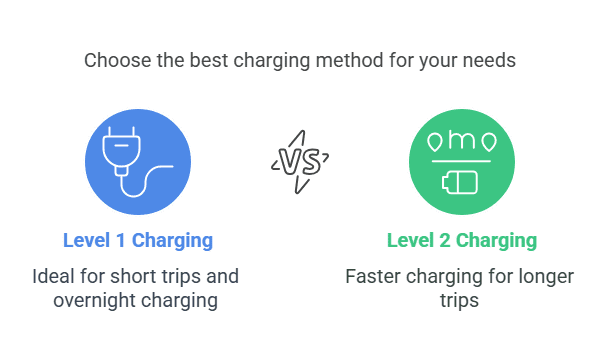
Level 1 charging is simple. It uses a standard 120V outlet. Most homes have this type of outlet. No special tools are needed. No extra installation is required. The car’s charging cable works with this outlet. You plug it in. This is the easiest way to charge. It is also the slowest way to charge. It adds only 3-5 miles of range per hour. Level 1 charging works well for short trips. It also works well for overnight charging. It suits people who drive short distances in cities. It is perfect for people who do not drive much.
Level 2 Charging (240V)
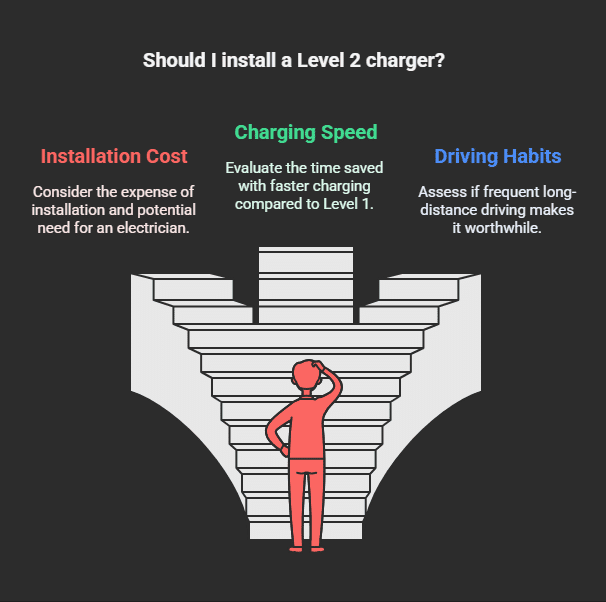
Level 2 charging is faster than Level 1. It adds 12 to 40 miles of range per hour, depending on the charger and vehicle. The charger model affects charging speed. Vehicle electrical features affect speed. Many homeowners who drive long distances or charge daily install Level 2 chargers. Installation can be expensive. You might need an electrician. The electrician can install a new outlet. Even so, it saves time. It charges vehicles faster.
DC Fast Charging (Level 3)
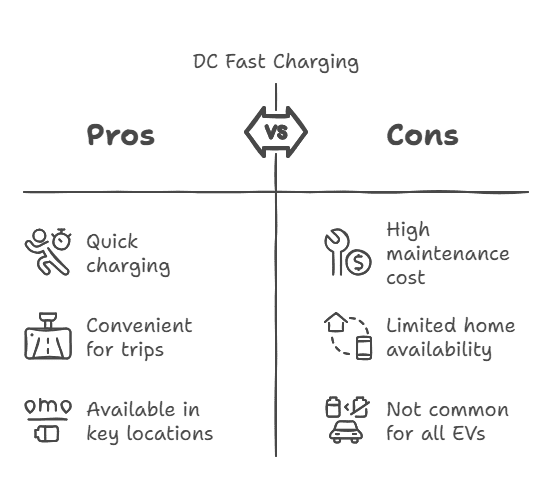
DC fast charging charges EVs quickly, up to 80% in about 30 minutes for most current EVs, such as the Tesla Model 3 and Hyundai Ioniq 5. This makes it great for road trips and quick stops. You often see DC fast chargers on highways, busy areas, and public places. They are expensive to maintain, and most EV owners do not have one. However, they are important for long trips.
How To Charge An Electric Car At Home?
Charging your electric car at home is simple and economical. Here’s how to set up a safe and efficient charging spot.
1. Plug into a Regular Wall Outlet (Level 1)
You can quickly charge your electric car using a regular 120-volt outlet in your home. The manufacturer probably included a portable charging cord with your vehicle. Using this simple method, you will gain roughly three to five miles of driving distance for each hour the car charges. Many owners find it convenient to plug in their electric car and charge it overnight.
2. Put in a Faster Home Charger (Level 2)
If you’re looking for a way to quickly power up your electric car, a 240-volt Level 2 charger — the same voltage as an electric dryer or oven outlet — is the way to go. These chargers deliver a much faster charge, adding roughly 25 miles of driving range for every hour they’re plugged in, which is much quicker than other charging options. To install one of these chargers at your home, you’ll need to call a professional, licensed electrician who can handle the electrical work safely and correctly.
3. Pick the Right Charging Device
Purchase a UL-certified Level 2 charger with adequate safety features. Good brands include ChargePoint and JuiceBox. Make sure your car is compatible with the charger. Most non-Tesla EVs use the J1772 plug for Level 1/Level 2 and CCS for DC fast charging, while Tesla uses NACS — now adopted as the North American standard across brands.
4. Charge During Cheaper Times
Charging your car when electricity rates are lower can noticeably cut your charging costs. Many modern electric vehicles have smartphone applications that you can use to time charging. Ask your electric utility about time-of-use plans for EV owners.

5. Check Your Home’s Breaker Panel
If you live in an older home, have an electrician confirm your electrical system can support a Level 2 charger before installation.
6. Use a Separate Electrical Line
The charger should be installed on its own dedicated circuit to avoid overloading your home’s wiring. Every new circuit should also have a new label so the homeowners know its purpose.
7. Place the Charger Where It’s Easy to Use
Place it near your car’s parking spot. If you’re putting it outside, use a charger that can handle the weather. Keep the charging cables off the ground so no one trips. Cold conditions also affect how quickly a battery accepts charge — see how cold temperatures affect EV battery performance for what to expect in winter.
8. Keep Track of Charging Costs
Smart meters and chargers can be very useful in tracking power charges. Use our Home Charging Cost Calculator to estimate the set charging price with base electricity — for example, $0.15 per kilowatt-hour (kWh) — and you will have a much easier time estimating electric utility expenses.
9. Consider Solar Integration
You can use solar panels on your roof to charge your car with free, renewable energy. Net metering can help you save even more on charging costs.
10. Follow Safety Rules
Don’t use damaged charging cords or outlets. Put in a GFCI outlet to stop electrical shocks. Don’t leave charging cables outside in bad weather.
Cost Breakdown
Level 1 Charging: No extra cost (uses your existing outlets).
Level 2 Charging: The equipment and installation will cost between $500 and $1,200.
Solar Panels: Installing solar panels costs between $15,000 and $25,000, but you’ll save money in the long run.
Electric Car Charging Comparison
| Charging Type | Voltage | Charging Time | Charging Speed | Cost | Ideal For |
|---|---|---|---|---|---|
| Level 1 | 120V | 24+ hours (Full Charge) | 3-5 miles per hour | Low (Basic home outlet) | Home use, overnight charging |
| Level 2 | 240V | 4-8 hours (Full Charge) | 25-30 miles per hour | Medium (Home installation required) | Home or public use, daily commuting |
| DC Fast Charging | 400V or higher | 30 minutes to 1 hour (80% Charge) | 60-100 miles per 30 minutes | High (Public charging stations) | Long trips, quick top-ups |
Swipe or scroll horizontally to see the full table content
Conclusion
Charging an electric car (EV) is straightforward, but understanding the different charging methods, equipment, and costs is essential for maximizing efficiency and convenience.
EV owners can choose from Level 1, Level 2, or DC Fast Charging depending on their needs, driving habits, and budget. Level 1 is ideal for overnight charging at home, while Level 2 offers faster charging for daily use.
DC Fast Charging is perfect for long trips and quick top-ups. Solar panels and smart meters can enhance home charging setups to save costs and promote sustainability. By following safety guidelines and optimizing charging times, EV owners can ensure their vehicles are always ready for the road. To understand how the battery chemistry affects how you should charge, the difference between LFP and NMC batteries is worth knowing — each has different charging recommendations. It’s also useful to know how long EV batteries last and how degradation works so you can charge in a way that extends battery life.
FAQs
How long does it take to charge an electric car?
- Level 1: 24+ hours for a full charge.
- Level 2: 4-8 hours for a full charge.
- DC Fast Charging: 30 minutes to 1 hour for an 80% charge.
Get a personalized estimate with our EV Charging Time Calculator.
Can I charge an electric car at home?
Yes, you can charge an EV at home using a standard 120V outlet (Level 1) or a 240V Level 2 charger for faster charging.
What is the cost of installing a Level 2 charger at home?
The equipment and installation typically cost between $500 and $1,200, depending on your home’s electrical setup.
Is DC Fast Charging bad for my EV battery?
While DC Fast Charging is convenient, frequent use can accelerate battery degradation. It’s best used sparingly for long trips.
How do I find public charging stations?
Apps like PlugShare and ChargePoint can help locate nearby charging stations — or try our EV Charging Station Locator to find chargers on a map.
Can I charge my EV in the rain?
Yes, EV charging equipment is designed to be weatherproof, but always follow safety guidelines.
Should I charge my EV to 100% every day?
For daily driving, most automakers recommend setting a charge limit of 80% — this protects the battery and helps it last longer. Charge to 100% only before long road trips. (Exception: some LFP-battery models, like the Tesla Model 3 Standard Range, can be charged to 100% daily.)
Detailed about: How Much Does It Cost to Replace an EV Battery?
