
Rivian R1T Battery Health Over Time

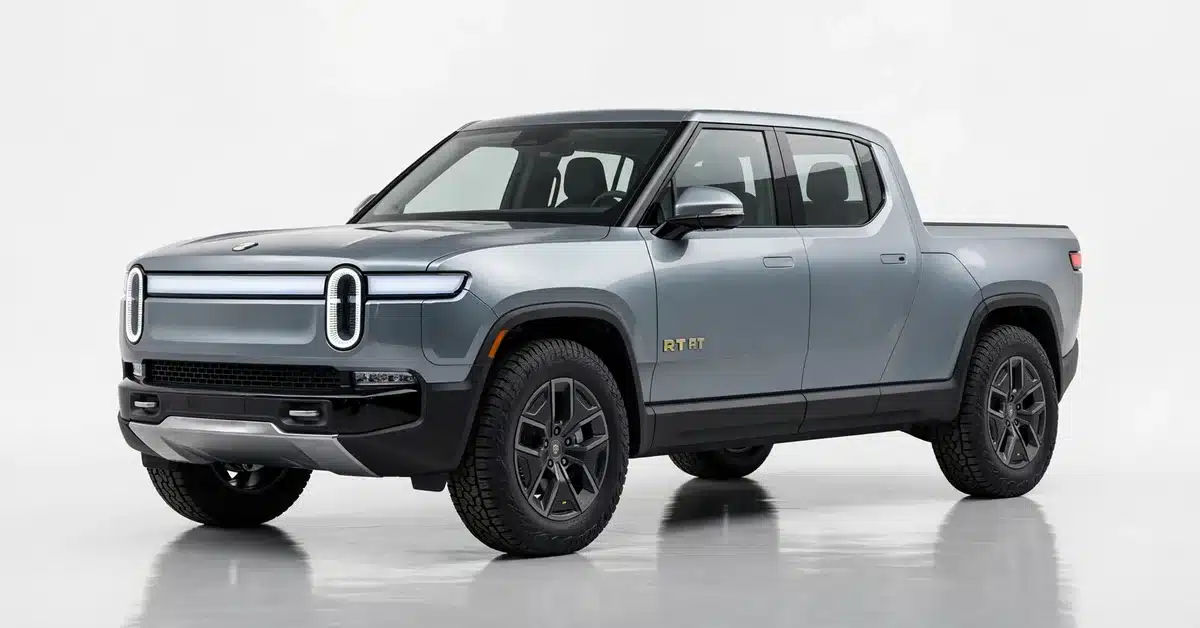
Rivian trucks are holding up well — better than most owners feared — but Rivian itself tells you almost nothing about your pack’s health, which is why owners end up swapping screenshots in forums. Here is what the real numbers say, how to check your own truck, and exactly what the warranty promises if the numbers go wrong.
R1T packs degrade slowly: Recurrent’s fleet data shows about 95% of original range after 3 years and 93% after 5, and owners who measure capacity directly typically find 2–5% gone by 40,000–55,000 miles. Check yours on the Battery/Energy screen by comparing the kWh the truck recognises against your pack’s original usable capacity; a dedicated Pack health screen is on its way by software update. Warranty: 8 years, 120,000–175,000 miles depending on pack, with a 70% capacity floor.
The packs, and why chemistry decides how they age
There is no single “R1T battery” — six usable sizes across two generations, and the smallest one is a different chemistry entirely.
| Generation | Pack | Usable kWh (Rivian) | Chemistry |
|---|---|---|---|
| Gen 1 (2022–24) | Standard | 106 | — (Rivian does not publish it) |
| Gen 1 | Standard+ | 121 | — |
| Gen 1 | Large | 131 | NMC (Samsung SDI 2170 cells) |
| Gen 1 | Max | 141 | — |
| Gen 2 (2025+) | Standard | 92.5 | LFP |
| Gen 2 | Large | 108 | NCA |
| Gen 2 | Max | 140 | NCA |
The chemistry split matters for health. The Gen 2 Standard’s LFP pack shrugs off daily 100% charges that age the nickel packs faster, and LFP generally outlasts them in cycles; the NCA Large and Max packs carry more energy but prefer life between roughly 20% and 80–90%. All the packs are built from Samsung SDI 2170 cylindrical cells in Rivian’s own modules — 7,776 cells in a Max pack. What degradation actually is, underneath the percentages, is covered in our explainer.
What the data shows: degradation in the real world
Two kinds of evidence exist — fleet range data and owners measuring capacity directly — and they tell a consistent story of slow loss.
Recurrent, which tracks real trucks across its owner community, puts the R1T at 95% of its original range after three years and 93% after five. Read that honestly: it is range availability, not a laboratory capacity measurement, and Recurrent itself warns the two are not the same thing — Rivian’s software holds displayed range steady early in life by quietly spending the pack’s built-in buffer. The fleet-wide averages across all EVs are 97% at three years and 95% at five, so the R1T sits a touch below average on this measure without being a problem truck.
Owners who measure the pack itself — tracking the kWh the truck reports against what it held when new — land in the same neighbourhood: typically 2–5% capacity gone by 40,000–55,000 miles. One carefully tracked truck sits at about 128 kWh remaining, losing roughly 1.9 kWh a year; a 2022 Quad-Motor measured 3.9% at 42,000 miles and 4.8% at 54,000. Expect the pattern behind those numbers everywhere in EV batteries: a faster settle in the first year or two, then a long, slow slope. (How cycle counts translate into years is in our guide.)
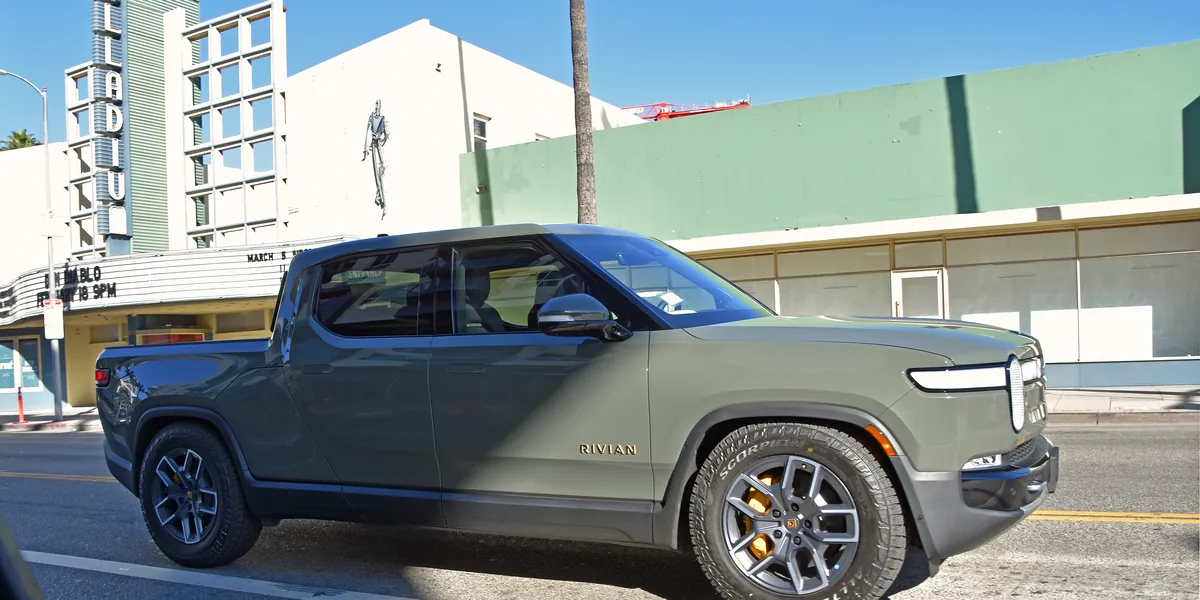
How to check your R1T’s battery health
Rivian gives you no state-of-health percentage today — but you are not blind; here are the checks in order of honesty.
Compare the kWh the truck recognises
The Battery section of the centre screen shows your current energy against the total capacity the vehicle currently recognises. Compare that total with your pack’s original usable figure from the table above: a Gen 1 Large that once recognised 131 kWh and now tops out at 126 has lost about 4%. Do it at a full charge, in mild weather, and repeat across a few charges — single readings wobble with temperature.
Watch the full-charge range estimate
Charging to 100% and comparing the displayed range with the truck’s original EPA figure is the rough version of the same check. It understates early loss — deliberately, because the buffer absorbs it — so treat a steady full-charge range as “no serious loss yet,” not as proof of zero degradation.
The coming Pack health screen
Rivian is preparing the readout owners actually want: a Pack health screen in Settings → About showing state of health as a percentage, plus maximum and current charge rates. It surfaced in the R2’s EPA documentation and is expected by over-the-air update — but Rivian has confirmed no date, so if your truck does not show it yet, that is normal, not a fault.
A service visit reads the truth
Rivian service can measure the pack’s usable capacity directly — that is literally how warranty claims are judged. If your own checks suggest a big loss, that visit is the decisive test. Third-party trackers such as Roamer can also log capacity over time if you want a trend rather than a snapshot. And none of this is your phone battery, by the way — the failure patterns and timescales differ completely.
Towing, off-road work, and the health of a truck battery
The R1T works harder than a car, and hard work shows up in the battery as throughput and heat — manageable, not fatal.
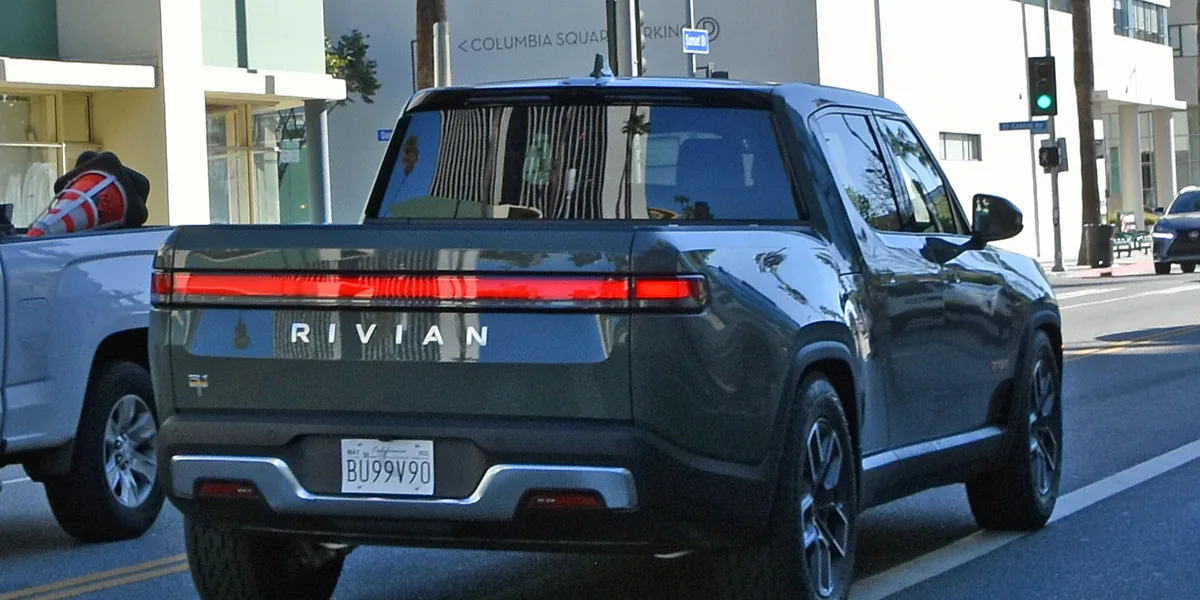
Towing at the truck’s limits roughly doubles energy consumption per mile on many routes, which means the pack accumulates charge cycles roughly twice as fast per mile; cycles, not miles, are the currency of wear, and your habits behind the wheel matter as much as the trailer. Long climbs under load also hold the pack at high power and high temperature for sustained periods — the cooling system handles it, and the BMS will trim power before it lets temperatures threaten the pack, but an owner who tows daily in desert heat is spending battery life faster than a commuter, and should expect the data section’s slower slope to steepen somewhat. Off-road, the risk is different: not chemistry but physics. The pack is armoured underneath, yet a hard strike is a service visit, not a shrug — a damaged enclosure is a safety issue of a different order entirely. None of this argues against using the truck as a truck; it argues for watching the kWh check above a couple of times a year if you do.
The warranty, pack by pack
Eight years everywhere — but the mileage limit is 120,000, 150,000 or 175,000 depending on which pack you bought.
| Model years | Pack | Battery warranty |
|---|---|---|
| 2022–2024 | Quad-Motor Large | 8 years / 175,000 miles |
| 2022–2024 | Dual Large, Dual Max | 8 years / 150,000 miles |
| 2022–2024 | Standard, Standard+ | 8 years / 120,000 miles |
| 2025–2026 | Large, Max | 8 years / 150,000 miles |
| 2025–2026 | Standard | 8 years / 120,000 miles |
| 2027 | All trims | 8 years / 150,000 miles |
The guarantee itself: if the pack loses 30% or more of its rated usable capacity inside that window — falls under 70% health — Rivian covers it, replacing the pack with one of equal or greater performance appropriate to the truck’s age and mileage. Two honest caveats from Rivian’s own document: gradual, expected capacity loss is not a defect, and Rivian service’s own measurement decides borderline cases. Where this sits among other makers’ promises is in our warranty guide; the wider battery-basics shelf is here.
Not the same battery: the 12-volt problem
Half the “my Rivian battery is dying” posts online are about a small lead-acid battery in the frunk, not the big pack under the floor.
The R1T also runs a conventional 12V system for locks, screens and computers — early Gen 1 trucks carried two 12V batteries, later builds one — and it wears out years sooner than the traction pack. Rivian’s warning signs are explicit: a 12V health notification means replacement may be needed within hours, the truck stays safe to drive, but left parked it can lose charge entirely and lock you out. Rivian’s advice: keep the truck plugged in (the big pack then supports the 12V system), expect faster idle range loss until it is replaced, and do not attempt a DIY swap. The 12V battery carries its own 3-year / 36,000-mile warranty. If your truck “won’t wake up,” suspect this battery first — your traction pack is almost certainly fine.
Habits that keep an R1T pack young
Nothing exotic — the same short list that works on every EV, adjusted for which pack you own.
Nickel packs (Large, Max): live between about 20% and 80–90% day to day, charge to 100% for trips rather than by default, and let home Level 2 do most of the work with DC fast charging as the road-trip tool. LFP Standard: charge to 100% regularly without guilt — the chemistry prefers it and needs it for accurate range estimates. Everyone: keep software updated, because Rivian ships thermal and charging refinements in its updates; avoid leaving the truck sitting at 100% in serious heat; and if you tow or off-road hard, run the kWh check a few times a year so a real problem is caught inside warranty, not after it.
Frequently asked questions
How fast do Rivian batteries degrade?
Slowly, on all the evidence available. Fleet range data shows about 95% of original range at three years and 93% at five; owners measuring capacity directly typically see 2–5% gone by 40,000–55,000 miles, with the fastest settle in the first year or two.
How many years should a Rivian battery last?
The warranty runs 8 years, but the pack’s working life should be far longer — degradation rates like those above imply well over a decade of useful service before a pack approaches the 70% end-of-life threshold, and by then stationary second-life work can extend it further.
Is 84% battery health after 2 years good?
No — that would be far worse than anything in the owner data, where two-year trucks measure in the mid-90s. If your own kWh check really shows a loss that size, book the service measurement: at that level it is a warranty conversation, not normal ageing.
Conclusion
The R1T’s battery story is boring in the best way: slow loss, a long warranty, and one small battery that causes most of the drama.
Check the recognised kWh a few times a year, know your pack’s warranty mileage, and let the forums’ horror stories check themselves against the measured data. The trucks are keeping their capacity; what they have lacked is a clear page saying so — this is that page.
