
What Is the Ideal Operating Temperature for an EV Battery?

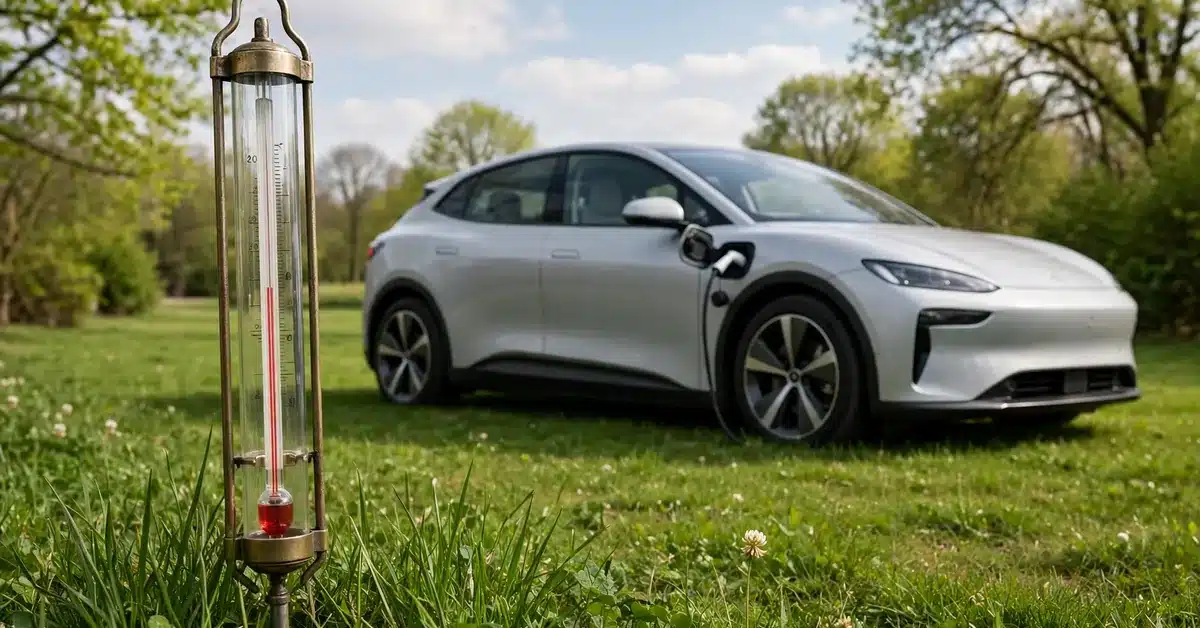
The ideal operating temperature for an EV battery is roughly 20°C to 35°C (68°F to 95°F), a range where lithium-ion chemistry delivers its best performance, fastest safe charging, and slowest long-term degradation. Outside this window, in either direction, the BMS has to compromise power, charging speed, or both to keep the battery safe.
Why This Specific Range Matters
Lithium-ion battery chemistry relies on ion movement between electrodes, a process that speeds up with heat and slows down in the cold. Inside this optimal window, that ion movement happens efficiently without generating excessive internal resistance or accelerating chemical degradation, which is exactly why manufacturers design thermal management systems around keeping cells here as much as possible.
What Happens Below the Ideal Range
Reduced Power and Range
Cold slows the electrochemical reactions inside the battery, increasing internal resistance and reducing how much energy the pack can deliver. Some data shows usable capacity dropping to roughly 92% at -5°C, and as low as 82% at -15°C, purely from cold-weather effects.
Charging Risk: Lithium Plating
Charging a lithium-ion battery below freezing carries a specific risk called lithium plating, where metallic lithium forms on the anode instead of properly intercalating, potentially causing permanent capacity loss or, in severe cases, internal short circuits. This is exactly why EVs restrict or slow charging in cold conditions.
What Happens Above the Ideal Range
Accelerated Aging
Higher temperatures increase chemical degradation rates. Research has shown that while a battery might briefly deliver slightly more usable capacity at elevated temperatures, that capacity fades considerably faster over repeated cycles compared to a battery kept in its optimal range.
Safety Risk at Extreme Heat
Beyond roughly 55°C, lithium-ion cells face a sharply increased risk of thermal runaway, since the organic electrolytes used in most commercial cells become thermally unstable at high temperatures.
How the BMS Keeps the Battery in Range
The BMS continuously reads pack temperature and commands cooling or heating hardware, liquid cooling loops, fans, or resistive heaters, to pull the battery back toward its ideal window whenever conditions push it outside that range. During fast charging or hot weather, this often means active cooling; in cold climates, it means preconditioning or heating before charging or hard acceleration.
Why Manufacturers Choose Slightly Different Target Ranges
Different sources cite ranges from roughly 15°C to 45°C on the wider end, down to a tighter 20°C to 35°C target for best long-term performance. This variation reflects differences in cell chemistry, pack design, and how aggressively each manufacturer prioritizes peak performance versus long-term degradation.
| Temperature Zone | Effect |
|---|---|
| Below 0°C | Reduced capacity, risk of lithium plating during charging |
| 0°C to 20°C | Usable but with somewhat reduced performance |
| 20°C to 35°C | Ideal range for performance and longevity |
| Above 45-55°C | Accelerated aging, rising thermal runaway risk |
Conclusion
The ideal operating temperature for an EV battery sits around 20°C to 35°C, a range that balances strong performance with slow, healthy aging. Outside that window in either direction, the battery faces real tradeoffs, reduced range and lithium plating risk in the cold, accelerated degradation and safety concerns in extreme heat, which is exactly why the BMS works continuously to pull the pack back toward this range whenever possible.
FAQs
Can I damage my EV battery by charging it in cold weather?
Repeated charging in very cold conditions without proper thermal management can contribute to lithium plating and permanent capacity loss, which is why most EVs restrict or slow charging until the battery warms.
Does parking in the sun overheat an EV battery?
Typically not to a dangerous level on its own; the more significant heat comes from charging and driving, which the thermal management system is specifically designed to handle.
Why does my EV recommend preconditioning before a road trip?
Preconditioning brings the battery into its ideal temperature range in advance, improving charging speed and performance right when you need it.
