
What Is the Difference Between BEV, PHEV, and HEV Batteries?

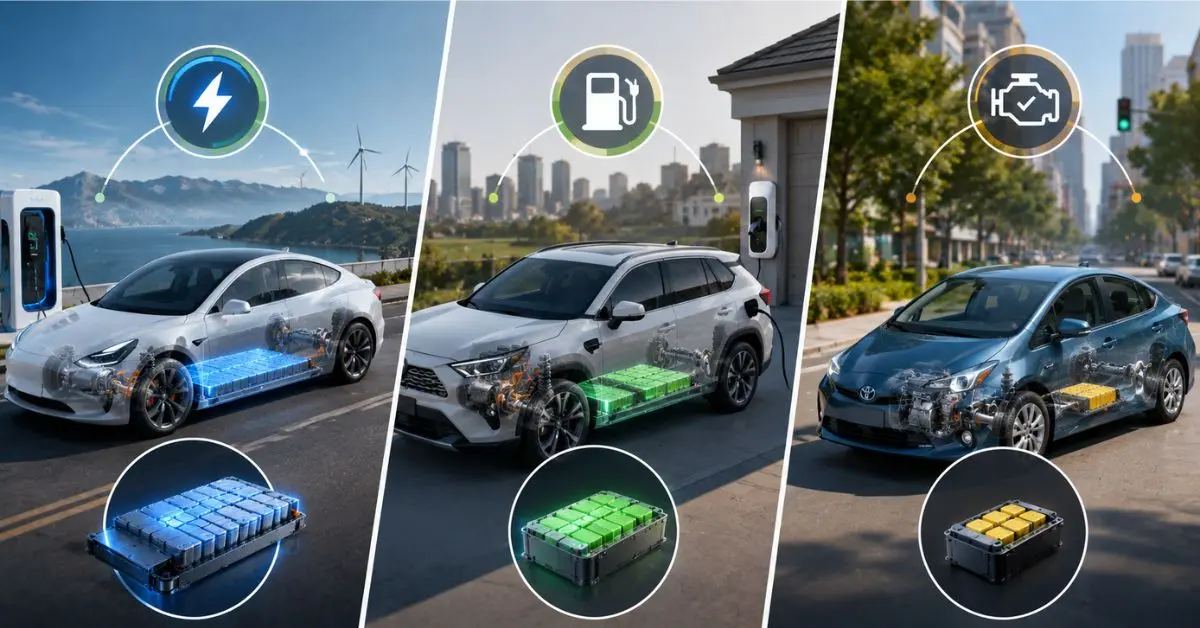
Figures checked against EPA ratings via fueleconomy.gov, the US Department of Energy’s Alternative Fuels Data Center, BloombergNEF’s battery price survey, EV Database’s capacity data and Toyota’s and Mazda’s own hybrid explainers.
BEV, PHEV and HEV sound like trim levels of the same idea. Under the floor, they are three different machines whose batteries differ by a factor of a hundred — and almost every practical difference between the cars (who plugs in, how far the electricity takes you, what the battery costs, how long it lasts) flows from that single fact: how big the battery is, and what job it was hired to do.
A hybrid’s battery is an assistant, there to make a petrol engine efficient. A plug-in hybrid’s battery is a part-timer, big enough to cover the daily commute alone. A battery-electric car’s pack is the entire fuel system. This guide compares the three side by side with current US models and verified figures — and corrects a few numbers that circulate widely on this topic, including two this page used to print.
BEV (battery-electric): battery only, no engine — 40–200+ kWh, plugs in, ~110–512 miles of EPA range. PHEV (plug-in hybrid): engine + a plug — ~11–25 kWh usable, 21–44 miles on electricity, then petrol. HEV (hybrid): engine-led, never plugs in — ~1–2 kWh, charged by braking and by the engine itself, no rated electric-only range. Smallest battery: HEV. Largest: BEV, by design.
Key figures: ~1.3 kWh (Prius hybrid) · 18.1 kWh (RAV4 Prime) · ~75 kWh (typical BEV) · 205 kWh (GM’s truck pack)
The Three, Defined
One ladder of battery sizes explains the whole family — here is each rung.
- BEV — Battery Electric Vehicle. No petrol engine, no fuel tank, no exhaust. A large traction battery (40–200+ kWh) feeds electric motors, and plugging in is the only way energy gets aboard. Examples: Tesla Model 3, Hyundai Ioniq 5, Chevrolet Silverado EV.
- PHEV — Plug-In Hybrid Electric Vehicle. A mid-size battery (~11–25 kWh usable) plus a full petrol drivetrain. Charge it and it runs as an electric car for 21–44 miles; let it empty and it continues as a hybrid. Examples: Toyota RAV4 Prime, Jeep Wrangler 4xe, Chrysler Pacifica Hybrid.
- HEV — Hybrid Electric Vehicle. A small battery (~1–2 kWh) assisting a petrol engine that remains firmly in charge. It never plugs in — its electricity comes from regenerative braking and from the engine itself. Examples: Toyota Prius, Honda Accord Hybrid, Ford Escape Hybrid.
And the fourth label: MHEV
A mild hybrid is not a full hybrid — it is a 48-volt starter-assist system with a battery of 1 kWh or less.
MHEVs (Ram’s eTorque, many European “hybrid” trims) cannot drive on electricity at all; the small motor smooths stop-start and recovers braking energy. Sellers badge them “hybrid”, which is why confusion starts — if a car cannot move on electric power alone, even briefly, it is an MHEV, the bottom rung below HEV.
The Battery Comparison
The three batteries side by side — sizes from today’s US showrooms, not brochure history.
HEV (hybrid) | PHEV (plug-in hybrid) | BEV (full electric) | |
|---|---|---|---|
Battery size | ~1–2 kWh | ~11–25 kWh usable (luxury models to ~29.5 kWh gross) | 40–200+ kWh (typical ~75 kWh usable) |
Electric-only range (EPA) | None rated — brief low-speed bursts only | 21–44 miles | ~110–512 miles (2024 fleet average: 292) |
Plugs in? | Never | Yes — Level 1 / Level 2 AC | Yes — Level 1 / Level 2 / DC fast charging |
How the battery charges | Regenerative braking + the petrol engine | The plug (plus regen and engine in hybrid mode) | The plug (plus regen) |
Chemistry | NiMH (many Toyotas) or lithium-ion | Lithium-ion (NMC family) | Lithium-ion (NMC, NCA or LFP) |
The battery’s job | Assist the engine; shallow micro-cycling near mid-charge | Commute on electricity, then assist | Everything — the only energy source |
Battery warranty (US) | 8 yr/100,000 mi typical; Toyota 10 yr/150,000 mi | At least 8 yr/100,000 mi | At least 8 yr/100,000 mi |
For the narrower two-way question — a full EV against a hybrid alone — our EV battery vs hybrid battery comparison goes deeper on that pairing.
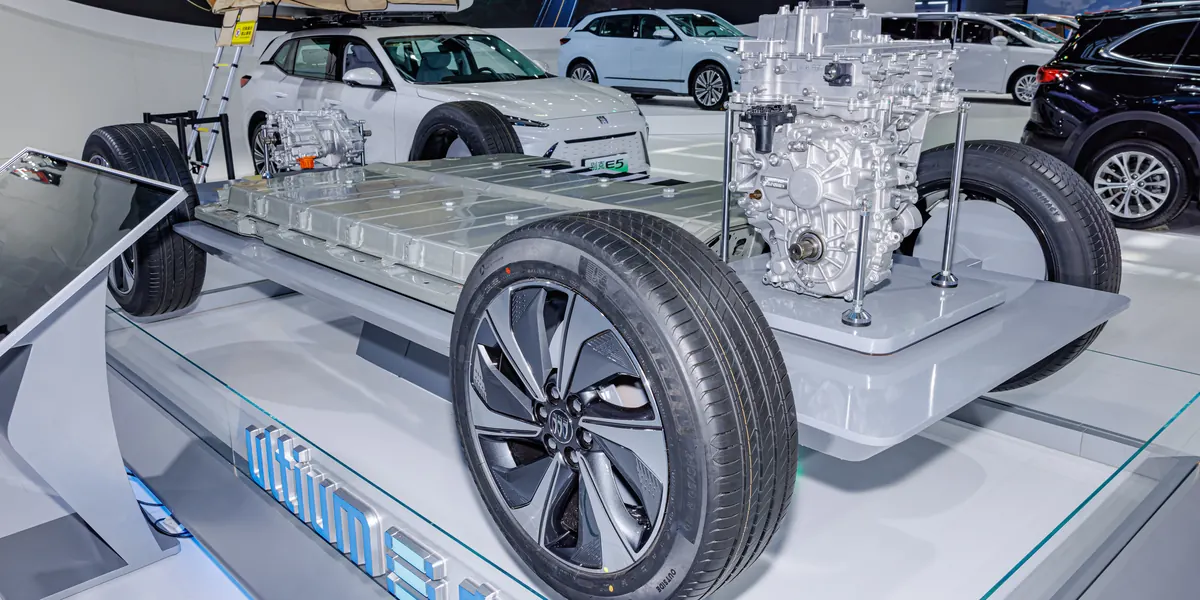
The BEV Battery: A Fuel Tank Made of Cells
The biggest battery of the three, because it does the whole job alone.
A BEV pack spans from about 40 kWh (a Nissan Leaf) to 205 kWh usable in GM’s full-size electric trucks, with a typical car near 75 kWh usable (EV Database’s cross-model average is ≈73.7 kWh). A Tesla Model 3 illustrates the middle: roughly 57.5 kWh (LFP) in the rear-wheel-drive car for 272 miles EPA, and about 75–78 kWh in Long Range form for up to 363 miles. At the extremes sit efficiency at one end — the Lucid Air Grand Touring’s 512-mile EPA rating, the highest of any US EV — and brute capacity at the other, where the Silverado EV work truck pairs its 205 kWh with up to 492 miles.
Because the pack is cycled deeply every day and must fast-charge, BEVs get the full engineering stack: liquid thermal management, careful charge buffers, and chemistries chosen per model line — LFP for standard-range value, NMC/NCA where range rules. It is also the only one of the three that uses DC fast charging, at 50–350+ kW depending on the car.
The PHEV Battery: Sized for the Commute, Not the Continent
Big enough to make daily driving electric, small enough to leave room for an engine.
US plug-in hybrids cluster between about 11 and 25 kWh usable (luxury models run higher on gross figures — BMW’s X5 xDrive50e carries 29.5 kWh gross). The verified middle of the market: Toyota RAV4 Prime, 18.1 kWh and 42 miles EPA; Prius Prime, 13.6 kWh and 44 miles — the efficiency champion’s trick is needing fewer kWh per mile; Jeep Wrangler 4xe, 17.3 kWh gross (~14 usable) and 21–22 miles; Chrysler Pacifica Hybrid, 16 kWh and 32 miles. Every current US PHEV verified for this page runs lithium-ion of the NMC family — claims of NiMH or LFP plug-in hybrids describe other markets (China sells LFP PHEVs), not US showrooms.
In use, the PHEV battery lives two lives: charge-depleting mode, where it drives like a BEV until the electric range is spent, then charge-sustaining mode, where it works like an HEV pack, hovering around a low buffer while the engine leads. Owners who plug in nightly can run almost entirely on electricity; owners who never plug in carry a heavy battery for nothing — an uncharged PHEV can lose its efficiency advantage over a plain hybrid entirely. Our dedicated Toyota Prius PHEV guide follows one of these packs in full detail.
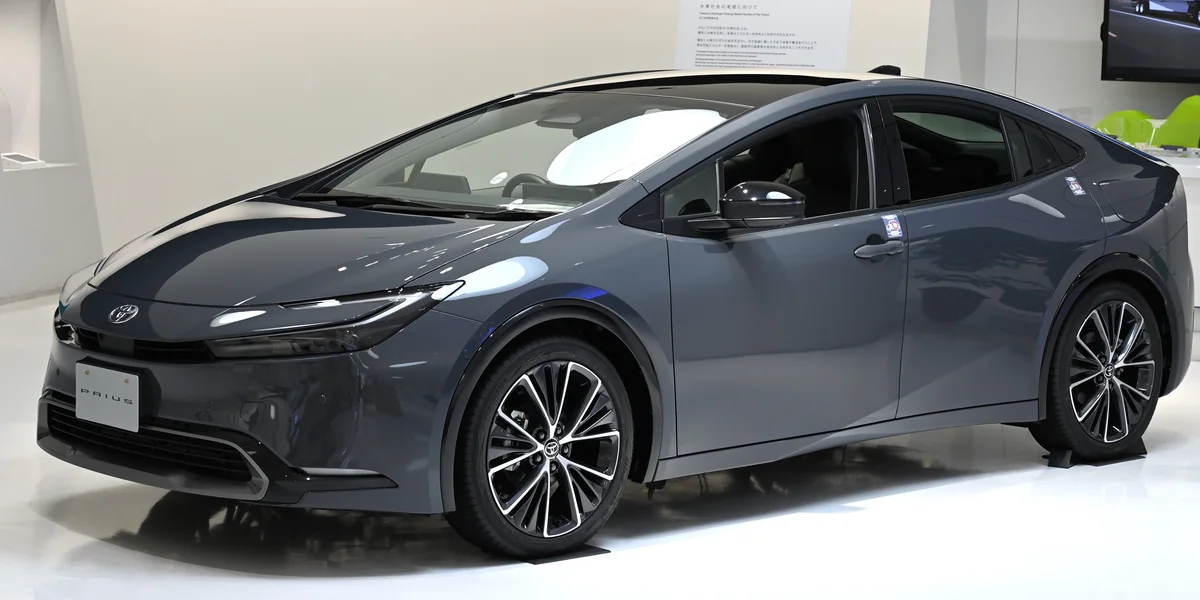
The HEV Battery: A Sprinter, Not a Marathon Runner
The smallest pack does the most cycles — thousands of shallow sips instead of deep drinks.
A hybrid pack holds about 0.9–2.0 kWh: the classic Prius NiMH pack is 1.3 kWh, today’s lithium-ion Prius pack is in the ~0.9 kWh class, a RAV4 Hybrid carries 1.6 kWh of NiMH. Chemistry is genuinely split in 2026 — Toyota still fits NiMH to several SUVs while its newest cars (and Honda, Hyundai/Kia and Ford hybrids generally) have moved to lithium-ion — so “hybrids use NiMH” is a dated half-truth.
The pack survives its workload by never working hard: Toyota’s control system holds the charge roughly between 40% and 80%, aiming near 60%, cycling shallowly thousands of times rather than deeply once a day.
And its energy comes from two sources, not one — regenerative braking and the petrol engine driving a motor-generator. (This page previously said “regen only”; Mazda’s and Toyota’s own explainers are clear that engine charging is a primary mechanism, and the correction matters because it is the entire reason the pack can stay so small.) There is no plug, no EPA electric range, and no need for either: the battery is a buffer that lets a small engine behave like a bigger one, returning fuel-economy gains of roughly 30–50% over a comparable non-hybrid.
Who Plugs In?
Two of the three — and only one of them can fast-charge.
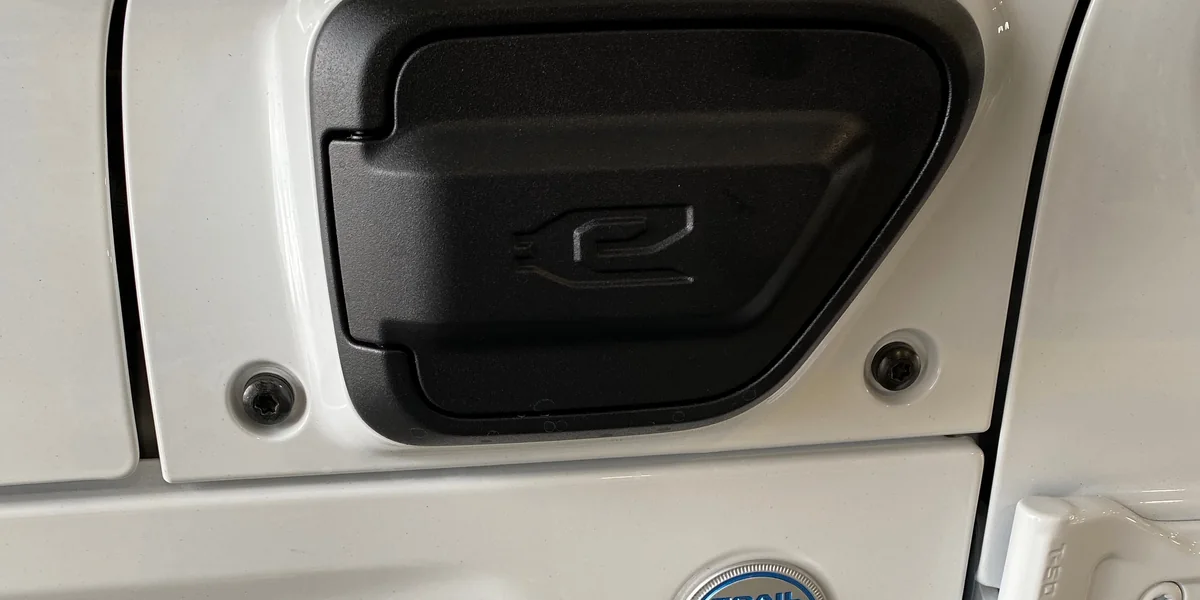
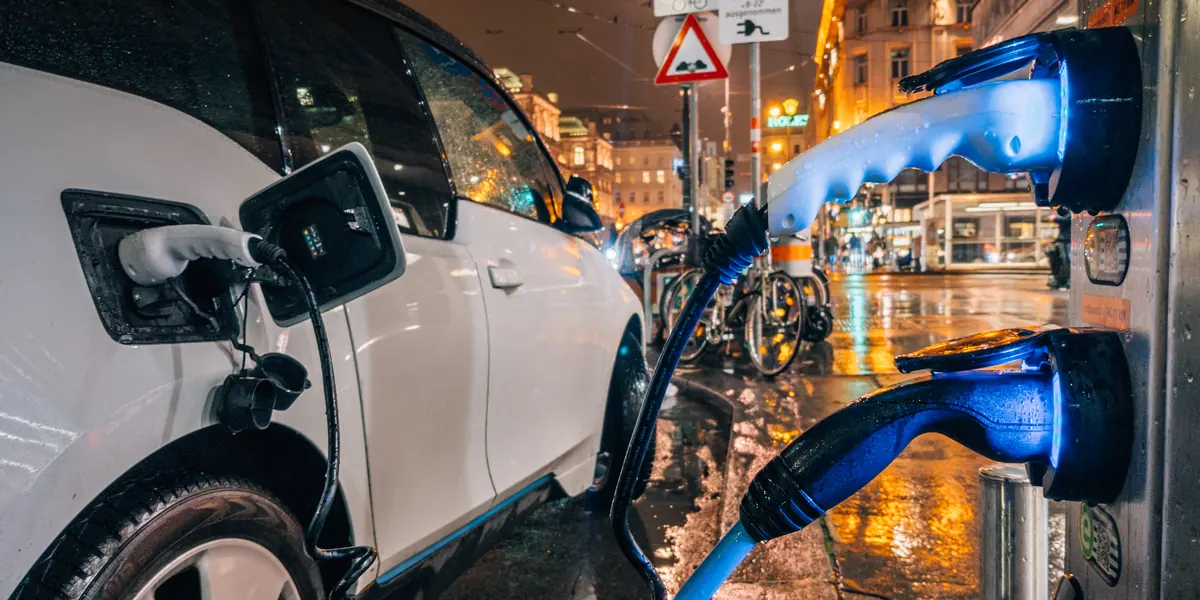
BEVs take every kind of charging: Level 1 from a wall outlet, Level 2 at home and work, and DC fast charging on the road — the only type here built for it. PHEVs plug in too, but on AC only (Level 1 and Level 2); effectively no US PHEV uses DC fast chargers, because with a petrol engine aboard, a 25-minute top-up was never the design brief — overnight is.
HEVs have no charge port at all: their battery is refilled by braking and by the engine, which is why a hybrid can sit unused for months and still start on its own stored energy. Regenerative braking, for the record, works in all three — it is a top-up source in the two plug-ins and, with the engine, the whole supply in the hybrid.
How Long Does Each Battery Last?
Different cycling, different clocks — and warranties that reflect both.
Every US BEV and PHEV carries a battery warranty of at least 8 years or 100,000 miles — the universal floor across the industry — and in CARB-rule states, certified cars extend that to 10 years/150,000 miles. Toyota goes further nationwide: 10 years/150,000 miles on hybrid and plug-in batteries since the 2020 model year. The failure these warranties guard against differs by type: a BEV pack slowly loses range to deep cycling and calendar age; an HEV pack does its thousands of shallow cycles so gently that Prius packs routinely outlive the cars’ first and second owners; a PHEV pack splits the difference, and its real-world life depends heavily on whether it was actually plugged in and used as designed.
Cost is where honest numbers get scarce, so here is the grounded version: BloombergNEF puts the average lithium-ion pack’s build price at $108/kWh (2025) — meaning a 75 kWh BEV pack represents roughly $8,600 of battery and an 18 kWh PHEV pack about $2,100, at factory cost. Retail replacement is a different and higher number, especially for low-volume hybrid packs: one dealer guide puts a RAV4 Prime replacement pack at $10,000–12,000 despite its modest size. Treat any tidy price ladder for the three types with suspicion — per-kWh, the smallest batteries are often the most expensive to replace.
Which One Fits Your Driving?
Match the battery to the week you actually live, not the trip you take twice a year.
- Mostly short daily trips + home charging + occasional long drives: a PHEV is the sweet spot — commute on electricity, road-trip on petrol, no charging anxiety.
- Home charging + a life that fits 250+ miles of range: a BEV gives the lowest running costs and the simplest drivetrain there is.
- No home charging, high miles, apartment living: an HEV asks nothing of you — no plug, no planning — and still cuts fuel use by a third or more.
- Towing and hauling heavy, far from chargers: today, a PHEV truck or a conventional hybrid is usually the pragmatic pick while big-battery trucks and charging networks mature.
If the words themselves are still fuzzy — what makes a car a “hybrid” at all — our plain-English explainer on what a hybrid car is starts one level further back.
Frequently Asked Questions
Which type has the smallest battery — HEV, PHEV or BEV?
The HEV, and it is not close: a hybrid pack is about 1–2 kWh (a Prius’s is ~1.3 kWh in NiMH form), a plug-in hybrid’s is roughly 11–25 kWh, and a BEV’s is 40–200+ kWh. The order HEV < PHEV < BEV holds for every model on sale.
Does a hybrid (HEV) ever plug in?
No — an HEV has no charge port. Its battery is refilled by regenerative braking and by the petrol engine driving a motor-generator. If it plugs in, it is by definition a PHEV. Both types, like BEVs, also carry a conventional 12V battery for accessories and starting systems — see our guide to 12V batteries in EVs.
Is a mild hybrid (MHEV) the same as an HEV?
No. A mild hybrid is a 48-volt assist system with a battery of 1 kWh or less that cannot drive the car on electricity at all — it smooths stop-start and recovers braking energy. An HEV can move on electric power alone at low speed, briefly. The badge “hybrid” covers both, which is why the distinction matters when shopping.
Which battery lasts the longest?
In years, hybrid packs have the gentlest job — shallow cycling near mid-charge — and routinely outlast the car. BEV packs degrade slowly (fleet data shows a few percent per year at most) and are warranted for at least 8 years/100,000 miles. PHEV packs sit between, depending on use. In cycles, the HEV wins by thousands; in total energy delivered over its life, the BEV wins by miles.
Can a PHEV run if I never charge it?
Yes — it becomes a heavier hybrid, driving on petrol with hybrid assistance. It will not harm the car, but it wastes the point of the purchase: the electric miles are the cheap, quiet ones, and an uncharged PHEV can use as much fuel as — or more than — the equivalent plain hybrid.
Why is a BEV battery so much bigger than a hybrid’s?
Because it is the whole fuel system. A hybrid’s battery only has to buffer an engine — a litre or two of petrol holds more usable energy than the entire HEV pack. A BEV must carry all of its energy aboard, and at today’s energy densities that takes 40 kWh at the small end and 200+ kWh in a heavy truck working hard.
Do all three use lithium-ion batteries?
BEVs and PHEVs do — every current US model. HEVs are split: many Toyota hybrids still use nickel-metal hydride (NiMH) packs, while Toyota’s newest cars and Honda, Hyundai/Kia and Ford hybrids use lithium-ion. All three types additionally carry a small conventional 12V battery.
Which is cheapest to run?
Per mile on electricity, the BEV — home charging undercuts petrol almost everywhere in the US, and there is no engine to service. A diligently plugged-in PHEV comes close for commute-length driving. The HEV wins on purchase price and needs no charging access at all, which for many households is the saving that matters.
Conclusion
BEV, PHEV and HEV are not three spellings of one idea — they are three battery sizes with three different jobs. The hybrid’s 1–2 kWh pack is an efficiency device that never plugs in and barely ages; the plug-in’s 11–25 kWh pack makes the daily drive electric while the engine covers the rest; the full EV’s 40–200+ kWh pack replaces the fuel system outright, and pays for it in weight, cost and charging dependence. Choose by the size of your daily driving and your access to a plug, and the right rung of the ladder picks itself.
