
What Battery Chemistry Do Hyundai and Kia Use?

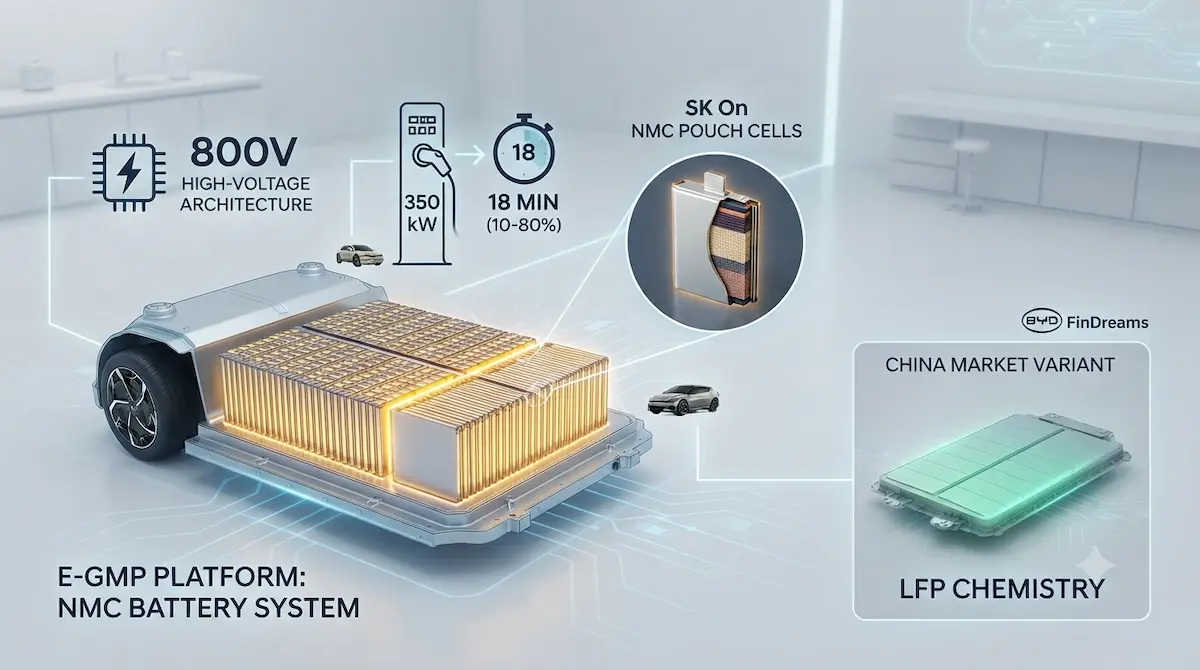
Cell suppliers per Hyundai Motor Group’s own per-model supplier disclosure (August 2024), cross-checked against Webasto, BusinessKorea, The Elec and CarExpert reporting (November 2026).
Ask what chemistry Hyundai and Kia use and the short answer — “NMC” — is true the way “petrol” is true of a fuel station: correct, and missing everything useful. The group’s US line-up runs on nickel-manganese-cobalt pouch cells, but from three different suppliers, split by model in a pattern the companies themselves disclosed: SK On feeds most of the range, LG Energy Solution powers the Ioniq 6, and CATL — the Chinese giant — quietly supplies two of the group’s best-selling EVs. And LFP, the chemistry half the industry is migrating to? In the US and Europe, Hyundai and Kia sell none at all.
This page is the model-by-model map: who makes the cells in each car on sale in America, what format they take, where the exceptions hide (including the three LFP cars that exist — none of them near you), and what changes next, when the group’s first prismatic cells and its home-grown solid-state program arrive. What NMC itself is — strengths, weaknesses, how it ages — is covered in our NMC chemistry explainer; this page is the Hyundai-Kia map specifically.
Hyundai and Kia EVs use NMC (nickel-manganese-cobalt) pouch cells almost everywhere. In the US: SK On supplies the Ioniq 5, Ioniq 9, EV6, EV9 and all three electric Genesis models; LG Energy Solution supplies the Ioniq 6; CATL supplies the Kona Electric and Kia Niro EV. No Hyundai or Kia EV sold in the US or Europe uses LFP — the group’s only LFP cars are Korea/China-market models.
Key figures: 3 cell suppliers across the US range · 0 LFP models on US/EU sale · First prismatic cells (Samsung SDI) from 2026
The US Line-Up, Model by Model
One table for the whole American range — chemistry, supplier and format, per Hyundai’s own disclosure.
| Model | Pack sizes | Chemistry | Cell supplier | Format |
|---|---|---|---|---|
| Hyundai Ioniq 5 | 63 / 84 kWh | High-nickel NMC (811-class*) | SK On | Pouch |
| Hyundai Ioniq 6 | 53 / 77.4 kWh | NMC | LG Energy Solution | Pouch |
| Hyundai Ioniq 9 | 110.3 kWh | NMC | SK On | Pouch |
| Hyundai Kona Electric | 48.6 / 64.8 kWh | NMC | CATL | Pouch-class |
| Kia EV6 | 63 / 84 kWh | NMC | SK On | Pouch |
| Kia EV9 | 76.1 / 99.8 kWh | NMC | SK On | Pouch |
| Kia Niro EV | 64.8 kWh | NMC | CATL | Pouch-class |
| Genesis GV60 / Electrified GV70 / G80 | 77.4–87.2 kWh | NMC | SK On | Pouch |
The Ioniq 5’s “811-class” grading comes from teardown and battery-database sourcing, not from Hyundai, which specifies only “high-nickel NMC” — the honest label. Genesis rows: SK On exclusively, per the same disclosure.
Hyundai: SK On’s House, With One LG Room
Four US Hyundais, three suppliers — and the Ioniq 6 is the one wearing LG cells, whatever older articles (including this page’s previous version) told you.
The Ioniq 5 is the volume car: high-nickel NMC pouch cells from SK On, in the facelifted 63 and 84 kWh packs (the pre-facelift 58/77.4 kWh figures still circulating belong to the older car). The Ioniq 9 scales the same recipe up — SK On NMC in a 110.3 kWh pack, EPA range up to 335 miles (the “385 miles” figure quoted around the internet is the 620 km WLTP number wearing the wrong label), charging 10–80% in about 24 minutes. The Kona Electric is the quiet exception: its NMC cells come from CATL, per Hyundai’s disclosure — the group’s first CATL car alongside the Niro EV below.
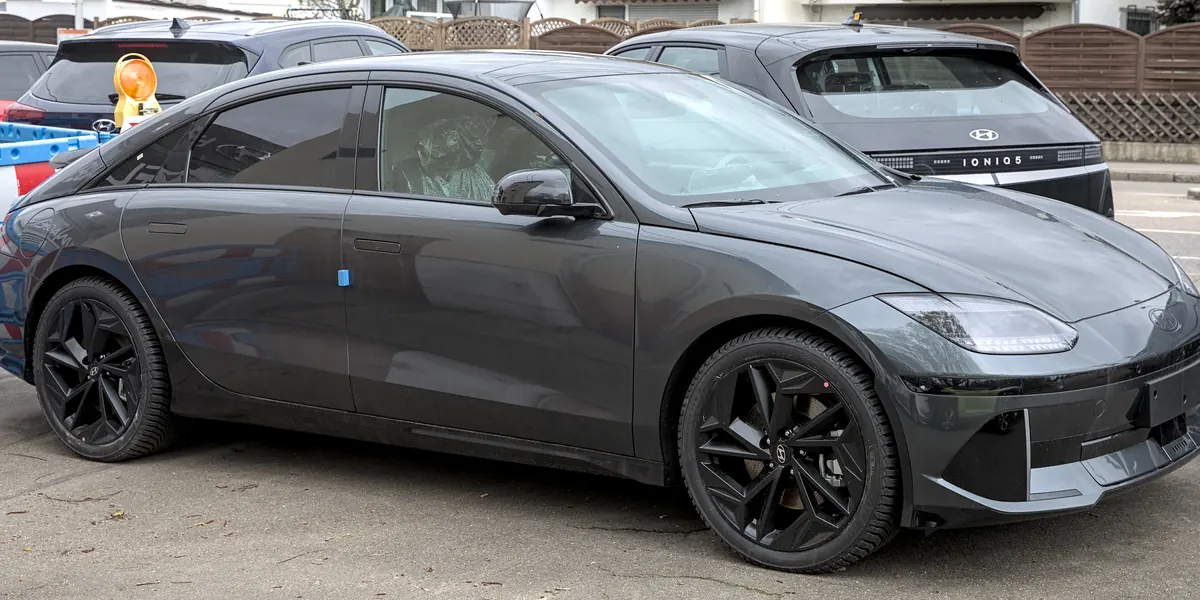
And the Ioniq 6: NMC pouch again, but the supplier is LG Energy Solution — Hyundai’s August 2024 per-model disclosure states it plainly, and the correction matters because the Ioniq 6’s charging and ageing behaviour is an LG cell’s behaviour, not an SK On one. (The sedan’s own deep-dive sits outside this page; the chemistry point is the supplier split itself.)
Kia: SK On for the Flagships, CATL for the Niro
Kia mirrors the pattern: the big E-GMP cars are SK On, the compact Niro EV is CATL — and two of the flagships are now built in Georgia.
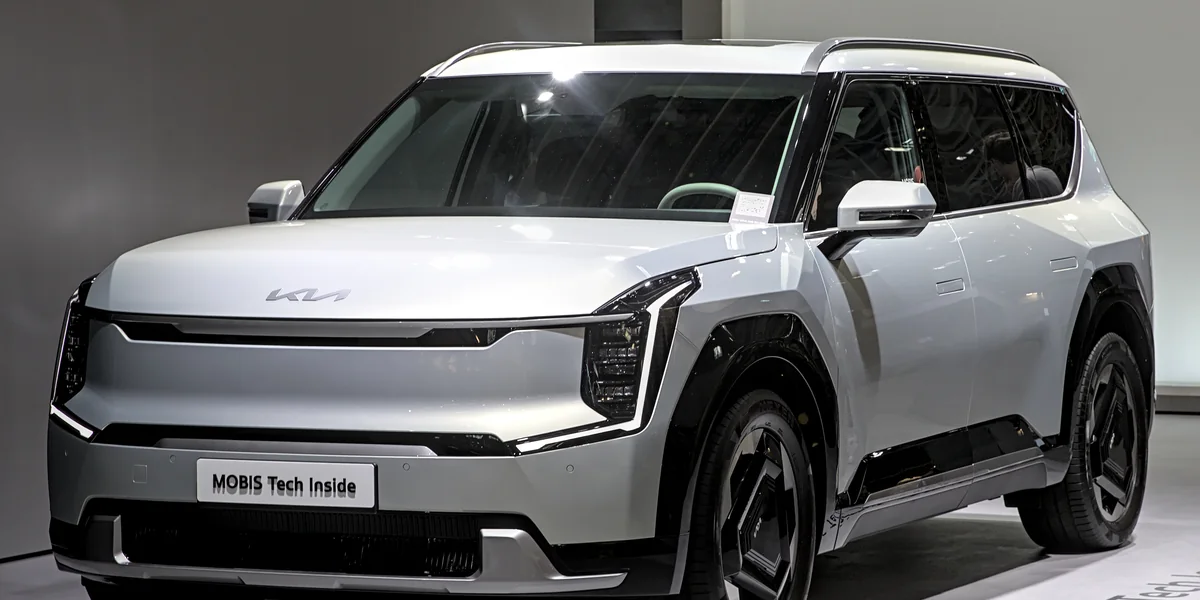
The EV6 (63/84 kWh, SK On NCM pouch, 697-volt system built from 384 cells, peak charge rate 258 kW) and the EV9 (76.1/99.8 kWh, SK On) are both built at West Point, Georgia for the US market — the full EV6 battery story is on our EV6 guide. The Niro EV (64.8 kWh) holds a small piece of history: it was Kia’s first CATL car, its NMC cells Chinese-made in a Korean car years before that became a headline. Its pack and warranty details live on the Niro EV guide.
Beyond the US: the EV3 (Europe/Korea) runs LGES NMC811 pouch cells with packs assembled by Webasto — not CATL, as this page previously claimed — and the EV5 is three different cars wearing one badge, detailed in the LFP section below.
The Platform Underneath: E-GMP and the 800-Volt Honesty Note
One skateboard carries the flagships — and its famous charging number deserves its footnote.
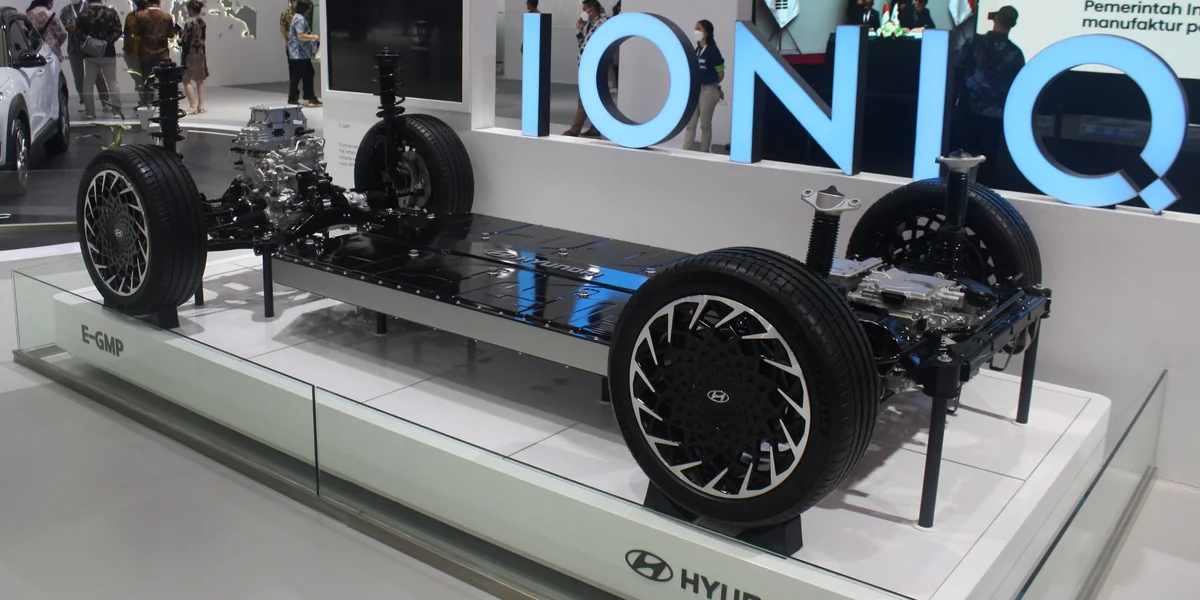
The Ioniq 5, Ioniq 6, Ioniq 9, EV6, EV9 and GV60 share Hyundai’s E-GMP platform: a flat pouch-cell pack in the floor and an ~800-volt electrical system (the EV6’s pack runs at 697 V nominal). The marketing line is “350 kW charging” — the honest version is that 350 kW is the charger’s class: the cars themselves peak between roughly 233 and 263 kW, and the big-battery cars (Ioniq 9, EV9) take about 24 minutes for 10–80% rather than the 18 minutes of the smaller packs.
None of that makes the platform less impressive — it remains among the fastest-charging in its class — but the per-car numbers, not the charger class, are what owners experience, and they are chemistry-and-pack-size numbers, which is why this page prints them per model.
Cell Formats: Pouch Today, Prismatic From 2026
Every Hyundai-Kia EV on sale uses pouch cells; the group’s first prismatic deal is the format story of the next decade.
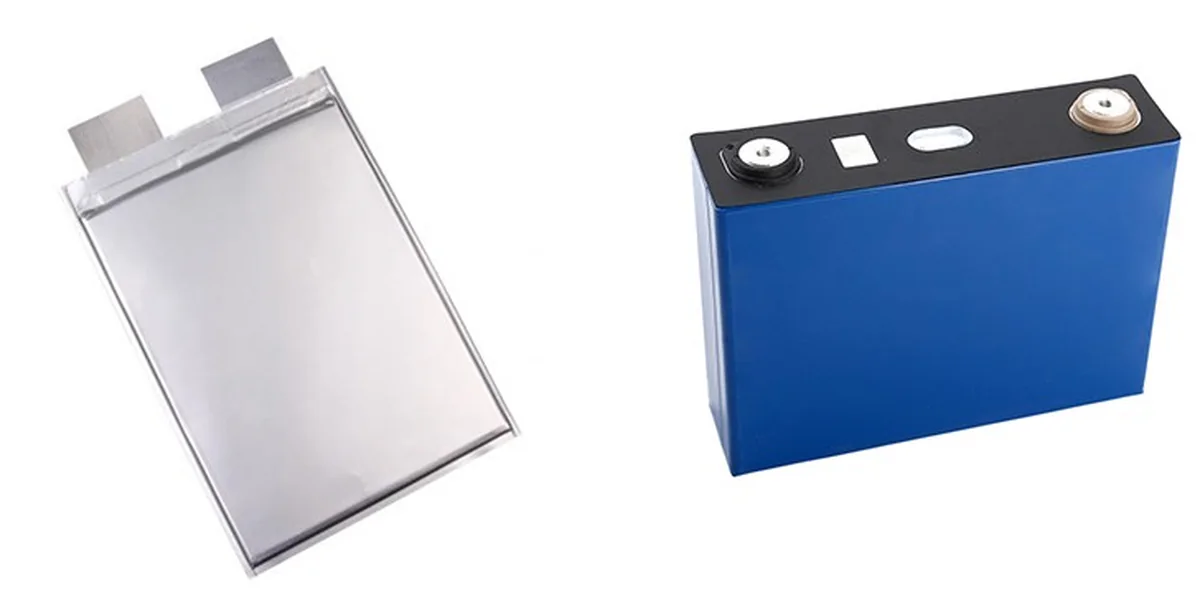
Pouch cells — flat, foil-wrapped, stacked into modules — suit the E-GMP floor and all three current suppliers make them. The shift: Hyundai Motor Group’s deal with Samsung SDI covers prismatic P6 cells — high-nickel NCA chemistry (91% nickel, silicon-content anode) built at Samsung SDI’s Göd plant in Hungary, running 2026–2032, with the small EV2 named among the first recipients. Note what that deal is not: it is not a solid-state partnership, whatever secondary coverage has claimed — the group’s solid-state work is in-house (next sections). How the three formats compare in general is our cell formats guide; the group-specific point is simpler — a pouch-only maker is hedging its format bet for the first time.
The LFP Map: Three Cars, None of Them Near You
Hyundai and Kia’s LFP story exists — in Korea and China. In the US and Europe the count is zero, and the group’s only verified LFP program is a materials project, not a car.
The complete, sourced list of LFP Hyundai-Kia vehicles: the Kia Ray EV (Korea only; CATL LFP, 35.2 kWh, on sale since September 2023); the China-built Kia EV5 (BYD FinDreams LFP Blade cells, 64.2/88.1 kWh — this is also the EV5 exported to Australia; the Korean-built EV5 uses CATL NCM and the European car NMC, which is why single-row EV5 tables are always wrong); and the Hyundai IONIQ V (China only; CATL LFP, 66.8 kWh, launched September 2026).
As for plans: the verified program is an LFP cathode research project — Hyundai, Kia, Hyundai Steel and EcoPro BM developing direct-synthesis LFP cathode material under a Korean government (MOTIE) project begun in September 2024 — materials science aimed at future supply, attached to no announced car, and certainly no US or European launch date. SK On’s Georgia LFP conversion, sometimes cited in this context, is for stationary storage, not cars. If your buying question is “which Hyundai or Kia gives me an LFP battery in America,” the accurate 2026 answer is: none — the LFP-versus-NMC choice itself is weighed on our LFP vs NMC comparison.
Made in Georgia: The US Supply Chain Behind the Badges
The newest fact in the group’s chemistry story is American: its own cell plant is now running.
The Hyundai–SK On joint venture in Georgia (HSBMA, 35 GWh) began series cell production in June 2026, feeding the group’s Metaplant (HMGMA) through Hyundai Mobis pack assembly — meaning a growing share of US-sold Hyundais and Kias run on US-made SK On cells, with the West Point-built EV6 and EV9 already localising the car side. It is the structural answer to the question this page opened with: the chemistry is NMC, the supplier is SK On, and increasingly, the origin is Georgia.
What’s Next: Dream Battery and the Prismatic Decade
Two future stories, kept separate because they are different technologies on different clocks.
Hyundai’s solid-state program is its own: the “Dream Battery” pilot line at the Uiwang R&D Center was inaugurated in March 2025, with mass production targeted around 2030 and technology partners Factorial Energy and SES AI in the ecosystem — a pilot line, not a product, and this page dates it as such. The nearer change is the Samsung SDI prismatic supply (2026–2032) bringing NCA chemistry and a second format into the group’s smaller cars. And the series context: Hyundai-Kia is the third brand map in this chemistry series — Volkswagen’s map is on our VW chemistry page, built the same way, from the maker’s own disclosures wherever they exist.
Frequently Asked Questions
Do Hyundai and Kia use LFP batteries?
Not in any car sold in the US or Europe. LFP appears only in Korea/China-market models: the Kia Ray EV (CATL LFP), the China-built Kia EV5 (BYD FinDreams Blade cells) and the China-only Hyundai IONIQ V (CATL LFP). The group’s verified LFP program for the future is a cathode-materials research project, not an announced car.
Who makes the batteries for the Hyundai Ioniq 5?
SK On. The Ioniq 5 uses high-nickel NMC pouch cells from SK On in 63 and 84 kWh packs (current facelift car). The “811-class” grading attached to them in databases comes from teardown sourcing; Hyundai’s own specification is high-nickel NMC.
Which Hyundai or Kia models use CATL batteries?
In the US, the Hyundai Kona Electric and the Kia Niro EV — both NMC, per Hyundai’s own supplier disclosure (the Niro EV was Kia’s first CATL car). CATL also supplies Korea/China-market models (the Korean-built EV5’s NCM cells, the Ray EV’s and IONIQ V’s LFP).
Is the Ioniq 6’s battery different from the Ioniq 5’s?
The chemistry family is the same (NMC pouch) but the supplier differs: the Ioniq 6’s cells come from LG Energy Solution, the Ioniq 5’s from SK On. That is Hyundai’s own disclosure, and it makes the Ioniq 6 the exception in an otherwise SK On Hyundai line-up.
What chemistry does the Kia EV9 use?
NMC pouch cells from SK On, in 76.1 and 99.8 kWh packs. US-market EV9s are built at West Point, Georgia; cell supply is transitioning toward the Georgia HSBMA joint-venture plant as it ramps.
Do Hyundai and Kia make their own battery cells?
The car companies do not manufacture cells themselves today; they buy from SK On, LGES and CATL. The Georgia HSBMA plant is a Hyundai–SK On joint venture (series production from June 2026), which is the closest the group comes to in-house supply — with Hyundai Mobis assembling the packs.
Are Hyundai and Kia working on solid-state batteries?
Yes, in-house: Hyundai’s “Dream Battery” pilot line at Uiwang opened in March 2025, with mass production targeted around 2030 and Factorial Energy and SES AI as ecosystem partners. Claims of a “Samsung SDI solid-state partnership” confuse it with a separate, real deal: Samsung SDI prismatic NCA cells for conventional lithium-ion cars, 2026–2032.
Why don’t Hyundai and Kia use LFP in the US?
Nothing official frames it as a refusal — it is a sequencing fact: their US range was engineered around NMC pouch supply (increasingly Georgia-made), and their LFP work is a cathode-materials research program with no announced car attached. LFP’s cost case is strongest in smaller, cheaper cars, which is exactly where the group’s LFP models exist — in Korea and China.
Conclusion
Hyundai and Kia’s chemistry story is a supplier map, not a chemistry list: NMC pouch cells everywhere in the US, SK On dominant, LG in the Ioniq 6, CATL in the Kona and Niro EV — and LFP nowhere you can buy one. The changes worth watching are already dated: Georgia-made cells ramping since June 2026, Samsung SDI’s prismatic NCA arriving from 2026, and a solid-state pilot line pointing at 2030. When any of those move a US model’s row in the table above, this page’s table is where it will show first — sourced, as the rest of it is, from the makers’ own disclosures rather than the rumour mill.
