
Hyundai Ioniq 6 N Battery: Complete Guide

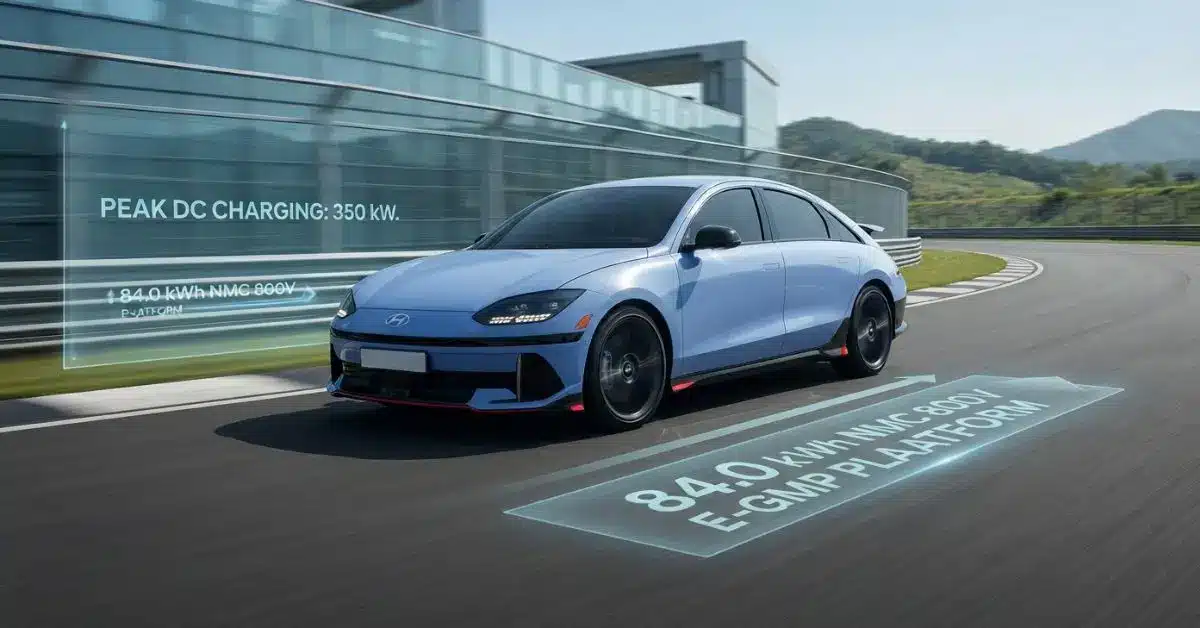
The Hyundai Ioniq 6 N battery is an 84.0 kWh NMC pack on the 800V E-GMP platform — the same size as the Ioniq 5 N and Kia EV6 GT. In N Grin Boost mode, system power reaches 641 hp (478 kW) with 770 Nm of torque. DC fast charging peaks at 350 kW — faster than the Ioniq 5 N’s 260 kW — completing 10–80% in just 18 minutes. The 0–100 km/h time of 3.2 seconds makes it the quickest Ioniq 6 ever. A NACS port for native Supercharger access is standard on U.S. 2026 models. The Ioniq 6 N was introduced at Goodwood Festival of Speed on July 10, 2025 — production in 2026.
Hyundai Ioniq 6 N Battery: Full Specs
| Specification | Detail |
|---|---|
| Battery capacity | 84.0 kWh NMC |
| Architecture | 800V E-GMP |
| Drivetrain | Dual-motor AWD |
| Front motor | 175 kW (234 hp) |
| Rear motor | 303 kW (406 hp) |
| Standard power | 478 kW (641 hp) |
| N Grin Boost power | 478 kW (641 hp) — sustained vs 5 N’s burst-mode |
| Torque | 770 Nm (568 lb-ft) |
| 0–62 mph (0–100 km/h) | 3.2 seconds |
| Top speed | 160 mph (257 km/h) |
| WLTP range (est.) | 300+ miles (~320 miles) |
| Peak DC charging | 350 kW |
| 10–80% DC time | 18 minutes |
| Level 2 AC | 11 kW |
| V2L capability | Yes |
| Charging port (U.S.) | Native NACS |
| Starting price (est.) | ~£65,000–£70,000 (UK) / ~$65,000–$70,000 (U.S.) |
350 kW Charging: Faster Than the Ioniq 5 N
The Ioniq 6 N’s 350 kW DC peak rate significantly beats the Ioniq 5 N’s 260 kW. Ten minutes at a 350 kW station adds approximately 120 miles of range. The 18-minute 10–80% session is class-leading for a performance electric sedan. This charging advantage makes the Ioniq 6 N one of the most practical performance EVs for road-tripping — even with aggressive driving depleting the battery quickly between sessions.
N Battery System: Three Modes for Performance
The Ioniq 6 N introduces Hyundai’s N Battery system — a first in any production Hyundai. Three distinct modes optimise battery cooling and conditioning for different use cases: Drag (maximum peak power for standing starts), Sprint (optimised for short repeated acceleration), and Endurance (sustained track-day use with managed thermal limits). This granular control allows drivers to tune the battery’s thermal and power output behaviour for their specific scenario — unprecedented in a road-going performance EV at this price, and a step beyond the single-mode tuning found in the related Kia EV6 GT battery.
Electronic Torque Vectoring Control: e-TVTC
The Ioniq 6 N features electronic Torque Vectoring Control (e-TVTC) — a twin-clutch rear differential that independently controls torque to each rear wheel. This enables precise power distribution for high-speed cornering. The e-TVTC draws additional peak current from the 84 kWh battery during aggressive cornering — one reason the N’s battery thermal management is more sophisticated than the standard Ioniq 6. The system works with the front motor’s variable torque to create a genuine four-wheel torque-vectoring performance platform.
Ioniq 6 N vs Ioniq 5 N: Same Battery, Different Strengths
| Feature | Ioniq 6 N | Ioniq 5 N |
|---|---|---|
| Battery | 84.0 kWh NMC 800V | 84 kWh NMC 800V |
| System power | 641 hp | 601 hp |
| 0–62 mph | 3.2 sec | 3.4 sec |
| WLTP range | ~320 miles | ~310 miles |
| DC peak rate | 350 kW | 260 kW |
| 10–80% DC | 18 min | 18 min |
| Body style | 4-door fastback sedan | Upright crossover |
| Drag coefficient | 0.21 Cd (est.) | ~0.28 Cd |
| Top speed | 160 mph | 161 mph |
Ioniq 6 N Charging
| Method | Power | Ioniq 6 N (84 kWh) |
|---|---|---|
| Level 1 (120V) | ~1.4 kW | ~65 hours full |
| Level 2 (11 kW) | 11 kW | ~8.5 hours full |
| DC Fast (800V, 350 kW) | 350 kW peak | 18 min (10–80%); ~120 miles in 10 min |
N Active Sound+ and Simulated Gear Shifts
The Ioniq 6 N inherits the Ioniq 5 N’s controversial but popular N Active Sound+ system — selectable artificial engine sounds including a V8 burble and lift-off pops. Simulated gear shifts via steering wheel paddles create a dual-clutch-style feel during acceleration. Both features are switchable — purists can run in silent EV mode. These features are designed specifically for performance EV buyers transitioning from petrol cars who want some familiar sensory feedback during spirited driving.
Battery Warranty
Hyundai covers the Ioniq 6 N battery with a 10-year / 100,000-mile warranty — the same class-leading coverage as the standard Ioniq 6. This warranty applies even under track use — matching the Ioniq 5 N’s precedent. Annual degradation under mixed road and track use is approximately 1.5–2.5% per year. The N Battery system’s sophisticated thermal management is specifically designed to extend cell life under sustained performance use.
Conclusion
The Hyundai Ioniq 6 N battery delivers the same 84 kWh 800V foundation as the Ioniq 5 N but with three key upgrades: 641 hp vs 601 hp, 350 kW DC vs 260 kW, and the Ioniq 6’s Cd 0.21 fastback aerodynamics adding range efficiency. The N Battery system’s three-mode thermal management and e-TVTC torque vectoring make it the most track-capable Hyundai N ever built. The 10-year battery warranty, NACS port, V2L support, and 18-minute DC fast charging combine real-world practicality with genuine performance credentials. Family buyers who want the same platform without the performance focus should see our Hyundai Ioniq 9 battery guide or the more affordable Kia EV6 battery guide.
