
How to Charge a Plug-In Hybrid (PHEV)

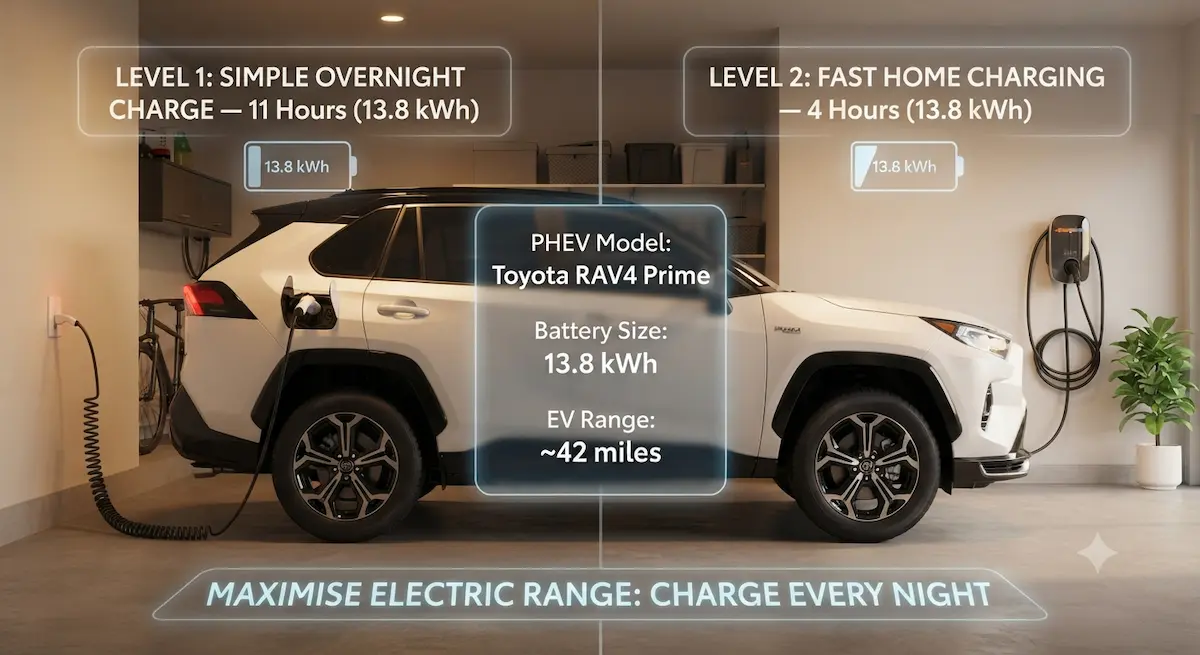
Charge times and charger ratings from the manufacturers’ own manuals and model pages (Toyota, Jeep, Chrysler, Ford, Hyundai, Mitsubishi, Mercedes-Benz), with running costs at the US residential average of 18.16¢/kWh (EIA) (November 2026).
A plug-in hybrid is the only electric car you can refuel from a plain wall outlet without thinking about it. The battery is small — roughly 14 to 23 kWh in today’s US models — the charging cord is in the trunk, and the engine removes every deadline: if the battery is empty, the car still drives. That forgiving nature hides exactly two things worth understanding: your car’s onboard charger, which sets your real charging speed no matter what you plug into, and the nightly habit that decides whether a PHEV is an economy car or just a heavier hybrid.
This page is the practical version: what you need, the steps, the real times for the models Americans actually buy, what a full charge costs, and the short list of new PHEVs that break the oldest rule of the segment — no fast charging. (Choosing between the two kinds of plug-in car instead? Our PHEV vs BEV charging comparison covers that decision.)
Plug the cord that came with the car into any 120 V outlet and you are charging: most PHEVs fill overnight in about 10–12 hours (the big-battery Outlander needs ~16). A 240 V Level 2 setup cuts that to about 2–4 hours — but only as fast as your car’s onboard charger allows (3.3 kW on many models, up to 7.2 kW on others). A full charge costs roughly $2.25–$3.10 at average US home electricity prices. Charge every night; that habit, not the hardware, is what makes a PHEV cheap to run.
Key figures: pack sizes 13.6–22.7 kWh · onboard chargers 3.3–7.2 kW (one outlier: Volvo, 3.6 kW in North America) · full charge ≈ $2–5 at home
What You Need — and the One Number That Sets Your Speed
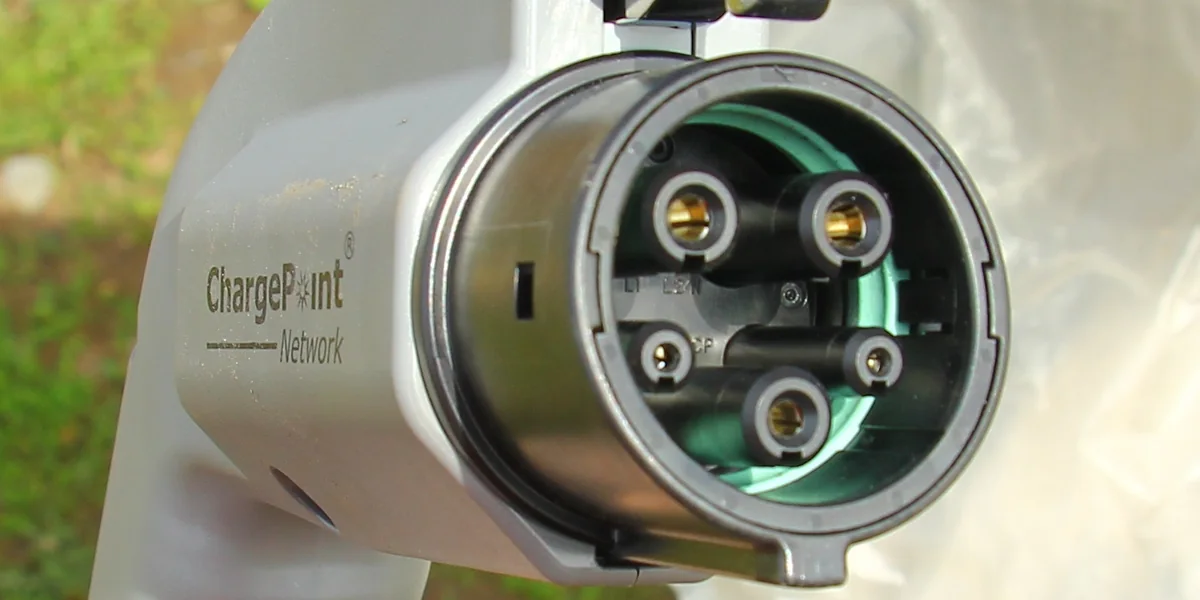
Every PHEV charges through the same J1772 inlet; what differs is the charger built into the car.
Your car came with a Level 1 cord (a plug for a household outlet on one end, the J1772 connector on the other). That, plus an outlet, is the complete required equipment list. A home Level 2 wallbox on a 240 V circuit is the optional upgrade — worth it if you drive twice a day, charge an Outlander, or simply want the battery full by dinner instead of by morning. What a wallbox cannot do is outrun the car: AC power passes through the onboard charger, and its rating is the ceiling.
A Prius Prime (3.3 kW onboard) plugged into an 11 kW wallbox charges at 3.3 kW. A Wrangler 4xe (7.2 kW) on the same wallbox charges more than twice as fast. Read your model’s number in the table below before spending a dollar on hardware.
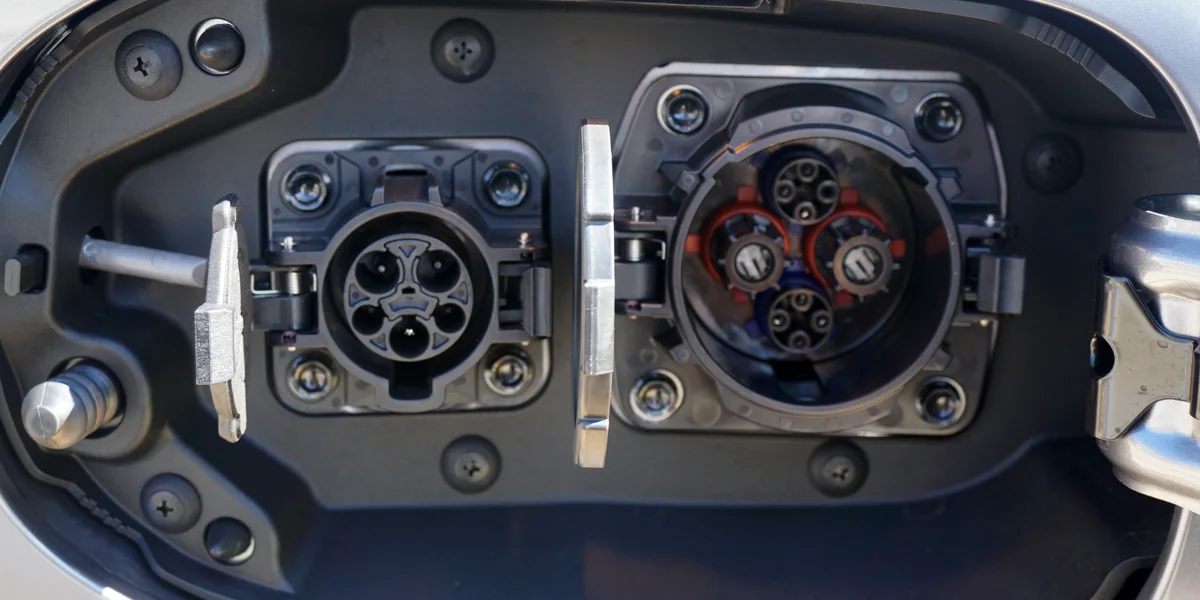
One more port note, because it confuses new owners: your car may have a second, covered socket beside the J1772 — on the Outlander PHEV that is a CHAdeMO fast-charge inlet (pictured). Almost every other PHEV has the single AC inlet only; the exceptions are listed in the fast-charging section.
The Steps: Your First Night
Five minutes of routine tonight, then it is muscle memory.
- Park within cord’s reach of an outlet. The supplied Level 1 cord is typically 15–20 feet; a sound, grounded household outlet is all it asks. (More on outlet craft in our Level 1 charging guide.)
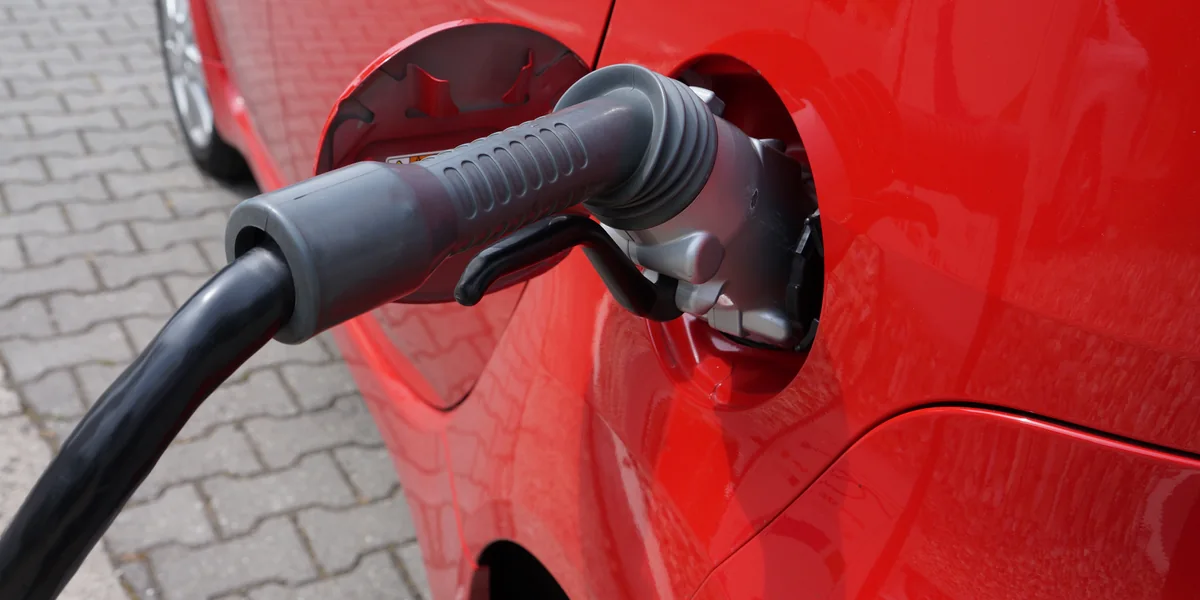
- Open the charge port and plug in the car end first until it clicks; then confirm the dashboard or port light shows charging. Most PHEVs let you lock the connector — set it once.
- Tell the car your schedule, if it offers one. Most PHEVs have scheduled charging (a Bing-sized number of owners ask whether it exists — it does, on nearly every model) so the charge finishes before your morning departure or inside off-peak hours.
- Leave it. The car stops on its own at full. There is no benefit to unplugging mid-charge and no harm in the car sitting plugged in overnight.
- In the morning, unplug, coil the cord where it lives, and drive on electricity. Repeat nightly — see the routine section for why this step is the entire economics of the car.
Charging Times by Model
Real manufacturer figures for the US fleet — note how the onboard-charger column predicts the Level 2 column.
Model | Battery | Onboard charger | Level 1 (120 V) | Level 2 (240 V) |
|---|---|---|---|---|
Toyota RAV4 Prime | 18.1 kWh | 3.3 kW (6.6 kW optional) | ~12 h | ~4.5 h (3.3 kW) / ~2.5 h (6.6 kW) |
Toyota Prius Prime | 13.6 kWh | ~3.3 kW | ~11 h | ~4 h |
Jeep Wrangler 4xe | 17.3 kWh | 7.2 kW | ~12 h | ~2 h |
Chrysler Pacifica Hybrid | 16 kWh | 6.6 kW | ~14 h | ~2 h |
Ford Escape PHEV | 14.4 kWh | 3.3 kW | ~10–11 h | ~3.5 h |
Hyundai Tucson / Kia Sportage PHEV | 13.8 kWh | 7.2 kW | ~9.5–10.5 h | ~2 h |
Mitsubishi Outlander PHEV | 20 kWh (22.7 kWh for 2026) | 3.3 kW | ~16–16.5 h | ~6.5 h |
Volvo Recharge PHEVs (US) | varies | 3.6 kW (North America) | ~13+ h | ~5+ h |
BMW 330e | 12 kWh class | 3.7 kW | ~10 h | ~3.5 h |
Mercedes-Benz GLC 350e | ~24 kWh class | 9.6 kW | — | ~2.5 h |
Times are the manufacturers’ published full-charge figures; a partially empty battery — the normal case — takes proportionally less. Two rows deserve a pause. The Outlander pairs the fleet’s biggest battery with one of its slowest onboard chargers, which is why its AC times are the longest here (its fast-charge port, next section, is its answer). And Volvo’s North American cars are capped at 3.6 kW — the faster figure quoted on European sites is a two-phase rating that does not apply to US cars. For Prius Prime owners who want the deep version — battery behaviour, costs, longevity — our Prius PHEV battery guide is the companion read.
What a Full Charge Costs
At home, a full PHEV battery costs less than a coffee — the arithmetic is the argument for plugging in.
Work it from your own bill: usable capacity × your per-kWh rate. At the US residential average of 18.16¢/kWh (EIA, August 2026), the sourced examples work out to about $2.25 for a Prius Prime, $3.10 for a RAV4 Prime, $3.10 for a Wrangler 4xe, and about $4.85 for a GLC 350e. Those electric miles replace gasoline at a fraction of the per-mile cost — provided you actually plug in (the routine section has the fleet data on owners who don’t).
Public charging flips the arithmetic for small packs. A network session priced with a session fee plus a per-kWh or per-minute rate can charge BEV money to deliver a PHEV’s 30-odd miles; a 14 kWh top-up that costs $2.50 at home can cost two or three times that at a public post, before parking fees. Public Level 2 makes sense when it is free (workplaces, some retail), when you are parked anyway for hours, or when the alternative is burning gasoline on a long day. It rarely makes sense as a paid habit.
DC Fast Charging: The Rule and the New Exceptions
Most PHEVs cannot fast-charge — but “most” is doing real work in that sentence, and the exceptions are this year’s news.
The rule exists for sound reasons: fast-charge hardware costs money and weight, and a 14 kWh battery that refills overnight gains little from a 20-minute stop. So the fleet skipped it — until recently. The verified exceptions, in order of how much they change the picture:
- Mitsubishi Outlander PHEV — the long-standing exception: a CHAdeMO inlet alongside the J1772, good for up to 80% in roughly 38 minutes (the 2026 car quotes ~29 minutes, on upper trims).
- Mercedes-Benz GLC 350e — an optional 60 kW CCS fast-charge port on a mainstream PHEV; Mercedes quotes 10–80% in about 20–30 minutes.
- 2026 Toyota RAV4 Plug-in Hybrid (XSE and Woodland) — 11 kW AC charging plus a CCS1 DC port, 10–80% in about 30 minutes (Toyota’s launch material). The SE and GR SPORT trims stay AC-only at 7 kW.
- 2027 RAV4 Plug-in Hybrid — goes further: native NACS with DC fast charging across all trims at up to 50 kW — reported by InsideEVs as the first major US PHEV to make the NACS jump.
So the honest 2026 answer to “can a PHEV fast-charge?” is: yours probably can’t, the newest ones increasingly can, and the direction is set. If your car has one inlet, no adapter changes that — a CCS or Tesla plug will not fit, and Superchargers are not an option for AC-only cars at any price. (What the different hybrid types are, battery-first, is covered in our BEV vs PHEV vs HEV explainer.)
The Daily Routine That Makes a PHEV Worth Owning
A plug-in hybrid delivers its promise only on days it was plugged in — the fleet data on this point is blunt.
The ICCT’s real-world studies keep landing on the same finding: PHEVs driven mostly uncharged use dramatically more fuel than their labels suggest — in the US analysis, real-world electric driving share ran 26–56% below the label assumption and fuel consumption 42–67% above it. The cars are not cheating; their owners simply are not plugging them in. The routine that separates the two outcomes is short:
- Charge every night. A PHEV battery is one day of driving; tonight’s charge is tomorrow’s cheap miles. This is the single habit the whole vehicle concept rests on.
- Use EV mode in town. Electric drive is at its best in stop-start city work; save the engine for the highway, where it is efficient and the battery would drain fastest.
- Top up at work if it is offered. A second full battery doubles your electric day.
- Precondition while plugged in. Heating or cooling the cabin on wall power before departure spends the grid’s energy, not the battery’s — free range on cold and hot mornings.
- Don’t nurse the battery like a BEV’s. PHEV packs are built to be filled and used daily — full charges every night are the design case, not abuse. (The battery-care science for big BEV packs is a different, gentler regime, covered on the charging-habits page.)
Frequently Asked Questions
Can I charge a PHEV using a normal household outlet?
Yes — that is the standard method. The Level 1 cord included with the car plugs into any grounded 120 V outlet and fills most PHEVs in about 10–12 hours (a big-battery Outlander needs ~16). No installation, no electrician, nothing to buy.
Is a Level 2 charger worth it for a PHEV?
If you drive once a day and park overnight, Level 1 is genuinely enough for most models — that is the honest answer the stored version of this page also gave. Level 2 earns its cost when you make several trips a day, own a slow-charging or big-battery model (Outlander, Volvo), or want preconditioning and a full battery on short turnarounds. Check your onboard-charger rating first: a 3.3 kW car gains hours, not miracles, from a wallbox.
Do I have to plug in a plug-in hybrid?
No — it will run indefinitely as a conventional hybrid on gasoline alone, and never needs the plug to function. But an unplugged PHEV is a heavier hybrid carrying a battery it never uses: the ICCT’s real-world data shows fuel use 42–67% above label for under-charged cars. The plug is optional mechanically and essential economically.
Should I charge my PHEV every day?
Yes — nightly, to full. Unlike a big BEV pack, a PHEV battery is designed around daily full cycles; its usable window and buffers are set by the manufacturer for exactly that life. Skipping nights does not preserve the battery; it just burns gasoline.
Can I use a Tesla charger or a public fast charger?
Public Level 2 posts with a J1772 plug: yes, anywhere. Tesla destination (AC) chargers: only with a third-party adapter, and results vary. Tesla Superchargers and other DC fast chargers: no for every AC-only PHEV — the plug does not fit and the car has no DC inlet. The exceptions are the DC-equipped models in the fast-charging section (Outlander CHAdeMO; GLC 350e’s CCS option; the newest RAV4 Plug-ins).
How many kilowatts does it take to charge a PHEV, and how much electricity is that?
A full charge delivers roughly the pack’s usable energy: about 11–20 kWh for today’s fleet (a Prius Prime ≈ 12 kWh from the wall including losses; a Wrangler 4xe ≈ 17 kWh). The wall power draw while charging is your onboard charger’s rating — 3.3 to 7.2 kW on Level 2, about 1.4 kW on a household outlet. Two hours at 7.2 kW is ~14.4 kWh, about $2.60 at average US prices.
Does the big battery charge the 12 V battery?
On most PHEVs, yes — a DC-DC converter lets the traction battery maintain the 12 V battery while the car is on or charging, which is why a regularly driven and plugged-in PHEV rarely strands its 12 V. A PHEV parked unplugged for many weeks can still flatten its 12 V like any car. How the 12 V system works in EVs generally is covered in our 12 V battery explainer.
Does a PHEV have scheduled charging?
Nearly all of them do — a departure-time or off-peak schedule set in the car or its app, so the battery is full when you leave and the charging happens on cheap overnight rates. If your commute is regular, set it once and forget it.
Conclusion
Charging a plug-in hybrid is a five-minute routine with outsized consequences. The hardware could not be simpler — a supplied cord, any outlet, a full battery by morning — and the two refinements are knowing your onboard charger’s ceiling before buying a wallbox, and knowing whether your model is one of the new DC-capable exceptions. Everything else is the nightly plug. Do that, and a PHEV is the cheapest motoring most households can buy; skip it, and the fleet data says you are driving an expensive hybrid. The car keeps its side of the bargain every night you keep yours.
