
The Future of EV Battery Longevity: Solid-State, Million-Mile Batteries & Beyond

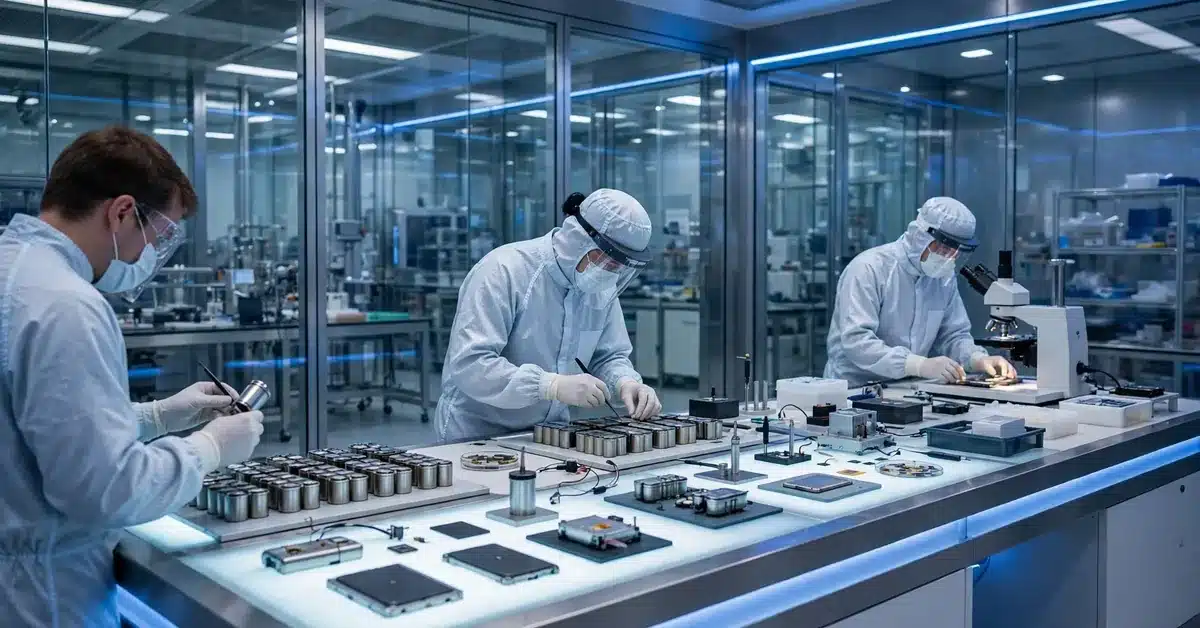
Today’s EV batteries already outlast most owners’ expectations — but the next generation of battery technology aims to push lifespan even further, into territory that changes how long people think about keeping an EV at all. This guide covers what’s actually coming: solid-state batteries, the “million-mile battery” concept, and how automakers and software are extending the life of the packs already on the road.
Will Solid-State Batteries Last Longer Than Lithium-Ion?
Yes, based on current research and prototype data — solid-state batteries replace the liquid electrolyte in today’s lithium-ion cells with a solid material, which eliminates several of the chemical side-reactions that drive calendar aging and reduces the risk of lithium plating that damages cells during fast charging. Toyota has publicly targeted solid-state prototypes capable of significantly longer cycle life alongside faster charging and higher energy density. For the technical details on how the chemistry differs, see What Is a Solid State Battery? and How Long Does a Solid State Battery Last? for current lifespan estimates.
The caveat: solid-state batteries remain expensive to manufacture at scale, and most automaker timelines point to gradual introduction in premium vehicles later this decade rather than immediate mainstream availability.
What Is a Million-Mile EV Battery?
The “million-mile battery” is an industry term for a pack engineered to retain useful capacity across a million miles of driving — roughly 3–5 times the lifespan of a typical modern EV battery. Reaching this milestone requires improvements across several fronts simultaneously: more stable cathode chemistries that resist cracking over repeated cycles, electrolyte additives that slow SEI layer growth, and improved thermal management that keeps cells in their ideal temperature range across far more cycles than today’s packs experience.
Several battery manufacturers and automakers, including CATL and General Motors’ battery partners, have published research and patents specifically targeting million-mile durability, primarily aimed at commercial fleet and rideshare applications where cycle count accumulates fastest. For passenger vehicles, a million-mile battery would functionally mean the battery outlasts every other major component of the car.
Will EV Batteries Last 500,000 Miles in the Future?
This is a more near-term and achievable milestone than the full million-mile target, and some current-generation LFP packs with excellent thermal management are already approaching this range in fleet and commercial use, given their inherently long cycle life (2,000–5,000+ cycles). As LFP and next-generation LMFP chemistries become more widespread in mainstream vehicles — not just budget trims — 500,000-mile battery lifespans are likely to become achievable for ordinary consumer EVs within the next several years, rather than remaining confined to commercial fleet applications.
How Are Automakers Improving EV Battery Longevity?
Several concrete engineering trends are already extending real-world battery life beyond what was possible five years ago:
- Cell-to-Pack designs: Eliminating module housings reduces weight and improves thermal uniformity across the pack, reducing hot-spot-driven degradation
- Silicon-carbon anodes: Emerging anode materials store more lithium with less structural stress per cycle than pure graphite, slowing cycle aging
- Smarter Battery Management Systems: Increasingly sophisticated BMS software actively manages charge rates, cell balancing, and thermal conditioning to minimize stress in real time — see what is a car Battery Management System for how this works
- LFP and LMFP chemistry adoption: These cobalt-free chemistries offer inherently longer cycle life, and their growing adoption beyond budget trims is raising the average lifespan across entire model lineups
Will OTA Updates Improve Older EV Battery Life?
Over-the-air software updates can meaningfully improve how a battery is managed, though they can’t reverse chemical degradation that has already occurred. Updates commonly refine charging curve algorithms to reduce heat during fast charging, improve cell-balancing precision, and recalibrate range estimation for more accurate readings. In some documented cases, automakers have used OTA updates to unlock previously reserved buffer capacity in older vehicles as the pack’s true safety margins became better understood — effectively extending usable range without any physical change to the battery. What OTA updates cannot do is restore capacity already lost to genuine cell-level degradation.
What Battery Technology Will Make EVs Last Longer?
Looking at the technologies closest to production impact, three stand out as most likely to meaningfully extend real-world EV battery lifespan over the next 5–10 years:
- Solid-state electrolytes: The highest-impact long-term change, though still early in mainstream commercialization
- Silicon-carbon and other advanced anode materials: Nearer-term improvements already entering select production vehicles
- Wider LFP/LMFP adoption: The most immediately scalable lifespan improvement, since the chemistry already exists and is simply expanding into more vehicle segments
Conclusion
EV battery longevity is improving on multiple fronts at once — better chemistry, smarter software, and refined pack engineering are collectively pushing real-world lifespans well beyond what early EVs achieved. Solid-state batteries represent the biggest eventual leap, but nearer-term gains from LFP adoption, improved anode materials, and smarter BMS software are already extending the life of batteries being built today. A true million-mile consumer EV battery isn’t available yet, but the individual technologies needed to get there are already in active development and, in some cases, early production.
