
How Does a BMS Monitor Battery Voltage?

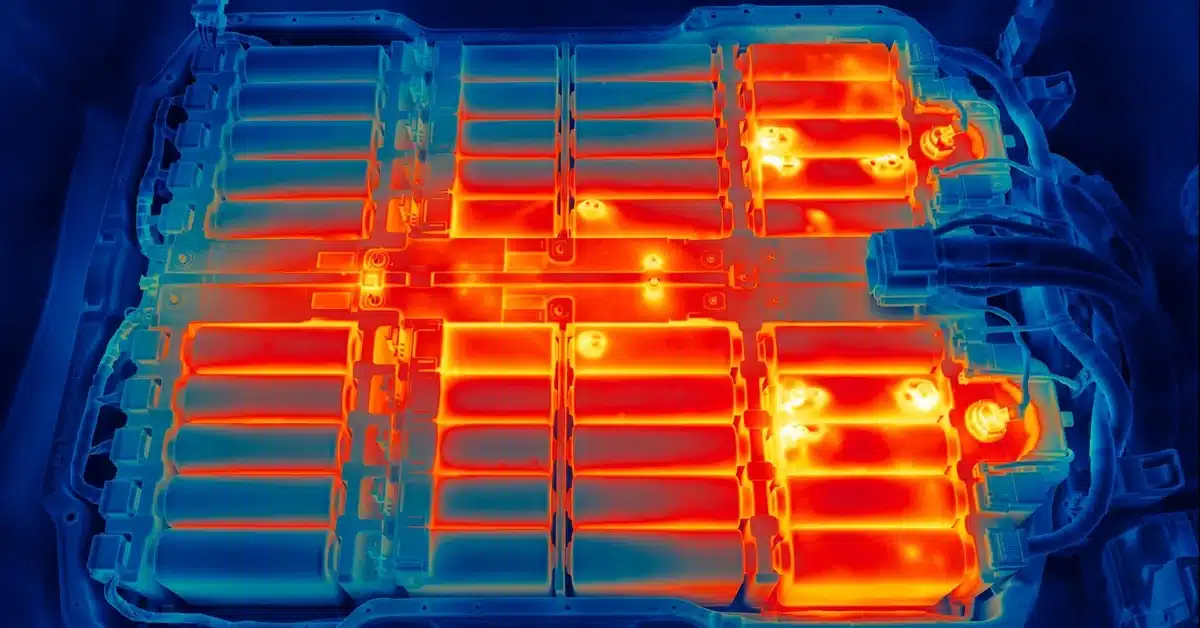
A BMS monitors battery voltage by using analog front-end chips and high-resolution ADCs to measure each individual cell’s voltage many times per second, even though hundreds of cells are wired together at up to 800V. This cell-by-cell precision is what lets the system catch a single weak or overcharging cell before it becomes a safety problem.
Why Voltage Monitoring Is Harder Than It Sounds
An EV battery pack isn’t one big battery — it’s hundreds of individual cells wired in series to reach hundreds of volts. Measuring the voltage of the very first cell is simple, since one end connects to ground. But measuring the 200th cell in the chain means measuring the combined voltage of every cell before it, then subtracting.
The Common-Mode Voltage Problem
As you move up the series stack, the “common mode” voltage each cell sits at gets higher, potentially up to 100V or more relative to the reference point. Standard measurement circuits struggle here, which is why automotive BMS design relies on specialized components rather than a basic microcontroller and voltmeter.
The Hardware Behind Cell Voltage Monitoring
Battery Monitoring ICs
Purpose-built battery monitoring integrated circuits, sometimes called BMICs, are wired to a group of cells, commonly 12 to 16 at a time. Each chip contains multiplexers, buffers, and an analog-to-digital converter (ADC) capable of isolating and reading one cell’s voltage at a time out of the series stack.
Sigma-Delta ADCs for Precision
Many BMS designs use high-resolution sigma-delta ADCs specifically because they handle the high common-mode voltages present in a long series stack while still resolving small differences, often within a few millivolts, between cells.
Switching and Multiplexing
Since one ADC channel typically can’t watch every cell simultaneously, the BMS uses switches or multiplexers to rapidly cycle through cells, taking a fresh reading from each one many times per second.
How the BMS Uses Voltage Data Once It’s Collected
Detecting Overcharge and Overdischarge
The moment any single cell’s voltage approaches its upper or lower safety limit, typically around 4.2V and 2.5V for common EV chemistries, the BMS reduces current or halts the process entirely.
Feeding State of Charge and State of Health Calculations
Cell voltage, combined with current data, is one of the core inputs used to estimate how much energy remains in the pack and how much the battery has aged.
Triggering Cell Balancing
Voltage differences between cells are exactly what tells the BMS which cells need balancing, and by how much, to keep the pack working as a uniform unit.
How Often Voltage Is Actually Checked
Most automotive BMS platforms sample individual cell voltage dozens to over a hundred times per second. This high sampling rate matters most during fast charging, when voltage can shift quickly and the margin for error narrows.
| Component | Role in Voltage Monitoring |
|---|---|
| Battery monitoring IC (BMIC) | Reads voltage from a group of cells (typically 12-16) |
| Sigma-delta ADC | Converts analog voltage to precise digital readings |
| Multiplexer/switches | Cycles the ADC across many cells rapidly |
| Main BMS controller | Aggregates all readings and applies safety logic |
Conclusion
A BMS monitors battery voltage by combining specialized monitoring chips, precision ADCs, and rapid switching to read every individual cell in a high-voltage series stack, dozens of times per second. That granular, cell-by-cell visibility is what allows the system to catch overcharge, overdischarge, and imbalance issues long before they become safety risks.
FAQs
How accurate is BMS voltage monitoring?
Automotive-grade systems typically resolve voltage differences within a few millivolts per cell.
Can a BMS monitor every cell individually?
Yes, in most modern EV designs. Battery monitoring ICs are specifically built to isolate and read individual cells within a large series stack.
Why does the BMS need to know each cell’s voltage instead of just the pack total?
Pack-level voltage alone can hide a single weak or overcharging cell, which is exactly the condition that leads to safety failures.
