
How Does BMS Manage Battery Temperature in an EV?

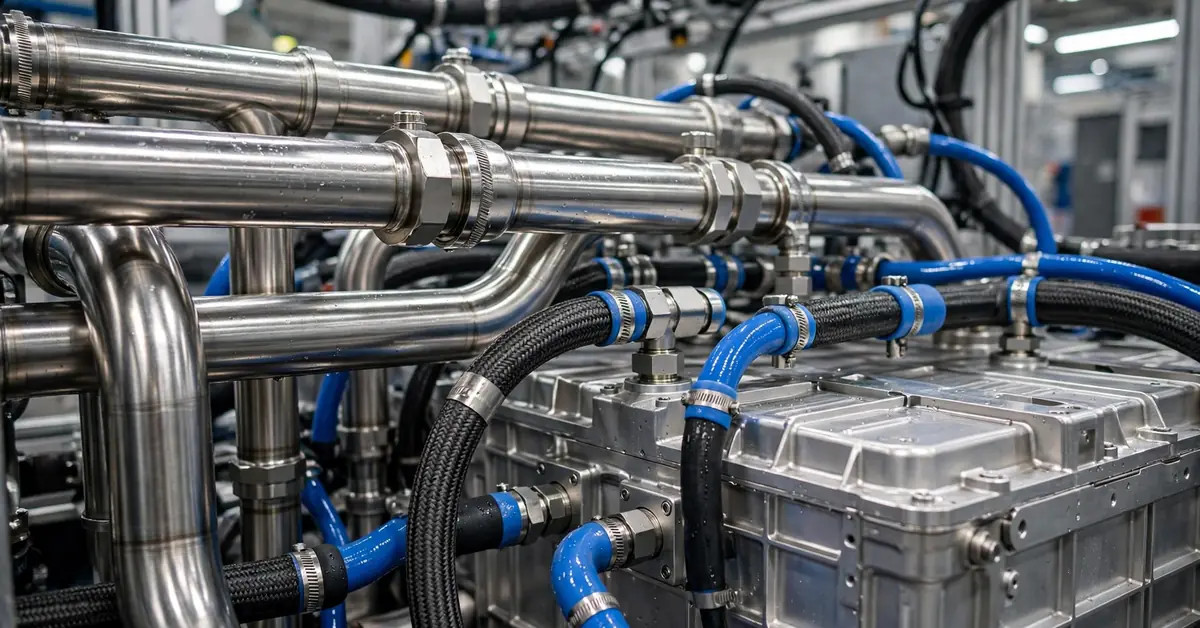
A BMS manages battery temperature in an EV by continuously reading temperature sensors across the pack, then commanding pumps, fans, valves, or heaters to keep every cell within its safe operating range. The BMS itself doesn’t generate heating or cooling — it’s the decision-maker that tells the physical thermal system what to do and when.
The BMS as the Decision Layer, Not the Hardware
A separate system, often called the battery thermal management system or BTMS, contains the actual pumps, coolant channels, fans, and heaters. The BMS sits above that hardware, reading temperature data and issuing commands: speed up the pump, open this valve, activate the heater. Understanding this split is key to understanding how temperature control actually works — the BMS is the brain, the BTMS is the muscle.
How the BMS Decides When to Cool the Pack
When temperature sensors report the pack climbing toward its upper safe threshold, the BMS commands the cooling system into action, whether that means increasing coolant pump speed, activating cooling fans, or engaging a refrigerant loop, depending on the vehicle’s specific thermal architecture. During DC fast charging especially, this response needs to be fast, since high current generates heat quickly.
How the BMS Decides When to Heat the Pack
In cold conditions, the BMS monitors the minimum temperature across the pack and activates heating elements, often resistive PTC heaters, once temperature drops below a safe threshold for efficient charging or discharging. Some designs even use waste heat from the motor, with the BMS controlling valves and pumps to redirect that heat into the battery loop rather than activating a separate dedicated heater.
Managing Temperature Uniformity, Not Just Average Temperature
A pack’s average temperature can look fine while hiding a dangerous localized hot spot. Because of this, well-designed BMS software pays attention to temperature gradients across the pack, not just the average, and can flag or respond to a specific module or cell running hotter than its neighbors, even if the overall average still looks acceptable.
Reducing Power When Thermal Systems Can’t Keep Up
If the pack is heating faster than the cooling system can remove that heat, or the ambient conditions are simply too extreme, the BMS can reduce available charging or discharging power directly, protecting the pack even if the thermal hardware is at its physical limit.
Verifying the Thermal System Is Actually Working
The BMS doesn’t just issue commands and assume they’re carried out. It also monitors coolant temperature, flow status, and actuator feedback to confirm the thermal system is genuinely responding as commanded. This matters because a pump degrading or a valve sticking could otherwise leave the BMS operating on a false assumption that cooling or heating is happening when it isn’t.
| Condition | BMS Response |
|---|---|
| Pack temperature rising toward upper limit | Increases coolant flow, activates fans/refrigerant loop |
| Pack temperature below safe minimum | Activates heaters or redirects motor waste heat |
| Localized hot spot detected | Flags or responds to specific module, not just average |
| Thermal system at capacity limit | Reduces charge/discharge power to compensate |
Conclusion
A BMS manages battery temperature in an EV by acting as the control layer above the physical thermal hardware, reading sensor data and commanding pumps, fans, valves, and heaters to keep the pack within its safe range. It watches for uniformity issues as well as average temperature, and can reduce power output directly when the thermal system alone can’t keep pace with demand.
FAQs
Does the BMS control the AC/heating system in the cabin too?
No, cabin climate control is typically a separate system, though some EVs share components like heat pumps between cabin and battery thermal loops.
Can the BMS heat the battery using the motor?
Yes, some designs redirect waste heat from the motor into the battery thermal loop, controlled by the BMS.
What happens if the cooling system fails?
The BMS will typically reduce available power to protect the battery until the thermal system can be repaired.
