
How Does BMS Extend EV Battery Life?

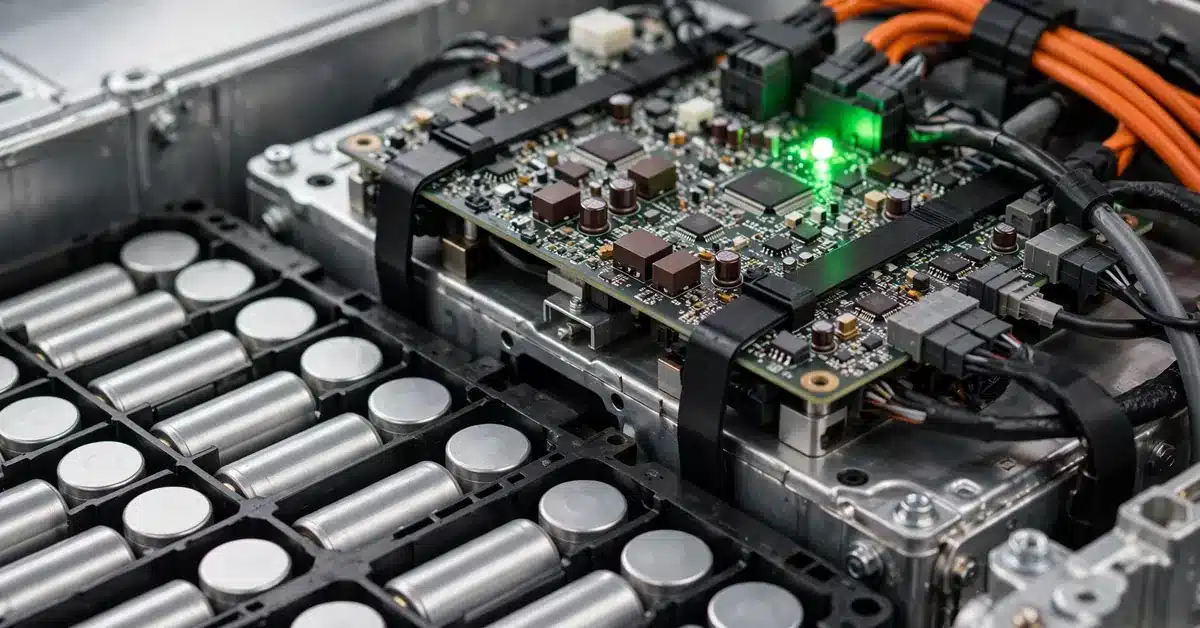
A BMS extends EV battery life by keeping every cell within its safe voltage and temperature range, balancing cells so none ages faster than the rest, and dynamically adjusting charging behavior to reduce the cumulative stress that drives lithium-ion degradation over time. It’s less about any single dramatic intervention and more about thousands of small, continuous protective decisions across the battery’s entire lifespan.
Preventing the Conditions That Accelerate Aging
Lithium-ion cells degrade faster when repeatedly pushed to voltage extremes, exposed to high temperatures, or subjected to high current stress. The BMS’s core protective functions, overcharge and over-discharge prevention, current limiting, and thermal management, all directly reduce exposure to exactly these accelerating conditions.
Cell Balancing’s Role in Longevity
Without balancing, cells would drift apart over time, with the weakest cells bearing a disproportionate share of stress relative to their shrinking capacity. By keeping cells reasonably aligned, the BMS prevents this uneven-aging feedback loop, helping the entire pack age more gracefully together rather than being limited early by a handful of overstressed cells.
Thermal Management’s Long-Term Impact
Heat is one of the primary drivers of lithium-ion chemical degradation. By actively cooling the pack during demanding conditions, like fast charging or hard driving, and keeping temperature within its ideal range as much as possible, the BMS’s thermal management directly slows the underlying chemical aging process.
Dynamic Charge Rate Adjustment
Rather than always allowing maximum charging speed regardless of conditions, the BMS tapers current based on temperature, state of charge, and battery health, trading some charging speed for meaningfully reduced long-term stress on the cells.
Setting a Usable Capacity Buffer
Many BMS designs intentionally reserve a small buffer at both the top and bottom of the theoretical capacity range, preventing cells from ever reaching the most extreme, most damaging voltage states even when the dashboard shows 100% or 0%. This buffer is a deliberate longevity tradeoff, sacrificing a small amount of usable range for meaningfully reduced degradation.
Tracking Health Data to Inform Ongoing Adjustments
By continuously tracking state of health and adapting its charging and protection parameters as the battery ages, a well-designed BMS doesn’t apply the same fixed rules throughout the pack’s entire life, it adjusts its behavior as the battery’s real condition changes, aiming to extract strong performance without accelerating decline further.
Software Improvements Over Time
Manufacturers continue refining BMS algorithms after vehicles ship, and firmware updates can bring genuinely improved balancing strategies, more accurate thermal management thresholds, or better charging curves to vehicles already on the road, extending the practical benefit of good BMS design beyond the original release.
| BMS Function | Longevity Benefit |
|---|---|
| Overcharge/over-discharge protection | Avoids the most damaging voltage extremes |
| Cell balancing | Prevents uneven aging across the pack |
| Thermal management | Slows heat-driven chemical degradation |
| Dynamic charge rate limiting | Reduces cumulative charging stress |
| Capacity buffer | Avoids extreme voltage states even at “full” or “empty” |
Conclusion
A BMS extends EV battery life through a combination of continuous, layered protections, avoiding voltage extremes, balancing cells, managing temperature, and dynamically limiting charge rate, all working together to reduce the cumulative stress that drives lithium-ion degradation. There’s no single dramatic mechanism responsible; it’s the accumulated effect of thousands of small protective decisions made consistently over the battery’s entire lifespan.
FAQs
Does a better BMS always mean a longer-lasting battery?
Generally yes, more sophisticated balancing, thermal management, and adaptive charging strategies tend to correlate with better long-term capacity retention.
Can firmware updates actually extend my EV’s battery life?
Yes, improvements to balancing algorithms or charging strategies delivered via updates can meaningfully affect long-term degradation, even after the vehicle has been in use for years.
Why does my EV never show it charging to a true 100%?
Many manufacturers reserve a small capacity buffer specifically to avoid the most degradation-prone extreme voltage states, even though the display shows “full.”
