
What Is Adaptive Charging in EV BMS?

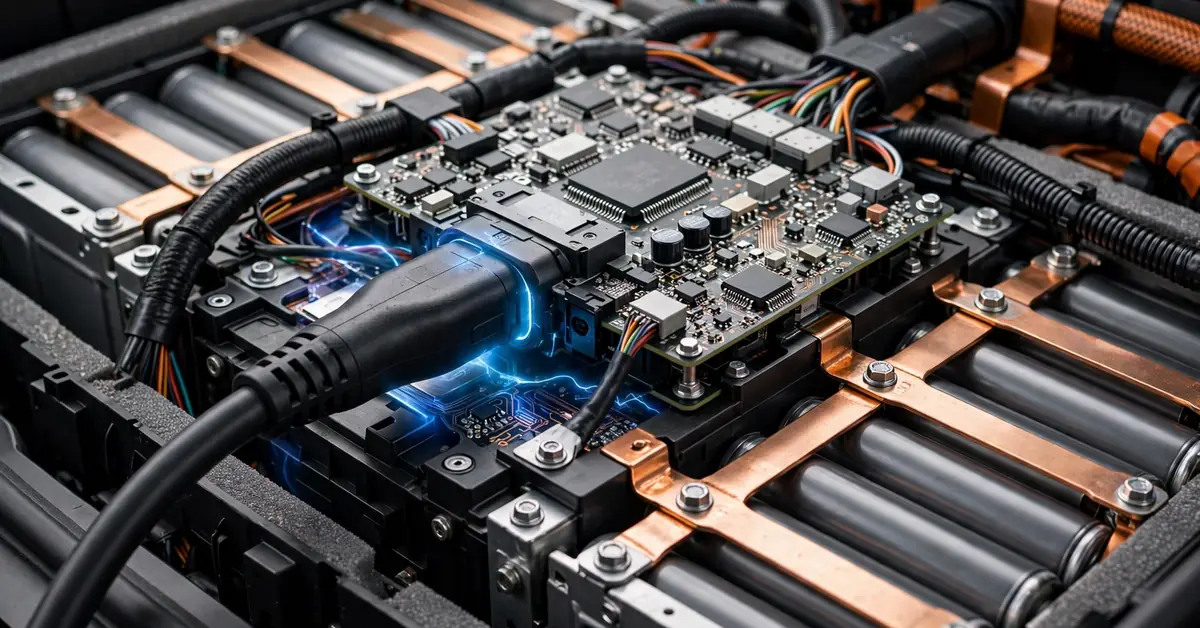
Adaptive charging in EV BMS refers to charging behavior that adjusts dynamically based on real-time and historical factors, temperature, battery health, driving patterns, and even electricity pricing or grid conditions, rather than applying one fixed charging strategy regardless of context. It’s a broader, more intelligent evolution of basic charge rate limiting.
How Adaptive Charging Differs From Basic Charge Rate Limiting
All EVs limit charge rate based on temperature and state of charge to some degree. Adaptive charging takes this further, incorporating a wider range of inputs, learned usage patterns, degradation trends, scheduling preferences, and sometimes external data like grid demand, to make more sophisticated, personalized charging decisions than a fixed rule-based approach would.
Adapting to Individual Battery Health
Rather than applying identical charging parameters to every vehicle regardless of age, adaptive systems can adjust charging behavior based on a specific pack’s actual measured state of health and degradation trend, potentially charging a well-preserved older battery somewhat differently than a newer one showing early signs of accelerated wear.
Adapting to Learned Usage Patterns
Some adaptive charging systems learn a driver’s typical schedule and adjust charging timing accordingly, for example, delaying the bulk of a charge to finish just before a usual departure time rather than immediately reaching full charge and then sitting at high voltage for hours, reducing unnecessary time spent at degradation-prone extreme charge states.
Adapting to Grid and Pricing Conditions
In markets with time-of-use electricity pricing or smart grid integration, adaptive charging can shift charging sessions toward lower-cost, lower-demand periods, benefiting both the owner’s electricity costs and broader grid stability, while still respecting the vehicle’s own charging needs and deadlines.
Adapting to Environmental Conditions Beyond Just Temperature
Beyond basic temperature-based rate limiting, more sophisticated adaptive systems can factor in humidity, altitude-related pressure differences, or seasonal patterns that affect optimal charging behavior in ways a simpler, temperature-only model might miss.
The Role of Machine Learning in Modern Adaptive Charging
Increasingly, adaptive charging strategies are informed by machine learning models trained on real-world data, allowing the system to refine its charging decisions based on patterns learned from a much larger dataset than any single vehicle’s own history could provide, particularly when combined with cloud connectivity and fleet-wide data aggregation.
Why Adaptive Charging Benefits Both Convenience and Longevity
Unlike a purely conservative, longevity-first approach that might frustrate drivers with unnecessarily slow charging, adaptive systems aim to balance convenience, having the car ready when needed, with genuine battery health benefits, reducing unnecessary time spent at stressful charge states without meaningfully compromising the practical driving experience.
| Adaptive Charging Factor | How It Adjusts Behavior |
|---|---|
| Battery health/degradation trend | Tailors charging parameters to actual pack condition |
| Learned usage patterns | Times charging completion to reduce time at high SOC |
| Grid/pricing conditions | Shifts charging toward lower-cost, lower-demand periods |
| Machine learning refinement | Improves decisions using broader real-world data patterns |
Conclusion
Adaptive charging in EV BMS goes beyond basic temperature-based rate limiting, incorporating battery health trends, learned usage patterns, and sometimes grid or pricing data to make more personalized, context-aware charging decisions. This more intelligent approach aims to balance driver convenience with genuine long-term battery health benefits, rather than forcing a tradeoff between the two.
FAQs
Does every EV have adaptive charging?
No, sophistication varies significantly by manufacturer and model, with some vehicles offering only basic scheduled charging and others featuring more advanced learned or grid-aware behavior.
Can adaptive charging save me money on electricity?
In markets with time-of-use pricing, yes, by shifting charging toward lower-cost periods when the vehicle supports this feature.
Does adaptive charging require an internet connection?
Some features, like grid-price awareness or fleet-informed learning, typically require connectivity, though basic scheduled adaptive behavior may work offline.
