
Can an EV BMS Be Reprogrammed for Energy Storage?

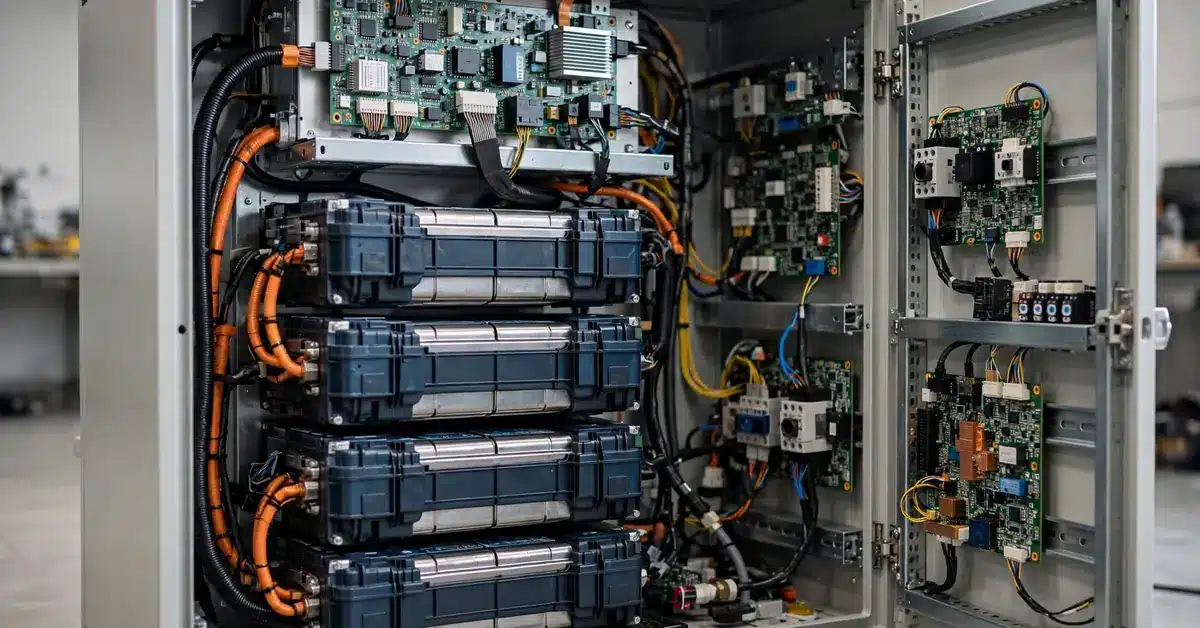
An EV’s original factory BMS generally cannot be reprogrammed for standalone energy storage use, since it’s typically locked to that specific vehicle’s ECU and communication architecture, which is why nearly every second-life energy storage project relies on a new, purpose-built BMS instead of repurposing the original one. The distinction between “reprogramming” and “replacing” matters a lot here.
Why Reprogramming the Original Unit Usually Isn’t an Option
The factory BMS in most EVs is deeply integrated with that specific vehicle’s control systems, authentication, and communication protocols. It generally cannot be reused as a standalone battery system, it’s locked to the vehicle’s ECU, which is precisely why second-life energy storage projects rely on a new control unit rather than attempting to repurpose the original one.
What Actually Happens Instead: Replacement, Not Reprogramming
Rather than reprogramming the factory unit, second-life energy storage systems install a purpose-built BMS designed for stationary storage applications, connected to the retired EV modules through signal and power cabling. Some designs specifically support connecting to multiple modules through various communication channels, coordinating them under one master control unit rather than relying on any of the original vehicle-specific control hardware.
Can Anything From the Original BMS Be Used at All?
In some emerging approaches, a separate control unit is added that communicates with the still-functioning internal module-level BMS components inside an unopened battery pack, translating signals like voltage, current, and state of charge, and sending commands back, without needing to physically open the battery case or fully replace every internal component. This is a more nuanced middle ground between full reprogramming and full replacement, though it’s still fundamentally adding new control hardware rather than reprogramming the original vehicle-locked unit.
Why a New BMS Is Actually Better Suited to This Application Anyway
Even if reprogramming the original unit were technically possible, it likely wouldn’t be the better choice. Second-life cells present different challenges, greater cell-to-cell inconsistency, mismatched degradation, than the original BMS was designed to handle, making a purpose-built system genuinely more appropriate rather than just more accessible.
What a Second-Life BMS Actually Needs to Handle
- Balancing modules with significant capacity mismatch from different aging histories
- Communicating with inverters or other energy storage system components via CAN or similar protocols
- Providing contactor control and current sensing appropriate for stationary storage current levels
- Disconnecting the circuit safely at low or maximum charge thresholds
The Practical Path for DIY or Commercial Second-Life Projects
Whether for a DIY home storage build or a commercial-scale project, the practical path is sourcing or building a BMS specifically designed for repurposed EV modules, rather than attempting to unlock or repurpose the vehicle’s original unit, which typically isn’t accessible or appropriate for standalone use regardless of technical effort applied.
| Approach | Feasibility |
|---|---|
| Reprogramming the original vehicle-locked BMS | Generally not feasible or supported |
| Installing a new, purpose-built BMS | Standard, well-established approach |
| Adding a control unit that communicates with internal module BMS | Emerging middle-ground approach in some designs |
Conclusion
An EV’s original factory BMS generally can’t be reprogrammed for standalone energy storage use, since it’s locked to the specific vehicle’s control architecture. Nearly every practical second-life energy storage project instead installs a new, purpose-built BMS designed specifically to handle the mismatched, variable characteristics of repurposed cells, an approach that’s not just more feasible but genuinely better suited to the application anyway.
FAQs
Is it illegal to try to unlock or reprogram a factory EV BMS?
This varies by manufacturer and jurisdiction, but even where technically possible, it’s generally not a supported or recommended path compared to using a purpose-built replacement.
How much does a second-life BMS typically cost?
Costs vary based on capacity and features needed, but purpose-built energy storage BMS units are a standard, commercially available product category.
Do I need a different BMS for each brand of EV module I want to repurpose?
Not necessarily — many second-life BMS platforms are designed with modularity in mind specifically to support various module sources and configurations.
