
BYD Sealion 7 Battery: Complete Guide

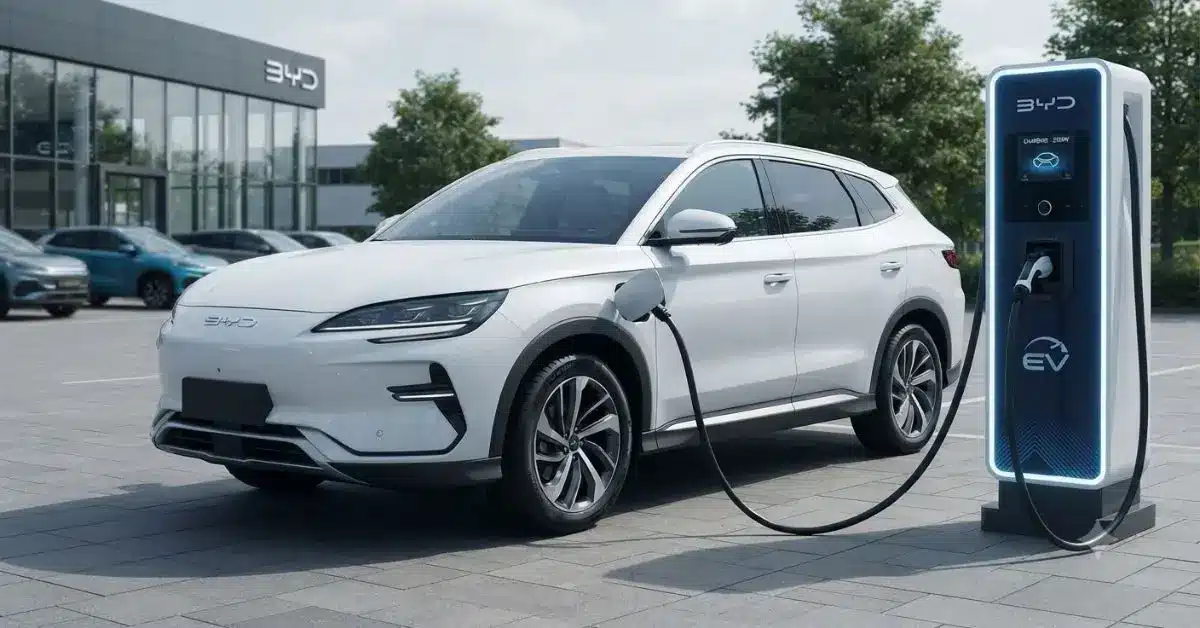
The BYD Sealion 7 offers three battery sizes: 71.8 kWh for the Dynamic RWD, 82.5 kWh for the Comfort and Excellence RWD, and 91.3 kWh for the AWD model. All versions use BYD’s safe LFP Blade Battery technology built on the e-Platform 3.0. The 82.5 kWh model travels up to 482 km (300 miles), while the 91.3 kWh model reaches about 523 km (325 miles) according to WLTP testing standards.
DC fast charging reaches 150 kW for RWD models and 230 kW for the AWD model, which uses the advanced 800V e-Platform 3.0 Evo. Every car includes a heat pump and V2L, which allow you to power external devices using the car’s battery. BYD designed the Sealion 7 to compete with the Tesla Model Y and earned a 5-star Euro NCAP safety rating in 2024. As of 2026, it is BYD’s most popular model in Europe and sits above the smaller Atto 2 in its lineup.
BYD Sealion 7 Battery: Full European Spec
| Variant | Battery | Chemistry | WLTP Range | Drive | Power | 0–100 km/h | DC Rate | 10–80% | EU Price |
|---|---|---|---|---|---|---|---|---|---|
| Dynamic RWD | 71.8 kWh | LFP Blade | ~410 km (255 mi) | RWD | 230 kW (308 hp) | 6.7 sec | 150 kW | ~30 min | ~€43,000 |
| Comfort RWD | 82.5 kWh | LFP Blade | ~482 km (300 mi) | RWD | 230 kW (308 hp) | 6.7 sec | 150 kW | ~31 min | ~€47,900 |
| Excellence RWD | 82.5 kWh | LFP Blade | ~482 km (300 mi) | RWD | 230 kW (308 hp) | 6.7 sec | 150 kW | ~31 min | ~€51,900 |
| Excellence AWD (800V) | 91.3 kWh | LFP Blade | ~523 km (325 mi) | AWD | 390 kW (523 hp) | 4.5 sec | 230 kW | ~30 min | ~€58,000 |
Designed as a Tesla Model Y Rival
BYD tested the Sealion 7 against the Tesla Model Y during its design. The Sealion 7 is 4.83 meters long, making it slightly larger than the 4.75-meter Model Y. This extra length gives passengers more room in the back seat. While the Model Y has an 854-liter trunk, the Sealion 7 has a 520-liter trunk and an extra 105-liter “frunk,” or front trunk, for storing charging cables.
BYD earned a 5-star safety rating from Euro NCAP, demonstrating the car’s reliability. This helps them win over customers who are unsure about the brand. The all-wheel-drive (AWD) model reaches 100 km/h in 4.5 seconds and offers 230 kW DC fast charging. These features match the performance of the Tesla Model Y at a competitive price.
AWD Model: 800V Architecture for 230 kW Charging
The Excellence AWD uses the e-Platform 3.0 Evo — BYD’s 800V architecture — whereas the standard RWD models use the 400V e-Platform 3.0. This voltage difference enables the AWD’s 230 kW DC peak vs the RWD’s 150 kW. The larger 91.3-kWh Blade Battery on the AWD also delivers the longest WLTP range in the Sealion 7 lineup. For buyers who primarily charge at home and only occasionally use DC fast charging, the 400V 82.5 kWh RWD represents better value — the 230 kW vs 150 kW DC difference adds only a few minutes per road-trip session.
Sealion 7 Charging Speeds
| Method | Power | 71.8 / 82.5 kWh RWD | 91.3 kWh AWD |
|---|---|---|---|
| Level 2 (7.4 kW) | 7.4 kW | ~12–13 hours full | ~14.5 hours full |
| Level 2 (11 kW) | 11 kW | ~8–9 hours full | ~10 hours full |
| DC Fast | 150 / 230 kW | ~30–31 min (10–80%) | ~30 min (10–80%) |
Real-World Range
- 82.5 kWh RWD, mild weather mixed: Approximately 380–430 km (236–267 miles) real-world at moderate speeds
- 82.5 kWh RWD, motorway at 120 km/h: Approximately 310–350 km (193–217 miles) — aerodynamic drag increases at speed
- Cold weather (with heat pump): Approximately 300–380 km — standard heat pump limits cold-weather range loss
- 91.3 kWh AWD, real-world: Approximately 400–450 km (249–280 miles) in mild conditions
LFP Blade Battery: Daily 100% Charging
All Sealion 7 variants use BYD’s LFP Blade Battery, which supports daily 100% charging without long-term capacity degradation. The Blade design integrates cells directly into the structural floor — eliminating traditional module casings. BYD’s nail penetration test demonstrates no thermal runaway — the highest fire-safety benchmark for production EV batteries. Long-term LFP cycle data suggest approximately 1–1.5% annual degradation, providing excellent long-term ownership economics.
Battery Warranty
BYD covers the Sealion 7 battery with an 8-year / 155,350-mile (250,000 km) warranty — Europe’s highest battery mileage coverage. The vehicle warranty is 6 years / unlimited mileage in most European markets. Five years of complimentary servicing are included. LFP’s inherent longevity means this warranty is genuinely conservative — real-world Blade Battery performance consistently shows minimal degradation relative to projections.
Sealion 7 vs Competitors
| Model | Battery | WLTP Range | DC Rate | Starting Price (EU) |
|---|---|---|---|---|
| BYD Sealion 7 Comfort (82.5 kWh) | 82.5 kWh LFP | 482 km (300 mi) | 150 kW | ~€47,900 |
| Tesla Model Y Long Range | ~82 kWh NMC | ~533 km | 250 kW | ~€49,990 |
| Hyundai Ioniq 5 LR RWD | 84 kWh NMC | ~507 km | 350 kW | ~€52,000 |
| VW ID.4 Pro (77 kWh) | 77 kWh NMC | ~533 km | 135–175 kW | ~€47,000 |
Conclusion
The BYD Sealion 7 uses LFP Blade battery technology. It comes in three sizes: 71.8, 82.5, and 91.3 kWh. This SUV directly rivals the Tesla Model Y in Europe. If you are interested in other BYD SUVs, check out our battery guides for the BYD Atto 2 and BYD Tang.
This car features a 5-star Euro NCAP safety rating and a 300-mile WLTP range for the 82.5 kWh model. It also includes a standard heat pump and V2L (Vehicle-to-Load) power, along with an 8-year or 155,000-mile warranty.
In 2026, the BYD Sealion 7 is a top choice in the European electric SUV market. It is ideal for people who charge at home and want the freedom to charge daily with an LFP. You also get a premium interior and a very strong battery warranty at a good price.
