
CAN, LIN, and Ethernet: BMS Communication Protocols Explained

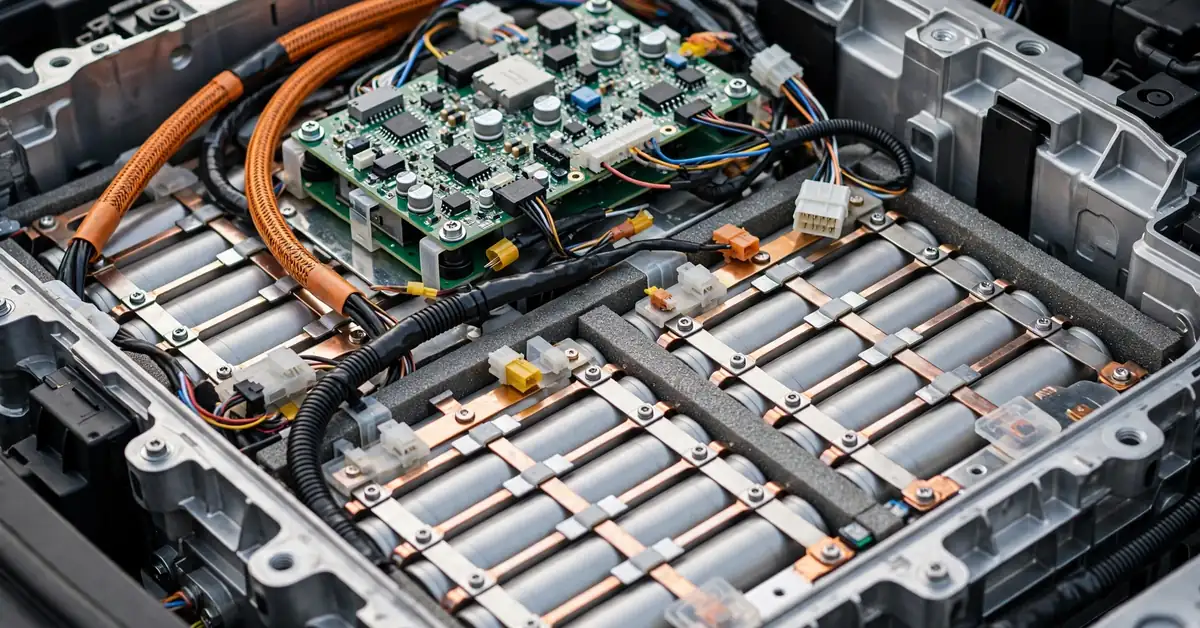
An EV BMS uses CAN bus for real-time, safety-critical communication, LIN bus for simpler, lower-cost auxiliary functions, and Ethernet for high-bandwidth applications like fleet diagnostics or advanced driver-assistance data, each protocol chosen for a different tier of speed, cost, and criticality. No single network handles everything — modern EVs run all three side by side, each doing the job it’s best suited for.
Why EVs Need More Than One Communication Protocol
Not every signal in a vehicle carries the same urgency or data volume. A battery voltage fault needs to reach the vehicle controller in milliseconds; a seat position setting doesn’t. Rather than forcing every signal onto one expensive, high-performance network, EV architecture assigns different protocols based on what each function actually needs.
CAN Bus: The Backbone for Safety-Critical BMS Communication
CAN remains the dominant protocol linking the BMS to the vehicle control unit, motor controller, and charging system. It offers data transfer up to 1 Mbps, strong resistance to electromagnetic interference through differential signaling, and robust error-checking, all critical in the electrically noisy environment of an EV powertrain. CAN carries the core safety data: battery voltage, current, temperature, and fault status, exactly the information that determines whether the vehicle needs to reduce power or shut down.
CAN FD: Handling More Data From Larger Packs
As battery packs have grown to include hundreds or even thousands of cells, standard CAN’s bandwidth can become a bottleneck. CAN FD extends the same reliable architecture with higher data rates and larger payload capacity, supporting the increased data demand without a complete system redesign.
LIN Bus: The Low-Cost Helper Network
LIN is a simpler, lower-speed protocol used for functions that don’t need real-time performance or high bandwidth. In battery systems specifically, LIN often handles auxiliary functions like battery heaters or charging port communication, tasks that would be needlessly expensive to run over full CAN infrastructure. By offloading these non-critical functions, LIN reduces the overall load on the more critical CAN network.
Ethernet: High-Bandwidth Applications in Modern EVs
Automotive Ethernet supports significantly higher bandwidth than CAN, ranging from 10 Mbps up into multi-gigabit territory, making it well suited for data-heavy applications like advanced driver-assistance systems, over-the-air update infrastructure, and detailed diagnostic or fleet-management data exchange. Its versatility in supporting standard networking protocols like TCP/IP also makes it a natural fit for connecting a vehicle’s systems to cloud platforms.
Comparing the Three Protocols Directly
| Protocol | Speed | Typical BMS Use |
|---|---|---|
| CAN / CAN FD | Up to 1 Mbps (higher for FD) | Core safety data: voltage, current, temperature, faults |
| LIN | Low speed | Auxiliary functions: heaters, charging port signals |
| Ethernet | 10 Mbps to multi-gigabit | Diagnostics, fleet data, cloud/OTA connectivity |
Why This Layered Approach Makes Practical Sense
Running every signal over the most capable, most expensive network would add unnecessary cost and complexity. By matching each protocol to its appropriate task, safety-critical CAN traffic for real-time protection, LIN for low-priority auxiliary signals, Ethernet for heavy data applications, EV architects keep the overall system both cost-effective and appropriately robust where it matters most.
Conclusion
An EV BMS relies on CAN bus for the safety-critical, real-time data that keeps the battery protected, LIN bus for simpler auxiliary functions that don’t need that level of performance, and Ethernet for high-bandwidth applications like diagnostics and cloud connectivity. Together, these three protocols form a layered communication architecture that balances reliability, cost, and data capacity across everything the BMS needs to report and control.
FAQs
Why doesn’t every EV signal just use Ethernet since it’s faster?
Ethernet hardware and implementation cost more, and CAN’s proven reliability and lower cost make it the better fit for safety-critical, lower-bandwidth signals.
Can a LIN bus failure affect BMS safety functions?
Generally not directly, since LIN typically handles non-critical auxiliary functions rather than core safety data, which runs on CAN.
Is Ethernet replacing CAN bus in EVs?
Not entirely — Ethernet is expanding into high-bandwidth applications, but CAN remains the backbone for core, safety-critical vehicle communication.
