What Is a Modular BMS Architecture?
What is a modular BMS architecture? Learn how it improves flexibility and serviceability.

How an EV’s Battery Management System (BMS) actually works: cell balancing, state-of-charge estimation, thermal control, and the fault codes and diagnostic signals that tell you something’s wrong. This hub is for owners who want to understand what’s happening inside the pack, not just how far it can go.
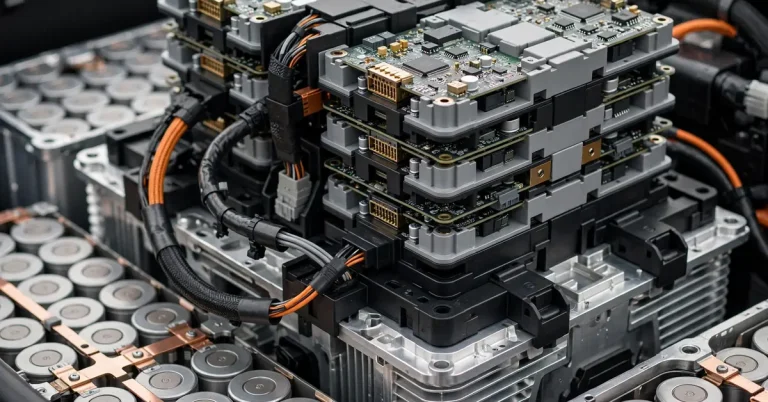
What is a modular BMS architecture? Learn how it improves flexibility and serviceability.
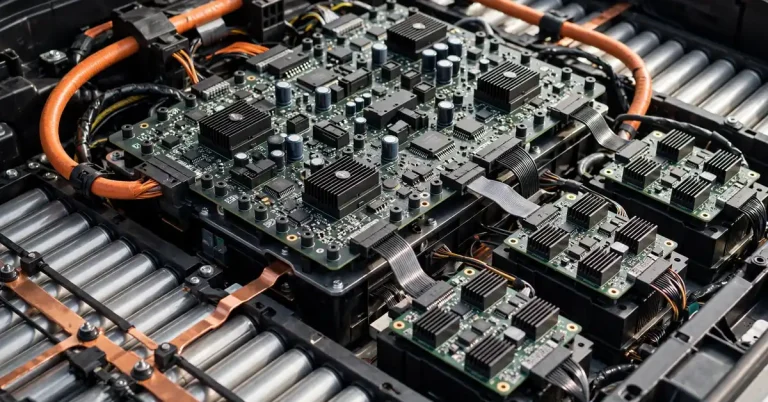
Centralized vs distributed BMS: which is better? Compare cost, scalability, and fault tolerance.
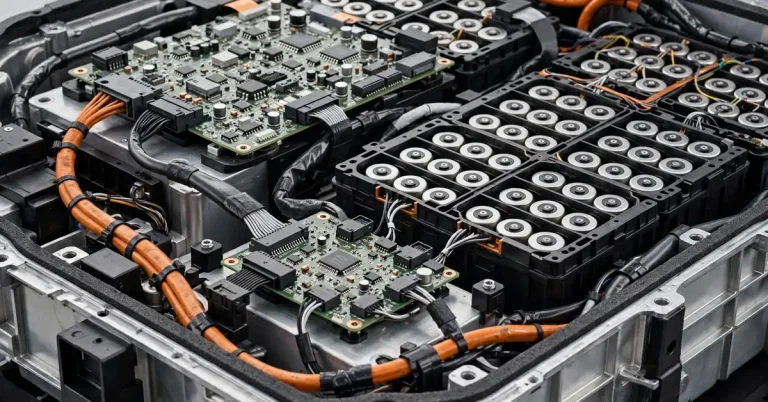
What is a master-slave BMS configuration? Learn how it balances cost and scalability.
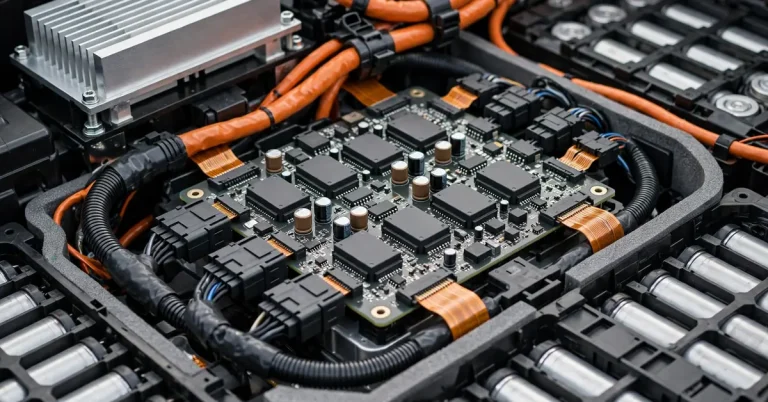
What hardware components are inside a BMS? Learn the roles of the AFE, MCU, and power electronics.
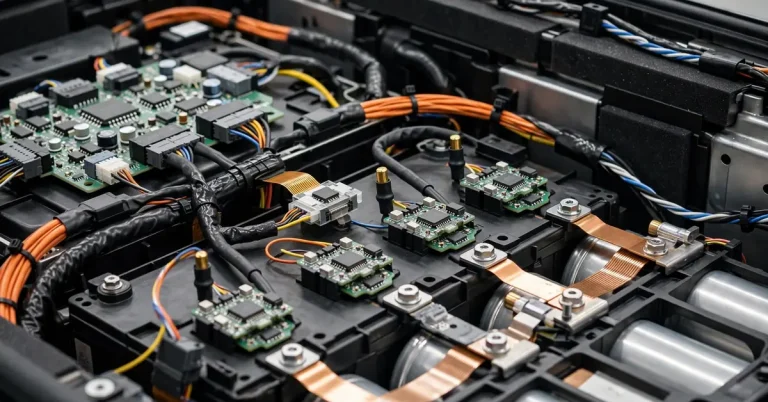
What sensors does a BMS use? Learn how voltage, current, and temperature sensing work together.
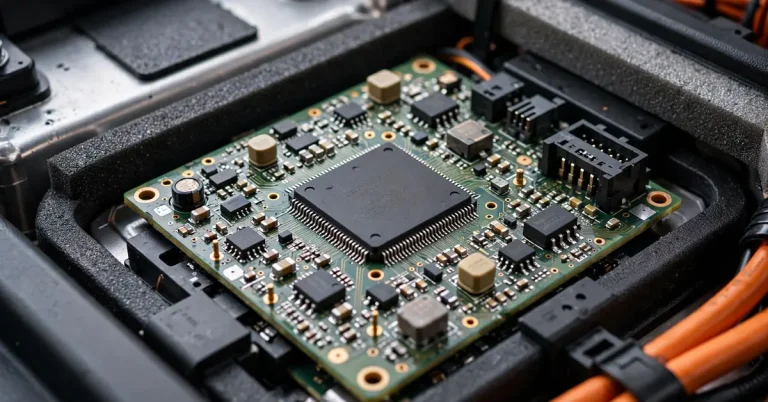
What is a BMS microcontroller unit (MCU)? Learn how it processes data and makes core decisions.
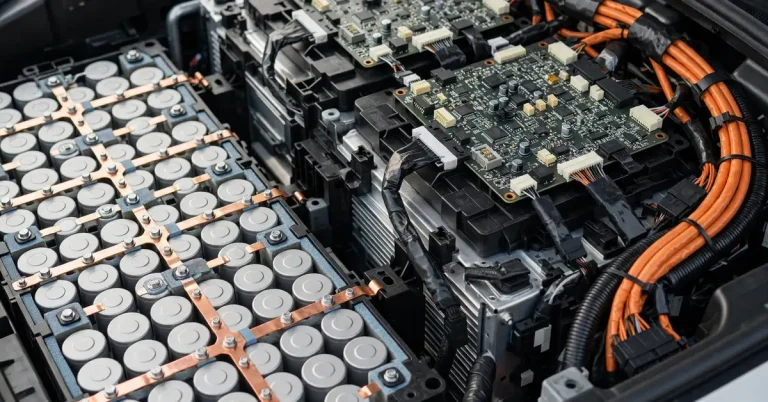
What software runs inside an EV BMS? Learn how layered, standardized software makes real-time decisions.
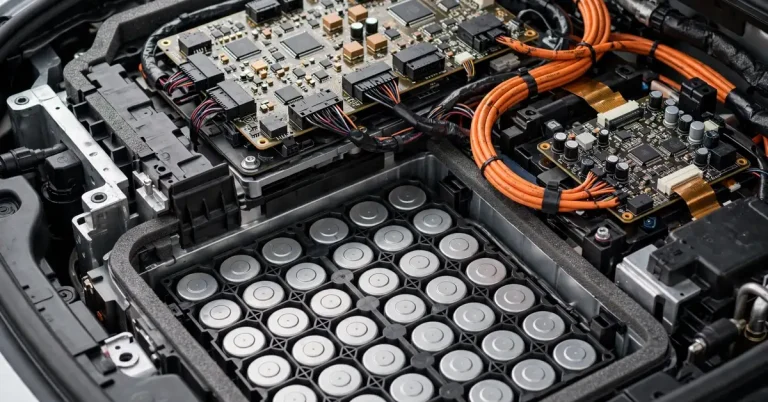
Your EV’s battery has a guard that never sleeps — and its instructions live in firmware. What that code does, why most ‘BMS updates’ are really calibration changes, and the documented cases where an update moved range, charging speed, or a charge limit.
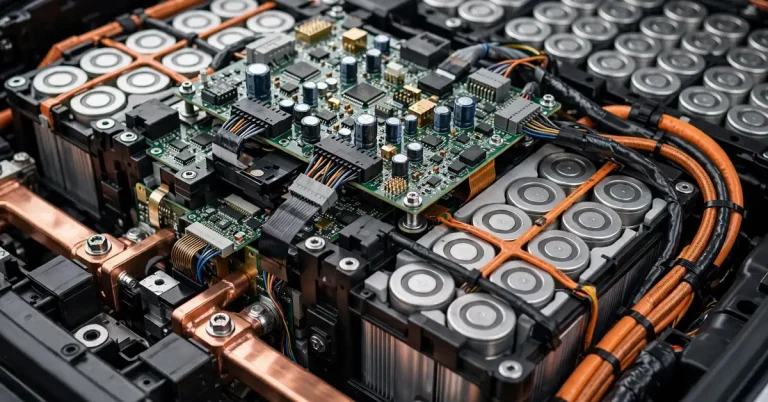
Can carmakers update an EV’s battery software over the air? Brand by brand: Tesla, VW, Kia, GM, Ford, Rivian — yes. The Nissan Leaf still needs a dealer.
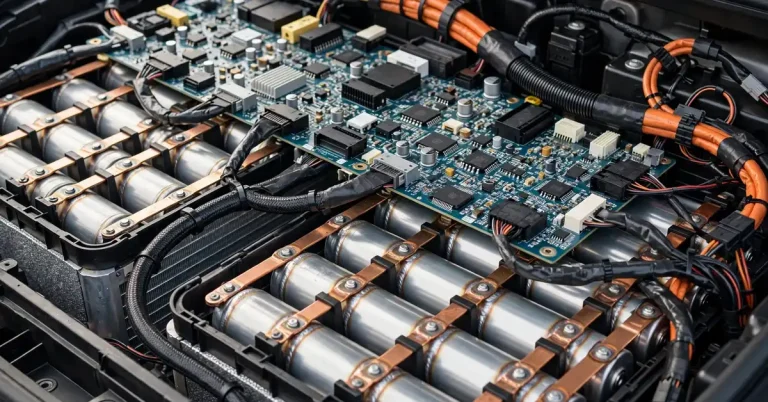
What is AI-powered battery management in EVs? Learn how machine learning improves SOC and SOH accuracy.
End of content
End of content