How Does Machine Learning Improve EV BMS Accuracy?
How does machine learning improve EV BMS accuracy? See how it beats fixed formulas on real-world data.

How an EV’s Battery Management System (BMS) actually works: cell balancing, state-of-charge estimation, thermal control, and the fault codes and diagnostic signals that tell you something’s wrong. This hub is for owners who want to understand what’s happening inside the pack, not just how far it can go.

How does machine learning improve EV BMS accuracy? See how it beats fixed formulas on real-world data.
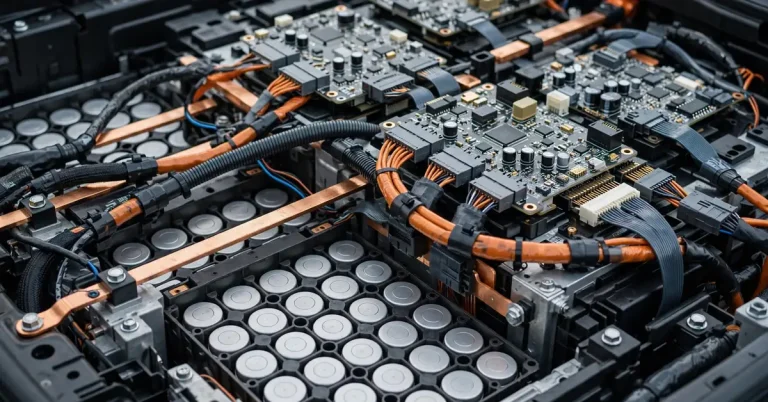
What is a digital twin in EV battery management? Learn how it predicts problems and refines accuracy.
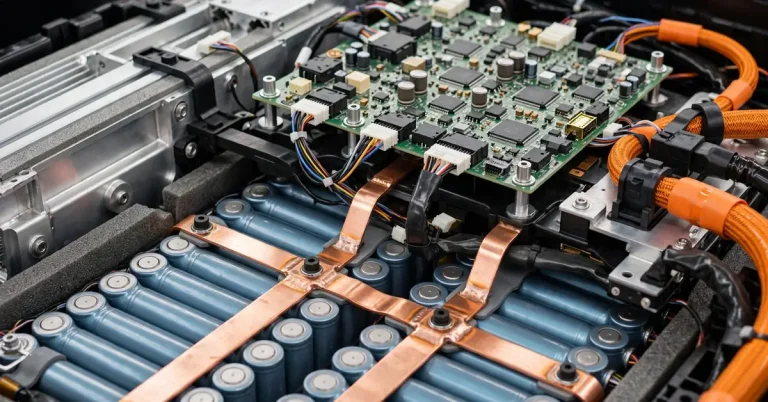
How does cloud-connected BMS work in modern EVs? Learn what stays local and what moves to the cloud.
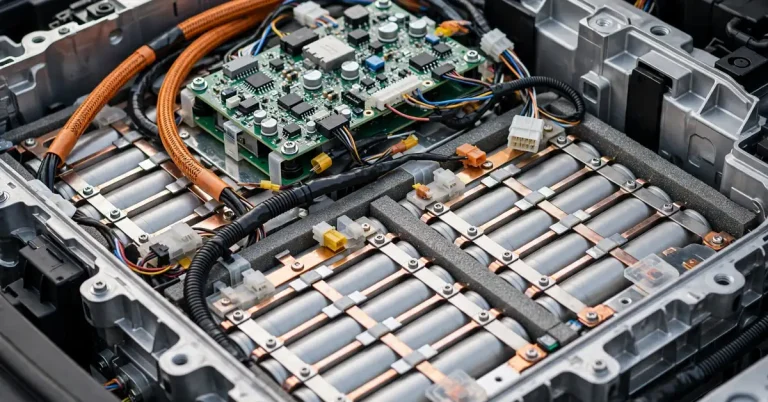
CAN, LIN, and Ethernet in EV BMS: learn how each communication protocol plays a distinct role.
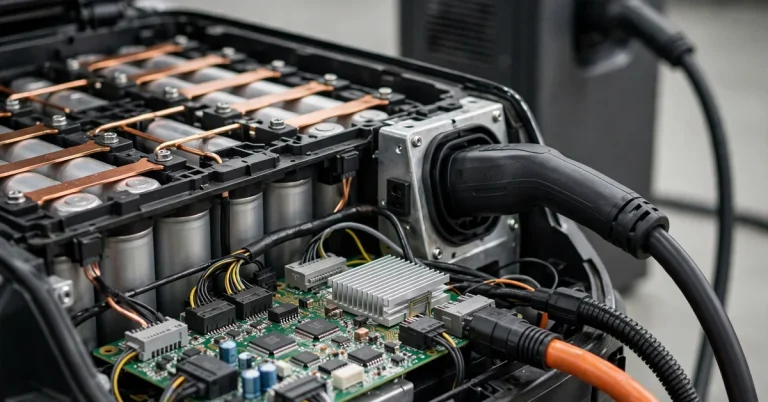
How does BMS communicate with EVSE during charging? Learn about the handshake process for AC and DC.
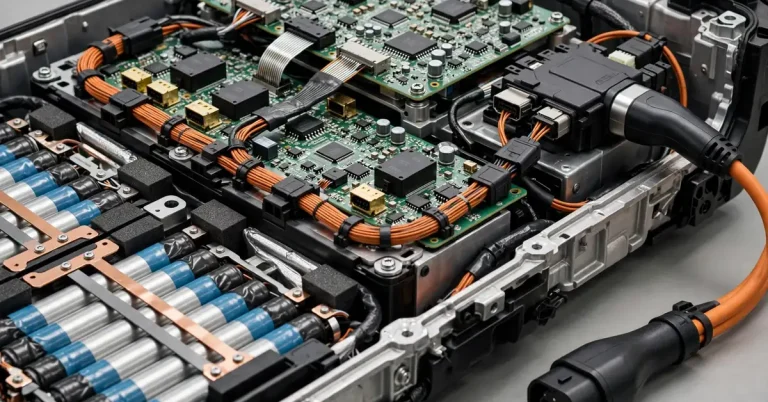
What is ISO 15118 and how does it relate to BMS? Learn how it enables Plug & Charge and secure communication.

How does BMS manage DC fast charging? Learn how it negotiates and adjusts current in real time.
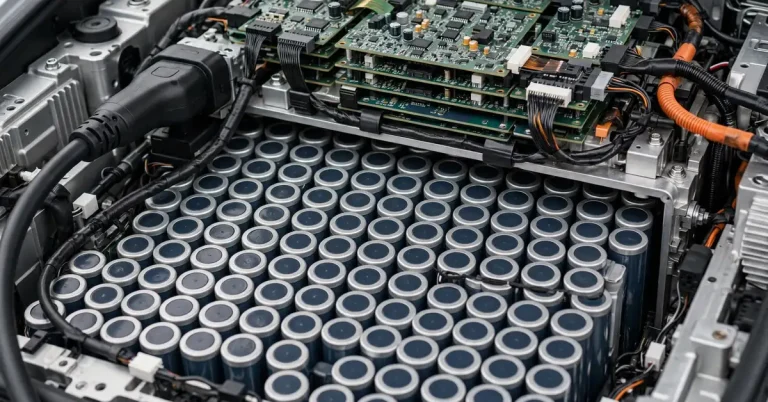
Charging slows near full because the BMS is protecting the cells: a 4.2V ceiling, lithium-plating risk and balancing. The taper, with real-car numbers.
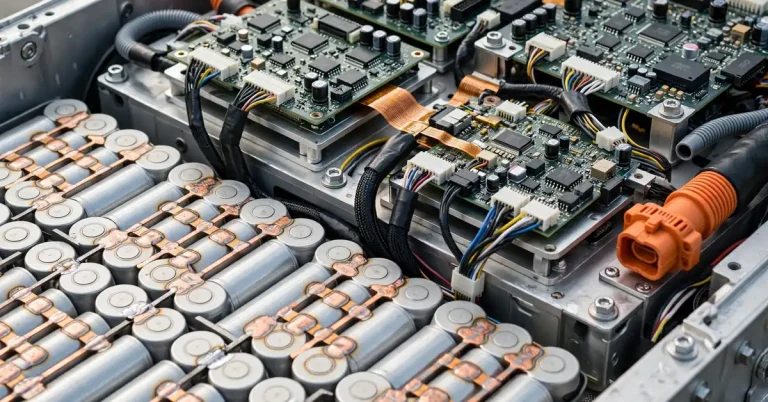
How does BMS control charging in cold weather? Learn how it prevents lithium plating.
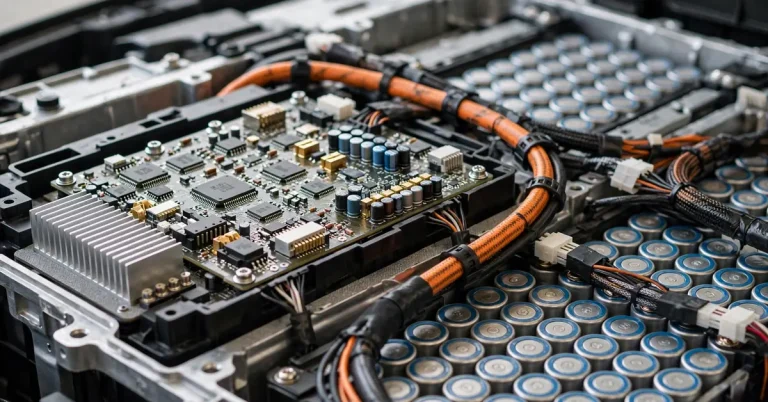
How does BMS protect the battery during fast charging? Learn about its layered safety mechanisms.
End of content
End of content